Nationalism was one of the most important and lasting forces to emerge from the Napoleonic Era, the period of European history dominated by the French leader Napoleon Bonaparte between 1799 and 1815. One of the most important and far-reaching impacts of the Napoleonic Era was the dramatic spread of nationalism across Europe. Nationalism is the belief that people who share a common language, culture, history, and identity should govern themselves as an independent nation rather than being ruled by a foreign power or a dynastic empire. During the years of Napoleon’s wars and conquests, this idea spread far beyond France and began to reshape how millions of Europeans thought about who they were and who should rule them.
More specifically, nationalism is a political idea that ties a person’s deepest loyalty to their nation rather than to a king, a religion, or a local village. A nation, in this sense, is a large group of people who feel united by things they share, such as language, customs, history, and a sense of common destiny. Under this belief, each nation has the right to control its own government and to be free from foreign rule. This idea seems ordinary today, but in the early 1800s it was new and revolutionary, and it would go on to redraw the map of Europe.
What Was the Napoleonic Era?
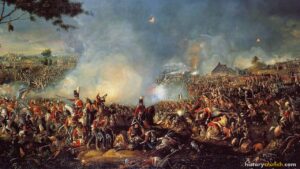
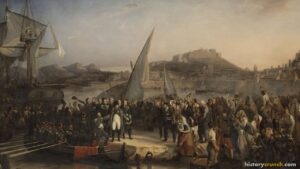
The Napoleonic Era, which lasted roughly from Napoleon Bonaparte’s rise to power in 1799 to his final defeat at Waterloo in 1815, was one of the most important periods in modern history. It grew directly out of the French Revolution, which had begun in 1789 and had overthrown the French monarchy. In the chaos that followed the Revolution, Napoleon, a talented young general, seized control of the French government and eventually crowned himself Emperor of France.
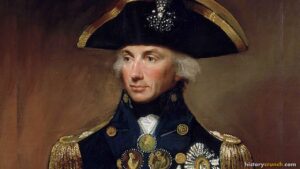
From this position of power, Napoleon led France into a long series of wars against the other major powers of Europe, including Britain, Austria, Prussia, and Russia. For a time he was remarkably successful, and by 1812 his empire and its allies controlled much of the continent. The changes it set in motion continued to shape Europe long after Napoleon himself was gone, and many of the political realities of the modern world have their roots in this remarkable and turbulent period. The spread of nationalism was among the most powerful of these lasting changes.
Why Was Nationalism a New Idea?
To understand why nationalism mattered so much, it helps to see how people thought before the Napoleonic Era. Before the late 18th century, most people in the world identified themselves primarily by their religion, their village, or their loyalty to a king or dynasty rather than by a sense of national identity. A farmer in central Europe might think of himself as a Catholic, or as a subject of a particular prince, but not as a member of a larger German or Italian nation.
Before the Napoleonic Era, this idea was not widely held among ordinary people in most European countries. Two great revolutions began to change this. The first was the American Revolution of 1776, and the second was the French Revolution of 1789. Both revolutions were built on the idea that governments derived their authority from the people rather than from kings or God.
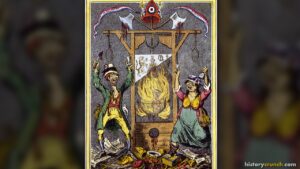
The French Revolution had proclaimed the sovereignty of the people and the idea that nations had the right to determine their own political destinies. During the Revolution, the French began to see themselves as citizens of a French nation rather than merely subjects of a king. They created national symbols, such as the tricolor flag and the anthem known as “La Marseillaise,” to spread this new sense of belonging. This powerful new spirit was carried out of France and across Europe once Napoleon came to power.
How Did Napoleon Spread Nationalism Across Europe?
The Napoleonic Era spread nationalism in two very different and in some ways opposite ways. First, Napoleon spread nationalist ideas by carrying the principles of the French Revolution into the countries he conquered. As his armies marched across the continent, they brought with them the revolutionary belief that the people, and not a king or a foreign empire, held the true authority to govern.
In the lands he ruled or reorganized, Napoleon swept away many old feudal privileges and introduced reforms based on legal equality. He is best known for the Napoleonic Code, a body of law that treated men as equal before the law and rewarded talent rather than noble birth. These ideas of citizenship, equality, and national sovereignty planted seeds in the minds of people across Europe, even in places that Napoleon controlled only briefly.
Napoleon also redrew the political map in ways that unintentionally encouraged national feeling. In the German-speaking and Italian-speaking lands, he combined many tiny states into larger units. This reorganization made it easier for people to imagine one day belonging to a single German nation or a single Italian nation, an idea that had seemed almost impossible when the region was divided into hundreds of separate territories.
How Did Resistance to Napoleon Create Nationalism?
The second way nationalism spread was more surprising, and in many ways more powerful. French occupation itself provoked nationalist reactions in the countries Napoleon conquered. Many people who lived under French rule came to resent the foreign soldiers, heavy taxes, and demands placed upon them, and their anger helped forge a shared identity. People who had previously identified primarily with their local region, their religion, or their dynasty discovered a new sense of shared identity in their resistance to French domination.
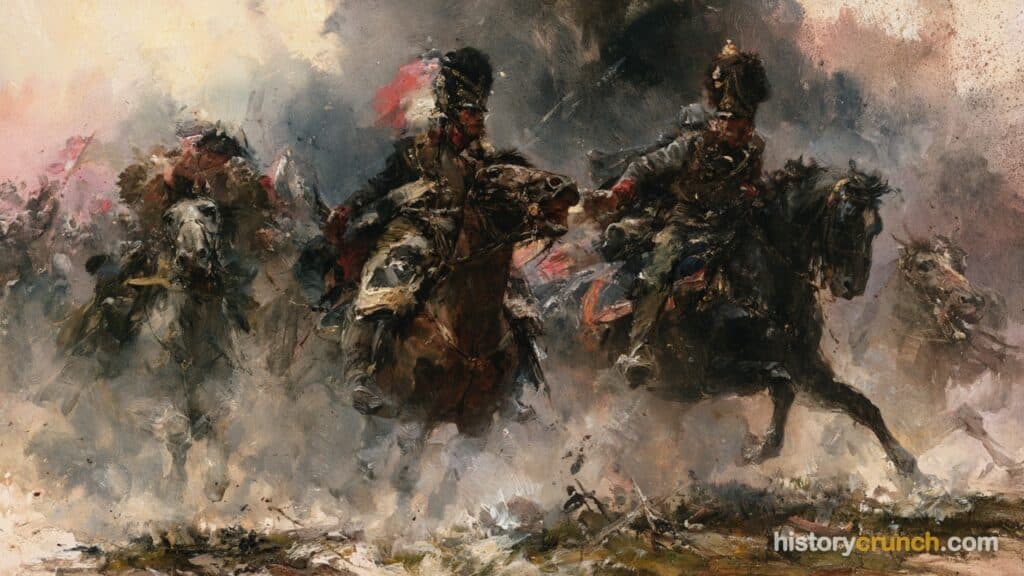
Spain offers one of the clearest examples of this reaction. When Napoleon removed the Spanish king and placed his own brother on the throne, the Spanish people rose up in fury. In Spain, the brutal guerrilla resistance to French occupation was driven partly by a new sense of Spanish national identity. Ordinary farmers, priests, and townspeople fought the French army in a long and bloody struggle. In fact, the fighters in Spain gave the world the word “guerrilla,” meaning “little war,” to describe their hit-and-run tactics against a stronger enemy.
A similar spirit awakened in the German lands. In Germany, the humiliation of Prussian and Austrian defeat at French hands inspired thinkers and leaders to call for German national unity as a source of strength. German writers and teachers began to celebrate their shared language and culture, arguing that the German people should stand together against foreign control. In response to their defeats, states such as Prussia reformed their governments, expanded their schools, and built larger armies drawn from the common people.
Italy followed the same pattern. In Italy, the experience of French-imposed reorganization began to plant the seeds of Italian national consciousness. As stated above, nationalism therefore spread both through those who admired the ideals of the French Revolution and through those who rose up to resist French dominance. In reality, these two paths often overlapped, and both left Europe transformed.
How Did the Congress of Vienna Respond to Nationalism?
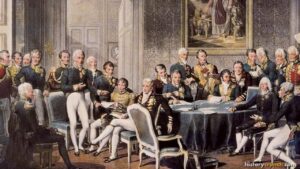
After Napoleon was finally defeated in 1815, the victorious powers of Europe gathered at the Congress of Vienna to rebuild the continent. Their leaders, including the powerful Austrian statesman Klemens von Metternich, feared both revolution and nationalism, which they blamed for years of war and disorder. As a result, they tried to restore the old kings and the old borders, and they hoped to turn back the clock to the world that existed before the French Revolution.
The peacemakers, however, could not erase the national feelings that the Napoleonic Era had awakened. Many Germans and Italians had hoped their peoples would be united into single nations, and they were bitterly disappointed to see their lands remain divided among many separate rulers. This disappointment did not destroy nationalism. Instead, it drove the idea underground, where it grew stronger and burst into the open again in the revolutions and unification movements of the 19th century.
Significance of Nationalism and the Napoleonic Era
The nationalism unleashed during the Napoleonic Era became one of the most important political forces of the modern world. The nationalism that the Napoleonic Era unleashed became one of the dominant forces in European politics throughout the 19th century. The desire of peoples to govern themselves shaped decades of revolutions, wars, and reforms long after Napoleon himself had died in exile.
The clearest results were the unification movements that followed. In the decades after 1815, nationalist leaders worked to bring the divided German and Italian states together into unified nations, achieving success by the second half of the century. The idea that each people deserved its own nation also weakened the large multinational empires of Europe, which contained many different peoples ruled by a single crown. Over time, these tensions helped pull such empires apart.
In the long run, the nationalism born in this period proved to be a force for both freedom and conflict. It inspired peoples to seek independence and self-government, yet it also fueled rivalries and wars between nations that would trouble Europe well into the 20th century. For this reason, the spread of nationalism stands as one of the most powerful and enduring legacies of the Napoleonic Era.
Frequently Asked Questions
What is nationalism in simple terms?
Nationalism is the belief that people who share a common language, culture, and history should form their own nation and govern themselves. It puts loyalty to the nation above loyalty to a king, a religion, or a local region. In the early 1800s this was a bold new idea, and it slowly replaced the older belief that ordinary people were simply the subjects of whichever ruler happened to control their land.
How did Napoleon spread nationalism if he was a conqueror?
Napoleon spread nationalism both on purpose and by accident. On purpose, his armies carried the French Revolution’s ideas about citizenship and the power of the people into the lands he conquered. By accident, his harsh occupation angered those same peoples, and their resistance to French rule gave them a stronger sense of their own national identity.
Which countries developed nationalism because of Napoleon?
Spain, the German states, and the Italian states all developed stronger national feeling during the Napoleonic Era. In Spain, people fought a guerrilla war against the French invaders. In the German and Italian lands, Napoleon’s reorganization of tiny states made it easier for people to imagine one day forming single, united nations of their own.
What is a guerrilla war and how does it connect to nationalism?
A guerrilla war is a fight in which small bands of irregular fighters use surprise attacks against a larger, better-equipped army. The word comes from the Spanish term meaning “little war,” and it was first widely used during the Spanish resistance to Napoleon. This kind of fighting connects to nationalism because ordinary Spaniards united across class lines to defend their homeland from foreign rule.
Why did the Congress of Vienna fail to stop nationalism?
The Congress of Vienna failed to stop nationalism because ideas are much harder to erase than borders. Its leaders restored old kings and old boundaries, but they could not remove the national pride that the Napoleonic Era had awakened in millions of people. Instead of dying out, nationalism grew stronger in the following decades and helped drive the revolutions and unification movements of the 19th century.
Cite This Article
To cite this article as a source, use one of the formats below.
MLA: Millar, B. “Nationalism and the Napoleonic Era: A Detailed Summary.” HistoryCrunch, 11 August 2026, https://historycrunch.com/nationalism-and-the-napoleonic-era/.
APA: Millar, B. (2026). Nationalism and the Napoleonic Era: A Detailed Summary. HistoryCrunch. https://historycrunch.com/nationalism-and-the-napoleonic-era/
Chicago: Millar, B. “Nationalism and the Napoleonic Era: A Detailed Summary.” HistoryCrunch. August 11, 2026. https://historycrunch.com/nationalism-and-the-napoleonic-era/
Sources
- The Met (Heilbrunn Timeline)
- Fordham Modern History Sourcebook
- David A. Bell, Napoleon: A Concise Biography.
- Charles Esdaile, Napoleon's Wars: An International History.