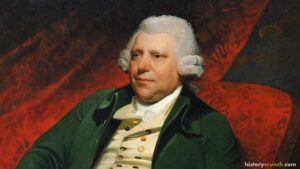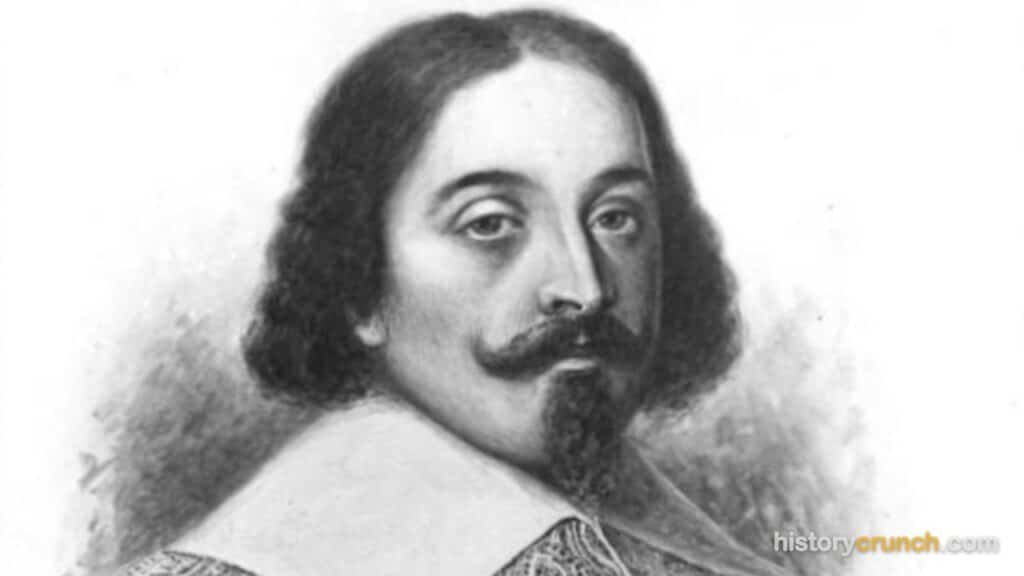
Abel Tasman was one of the most important European explorers of the 17th century, and his voyages greatly expanded the world’s knowledge of the southern hemisphere. Abel Tasman was a Dutch navigator who sailed for the Dutch East India Company during the era of European exploration, a period when several nations sent ships across the oceans in search of trade, wealth, and new lands. He became the first known European to reach the island of Tasmania and the islands of New Zealand, and he also sighted Tonga and Fiji. His travels helped prove that Australia was a separate continent, and today his name is remembered in places such as Tasmania and the Tasman Sea.
A navigator was a ship’s officer who used the stars, the sun, charts, and instruments to figure out a vessel’s position and steer it safely across open water. In an age before accurate maps of the southern oceans, navigators like Tasman played a central role in exploration, because they had to guide their crews through waters that no European had ever recorded.
Early Life and Background
Very little is known about the early life of Abel Tasman. He was born around 1603 in the small village of Lutjegast, in the province of Groningen in the northern Netherlands. His full name was Abel Janszoon Tasman. In fact, so few records survive that historians are not even certain of the exact year of his birth, and most sources place it between 1602 and 1603.
Tasman came from humble beginnings and received little formal education. Although he was uneducated, he learned navigation and seamanship on the job while working for the Dutch East India Company. His first wife died after giving him a daughter, and in 1631 he remarried in Amsterdam, describing himself at the time as a widower and a sailor.
By this stage of his life, Tasman was already an experienced seaman. Of humble birth, he rose to become one of the Dutch East India Company’s most respected skippers. His skill and reliability at sea would soon earn him the chance to lead major expeditions.
Service With the Dutch East India Company
The Dutch East India Company was a powerful trading business that dominated much of Europe’s commerce with Asia. The company was founded in the Dutch Republic in 1602 to protect Dutch trade in the Indian Ocean and to assist in the Dutch war of independence from Spain. In the early 1600s, the Dutch were replacing the Portuguese as the most powerful European influence in Asia, and the company held a monopoly over the enormously profitable spice trade in goods such as pepper.
Tasman entered the service of the company in the early 1630s. In 1634, he was appointed skipper of a ship called the Mocha and went on a two-year voyage to the Maluku Islands. The center of the company’s operations was the city of Batavia, the Dutch name for what is now Jakarta on the island of Java.
For years, Tasman worked in the waters of the Dutch East Indies, which is now Indonesia. He patrolled these waters searching for smugglers and rebels before being chosen in 1642 to lead a great expedition. As stated above, this was a dangerous line of work. At that time sailing was a hazardous occupation, with a high death toll from disease and many ships lost due to primitive navigation and uncharted waters. Earlier, in 1639, he had also sailed under Commander Mathijs Quast in search of legendary “islands of gold and silver” thought to lie east of Japan.
The First Great Voyage of 1642
In 1642, the governor-general of the Dutch East Indies, Anthony van Diemen, selected Tasman to command an exploratory voyage into the southern seas. The company wanted to learn whether exploitable southern lands existed, or whether there was a sea passage across the Pacific to Chile. For this journey, Tasman was given two small ships, his flagship the Heemskerck and an armed transport ship called the Zeehaen. The experienced hydrographer Franz Jacobszoon Visscher served as chief pilot.
The expedition set out from Batavia in August of 1642. The ships first sailed west to the island of Mauritius, where they stayed for about a month making repairs and taking on supplies, then sailed due south until cold conditions forced them back to the 45th parallel, which they followed eastwards. On November 24th, 1642, they sighted the mountains of a new land far to the south.
Tasman named this land after his sponsor. He reached the island later called Tasmania on November 24th, naming it Van Diemen’s Land after the governor-general Anthony van Diemen. His men found signs that people lived there, but they did not actually see any of the inhabitants. After taking on fresh water and planting a Dutch flag, the ships continued east on December 4th.
Reaching New Zealand and the Pacific Islands
After leaving Tasmania, Tasman crossed the wide stretch of sea that today carries his name. On December 13th, 1642, the Dutch sighted “a large land, uplifted high,” which was probably the Southern Alps of New Zealand. Tasman is officially recognized as the first European to reach New Zealand, and his men were the first Europeans to have a confirmed encounter with the Maori people.
Sadly, this first meeting between two very different worlds ended in bloodshed. The initial contact was tense but peaceful, yet the following day the Dutch had a violent encounter with the local Ngati Tumatakokiri. The misunderstanding and fear on both sides quickly led to a deadly clash, after which Tasman chose not to explore the land any further.
From there, Tasman turned north and continued his voyage home. He sailed north to Batavia by way of Tonga, the northern Fiji Islands, and New Guinea. While passing through Fiji, his ships came close to being wrecked on the dangerous reefs of the north-eastern part of the group. The expedition finally reached Batavia in June of 1643, having been at sea for roughly ten months.
The Second Voyage of 1644
Even though Tasman had sighted so much new land, the company was not satisfied. The council of the company decided that Tasman had been negligent in his investigation of the lands he discovered and of the passage to Chile. As a result, they sent him on a second expedition in 1644 to learn more about the relationship between New Guinea, western Australia, and Van Diemen’s Land.
For this journey, Tasman commanded three ships. He left Batavia on January 30th, 1644, with the Limmen, the Zeemeeuw, and the tender Braek, and followed the south coast of New Guinea eastwards in an attempt to find a passage to the eastern side of New Holland. New Holland was the Dutch name for the Australian mainland at that time.
More specifically, Tasman missed the key waterway that separates New Guinea from Australia. He missed the Torres Strait, probably because numerous reefs and islands hid possible routes, and continued his voyage along the shore of the Gulf of Carpentaria, mapping the north coast of Australia and making observations about the land and its people. In reality, this careful mapping was a lasting achievement, even if it did not lead to the trade the company wanted.
Later Life
After his two great voyages, Tasman took on new duties in the service of the company. On November 2nd, 1644, he was appointed a member of the Council of Justice at Batavia, and he later carried out missions to Sumatra in 1646 and to Siam, now Thailand, in 1647. In 1648, he was placed in charge of an expedition sent to Manila to try to intercept and loot Spanish silver ships coming from America, but he had no success and returned to Batavia in January of 1649.
Tasman’s career soon ran into serious trouble. In November of 1649, he was charged and found guilty of having hanged one of his men without a trial, and he was suspended from his office of commander, fined, and made to pay compensation to the sailor’s relatives. This was a heavy blow to his standing within the company.
In time, however, his reputation was restored. On January 5th, 1651, he was formally reinstated in his rank and spent his remaining years at Batavia, where he was in good circumstances as one of the larger landowners in the town. Abel Tasman died at Batavia on October 10th, 1659, and was survived by his second wife and a daughter from his first marriage.
Significance of Abel Tasman
During his own lifetime, Tasman’s voyages were not celebrated as great triumphs. Because his voyages revealed no new land of great potential wealth, they were at the time considered to be a disappointment. The company had hoped for gold, silver, or valuable trade goods, and Tasman had found none of these things.
Over the centuries, though, his true importance became clear. With the passage of time, his voyages came to be recognized as important contributions to the knowledge of that part of the world. In fact, Tasman had circumnavigated Australia without seeing it, thus establishing that it was separate from the hypothetical southern continent that Europeans had long imagined.
Tasman’s discoveries also opened the door to later exploration and settlement of the region. He was one of a wave of European seafarers whose journeys, navigation skills, and map making aided both the colonial and the commercial enterprises of the expanding imperial powers. More than a century after his voyages, other explorers such as James Cook would follow the paths he had first charted.
Today, Tasman’s name lives on across the region he explored. The Australian island state of Tasmania, the Tasman Sea between Australia and New Zealand, and Abel Tasman National Park in New Zealand all carry his name, keeping the memory of the Dutch navigator alive for people all around the world.
Frequently Asked Questions
What is Abel Tasman famous for?
Abel Tasman is famous for being the first known European to reach Tasmania and New Zealand. He was a Dutch navigator who also sighted the islands of Tonga and Fiji during a single long voyage in 1642 and 1643, greatly adding to European maps of the southern hemisphere.
Why is Tasmania named after Abel Tasman?
Tasmania is named after Abel Tasman because he was the first European to sight the island in 1642. He himself had named it Van Diemen’s Land after his sponsor, and the island was only renamed Tasmania in his honor much later, in 1856, more than two hundred years after his death.
Who did Abel Tasman work for?
Abel Tasman worked for the Dutch East India Company, a powerful trading business. The company paid for his voyages because it wanted to find new trade routes and sources of wealth, not simply to explore, which is why it viewed his journeys as failures when he returned without riches.
Did Abel Tasman ever land in mainland Australia?
Abel Tasman never landed on the eastern coast of mainland Australia, and he sailed all the way around the continent without ever seeing it on his first voyage. On his second voyage in 1644, however, he closely mapped long stretches of the northern Australian coastline, which the Dutch called New Holland.
How did Abel Tasman die?
Abel Tasman died in the city of Batavia, now Jakarta, on October 10th, 1659. By the end of his life he had left active exploration behind and become a wealthy landowner and merchant, and he was survived by his second wife and a daughter from his first marriage.
Cite This Article
To cite this article as a source, use one of the formats below.
MLA: Millar, B. “Abel Tasman: A Detailed Biography.” HistoryCrunch, 2 August 2026, https://historycrunch.com/abel-tasman/.
APA: Millar, B. (2026). Abel Tasman: A Detailed Biography. HistoryCrunch. https://historycrunch.com/abel-tasman/
Chicago: Millar, B. “Abel Tasman: A Detailed Biography.” HistoryCrunch. August 2, 2026. https://historycrunch.com/abel-tasman/
Sources
- J.M. Roberts & Odd Arne Westad, The Penguin History of the World.
- Jerry Bentley & Herbert Ziegler, Traditions & Encounters: A Global Perspective on the Past.