Medieval tournaments were one of the most important social and military events in the Middle Ages, and they helped define the culture of the knightly class across Europe. These gatherings gave knights a place to practice their fighting skills, show off their courage, and win fame and fortune in front of large crowds. Over several centuries, tournaments grew from rough, dangerous training exercises into grand celebrations filled with pageantry, color, and ceremony. They became so tied to the ideals of knighthood that they remain one of the first images that come to mind when people think about medieval Europe.
A tournament was a competitive event where mounted knights, and sometimes fighters on foot, competed in mock battles and contests of skill. The two most famous forms were the melee, a large team battle that imitated real warfare, and the joust, a one on one contest in which two riders charged each other on horseback with lances. Tournaments were usually organized by kings, nobles, or knightly groups and were meant to prepare knights for war while also entertaining spectators and displaying the wealth and honor of those who took part.
What Were the Middle Ages?
The Middle Ages, sometimes called the medieval period, was the long stretch of European history that lasted from roughly 500 CE to 1500 CE. It began after the fall of the Western Roman Empire and ended around the start of the Renaissance and the Age of Exploration. During this time, much of Europe was organized under a system called feudalism, in which land and loyalty were exchanged between different levels of society.
Under feudalism, kings granted land to powerful nobles, and those nobles in turn relied on knights to fight for them. Knights were granted smaller pieces of land in exchange for serving the nobles in battle, while peasants and serfs worked the land to produce food and goods for everyone above them. In fact, it was this need for well-trained fighters that helped create the culture of knighthood. Knights were expected to follow a code of behavior known as chivalry, which valued bravery, loyalty, and honor, and tournaments became one of the main places where these values were put on display.
Where Did Medieval Tournaments Come From?
Tournaments most likely developed out of the cavalry training used by mounted warriors in France during the 9th, 10th, and 11th centuries. Groups of knights would charge at one another and practice difficult maneuvers on horseback, since fighting from a moving horse took years of skill to master. Over time, these practice sessions grew larger and more organized until they became formal events.
Most accounts place the beginning of the true medieval tournament in France around the middle of the 11th century. As stated above, mounted knights had become the most powerful force on the battlefield, so nobles wanted a way to keep them sharp during times of peace. In reality, early tournaments were far from the polished spectacles seen in movies today. They were rough, chaotic, and often deadly, closer to a real battle than to a sporting match.
What Was the Melee?
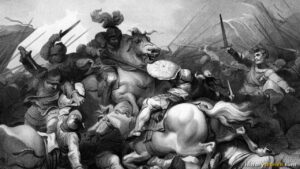
The earliest and most common form of tournament was the melee, a mock battle fought between two large teams of armed horsemen. These fights could spread across open countryside, with villages, fields, streams, and forests all becoming part of the playing area. The main goal was not simply to defeat the other side but to capture opposing knights, since a captured knight could be held for ransom.
This ransom system was the economic engine of the melee. A skilled knight could capture rivals along with their horses and armor, then demand payment for their release, which meant tournaments could be a path to real wealth. For instance, one of the most famous champions of the 12th century, William Marshal, reportedly captured hundreds of knights during his career and became one of the most powerful men in England as a result.
The melee was extremely dangerous. Knights used the same weapons, armor, and horses that they took into real war, and serious injuries and deaths were common. In one tournament held in Germany in the year 1241, dozens of knights reportedly died, many from crushing and heat exhaustion inside their heavy armor rather than from direct blows. Because the teams often carried real grudges, a friendly contest could quickly turn into a genuine and bloody fight.
What Was the Joust?
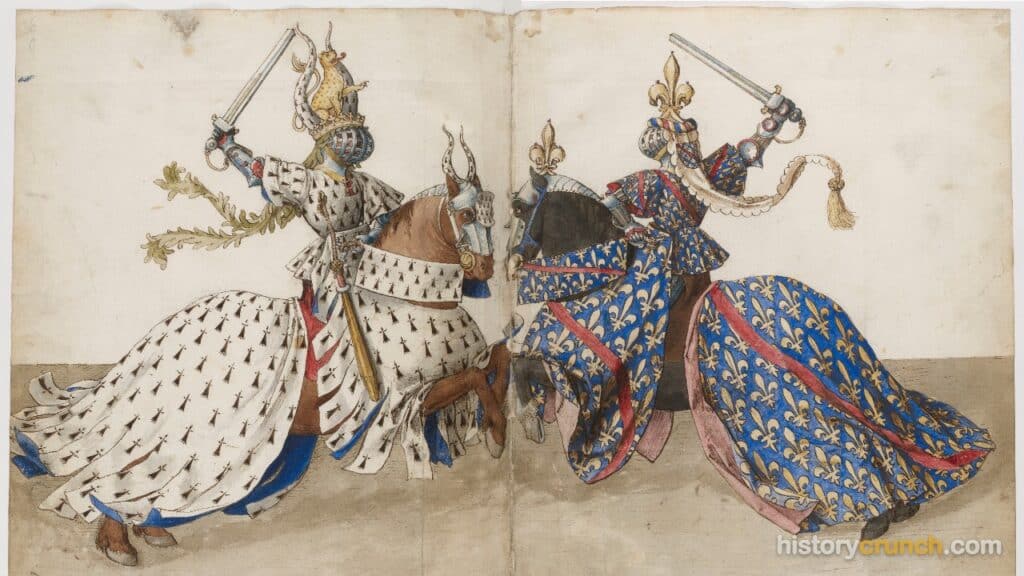
The joust was a one on one contest in which two knights on horseback charged at each other from opposite ends of a fenced area, each trying to strike the other with a lance. The aim was to break the lance against the opponent’s shield or body, or to knock the rider completely out of the saddle. Points were awarded for clean, well-aimed strikes, and unhorsing an opponent was the most impressive result of all.
Although jousting existed as a minor side event from the early days of the tournament, it became far more popular from the second half of the 13th century onward. More specifically, it was much easier for spectators to follow a single dramatic contest between two riders than to watch a confusing free-for-all spread across the countryside. By the 15th century, the joust had largely replaced the melee as the central event of most tournaments.
A major improvement came with the introduction of a wooden barrier, sometimes called the tilt, in the early 15th century. This low fence ran down the middle of the field and kept the two charging horses apart, which reduced the chance of head-on collisions and made the contest a little safer. Even so, jousting remained risky, and in 1559 King Henry II of France was killed when a splinter from a shattered lance pierced the eye slit of his helmet.
What Happened at a Tournament?
By the later Middle Ages, tournaments had become major social events that could stretch over several days. They were often held to celebrate important occasions such as coronations, royal weddings, or the yearly gatherings of knightly orders. Nobles used these events not only for entertainment but also to show off their wealth, form alliances, and measure the loyalty and skill of their followers.
The fighting took place in an area known as the lists, which was often spread with sand or straw and set up in a field near a castle. Around the edges stood colorful tents called pavilions, where the knights prepared and where surgeons waited to treat the wounded. Raised viewing stands were built for the richest spectators, giving nobles and ladies a clear view of the action below.
Pageantry became a central part of the experience. Knights displayed their family coat of arms on their shields, helmets, and clothing so that spectators could tell them apart, a practice tied to the growing system known as heraldry. Competitors were expected to prove noble birth to take part, and those who had committed serious crimes or behaved dishonorably could be banned. For instance, a knight found guilty of slandering a woman or of murder might be turned away, since tournaments were meant to reflect the ideals of chivalry.
Why Did Medieval Tournaments Decline?
Several forces brought about the slow end of the medieval tournament. New weapons such as the longbow, pike, and cannon made the heavily armored mounted knight far less important on the battlefield, which weakened the whole warrior culture that tournaments had celebrated. As gunpowder spread, the age of the charging knight came to a close.
At the same time, the danger and enormous expense of tournaments made them harder to justify. The death of King Henry II of France in 1559 was a shocking reminder of the risks involved, and public enthusiasm for jousting began to fade. Tournaments continued in some countries as grand shows for special royal events, but by then they were rare celebrations rather than a normal part of noble life.
Significance of Medieval Tournaments
Medieval tournaments were important because they shaped the identity of the knightly class and the ideals of chivalry that went with it. They gave knights a way to train for war, prove their courage, and earn both wealth and reputation, all while entertaining large crowds. In this way, tournaments tied together the military, social, and political worlds of the Middle Ages.
Tournaments also helped spread the system of heraldry, since knights needed clear symbols to be recognized in combat and in the stands. In addition, the games were powerful political tools, allowing rulers to display their wealth, forge friendships, and project strength to rival courts. The blend of skill, ceremony, and competition even influenced later ideas about organized sport and public spectacle.
Finally, tournaments left a lasting mark on how people imagine the Middle Ages today. The image of armored knights charging with lances, cheering crowds, and fluttering banners has appeared in countless books, paintings, and films. Because of this, tournaments remain one of the clearest windows into the values, dangers, and grandeur of medieval knighthood.
Frequently Asked Questions
When did medieval tournaments start?
Medieval tournaments most likely began in France around the middle of the 11th century. They grew out of earlier cavalry training used by mounted warriors, and several old chronicles credit a French noble named Geoffroi de Preully with helping to organize the first true tournaments. From France, the practice spread across much of Europe over the following centuries.
What is the difference between a joust and a melee?
A joust was a one on one contest, while a melee was a large team battle. In a joust, two knights charged each other on horseback and tried to strike or unhorse their opponent with a lance. A melee, by contrast, involved many knights fighting at once across a wide area, more closely imitating the chaos of a real battle.
Were medieval tournaments dangerous?
Yes, medieval tournaments were very dangerous and often deadly. Knights used real weapons, heavy armor, and powerful war horses, so broken bones, crushing injuries, and even deaths were common, especially in the early melees. Later safety measures, such as a barrier between charging riders, reduced the risk but never removed it entirely.
Could knights make money at tournaments?
Knights could indeed grow rich by competing in tournaments. When a knight captured an opponent in a melee, he could hold that rival for ransom and also claim his horse and armor as prizes. A single skilled fighter who won many contests could build a large fortune and rise to great power over the course of a career.
Why did the Church oppose tournaments?
The Church opposed tournaments mainly because they led to needless deaths and encouraged sinful behavior. Religious leaders viewed them as sources of pride, greed, and anger, and they worried that the games distracted knights from their duties and from defending the faith. Despite these objections, tournaments remained popular among the nobility for centuries.
Cite This Article
To cite this article as a source, use one of the formats below.
MLA: Millar, B. “Medieval Tournaments: A Detailed Summary.” HistoryCrunch, 26 July 2026, https://historycrunch.com/medieval-tournaments/.
APA: Millar, B. (2026). Medieval Tournaments: A Detailed Summary. HistoryCrunch. https://historycrunch.com/medieval-tournaments/
Chicago: Millar, B. “Medieval Tournaments: A Detailed Summary.” HistoryCrunch. July 26, 2026. https://historycrunch.com/medieval-tournaments/
Sources
- The Met (Heilbrunn Timeline) — medieval art
- Jacques Le Goff, Medieval Civilization 400-1500.