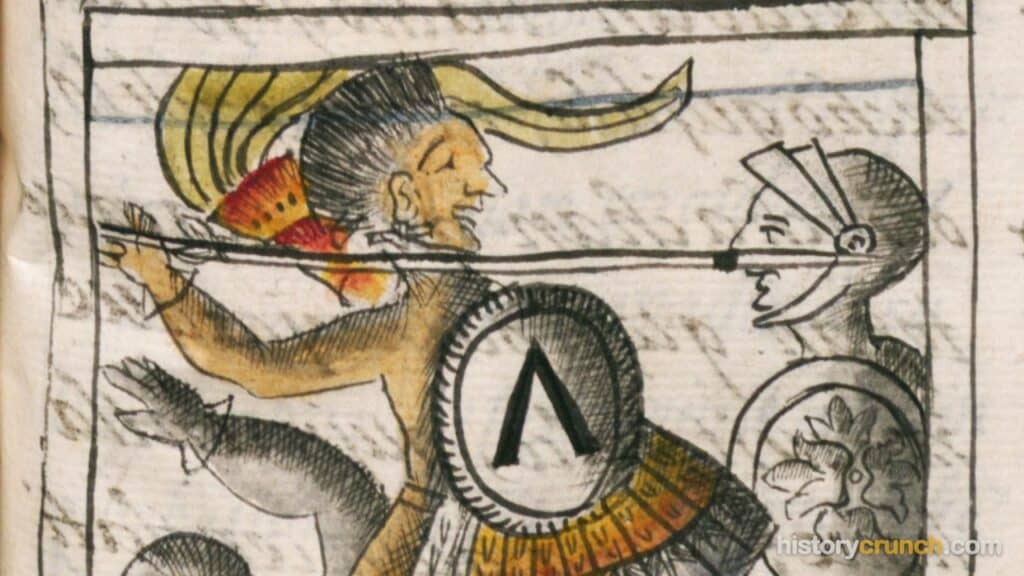
The fall of the Aztec Empire in 1521 was one of the most important turning points in the history of the Americas, marking the end of the most powerful society in Mesoamerica and the beginning of centuries of Spanish rule. In just over two years, a small group of Spanish soldiers led by Hernan Cortes toppled an empire that ruled millions of people across central Mexico. The collapse was not caused by a single event, but by several causes that worked together, including Spanish weapons and horses, deadly diseases, powerful native allies, and weaknesses within the Aztec Empire itself.
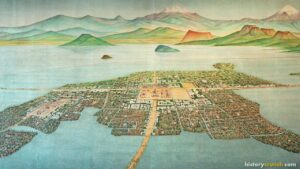
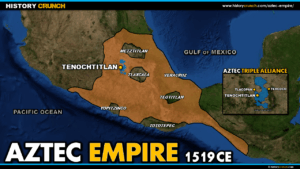
The Aztec Empire was a large and organized state centered on the island city of Tenochtitlan, which sat in the middle of Lake Texcoco in the Valley of Mexico. To the Aztec, 1519 was a year that began with their empire as the uncontested power in the region, and its capital city, Tenochtitlan, ruled 400 to 500 small states with a total population of five to six million. The empire held power by demanding tribute, meaning payments of goods and captives, from the peoples it conquered, and its fall meant the destruction of that entire system.
What Was the Age of Exploration?
The fall of the Aztec Empire took place during the Age of Exploration, a period from the early 1400s to the 1600s when European kingdoms sent ships across the oceans in search of new trade routes, land, and wealth. Nations such as Spain and Portugal led the way, sailing to Africa, Asia, and the Americas, and claiming vast territories for their kings. This overall era changed the world by connecting continents that had never been in contact before.
Spain became especially powerful after the voyages of Christopher Columbus, who reached the Caribbean in 1492. After the discovery of America by Columbus, the Spanish crown quickly took an interest in these unexplored regions, and after settling in Cuba, Hispaniola, Jamaica, and Puerto Rico, the Spaniards began exploring the coasts of mainland America. These Spanish adventurers were called conquistadors, a Spanish word meaning conquerors. It was not long before the lure of wealth spurred Spain’s adventurers beyond exploration and into a phase of conquest that would lay the foundations of the modern world.
Who Was Hernan Cortes?
Hernan Cortes was the Spanish conquistador who led the conquest of the Aztec Empire between 1519 and 1521. Born in Spain in 1485, he traveled to the Americas as a young man and settled in the Spanish colonies of the Caribbean. In 1519 he set out from Cuba on an expedition to the mainland of Mexico. Inspired by rumors of gold and the existence of large, sophisticated cities in the Mexican interior, Cortes was appointed to head an expedition of eleven ships and five hundred men to Mexico.
In fact, Cortes had defied the governor of Cuba to launch the expedition. The journey began when Cortes set sail in early 1519, defying orders from Diego Velasquez, the Spanish governor of Cuba, who had tried to cancel the expedition. To keep his men from turning back, Cortes destroyed his own ships after landing on the Mexican coast. As stated above, this bold decision meant that his soldiers had no choice but to march inland toward the heart of the Aztec Empire. His route to Tenochtitlan can be traced in the HistoryCrunch map of the route of Hernan Cortes to conquer the Aztec.
How Did Spanish Weapons and Horses Cause the Fall?
One major cause of the fall of the Aztec Empire was the huge difference between Spanish and Aztec weapons and technology. The Spanish came from a warlike part of Europe and carried equipment that the Aztecs had never faced before. The conquistadors arrived in Mesoamerica with steel swords, muskets, cannons, pikes, crossbows, dogs and horses. None of these tools had ever been used in battle in the Americas.
The Aztecs, in contrast, fought with weapons made of wood and stone. The Aztecs fought the Spanish with wooden broadswords, clubs and spears tipped with obsidian blades, but their weapons proved ineffective against the conquistadors’ metal armor and shields. Obsidian is a sharp volcanic glass, but it could not match Spanish steel. More specifically, the Spanish also used animals as weapons of war. They deployed a cavalry that could chase down retreating warriors, dogs trained to track down and encircle enemies and horses capable of trampling adversaries. The Aztecs had never seen horses before, and these animals frightened and confused their warriors in battle.
Why Were Native Allies So Important?
Even with better weapons, the small Spanish force could never have defeated the Aztecs alone. In reality, one of the most important causes of the fall was the help Cortes received from native peoples who hated Aztec rule. The Aztecs had made many enemies by conquering their neighbors and forcing them to pay heavy tribute. While the Aztec’s monetary and religious demands empowered the empire, it also fostered resentment among surrounding city-states.
Cortes understood this anger and used it to his advantage. The key to Cortes’s subsequent conquests lay in the political crisis within the Aztec empire, as the Aztecs were bitterly resented by many of the subject peoples who had to pay tribute to them. The most important of these allies were the Tlaxcalans, a people who had fought the Aztecs for generations. This instability enabled Cortes to form alliances with other native peoples, most notably the Tlaxcalans, who were old rivals of the Aztec, and the Totonac, and the Tlaxcalans’ army considerably enhanced the conquistadors’ numbers and were critical to Cortes’s later successes. In the end, tens of thousands of native warriors fought alongside the Spanish, turning a tiny expedition into a large army.
Cortes was also helped by a woman known as La Malinche, or Marina, who served as his translator. Cortes defeated a local Mayan tribe, and as recompense they gifted him several slave girls, one of whom was named Malintzin, who spoke both the local Mayan dialect and the Nahuatl language of the Aztecs, and as a result she was instrumental as an interpreter for Cortes and stayed by his side throughout his conquests. Her skill with languages allowed Cortes to communicate, negotiate, and gather information across Mexico.
How Did Disease Help Destroy the Aztec Empire?
Perhaps the deadliest cause of the fall of the Aztec Empire was disease. The Spanish carried germs from Europe, especially smallpox, that had never existed in the Americas before. Because native peoples had never been exposed to these illnesses, their bodies had no natural defenses against them. The Aztecs had no immunity to European diseases, which took a significant toll.
Smallpox swept through Tenochtitlan during the war and killed enormous numbers of people. A devastating smallpox outbreak, introduced by the Spanish, decimated the Aztec population, including their emperor, Cuitlahuac, weakening their ability to resist. For instance, the disease killed warriors, leaders, and ordinary people alike, leaving the city weak and disorganized just as the Spanish and their allies prepared their final attack. The long-term effects were even greater, as European diseases eventually wiped out much of the native population of Mexico.
What Weaknesses Existed Within the Aztec Empire?
The Aztec Empire also had weaknesses of its own that made it easier to defeat. The empire did not rule its lands directly, but instead controlled other cities through fear of its military power. This meant that once the Aztecs suffered defeats, their allies and subjects could quickly turn against them. The system depended on the belief that the Aztecs could never be beaten.
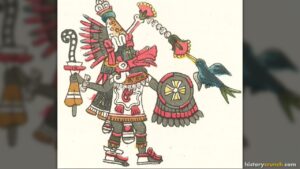
The behavior of the emperor Moctezuma II also played a role. When the Spanish first reached Tenochtitlan in November of 1519, Moctezuma welcomed them with gifts rather than attacking. Initially the Spaniards were welcomed and met with gifts from Montezuma, but Cortes was intent on taking over Tenochtitlan, and he made the emperor his prisoner, taking control of the city and forcing Montezuma into the role of a puppet king. This decision allowed the Spanish to seize control of the empire from the inside without a fight. In fact, some accounts claim the Aztecs believed the Spanish might be connected to the returning god Quetzalcoatl, though many historians now doubt this idea.
Eventually the Aztecs rebelled and drove the Spanish out of the city during a violent retreat. However, Cortes regrouped, gathered more allies, and returned to lay a long siege on Tenochtitlan. Cortes and his coalition of Spanish and indigenous combatants sieged the city for 93 days, surrounding the city from the water and causeways, cutting off the Aztecs’ food and water supply while relentlessly assaulting the Aztec defenders. After months of fighting, the exhausted and starving city finally fell.
Significance of Causes of the Fall of the Aztec Empire
The fall of the Aztec Empire was one of the most important events in world history because it ended the most powerful society in Mesoamerica and opened the door to Spanish control of a huge part of the Americas. By August 13th, 1521, the Spanish had taken the capital city of Tenochtitlan, marking the climax of a brutal two-year campaign and leading to the fall of the Aztec empire. The causes behind this collapse, including weapons, allies, disease, and internal weakness, show that no single factor brought down the empire on its own.
The results of the conquest reshaped the region forever. Cortes’s victory destroyed the Aztec empire, allowing the Spanish to consolidate control over what became the colony of New Spain, and the Spanish began building a new capital over the island city’s ruins, erecting a Christian cathedral on the stones of Huitzilopochtli’s temple. This new capital eventually became Mexico City, which still stands today on the site of Tenochtitlan.
The human cost was staggering. Ordinary people suffered from the European-introduced diseases which wiped out up to 50 percent of the population, and their new overlords did not turn out to be any better than the Aztecs. In the long run, the fall of the Aztec Empire marked the beginning of Spanish rule over much of the Americas and the blending of native and European peoples and cultures that continues to shape Mexico today.
Frequently Asked Questions
When Did the Aztec Empire Fall?
The Aztec Empire fell on August 13th, 1521, when the Spanish captured the capital city of Tenochtitlan. This came after a siege that lasted about 93 days. The final Aztec emperor, Cuauhtemoc, was taken prisoner, and the empire that had ruled central Mexico for nearly 200 years came to an end.
What Was the Main Cause of the Fall of the Aztec Empire?
There was no single main cause, but disease and native allies were among the most powerful factors. Smallpox killed huge numbers of Aztecs, while tens of thousands of native warriors joined the Spanish because they hated Aztec rule. When combined with superior Spanish weapons and horses, these causes together brought down the empire.
Why Did Native Peoples Help the Spanish?
Many native peoples helped the Spanish because they resented the heavy tribute and human sacrifices the Aztecs demanded from them. Groups such as the Tlaxcalans had fought the Aztecs for generations and saw the Spanish as a chance to defeat their old enemy. Their soldiers and knowledge of the land were essential to the Spanish victory.
How Many Spanish Soldiers Defeated the Aztecs?
Cortes began his expedition with only about 500 Spanish soldiers, a tiny force compared to the millions of people in the Aztec Empire. The Spanish were able to succeed only because they gained tens of thousands of native allies and because disease weakened the Aztecs. This shows that the small number of Spanish soldiers alone could not have won without other advantages.
What Happened to Tenochtitlan After the Fall?
After the fall, the Spanish destroyed much of Tenochtitlan and built a new capital on its ruins. This new city became Mexico City, the capital of the Spanish colony of New Spain. The great temples of the Aztecs were torn down, and Christian churches were built in their place as Spain worked to replace Aztec culture with its own.
Cite This Article
To cite this article as a source, use one of the formats below.
MLA: Millar, B. “Causes of the Fall of the Aztec Empire: A Detailed Summary.” HistoryCrunch, 18 July 2026, https://historycrunch.com/causes-of-the-fall-of-the-aztec-empire/.
APA: Millar, B. (2026). Causes of the Fall of the Aztec Empire: A Detailed Summary. HistoryCrunch. https://historycrunch.com/causes-of-the-fall-of-the-aztec-empire/
Chicago: Millar, B. “Causes of the Fall of the Aztec Empire: A Detailed Summary.” HistoryCrunch. July 18, 2026. https://historycrunch.com/causes-of-the-fall-of-the-aztec-empire/
Sources
- Matthew Restall, When Montezuma Met Cortés / Seven Myths of the Spanish Conquest.
- The Met (Heilbrunn Timeline) — Aztec art
- Michael E. Smith, The Aztecs.
- Richard Townsend, The Aztecs.