The Conflict of the Orders was one of the most important political struggles in the history of ancient Rome, and it shaped the way the Roman Republic was governed for centuries. The Roman Republic was the period of Roman history that ran from 509 BCE, when the last Roman king was overthrown, until 27 BCE, when the Roman Empire began. During the early years of the Republic, Roman society was divided into two main groups, and the tension between them grew into a long fight over political rights, legal fairness, and equality. That fight is what historians call the Conflict of the Orders.
The Conflict of the Orders can be defined as a political and social struggle in the early Roman Republic between the patricians, who were the wealthy noble class, and the plebeians, who were the common citizens. It lasted from roughly 494 BCE to 287 BCE, and over those two centuries the plebeians gradually won a series of laws and reforms that gave them greater legal protection, political power, and social equality. Importantly, the struggle was largely peaceful, and it changed the shape of Roman government without a major civil war.
What Was the Roman Republic?
The Roman Republic was the form of government that Rome used after it did away with kings and before it became an empire ruled by emperors. In 509 BCE, the Romans overthrew their last king, Tarquinius Superbus, and set up a system in which elected officials, rather than a single monarch, ran the state. In place of a king, the Romans elected two consuls each year to lead the government and the army.
The most powerful body in the Republic was the Senate, a group of experienced leaders who advised the officials and shaped policy. In addition, several popular assemblies allowed citizens to vote on laws and to elect officials. In reality, though, power in the early Republic was held almost entirely by a small group of wealthy families, and this imbalance is exactly what led to the Conflict of the Orders.
Who Were the Patricians and Plebeians?
The word “orders” refers to the two main classes, or groups, in early Roman society. The patricians were the wealthy noble families who owned most of the land and claimed to be descended from the earliest leaders of Rome. Because of their birth and wealth, the patricians controlled the government, the courts, and the religious offices.
The plebeians, on the other hand, were the common citizens of Rome. They made up the large majority of the population and included farmers, craftsmen, traders, laborers, and soldiers. Both patricians and plebeians were full citizens of Rome, but the plebeians were shut out of holding public office and had little say in how the state was run.
More specifically, in the early Republic only patricians could serve as consuls, sit in the Senate, or hold the important priesthoods. At first, plebeians were not even allowed to marry patricians. As a result, the plebeians grew more and more frustrated at being treated as second-class citizens despite doing much of the work and most of the fighting for Rome.
What Caused the Conflict of the Orders?
The Conflict of the Orders grew out of the deep unfairness that plebeians faced in the early Republic. When the monarchy fell in 509 BCE, the patricians took even more control of the government, and the plebeians lost access to public land that had once been open to them. In many cases the patricians seized this land to grow their own wealth, which left poorer Romans worse off.
Another major cause was the burden of military service. The plebeians made up the bulk of the Roman army, and while they served in war their farms were often left untended. Unable to earn enough to live on, many plebeians fell into debt, and some were even forced into slavery to pay what they owed.
In addition, Rome’s laws were not written down in the early Republic. Instead, they were memorized and interpreted by patrician priests, which meant the plebeians could never be sure of their rights. This gave the patricians the power to bend the rules in their own favor, and it became one of the central grievances that drove the plebeians to demand change.
How Did the Plebeians Fight for Their Rights?
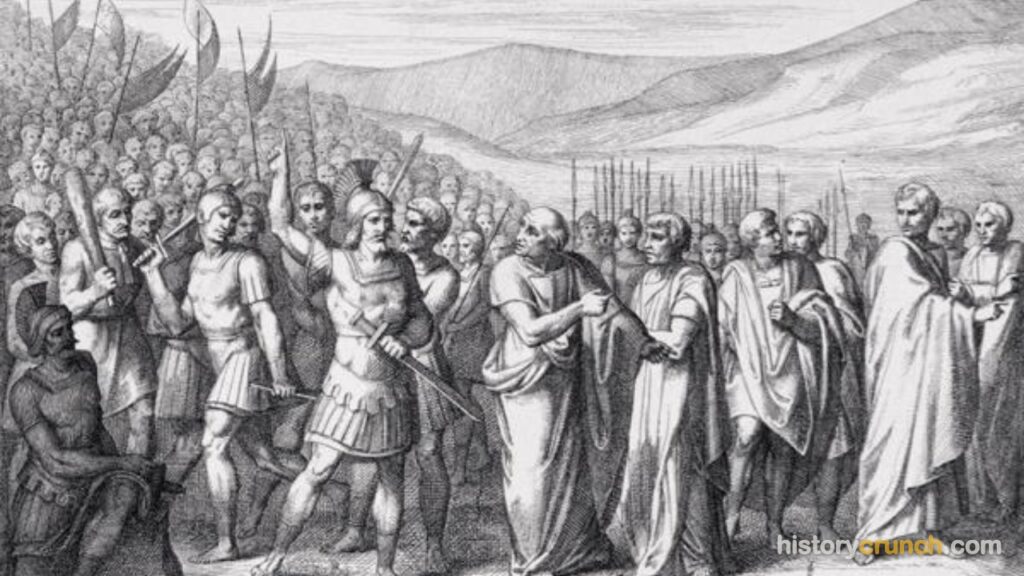
The plebeians had one great advantage over the patricians, and that was their sheer numbers. Their most powerful weapon was a strategy called the secession, in which the plebeians withdrew from the city in protest and refused to work or fight. Because the plebeians made up most of the army and most of the workforce, a secession could bring Rome to a standstill.
The first secession took place in 494 BCE, during a time when Rome was at war with neighboring tribes. Instead of fighting the enemy, the plebeians marched out of the city and gathered on a nearby hill, sometimes called the Sacred Mount. Faced with no army and no workers, the patricians had no choice but to negotiate.
As a result of this first protest, the plebeians won the right to elect their own officials, called tribunes of the plebs. The tribunes could protect ordinary citizens and could even veto, or block, the actions of the patrician officials. In fact, the plebeians used the threat of secession several more times over the next two centuries, and each time they forced the patricians to give up more of their power.
Major Reforms of the Conflict of the Orders
One of the earliest and most important victories came with the writing down of Rome’s laws. In response to plebeian demands, a group of ten men known as the decemviri was appointed to record the law, and around 450 BCE they produced the Twelve Tables. These laws were displayed publicly in the Roman Forum so that every citizen, patrician or plebeian, could know their rights.
Another key reform involved marriage. At first, the law forbade patricians and plebeians from marrying each other, which helped keep the two orders separate. In 445 BCE, however, a law known as the Lex Canuleia removed this ban and allowed the two groups to intermarry, which slowly broke down the barriers between them.
Over time, the plebeians also won the right to hold the highest offices in the state. New laws opened the consulship to plebeians, and eventually it became common for one of the two consuls each year to be a plebeian. Because officials often joined the Senate after their term, this change slowly transformed the Senate from a purely patrician body into one that included wealthy plebeians as well.
The final major reform came in 287 BCE with a law called the Lex Hortensia. This law made the decisions of the plebeian assembly binding on all Romans, including the patricians. With this victory, the plebeians had gained full legal equality, and the Conflict of the Orders came to an end.
Significance of Conflict of the Orders
The Conflict of the Orders was significant because it reshaped the government of the Roman Republic and gave ordinary citizens a real voice for the first time. Through the struggle, the plebeians gained written laws, elected tribunes to protect them, and the right to hold the highest offices in Rome. As stated above, they finally won full legal equality with the passage of the Lex Hortensia in 287 BCE.
The conflict also changed the makeup of Rome’s ruling class. In place of an aristocracy based only on birth, Rome developed a governing class based on wealth and the holding of public office. This meant that a wealthy plebeian family could rise to join the Roman nobility, something that had been impossible in the early Republic.
Perhaps most remarkable of all was that these enormous changes came about with very little bloodshed. Rather than fighting a civil war, the plebeians used peaceful pressure, especially the secession, to force the patricians to compromise. In this way, the Conflict of the Orders became a model of how a society could reform itself gradually, and its ideas about written law, representation, and citizenship influenced later governments long after Rome itself had faded.
Frequently Asked Questions
When did the Conflict of the Orders take place?
The Conflict of the Orders lasted from about 494 BCE to 287 BCE, a span of roughly two centuries during the early Roman Republic. It began with the first secession of the plebeians and ended with the Lex Hortensia. This means the struggle unfolded over many generations rather than in a single dramatic event.
What is a secession of the plebs?
A secession of the plebs was a protest in which the plebeians left the city of Rome and refused to work or serve in the army. It was similar to a modern general strike, and it worked because the plebeians made up most of the population. Historians believe the plebeians may have used this tactic five or more times during the Conflict of the Orders.
What did the tribunes of the plebs do?
The tribunes of the plebs were officials elected by the plebeians to defend their interests against the patrician leaders. Their most important power was the veto, which allowed them to block laws or actions that harmed ordinary citizens. The person of a tribune was also considered sacred, meaning it was a serious crime to harm one.
Why were the Twelve Tables important?
The Twelve Tables were important because they were the first written law code in Roman history, created around 450 BCE. By putting the law in public view, they stopped patrician priests from being the only ones who could interpret the rules. This idea of a clear, public, written law later influenced legal systems in many other countries.
Who won the Conflict of the Orders?
The plebeians are generally seen as the winners of the Conflict of the Orders, since they gained legal equality by 287 BCE. However, the patrician families kept a great deal of prestige and influence even after the struggle ended. In practice, the two orders blended into a new nobility that shared power at the top of Roman society.
Cite This Article
To cite this article as a source, use one of the formats below.
MLA: Millar, B. “Conflict of the Orders: A Detailed Summary.” HistoryCrunch, 7 July 2026, https://historycrunch.com/conflict-of-the-orders/.
APA: Millar, B. (2026). Conflict of the Orders: A Detailed Summary. HistoryCrunch. https://historycrunch.com/conflict-of-the-orders/
Chicago: Millar, B. “Conflict of the Orders: A Detailed Summary.” HistoryCrunch. July 7, 2026. https://historycrunch.com/conflict-of-the-orders/
Sources
- J.M. Roberts & Odd Arne Westad, The Penguin History of the World.
- Jerry Bentley & Herbert Ziegler, Traditions & Encounters: A Global Perspective on the Past.