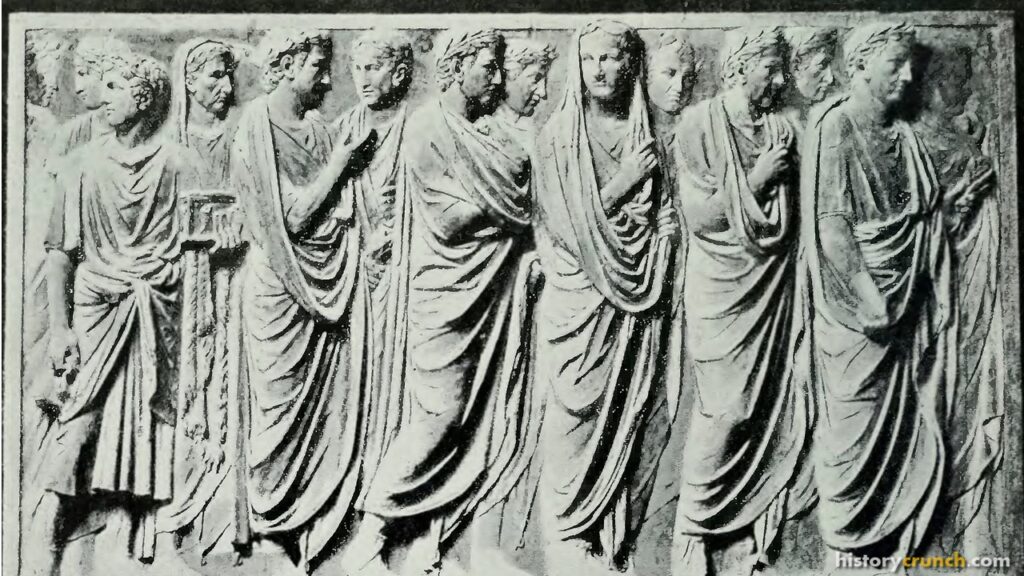
Ancient Roman society was organized into a strict hierarchy of social classes that determined a person’s rights, opportunities, and daily life. A person’s place in society was largely determined by the family they were born into, the wealth they held, and whether they were a free citizen, a freed slave, or an enslaved person. Roman society changed significantly over the many centuries from the early Republic to the late Empire, but the basic division between the powerful few at the top and the vast majority below remained a constant feature of Roman life.
WHAT WAS ANCIENT ROME?
Ancient Rome was one of the most powerful civilizations in world history. It began as a small city-state on the Italian peninsula and grew over many centuries into a vast empire that stretched from Britain in the northwest to Egypt in the southeast. At its height, the Roman Empire controlled much of Europe, North Africa, and parts of the Middle East. Roman civilization is remembered for its contributions to law, government, architecture, language, and culture. Understanding Roman society is essential to understanding how Rome functioned, since the social structure shaped everything from who could hold political office to what kind of house a person lived in and what kind of food they ate.
ANCIENT ROMAN SOCIETY – PATRICIANS
At the top of Roman society were the patricians, the small group of aristocratic families who held most of the wealth and political power in the early Republic. The word patrician comes from the Latin word for father, reflecting the idea that these families were descended from the original founders of Roman society. Only certain families were patrician, and membership was determined by birth. You could not become a patrician through wealth or achievement alone.
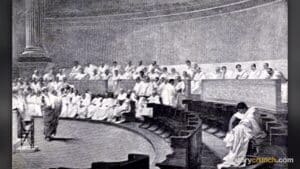
In the early Republic, patricians held almost exclusive control over Roman political life. Only patricians could sit in the Senate, hold the highest government positions called magistracies, and serve as priests in the most important religious roles. They owned the best farmland, lived in the largest houses, and looked down on any form of manual work or trade as beneath their dignity. Despite making up only a small percentage of the Roman population, patricians effectively controlled the state for much of the early Republican period.
ANCIENT ROMAN SOCIETY – PLEBEIANS
The vast majority of Roman citizens were plebeians, a term that referred to all free citizens who were not patricians. Plebeians ranged from wealthy merchants and large landowners all the way down to poor farmers, craftspeople, and laborers. Being a plebeian did not automatically mean being poor. Some plebeian families became very wealthy over time, while some patrician families lost their fortunes. The key distinction was one of birth and legal status rather than simply money.
In the early Republic, plebeians had almost no political rights. They could not hold senior government offices, marry into patrician families, or know the details of Roman law, which was not written down and was interpreted by patrician judges. Over time, plebeians fought back through a series of protests and political actions known as the Conflict of the Orders. The plebeians’ most powerful tactic was the secessio plebis, or withdrawal, in which they would leave the city of Rome entirely and refuse to work or serve in the army until their demands were met. These actions gradually forced the patricians to share power.
By 287 BCE, after nearly two centuries of struggle, plebeians had won the right to hold almost all political offices, had their own elected representatives called tribunes who could veto actions of the Senate, and had gained access to a written legal code that applied equally to all citizens. Over time, the distinction between patrician and plebeian became less important, as a new mixed aristocracy of wealthy families from both groups came to dominate Roman political life.
ANCIENT ROMAN SOCIETY – THE EQUESTRIANS
Between the senatorial class and the ordinary plebeians sat a group known as the equestrians, or knights. The equestrian class was originally made up of those wealthy enough to provide their own horse for military service. Over time it became a defined social and legal class of wealthy Romans who were not members of the Senate but who played an important role in commerce, banking, tax collection, and the administration of the empire. Many equestrians ran the large business operations that financed Roman trade and supplied the army. In the imperial period, equestrians held many important government positions that were closed to senators, including key posts in the imperial bureaucracy and command of certain military units.
ANCIENT ROMAN SOCIETY – FREEDPEOPLE AND SLAVES
At the bottom of Roman society were enslaved people, who had no legal rights and were considered the property of their owners. As discussed in other articles, enslaved people made up a very large portion of the Roman population, performing work across every area of Roman life from farm labor and mining to household service and skilled trades. They could not own property, marry legally, or hold any public role.
One of the distinctive features of Roman slavery was the practice of manumission, or the formal freeing of an enslaved person by their owner. Freed enslaved people became known as liberti, or freedpeople. Male freedpeople became Roman citizens, though with some restrictions on holding public office. They typically took their former owner’s family name and owed their former owner ongoing duties and loyalty in return for the support and connections the relationship provided. Over time, some freedpeople and their descendants became wealthy and influential members of Roman society. By the imperial period, a significant number of freed people held important posts in the imperial household and administration.
ANCIENT ROMAN SOCIETY – FAMILY AND THE PATERFAMILIAS
The basic unit of Roman society was the family, and the family was organized around the authority of the paterfamilias, or father of the household. Under Roman law, the paterfamilias held enormous power over every member of his household, including his wife, children, and enslaved people. He controlled family property, arranged marriages, and made major decisions affecting the entire household. This power, known as patria potestas, technically remained in place for as long as the paterfamilias lived, even after his children became adults.
In practice, the extent of this authority varied considerably depending on the family and the time period. Roman mothers, particularly in wealthier families, often exercised real influence over household decisions, the raising of children, and family finances, even if the law gave formal authority to the father. Roman children, particularly sons of wealthy families, were expected to pursue education, military service, and eventually a political career that would bring honor to the family name.
ANCIENT ROMAN SOCIETY – SOCIAL MOBILITY
Unlike many ancient societies, Roman society allowed for some degree of social movement between classes, particularly in the later Republic and imperial period. A successful general or politician could be elevated to the senatorial class by the emperor. A wealthy freedman’s son could enter the equestrian class. Talented individuals from plebeian backgrounds could rise to the highest political offices. The Roman politician and writer Cicero, for instance, was a plebeian from a relatively obscure family who rose through talent and ambition to become one of the most powerful men in Rome, though the old aristocracy always looked down on him for his origins.
At the same time, downward movement was also possible. Patrician families that lost their wealth could fall from influence. Soldiers who committed serious crimes could be stripped of their citizenship. The social system was rigid enough that most people lived and died in the class they were born into, but flexible enough that exceptional individuals could sometimes rise above it.
SIGNIFICANCE OF ANCIENT ROMAN SOCIETY
The social structure of Ancient Rome shaped every aspect of Roman life, from politics and law to family relationships and daily routines. The long struggle between patricians and plebeians produced the political institutions and legal reforms that made the Roman Republic one of the most sophisticated governments in the ancient world. The role of slavery in Roman society fueled the economy but created deep inequalities and the constant threat of violent resistance. The family structure organized around the paterfamilias shaped Roman values around duty, loyalty, and hierarchy that influenced Roman culture for centuries.
The legacy of Roman social organization extended far beyond the ancient world. Roman ideas about citizenship, legal status, and the rights of different classes of people shaped the legal systems of medieval Europe and continue to influence Western legal traditions to this day.