Natural rights are one of the most important ideas to come out of the Age of Enlightenment, and they continue to shape how people think about freedom and government today. The concept holds that every person is born with certain basic rights that belong to them simply because they are human. These rights are not given by a king, a church, or a written law, and because of this they cannot be fairly taken away. During the 18th century, Enlightenment thinkers used this idea to challenge the power of monarchs and to argue that governments exist to protect the rights of ordinary people.
In plain terms, natural rights are the freedoms and protections that a person has by nature rather than by permission of a government. Common examples include the right to life, the right to liberty, and the right to own property. Because these rights come from human nature itself, they are described as universal, meaning they apply to everyone, and inalienable, meaning they cannot be surrendered or stripped away. This makes natural rights different from legal rights, which are created by a specific government and can be changed or removed by that same government.
What Was the Age of Enlightenment?
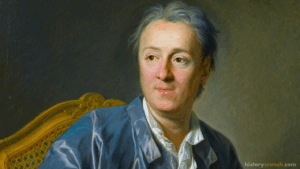
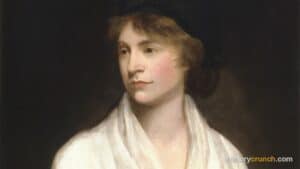
The Age of Enlightenment is one of the most significant events in the history of Western civilization. The Age of Enlightenment, also known as the Age of Reason, occurred during the 18th century and is remembered as a time of great change and new ideas. During this period, famous thinkers and philosophers challenged some of the basic foundations of society, including the role of government, the nature of human beings, the sources of authority, and ideas centered on liberty.
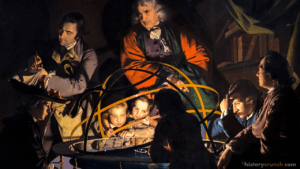
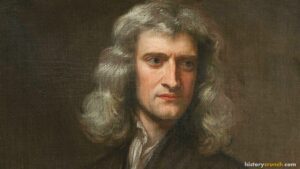
The Enlightenment did not appear suddenly. Instead, it grew out of several earlier developments, including the Scientific Revolution, the Renaissance, and the Protestant Reformation. For instance, the Scientific Revolution showed that reason and careful observation could explain the laws of nature. This inspired thinkers to apply the same methods of reason and evidence to questions about society and government.
As a result, Enlightenment thinkers questioned the long-held belief that kings ruled by the will of God, an idea known as the divine right of kings. In its place, they argued that authority should rest on reason and on the consent of the people. Natural rights became a central part of this new way of thinking, because they gave people a powerful argument for why governments should serve the people rather than rule over them.
Where Did the Idea of Natural Rights Come From?
The idea that people have rights by nature is very old and can be traced back to the philosophers of ancient Greece and Rome. Ancient thinkers wrote about a “natural law,” meaning a set of rules about right and wrong that they believed existed in nature and applied to all people everywhere. This idea suggested that some standards of justice were higher than the laws made by any single ruler or city.
Over the centuries, the concept of natural law continued to develop through religious and legal thinking. Many writers connected it to the belief that a person’s rights and duties came from being part of the natural order created by God. In reality, though, it was the philosophers of the Age of Enlightenment who took these older ideas and shaped them into the modern concept of natural rights.
More specifically, Enlightenment thinkers moved the focus toward the individual person and asked what rights someone would have before any government even existed. To explore this question, they imagined a “state of nature,” a condition in which people lived without laws or rulers. By thinking about human life in this imagined state, philosophers tried to figure out which rights were truly natural and which ones only came from living under a government.
How Did John Locke Shape Natural Rights?
The most famous version of natural rights comes from the English philosopher John Locke, who lived from 1632 to 1704. Locke had a profound impact on modern political thought and on the Age of Enlightenment, and he is often called the “Father of Liberalism.” His ideas about natural rights, the social contract, and government by consent changed the way people understood authority.
Locke argued that all individuals are born with natural rights, which he described as life, liberty, and property. In his view, these rights existed in the state of nature and did not depend on any king or government to grant them. Because every person was equal and free by nature, Locke believed that no one had the right to harm another person’s life, health, liberty, or possessions.
Building on this, Locke rejected the divine right of monarchy and proposed a new theory of government. First, he argued that governments exist only with the consent of the governed. Second, he stated that the main purpose of a government is to protect the natural rights of its people. Finally, he claimed that if a government fails to protect those rights, the people have the right to change it or even to revolt.
How Are Natural Rights Connected to the Social Contract?
During the Enlightenment, natural rights developed hand in hand with an idea known as social contract theory. The social contract is the idea that people agree to give up some of their freedom in exchange for the safety, order, and protection that a government can provide. In this view, a government’s power does not come from God but from an agreement between the rulers and the people.
Not every thinker viewed this agreement in the same way. For instance, the earlier English philosopher Thomas Hobbes, who lived from 1588 to 1679, believed that life in the state of nature was dangerous and violent. As a result, Hobbes argued that people needed to hand over almost all of their rights to a strong ruler in order to keep the peace.
Locke, however, took a more hopeful view of human nature. He believed that people were reasonable enough to govern themselves and that they kept their natural rights even after forming a government. Later, the French philosopher Jean-Jacques Rousseau, who lived from 1712 to 1778, built on these ideas and argued that legitimate government must rest on the general will of the people. Together, these thinkers spread the belief that a government which broke its side of the contract could rightly be changed.
How Did Natural Rights Influence Revolutions?
The idea of natural rights did not stay locked inside books and debates. In fact, it moved from philosophy into real political action, especially in the American colonies. Colonists who felt they were being treated unfairly by Britain used the language of natural rights to argue that their basic freedoms were being denied.
This influence appears clearly in the American Declaration of Independence of 1776. In that document, Thomas Jefferson adapted Locke’s concept of natural rights, changing the phrase “life, liberty, and property” into “life, liberty, and the pursuit of happiness.” The Declaration also stated that governments receive their just powers from the consent of the governed, which was another key Enlightenment idea.
The same ideas helped inspire the French Revolution, which began in 1789. Revolutionaries in France drew on Enlightenment beliefs about natural rights and the social contract to challenge the absolute monarchy of King Louis XVI. As stated above, the belief that all people held equal and inalienable rights gave ordinary citizens a powerful reason to demand a new kind of government.
Significance of Natural Rights
Natural rights are significant because they helped transform the way people thought about government, freedom, and the value of the individual. Before the Enlightenment, most Europeans lived under rulers who claimed absolute power granted by God. The idea of natural rights offered a completely different vision, one in which power flowed from the people and the government existed to protect their rights.
This shift had enormous consequences for world history. The belief in natural rights inspired revolutions, shaped new constitutions, and laid the foundation for modern democracy. Ideas such as government by consent, equality before the law, and the right to change an unjust government all grew out of this thinking.
The influence of natural rights continues into the present day. Modern discussions of human rights, in which people argue that all human beings deserve certain basic protections no matter where they live, grew directly out of the Enlightenment idea of natural rights. For this reason, natural rights remain one of the most lasting contributions of the Age of Enlightenment to the modern world.
Frequently Asked Questions
What are natural rights in simple terms?
Natural rights are basic freedoms that every person is born with, such as the right to life, liberty, and property. They are called “natural” because they come from being human rather than from a government or a law. This means that no ruler can rightly grant them or take them away, since they belong to people by nature.
What is the difference between natural rights and legal rights?
The main difference is where the rights come from. Natural rights belong to people simply because they are human and are considered universal, while legal rights are created by a particular government through its laws. Because legal rights are made by governments, they can also be changed or removed by those governments, whereas natural rights are meant to stay the same for everyone.
Who came up with the idea of natural rights?
No single person invented natural rights, but the English philosopher John Locke created the most famous modern version of the idea. Earlier thinkers in ancient Greece and Rome wrote about a natural law that applied to all people, and this idea developed over many centuries. Locke and other Enlightenment philosophers then reshaped it into the clear list of rights that influenced later governments.
Why were natural rights important during the Enlightenment?
Natural rights were important because they gave people a reason to question the absolute power of kings. During the Enlightenment, thinkers argued that if everyone was born with equal rights, then no ruler could claim total authority granted by God. This idea encouraged people to demand governments that were limited, fair, and based on the consent of the governed.
How do natural rights relate to human rights today?
Modern human rights grew directly out of the older idea of natural rights. Both share the belief that all people deserve certain basic protections no matter where they live or who governs them. Today, organizations and governments around the world use this thinking to defend freedoms such as free speech, fair treatment under the law, and protection from cruelty.
Cite This Article
To cite this article as a source, use one of the formats below.
MLA: Millar, B. “Natural Rights: A Detailed Summary.” HistoryCrunch, 9 August 2026, https://historycrunch.com/natural-rights/.
APA: Millar, B. (2026). Natural Rights: A Detailed Summary. HistoryCrunch. https://historycrunch.com/natural-rights/
Chicago: Millar, B. “Natural Rights: A Detailed Summary.” HistoryCrunch. August 9, 2026. https://historycrunch.com/natural-rights/
Sources
- J.M. Roberts & Odd Arne Westad, The Penguin History of the World.
- Jerry Bentley & Herbert Ziegler, Traditions & Encounters: A Global Perspective on the Past.