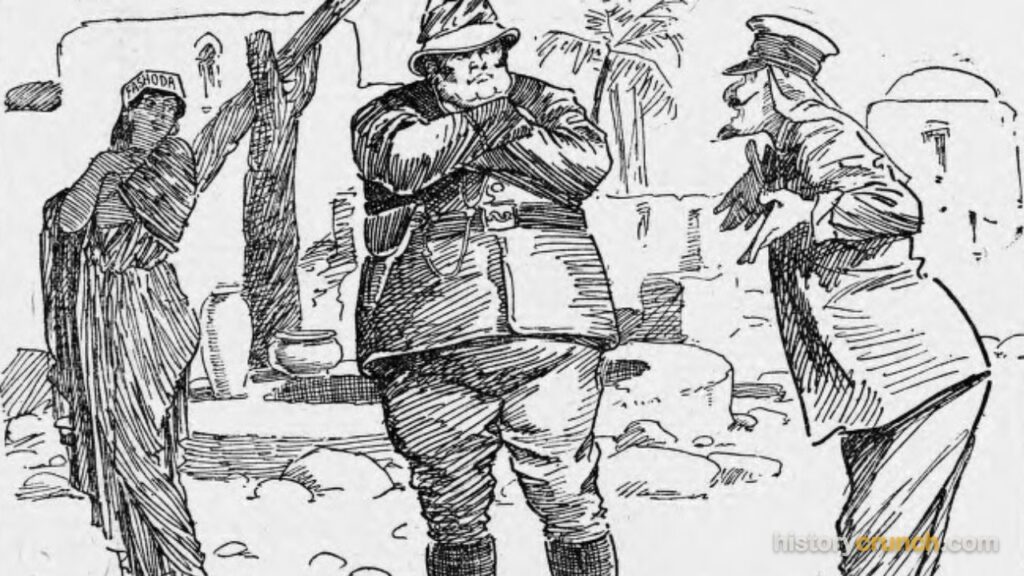
The Fashoda Incident of 1898 was one of the most important moments in the Scramble for Africa, because it brought Britain and France to the edge of war over a remote outpost on the Nile River. The crisis showed how fierce the competition for African territory had become by the end of the 1800s, and how quickly a dispute in a distant corner of the continent could threaten peace between two of Europe’s greatest powers. In the end, the standoff was settled through diplomacy rather than fighting, and it helped push Britain and France toward an unexpected friendship in the years that followed.
In simple terms, the Fashoda Incident was a tense military standoff between a small French force and a much larger British-Egyptian army at the town of Fashoda in the region of Sudan, in northeastern Africa. Both nations claimed the same stretch of the upper Nile, and neither wanted to back down. The incident is often remembered as the high point of Anglo-French rivalry during the age of European empire-building in Africa.
What Was the Scramble for Africa?
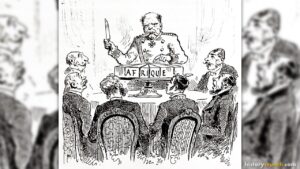
To understand the Fashoda Incident, it helps to understand the larger period it belonged to. The Scramble for Africa is the term that historians use to describe the rapid expansion of European empires into Africa during the Age of Imperialism. It is called a “scramble” because the European nations raced against one another to seize as much African land as possible for their empires.
This period is generally considered to have lasted from around 1870 until the outbreak of World War I in 1914. During those years, almost the entire continent came under the control of a handful of European powers, including Britain, France, Germany, Belgium, Italy, Portugal, and Spain. In fact, in the 1870s only about 10 percent of Africa was controlled by Europeans, but by 1914 roughly 90 percent of the continent had been divided among the European empires.
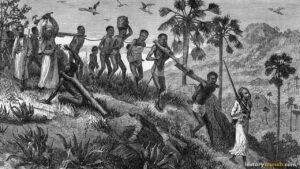
Several causes drove this rush for territory. European nations wanted access to raw materials such as rubber, ivory, copper, and gold to feed their growing factories. They also sought new markets for their goods, ports to refuel their ships, and greater national prestige. As stated above, many Europeans also held false beliefs about their own racial and cultural superiority, which they used to justify taking control of African lands and peoples.
Why Did Britain and France Compete Over the Nile?
By the 1890s, both Britain and France had large ambitions for how their African empires should look. Britain hoped to control a continuous strip of territory running north to south, all the way from Egypt in the north to South Africa in the south. This grand plan is often described as a “Cape to Cairo” route, and controlling the Nile River was an important piece of it.
France, on the other hand, wanted to build an empire that stretched from west to east across the middle of the continent, linking its many colonies in West Africa to the Red Sea coast in the east. If France could plant itself along the upper Nile, it could block Britain’s north-south plan and gain a powerful bargaining chip. More specifically, some French leaders believed that by controlling the headwaters of the Nile, they might even be able to pressure Britain out of Egypt, since Egypt depended entirely on the river’s water.
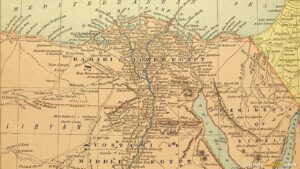
The two nations’ plans crossed at a single point, and that point was Fashoda, a small settlement on the White Nile in southern Sudan. In this way, a tiny and remote outpost suddenly became the place where the imperial ambitions of Britain and France collided head-on.
Who Was Jean-Baptiste Marchand?
The French plan was carried out by an army officer and explorer named Jean-Baptiste Marchand. In 1896 the French government ordered him to lead an expedition across Central Africa to reach the upper Nile before the British could get there. His mission was to claim the region around Fashoda for France and turn it into a French protectorate, which is a territory controlled and protected by a stronger nation.
Marchand’s force was very small, made up of roughly a dozen French officers and around 150 African soldiers from Senegal in West Africa. Starting from the French Congo, they spent about 14 grueling months crossing thousands of miles of jungle, swamp, and desert. The journey was so difficult that the men had to take apart a small steamboat, carry its pieces overland, and then rebuild it in order to travel along the rivers.
After this exhausting trek, Marchand and his men finally reached Fashoda on July 10th, 1898. They took over an old fort that Egyptian troops had abandoned years before, and they raised the French flag to claim the area for France. For the moment, France had won the race to the Nile.
How Did the Standoff Happen?
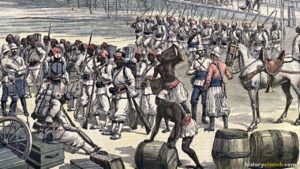
While Marchand was making his way east, a large British-Egyptian army was pushing south up the Nile from Egypt. This army was commanded by General Horatio Herbert Kitchener, and its main goal was to reconquer Sudan, which had been lost years earlier to a religious and political movement known as the Mahdist state. On September 2nd, 1898, Kitchener’s forces crushed the Mahdist army at the Battle of Omdurman, near the city of Khartoum, restoring Anglo-Egyptian control over much of Sudan.
As soon as this victory was won, Kitchener sailed farther up the Nile to deal with the French at Fashoda. He arrived in mid-September 1898 with a strong force of gunboats and thousands of troops, vastly outnumbering Marchand’s tiny party. When the two commanders met on September 19th, Kitchener demanded that the French withdraw, and Marchand refused to leave without orders from his own government.
Despite the tension, the meeting between the two officers was surprisingly polite and respectful. Neither commander wanted to start a battle, so they agreed to let their governments in London and Paris settle the matter. In the meantime, both the French and British flags were allowed to fly at the fort while the world waited to see what would happen.
How Was the Fashoda Incident Resolved?
When news of the standoff reached Europe, it set off a furious reaction. Newspapers in both Britain and France whipped up nationalist anger, and for several weeks the two nations seemed to stand on the very edge of war. Each government accused the other of aggression and refused to look weak in front of its own public.
In reality, however, France was in a far weaker position than Britain. Kitchener had a powerful army right there on the Nile, while Marchand’s handful of men were isolated and could not be reinforced. On top of this, France was distracted by a major political scandal at home, and its ally Russia made clear that it would not help France fight a war over an African dispute.
Faced with these facts, the French foreign minister, Théophile Delcassé, decided that war was not worth the risk. In early November of 1898, he ordered Marchand to withdraw from Fashoda, ending the immediate crisis without a shot being fired. A few months later, in March of 1899, the two nations signed an agreement stating that the divide between the Nile and Congo river systems would mark the boundary between their areas of influence. In effect, France gave up its claims to the Nile valley and Sudan, while Britain accepted French control over much of West Africa.
Significance of Fashoda Incident
The Fashoda Incident is remembered as the high point of Anglo-French tension during the Scramble for Africa. It revealed just how dangerous the competition for empire had become, since a dispute over a single remote outpost had nearly dragged two great powers into war. For this reason, the incident stands as one of the clearest examples of how imperial rivalry could spill over into serious international conflict.
The crisis also ended in a clear diplomatic victory for Britain, which secured its control over Sudan and the upper Nile. At the same time, it left many in France feeling humiliated, and it created a lasting sense of caution in French foreign policy toward British expansion. In the short term, the incident badly damaged the relationship between the two countries.
In the long run, however, the Fashoda Incident had a surprising outcome. Once the anger faded, leaders in both Britain and France came to realize that they had far more to fear from the rising power of Germany than from each other. This shared concern helped push them toward cooperation, and in 1904 the two nations signed the Entente Cordiale, a friendly agreement that settled many of their colonial disputes. In this way, a crisis that almost caused a war instead helped lay the groundwork for an alliance that would shape the balance of power in Europe leading up to World War I.
Frequently Asked Questions
When and where did the Fashoda Incident take place?
The Fashoda Incident took place in 1898 at the town of Fashoda, located on the White Nile in southern Sudan in northeastern Africa. The site is known today as Kodok, and it lies in the modern nation of South Sudan. The main confrontation between the French and British commanders happened in September of that year.
Who were the main leaders in the Fashoda Incident?
The two key military figures were the French officer Jean-Baptiste Marchand and the British general Horatio Herbert Kitchener. Marchand led the small French expedition that reached Fashoda first, while Kitchener commanded the much larger British-Egyptian army. The peaceful resolution was arranged by government leaders, especially the French foreign minister Théophile Delcassé, who ordered the French to withdraw.
Why was Fashoda so important to Britain and France?
Fashoda was important because it sat at the exact point where the empire plans of Britain and France crossed. Britain wanted a north-south empire connecting Egypt to South Africa, while France wanted an east-west empire connecting its western and eastern colonies. Control of the upper Nile at Fashoda could decide which of these plans would succeed.
Did the Fashoda Incident lead to a war?
No, the Fashoda Incident did not lead to a war, even though it came dangerously close. Both governments used angry language and both nations prepared for the possibility of fighting. In the end, France chose to back down because it was militarily outmatched and lacked support from its allies.
How did the Fashoda Incident affect relations between Britain and France?
The incident first damaged Anglo-French relations but eventually helped bring the two nations closer together. After the crisis passed, both countries recognized that Germany was a greater threat to them than one another. This realization contributed to the signing of the Entente Cordiale in 1904, which turned former rivals into partners.
Cite This Article
To cite this article as a source, use one of the formats below.
MLA: Millar, B. “Fashoda Incident: A Detailed Summary.” HistoryCrunch, 14 August 2026, https://historycrunch.com/fashoda-incident/.
APA: Millar, B. (2026). Fashoda Incident: A Detailed Summary. HistoryCrunch. https://historycrunch.com/fashoda-incident/
Chicago: Millar, B. “Fashoda Incident: A Detailed Summary.” HistoryCrunch. August 14, 2026. https://historycrunch.com/fashoda-incident/
Sources
- J.M. Roberts & Odd Arne Westad, The Penguin History of the World.
- Jerry Bentley & Herbert Ziegler, Traditions & Encounters: A Global Perspective on the Past.