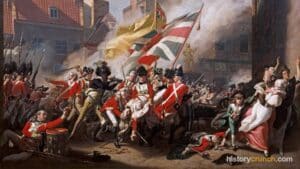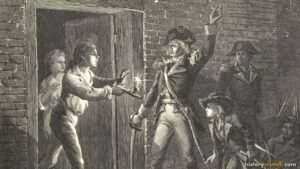
Children were among the least visible but most affected participants in the American Revolution, the conflict through which the Thirteen Colonies broke free from British rule and created the United States. While generals and statesmen fill most accounts of the war, boys and girls under the age of sixteen made up a large share of the colonial population, and the Revolution reshaped nearly every part of their daily lives. Some marched with the armies as musicians or messengers, while many more shouldered adult work at home after fathers and older brothers left to fight.
Understanding the roles of children helps explain how an entire society, and not just an army, went to war. Their experiences ranged from farm chores and school lessons to real danger on the battlefield and the home front. In fact, the stories of a few young people who took part in famous events have become some of the best-known tales of the entire Revolution.
What Was the American Revolution?
The American Revolution was the political and military struggle through which the Thirteen Colonies broke free from British rule and established the United States of America. Open fighting began in April of 1775 at Lexington and Concord in Massachusetts, and the colonies formally declared independence on July 4th, 1776. The war then continued for eight long years.
The causes of the Revolution grew over more than a decade, driven by British taxation, the denial of self-government, and a series of escalating confrontations between Britain and its colonies. During the war, the Continental Army, led by General George Washington, fought the British across the eastern seaboard while struggling with limited supplies and unreliable funding. The tide eventually turned with help from France, and the war ended with the American victory at Yorktown in 1781, followed by the Treaty of Paris in 1783. More about the wider conflict can be found in the causes of the American Revolution.
What Was Daily Life Like for Children in the Colonies?
Long before the war, children in colonial America were expected to work from a very young age. Most families lived on farms, so even small children carried firewood, fetched water, fed animals, milked cows, and gathered eggs. As they grew, boys took on heavier outdoor labor such as fieldwork, hunting, and fishing, while girls learned cooking, spinning, sewing, and the care of younger brothers and sisters.
Families in the 1700s were often large, with six or seven children who shared the same cramped bedroom. Because parents were busy with their own labor, children were frequently left to entertain themselves once their chores were done. They played simple games and used homemade toys, such as dolls sewn from leftover cloth and tops or cup-and-ball toys carved from wood.
Education varied widely from place to place. More children attended school in the northern colonies than in the south, and many children learned to read and write between the ages of six and eight. After that, formal schooling usually continued only for wealthier boys, while most other children left to work full time. Girls rarely received much formal education unless their families were wealthy.
How Did the War Change Children’s Lives at Home?
When the Revolution began, many fathers and older brothers left home to serve in the army or local militia. As a result, children took on even more responsibility than usual. They ran farms, tended crops, cared for livestock, minded younger siblings, and helped keep households running while adults were away.
The war also disrupted the routines that children had always known. Because many schoolmasters enlisted in the army, some schools were left without teachers, and the few colleges in the colonies closed during the fighting. In this way, ordinary childhood activities like schooling were interrupted for years at a time.
Children also helped supply the war effort directly. Both boys and girls sewed uniforms, grew food, and helped care for wounded soldiers. For families near the fighting, the danger could be very real, since battles were fought wherever two armies met, often on farmland or near towns. In reality, some families woke to the sound of cannon fire and had to flee their homes as armies approached.
Did Children Serve in the Army?
Boys who were sixteen or older could legally join the military, and many did. Younger boys served too, most often as musicians and messengers rather than as front-line soldiers. These roles were important, and they placed young people close to the action even when they did not carry a musket.
Fifers and drummers were an essential part of an eighteenth-century army. Officers used loud drums and shrill fifes to send signals that could be heard over long distances or above the noise of battle. More specifically, each company of about forty soldiers typically had one drummer and one fifer, and their tunes told soldiers when to wake up, gather wood, march forward, or attend church.
Most of these musicians were teenagers or young men in their late teens and early twenties, not small children. Even so, a few were remarkably young. In the Continental Army, a small number of drummers and fifers were as young as ten years old, such as fifer John Piatt of the 1st New Jersey Regiment, who first served in 1776 at the age of ten. Truly young “drummer boys” were the exception rather than the rule, but their existence gave the famous image some basis in fact.
Who Were Some Famous Young People of the Revolution?
A handful of young people became well known for the roles they played during the war. One of the most famous was Joseph Plumb Martin, a Connecticut farm boy who enlisted in June of 1776 at just fifteen years old. Although the law required a man to be older to join up, recruiters seldom asked hard questions about age, and Martin stayed in the army until American independence was won.
Martin later became especially important to history because, decades after the war, he wrote a memoir describing his experiences as an ordinary soldier. His account describes hunger, freezing winters without shoes, and unpaid wages, and it gives one of the clearest views of daily life for an enlisted soldier. As stated above, most personal narratives from that time were never written down, which makes his story unusually valuable.
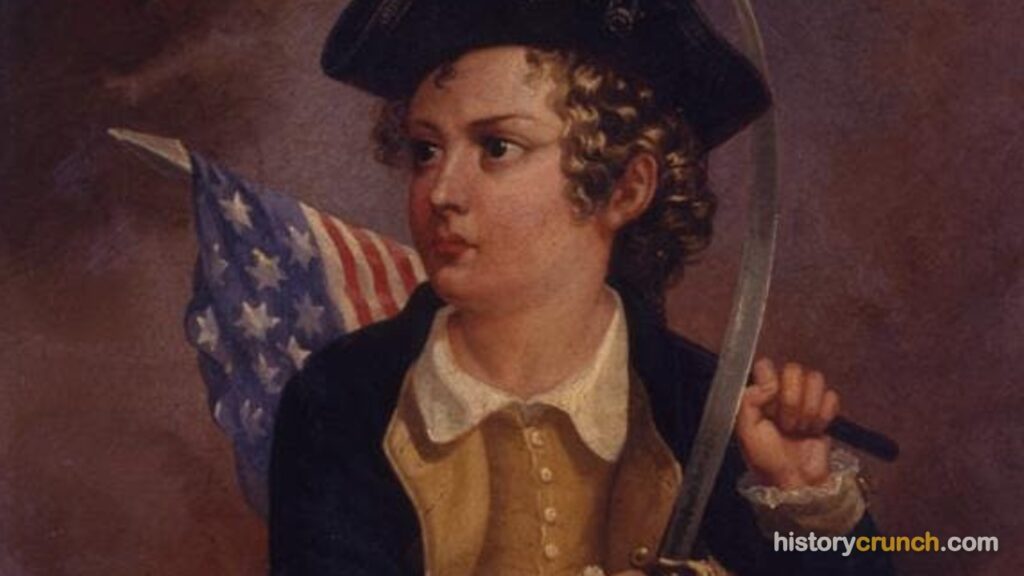
Young women also took part, even though they were not allowed to join the military. A few disguised themselves and served under false names. Others carried messages and defended farms. The best-known example is the traditional story of Sybil Ludington, the sixteen-year-old daughter of a New York militia colonel, who is said to have ridden through the night in April of 1777 to warn militiamen that the British were burning Danbury, Connecticut. It is worth noting that modern historians question many details of her ride, but the tale remains a popular symbol of young people acting bravely during the war.
What Was Life Like for Enslaved and Native American Children?
Not all children experienced the Revolution in the same way, and for many the hardships were far greater. Enslaved children often began working at a very young age, doing chores or helping adults in fields and homes. Under the law they were treated as property, which meant they could be sold away or separated from their families at any time.
Native American children also faced serious disruption. As armies moved through the land and villages were caught up in the fighting, many Indigenous families were forced from their homes. For these children, the promises of liberty made during the Revolution did not translate into freedom or safety, a reality that stands in sharp contrast to the ideals the colonists were fighting to defend.
Significance of Children in the American Revolution
The significance of children in the American Revolution lies in how completely the war reached beyond soldiers and leaders into everyday family life. With fewer than three million people in the colonies, only a portion of the population fought, but many more supported the cause in other ways, including the young. Children kept farms and households running, produced supplies, cared for the wounded, and in some cases marched with the armies themselves.
Their experiences also remind readers that the Revolution was not a single event but a long ordeal that touched every corner of society. For some young people, especially the poor, the war offered a chance to show their patriotism and to build a new life in a new nation. For enslaved and Native American children, however, the same war often brought loss and continued hardship rather than opportunity.
Finally, the stories of young participants have shaped how later generations remember the Revolution. Figures like Joseph Plumb Martin and the legendary Sybil Ludington show that ordinary young people, and not only famous founders, helped carry the struggle for independence. In this way, the history of children adds a fuller and more human picture to the story of how the United States was born.
Frequently Asked Questions
How old did boys have to be to join the army in the Revolution?
Boys generally had to be about sixteen years old to enlist as soldiers, though the rules were not always enforced. Recruiters often needed men badly and rarely checked a volunteer’s age closely, so some who signed up were younger than the law allowed. Boys under sixteen were more likely to serve in support roles such as musicians or messengers.
What jobs did drummer boys do in the Continental Army?
Drummers and fifers used music to send commands that soldiers could hear over long distances or during the chaos of battle. Their signals told troops when to wake, when to gather supplies, when to assemble, and when to advance or retreat. Because clear communication was vital, these young musicians were treated as an important part of every company even though most were not front-line fighters.
Did girls help during the American Revolution?
Yes, girls contributed in many ways even though they could not officially serve as soldiers. They sewed uniforms, grew and prepared food, cared for wounded men, and took over farm and household duties when the men were away. A small number of young women even disguised themselves to fight, while others carried messages or helped defend their families’ land.
Who was Joseph Plumb Martin?
Joseph Plumb Martin was a Connecticut teenager who enlisted at fifteen and served in the Continental Army for the length of the war. He rose from private to sergeant and survived years of hunger, cold, and hardship. Long after the war he wrote a memoir that became one of the most valuable records of what daily life was really like for an ordinary Revolutionary soldier.
How did the war affect children who stayed at home?
Children who stayed home often took on adult responsibilities when fathers and older brothers left to fight. They managed farms, cared for younger siblings, and helped produce food and supplies for the army. Their schooling was frequently interrupted because teachers enlisted and schools closed, and families living near battlefields sometimes had to flee their homes to escape the fighting.
Cite This Article
To cite this article as a source, use one of the formats below.
MLA: Millar, B. “Children in the American Revolution: A Detailed Summary.” HistoryCrunch, 10 August 2026, https://historycrunch.com/children-in-the-american-revolution/.
APA: Millar, B. (2026). Children in the American Revolution: A Detailed Summary. HistoryCrunch. https://historycrunch.com/children-in-the-american-revolution/
Chicago: Millar, B. “Children in the American Revolution: A Detailed Summary.” HistoryCrunch. August 10, 2026. https://historycrunch.com/children-in-the-american-revolution/
Sources
- Robert Middlekauff, The Glorious Cause.
- Yale Avalon Project
- Gordon S. Wood, The Radicalism of the American Revolution.