African Americans played a vital role in the American Revolution, serving as soldiers, sailors, spies, and laborers on both the Patriot and the British sides. Their story sits at the heart of the founding of the United States, because the war for liberty was fought by a nation that still held hundreds of thousands of people in bondage. The American Revolution was fought under the banner of freedom and equality, yet those ideals did not extend to most Black Americans, whether they were free or enslaved.
At the time of the Revolution, African Americans made up a large share of the population of the Thirteen Colonies. On the eve of the American Revolution, the Thirteen Colonies had a population of roughly 2.1 million people, and around 500,000 of these were African Americans, of whom approximately 450,000 were enslaved. Because they were such a large part of the population, African Americans naturally became caught up in the conflict on both sides.
What Was the American Revolution?
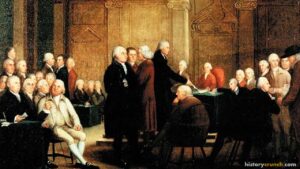
The American Revolution was the political and military struggle through which the Thirteen Colonies broke free from British rule and created the United States of America. Open fighting began in April of 1775 at Lexington and Concord, the colonies formally declared independence on July 4th, 1776, and the war lasted until 1783. The conflict grew out of more than a decade of rising tension between Britain and its colonies over taxation, trade, and the right of colonists to govern themselves.
The war divided Americans into two main groups. The Patriots wanted independence from Britain, while the Loyalists wished to remain part of the British Empire. African Americans could be found in both camps, and their choices were often shaped less by politics than by the simple hope of gaining their own freedom.
The Revolution was also fought during the Age of Enlightenment, a period when thinkers argued about natural rights, liberty, and equality. Patriot leaders used the word “slavery” to describe how Britain treated the colonies, even as many of them owned enslaved people. This contradiction, sometimes called a paradox, sat at the center of the entire conflict.
Why Did African Americans Take Part in the War?
There was no single reason that African Americans joined the fight. Some were inspired by the rhetoric of white revolutionary leaders, who used words like “slavery” to describe the condition of the colonies and promised to build a new society based on liberty and equality, and these words appealed to the enslaved population, many of whom hoped they might receive better opportunities in the new nation. For many, the promise of personal freedom mattered far more than any larger cause.
In fact, freedom was the strongest motivation of all. African Americans fought on both sides for the same reason, which was freedom, and the British offered it more consistently while Patriot promises were often conditional or ignored. Enslaved people watched carefully to see which side was more likely to reward their service with liberty, and they made their choices accordingly.
Historians estimate that thousands served each side. Between 5,000 and 10,000 Black men fought for the Patriot cause, while thousands more served the British, many in hopes of gaining freedom. Whether free or enslaved, African Americans understood that the war offered a rare chance to change their own lives.
Black Americans and the First Shots of the Revolution
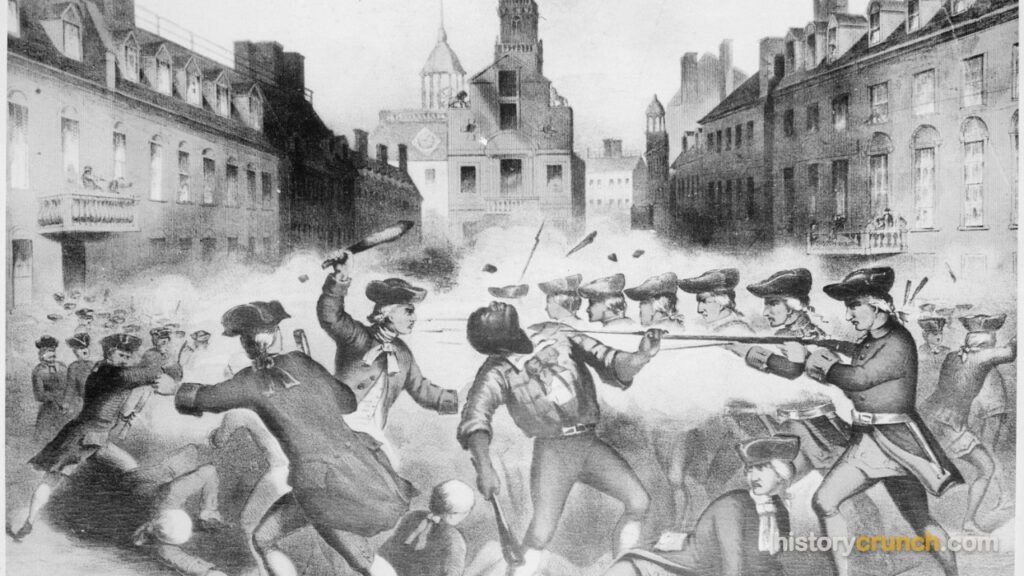
African Americans were present from the very first violent clashes of the Revolution. On March 5th, 1770, a mob of around 300 American Patriots confronted nine British soldiers on King Street in Boston, and among the crowd was Crispus Attucks, a mixed-race sailor commonly thought to have been of African and Native American descent. Attucks was killed that night, and he is often remembered as the first person to die in the event known as the Boston Massacre.
Black Americans were also on the field when open war began in 1775. Once the rebellion began, Prince Estabrook, an African American, was one of the first to fall on Lexington Green in Massachusetts on April 19th, 1775. More specifically, at least ten to fifteen Black soldiers, some of them enslaved, fought against the British at the early battles of Lexington and Bunker Hill.
Two of these early soldiers earned lasting recognition. Salem Poor and Peter Salem earned special distinction for their bravery. As stated above, their courage showed that African Americans were willing to risk their lives in the fight from its earliest days.
Serving the Patriot Cause
At first, the Continental Congress and George Washington were reluctant to let Black men serve. By 1776 it had become clear that the revolutionary rhetoric of the founding fathers did not include enslaved Blacks, and even though they were great fighters, the Continental Congress did not at first allow Black soldiers to join the army. This early rejection reflected the fears of many white leaders, especially in the South, about arming enslaved people.
As the war dragged on, however, the need for soldiers changed minds. As states found it increasingly difficult to fill their enlistment quotas, they began to turn to this untapped pool of manpower. In reality, the demands of a long war did more to open the ranks to Black men than any change of heart about slavery.
Black Americans also served heavily at sea. Although the Southern states were reluctant to recruit enslaved African Americans for the army, they had no issue using free and enslaved Blacks in the navy, and in Virginia alone as many as 150 Black men, many of them slaves, served in the state navy, with the legislature later granting several of these men their freedom as a reward for faithful service. On ships, the constant shortage of crew meant that skill mattered more than race.
The 1st Rhode Island Regiment
The most famous Black unit of the war came from Rhode Island. In the late 1770s, dwindling manpower forced George Washington to reconsider his original decision to ban Black people from the Continental Army, so in 1778 the Rhode Island legislature declared that both free and enslaved Black people could serve, and to attract enslaved men the Patriots promised freedom at the end of service. This decision created a unit that became widely known as the “Black Regiment.”
The regiment stood out among all of Washington’s forces. The 1st Rhode Island Regiment became the only regiment of the Continental Army to have full companies of Black soldiers. It served for a remarkably long time, from the early siege of Boston through the closing years of the conflict.
Its most celebrated moment came in the summer of 1778. At the Battle of Rhode Island in August of 1778, the regiment held the line against repeated charges by Hessian and British forces, repelling three assaults and allowing the Continental Army an orderly retreat. The unit later took part in the decisive assault on the British defenses at Yorktown in 1781.
James Armistead and Black Spies
African Americans also served the Patriots in less visible but crucial roles, including spying. James Armistead’s life changed drastically during the Revolution, from an enslaved person in Virginia to a double agent passing information between the two warring sides, and when he joined the Patriots they assigned him to infiltrate the enemy, so he pretended to be a runaway slave wanting to serve the crown and was welcomed by the British. His position gave him access to the plans of British commanders.
The intelligence he gathered proved enormously valuable. Because of Armistead’s efforts, the Americans gained the insight they needed to successfully carry out the decisive Siege of Yorktown, which effectively ended the war. In fact, years later, after a testimonial from a French general helped secure Armistead’s freedom, the former slave changed his surname to Lafayette.
Black Loyalists and Lord Dunmore’s Proclamation
Many African Americans chose the British side, and one document did more than any other to encourage them. Dunmore’s Proclamation was signed on November 7th, 1775, by John Murray, 4th Earl of Dunmore, the royal governor of the colony of Virginia, and it declared martial law and promised freedom for all indentured servants, enslaved people, and others who joined the British Army. The offer spread quickly across the colonies.
The response was immediate and dramatic. Its publication prompted between 800 and 2,000 enslaved people to run away and enlist with Dunmore. These recruits formed a unit that Dunmore called his Royal Ethiopian Regiment.
The proclamation also had a powerful effect on white Virginians. The declaration of martial law further inflamed anti-British sentiment, and the decision to free enslaved people in Virginia increased fear of a rebellion and raised concerns about property rights, which convinced many wealthy white men who had been neutral or Loyalist to side against King George III. For enslaved people, though, the offer meant something very different. Many Black individuals viewed the offer as a path to freedom from enslavement, a stark reminder that while the Revolution was grounded in the rhetoric of freedom and liberty for all, those ideals applied to only a select part of the population.
The fate of these Black Loyalists after the war was uncertain and often tragic. The fate of Black Loyalists was uneven throughout the British Empire, and protections of their freedom and prosperity were not upheld by the crown in the years after their defeat, and while many faced challenges that resulted in death or re-enslavement, thousands navigated the Atlantic World in the Age of Revolution.
Broken Promises After the War
For most African Americans, the end of the war did not bring the freedom they had hoped for. Black Patriot veterans faced mixed fates, as some received pensions or land grants, which were rarely honored, and others were re-enslaved, and the Revolution did not end slavery but instead intensified debates that led to the Constitution’s compromises and eventually the Civil War. The gap between the nation’s ideals and its actions remained wide.
The new Constitution itself reflected this failure. The new United States Constitution tacitly acknowledged the institution of slavery when it determined that three out of every five enslaved people would be counted when determining a state’s total population for the purposes of taxation and representation in Congress. This arrangement, known as the Three-Fifths Compromise, showed that slavery had survived the Revolution intact in much of the country.
Even so, the war did produce some early steps toward abolition. Before and during the American Revolution, the first debates to abolish slavery emerged, and Black and white abolitionists contributed to new legislation that gradually abolished slavery in some northern states such as Vermont and Pennsylvania, though these laws often emancipated only the newly born children of enslaved women.
Significance of African Americans in the American Revolution
African Americans were essential to the outcome of the Revolution, even though their contributions were long overlooked. Their involvement was not peripheral, as African Americans were soldiers, sailors, spies, laborers, and even informants in one of the most pivotal conflicts in world history. Without their service on both sides, the course of the war would have looked very different.
Their participation also exposed the deep contradiction at the heart of the new nation. Their service challenged the hypocrisy of a slaveholding republic fighting for liberty, laying early groundwork for abolitionist arguments. The idea that a country founded on liberty could keep people in bondage would trouble Americans for generations.
Finally, the story of Black Revolutionaries connects directly to later struggles for freedom. The debates over slavery that the Revolution intensified would grow more heated over the following decades and eventually help lead to the Civil War. In this way, the African Americans who fought between 1775 and 1783 were part of a much longer fight for the promise of equality that the Revolution had first proclaimed.
Frequently Asked Questions
How many African Americans fought in the American Revolution?
Around 5,000 to 10,000 Black men fought for the Patriots, and thousands more served the British. Exact numbers are hard to know because record keeping was uneven and many soldiers left no written accounts of their own. Black Americans took part in nearly every major campaign of the war, from Massachusetts to Virginia and the Deep South.
Who was Crispus Attucks?
Crispus Attucks was a mixed-race sailor of African and Native American descent who was killed during the Boston Massacre in 1770. He is often remembered as the first person to die in the events leading to the Revolution. Before that night, he had worked as a sailor and rope maker, and he is thought to have earlier escaped from slavery.
What was Lord Dunmore’s Proclamation?
Lord Dunmore’s Proclamation was a 1775 order by Virginia’s royal governor offering freedom to enslaved people and indentured servants who left Patriot owners and fought for the British. It applied only to those held by rebels, not by Loyalists, and it was meant to weaken the Patriot cause. The offer angered many white Virginians and pushed some undecided colonists toward supporting independence.
Did the American Revolution end slavery?
No, the American Revolution did not end slavery in the new United States. A few northern states, such as Pennsylvania and Vermont, passed gradual abolition laws, but slavery remained legal and widespread in the South. Slavery would not be fully abolished nationwide until the passage of the Thirteenth Amendment in 1865, after the Civil War.
Why did some African Americans fight for the British?
Many enslaved African Americans fought for the British because the British offered them freedom more consistently than the Patriots did. Documents like Lord Dunmore’s Proclamation promised liberty in exchange for military service, which was a powerful reason to join. For people held in bondage, the choice of a side often came down to which one was most likely to make them free.
Cite This Article
To cite this article as a source, use one of the formats below.
MLA: Millar, B. “African Americans in the American Revolution: A Detailed Summary.” HistoryCrunch, 10 August 2026, https://historycrunch.com/african-americans-in-the-american-revolution/.
APA: Millar, B. (2026). African Americans in the American Revolution: A Detailed Summary. HistoryCrunch. https://historycrunch.com/african-americans-in-the-american-revolution/
Chicago: Millar, B. “African Americans in the American Revolution: A Detailed Summary.” HistoryCrunch. August 10, 2026. https://historycrunch.com/african-americans-in-the-american-revolution/
Sources
- Gordon S. Wood, The Radicalism of the American Revolution.
- Bernard Bailyn, The Ideological Origins of the American Revolution.