
British imperialism in India is the story of how a trading company chartered in London in 1600 came to govern a subcontinent, how the Crown took over from it in 1858, and how a movement of English-educated lawyers and a man with a spinning wheel ended the whole arrangement in 1947. It begins with an English king petitioning a Mughal emperor, and ends with a border published two days after independence.
From a company charter in 1600 to a border drawn in six weeks in 1947.
British imperialism in India is the story of how a trading company chartered in London in 1600 came to govern a subcontinent, how the Crown took over from it in 1858, and how a movement of English-educated lawyers and a man with a spinning wheel ended the whole arrangement in 1947. It begins with an English king petitioning a Mughal emperor, and ends with a border published two days after independence.
Most accounts start with the East India Company. Start two hundred years earlier and the story changes shape.
The Mughal Empire at its height, and what that means in numbers.
Not land, not glory, at least not at first. Follow what was actually being carried.
Pepper, cotton, silk and indigo, and the middlemen in between.
The East India Company was a trading firm with shareholders. By 1857 it governed more people in India than lived in all of Britain.
A charter, a vacuum, a battle and an army of 267,000.
A few thousand Company troops beat a far larger army. The reason is not military.
A bribe, a defection, and what it bought.
A difficult teenager sent abroad because nobody knew what else to do with him won a province.
Arcot, Plassey, a fortune and a parliamentary inquiry.
The same event has two names, and the name you use is an argument about what it was.
What happened, who joined, and why the naming matters.
It failed. Britain stayed for another eighty-nine years. So what was different afterwards?
A company abolished, an army rebuilt, and two communities pushed apart.
The army that held British India was Indian. Working out why is harder than it sounds.
Pay, status, pension, and what happened when the bargain broke.
The arithmetic looks impossible. Work out how it was actually done.
Princely rulers, Indian soldiers, an Indian civil service and a railway.
The Great Famine of 1876 to 1878 killed six to ten million people while grain was exported.
Drought, policy, and the argument officials made at the time.
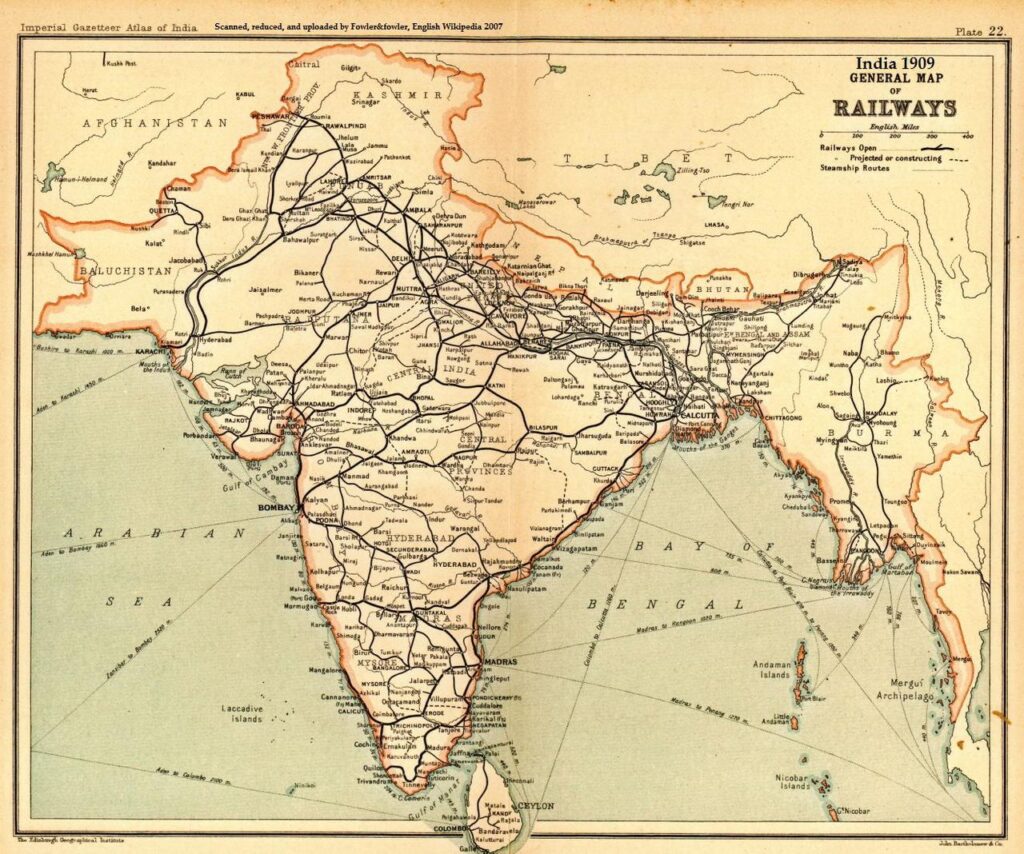
India had one of the largest rail networks in the world by 1900. That is not in dispute. What it was for is.
Where the lines ran, who paid, and who profited.
India made the best and cheapest cotton cloth on earth in 1700. By 1900 it was importing British cloth.
Tariffs, machines, and a reversal that took a century.
The men who ended the Raj were trained by it. That was not an accident and it was not charity.
A civil service, a legal system, and an argument that could be answered.
Hundreds of Indian rulers kept their thrones right through the Raj. That is not an oversight.
Indirect rule, and what it cost and saved.
The Indian National Congress began in 1885 as lawyers writing polite letters. By 1930 it could shut the country down.
Forty-five years, a partition, a boycott and a returning lawyer.
The partition of Bengal in 1905 split a province along religious lines. Forty-two years later a country was split the same way.
1905, separate electorates, and how far the line runs.
In 1905 India answered a partition by refusing to buy British goods. It worked better than any petition had.
A boycott, a spinning wheel, and an economy that depended on a market.
In 1942 Congress demanded immediate British withdrawal while Winston Churchill's Britain was fighting Germany and Japan.
The demand, the arrests, and the argument on both sides.
Gandhi never commanded troops. He ended British rule over four hundred million people.
Non-cooperation, swadeshi, salt, and why each was chosen.
He arrived in India in 1915 aged forty-five with the technique already finished. Where had he been?
Porbandar, London, Natal, and twenty-two years of practice.
Winston Churchill defined the war against Nazi Germany as a fight for freedom and spent forty years opposing it for India.
A career, a conviction, and a contradiction pointed out at the time.
A tax on salt sounds trivial. It was the most carefully chosen target in the history of protest.
One law, one substance, and everybody in India.
He was shot five months after independence by a Hindu nationalist, not by the British.
Partition, tolerance, and an argument still running in India today.
Between one and two million dead and about fifteen million people moved, in a few weeks.
The deadline, the border, and forty years of separate representation.
Gandhi and Nehru wanted the British gone and disagreed about almost everything after that.
Village and factory, spiritual and secular, local and central.
Gandhi gets the statues. Nehru got the job, and ran India for seventeen years.
Dams, steel, secularism and a constitution.
Railways, a legal code and ten years of added life on one side. Famine, deindustrialization and partition on the other.
How to weigh it, and why the question is harder than it looks.
Borders, a legal system, a language, a railway network and an argument that is still running.
What was left behind, and what has been kept on purpose.
The despatches, the reports and the histories were written by the people doing the governing.
The gaps in the record, and how historians work around them.
Both held hundreds of millions of people and centuries of government. One became a colony; the other was carved into spheres of influence.
Two answers to the same pressure, and what made the difference.
In 1612 an English king wrote to a Mughal emperor asking politely for permission to trade. That is the right way round to start. The Mughal Empire ruled 158 million people at its height, 23 per cent of everyone alive, and India was the largest producer of cotton cloth in the world. A company chartered in London on the last day of 1600 spent its first century as a guest, with 23 fortified warehouses and no power to govern anybody.
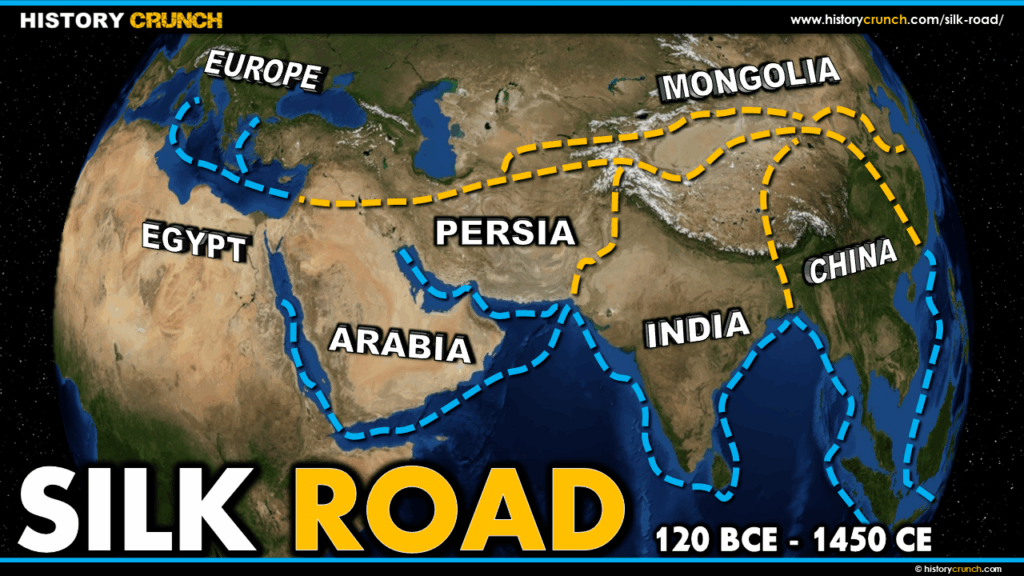
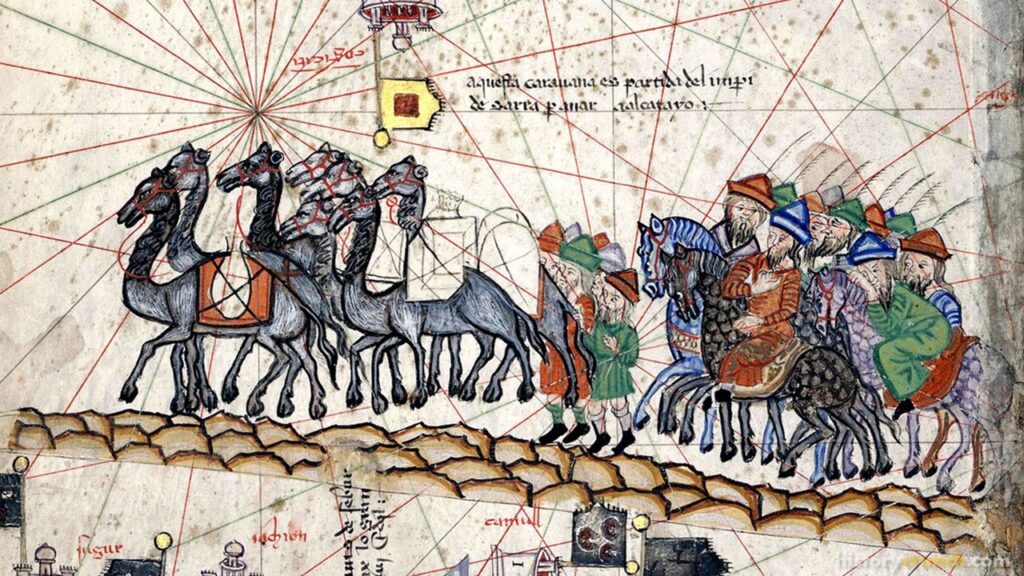
The Silk Road carried goods between Europe and Asia for roughly fifteen centuries, from about 120 BCE to 1450 CE. Everything that reached Europe from India passed through many hands, and every hand took a cut.
LEARN MORESHOW LESSwhy it mattersECONOMICThis is why Europeans went looking for a sea route at all. Cut out the middlemen and the profit on pepper, cotton and silk becomes enormous, which is the reason anyone was interested in India in the first place.
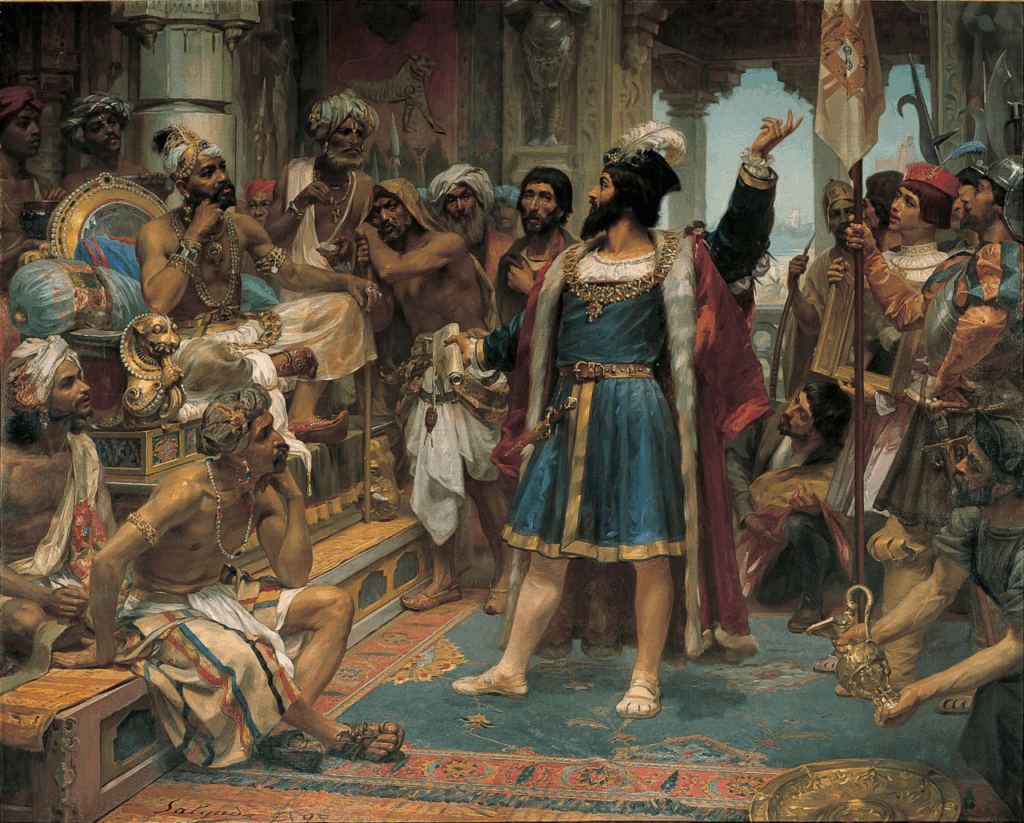
On 20 May 1498 the Portuguese captain Vasco da Gama sailed south from Portugal, around the southern tip of Africa, and reached Calicut on the west coast of India. He was the first European to reach India by sea.
LEARN MORESHOW LESSwhy it matters · key numbers · 1 key figureTECHNOLOGYEverything on this timeline runs down the road he opened. Portugal went first, the Dutch and the French followed, and an English company arrived a century later and eventually took the country.
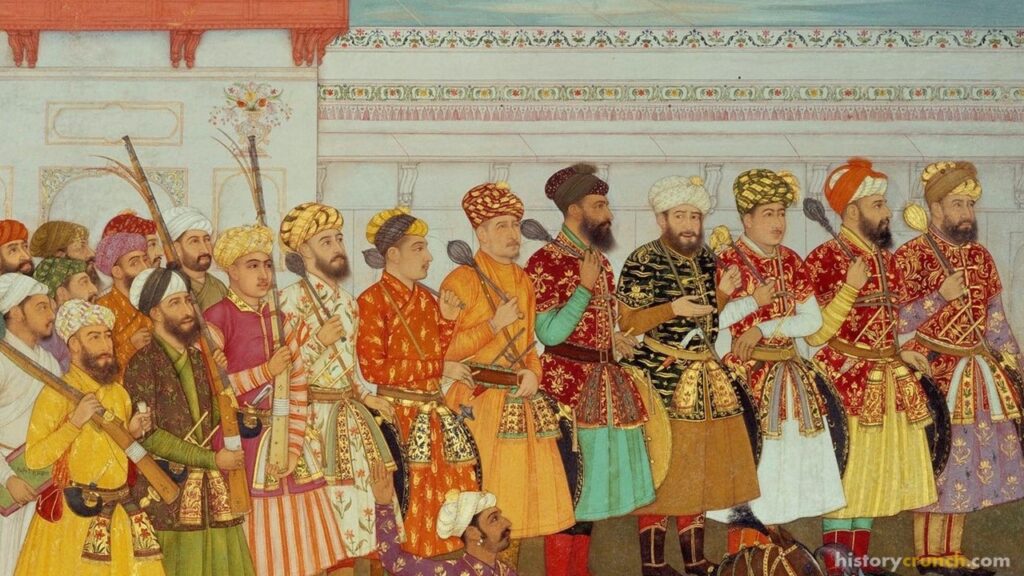
The Mughal Empire was founded in 1526 by Babur, a warrior chief from the region of modern Uzbekistan. At its height it covered most of modern India, parts of Pakistan and parts of Bangladesh, and it lasted until 1857.
LEARN MORESHOW LESSwhy it matters · key numbers · 1 key figurePOLITICALBritain did not take India from nobody. It took it from the successors of one of the largest and richest empires in the world, and it took a century and a half to do it.
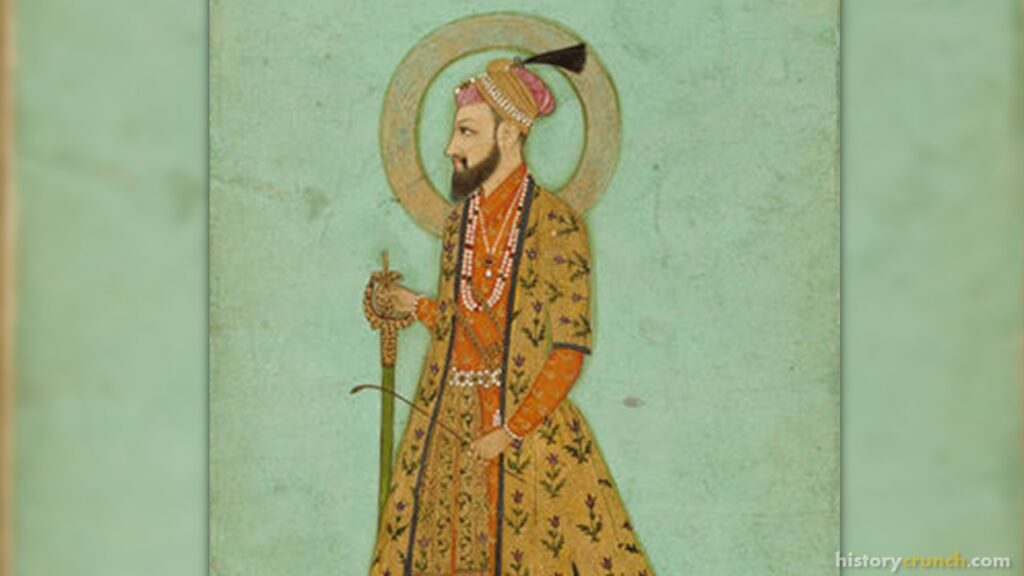
Akbar ruled the Mughal Empire from 1556 to 1605. He expanded it considerably and built a central administration, a land revenue system and a policy of tolerance towards non-Muslim subjects.
LEARN MORESHOW LESSwhy it matters · 1 key figurePOLITICALThe machinery Akbar built is the machinery the East India Company later took over and used. Much of what looks like British administration in India is Mughal administration with British officials on top.
The British East India Company was established on 31 December 1600 to promote British trade in the Far East, meaning India, China and Japan. It was a chartered company: privately owned by shareholders, with a royal monopoly on English trade east of Africa.
LEARN MORESHOW LESSwhy it matters · key numbers · 1 key figureECONOMICA trading licence. Nothing in it mentions governing anybody, and within 160 years the same company was collecting the taxes of Bengal.
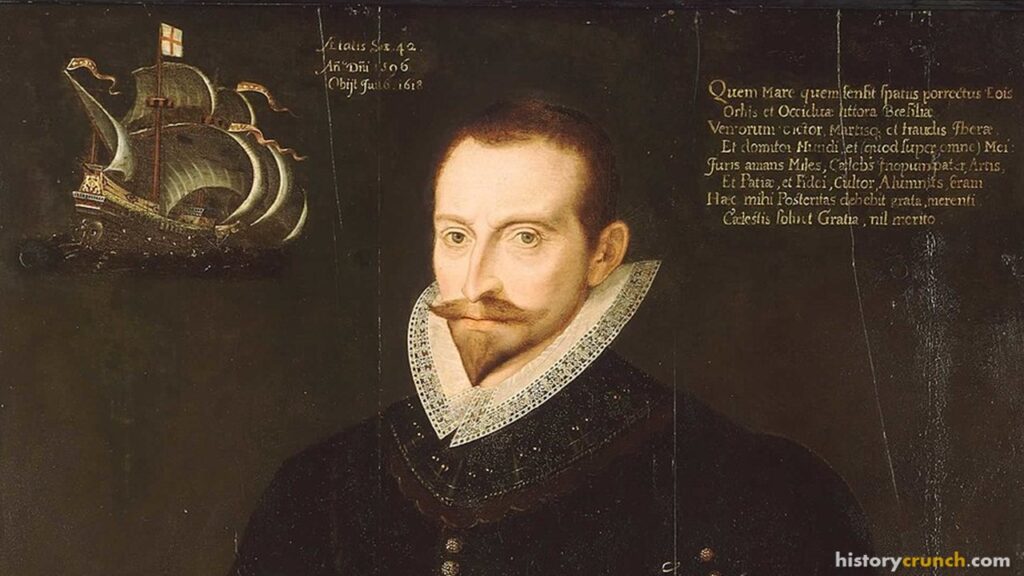
James Lancaster sailed in the Red Dragon in 1601, around the Cape of Good Hope to the Far East, returning in 1603 to be knighted by James I. The Company sent a voyage every year from 1606 to 1615.
LEARN MORESHOW LESSwhy it mattersECONOMICEach voyage was a separate investment with its own shareholders and its own risk. The Company only became permanent, and therefore powerful, once the money stopped being raised voyage by voyage.
In 1612 James I wrote to the Mughal Emperor Jahangir asking that the East India Company be allowed onto the Indian mainland. Permission was granted.
LEARN MORESHOW LESSwhy it matters · 2 key figuresPOLITICALIt is worth being clear about who was asking whom. England was a small kingdom petitioning one of the richest states on earth for a trading post, and the relationship reversed completely within 150 years.
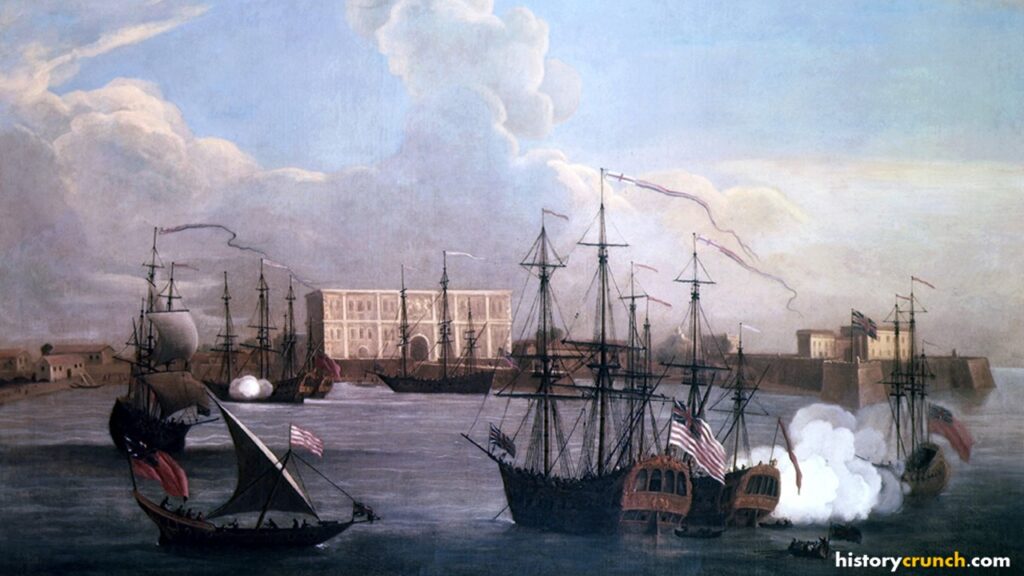
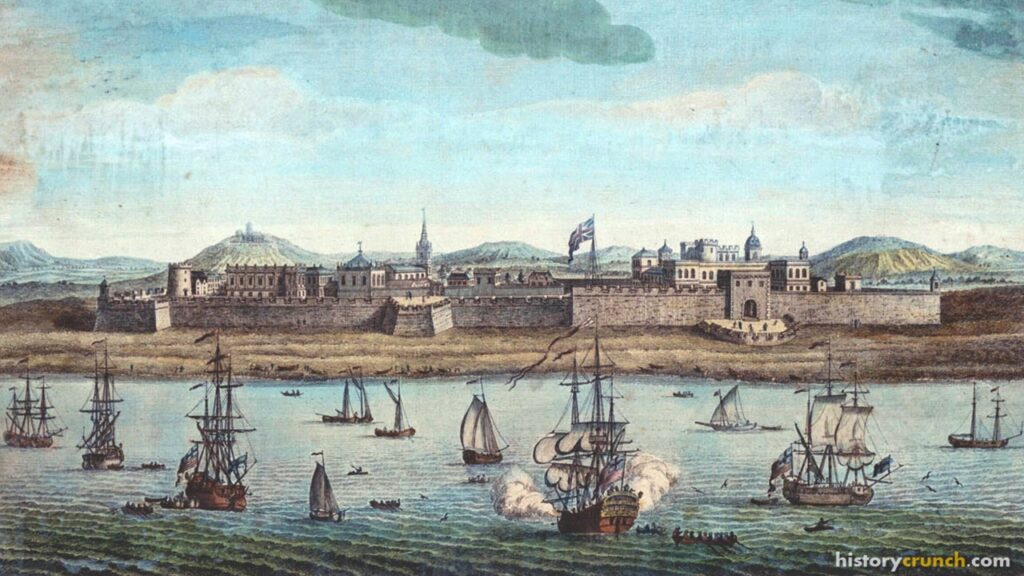
By 1647 the Company had 23 factories in India, at Bengal, Madras, Bombay and elsewhere. A factory here meant a fortified warehouse and trading post, not a place where goods were made.
LEARN MORESHOW LESSwhy it matters · key numbersECONOMICWalls need guards, guards need officers, and officers need orders. The Company acquired soldiers the way a shop acquires a lock, and then discovered it had an army.
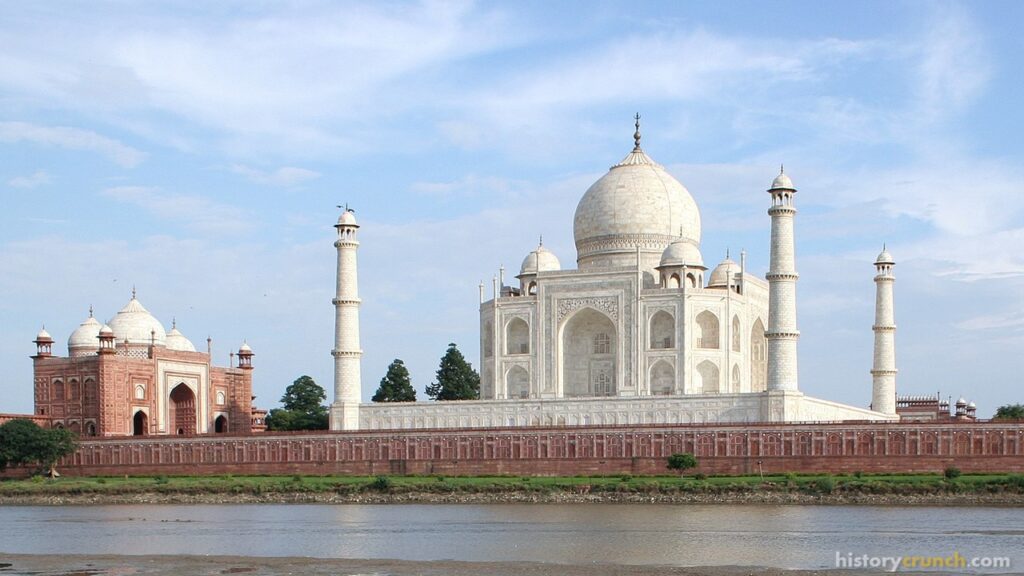
The Taj Mahal was built between 1632 and 1653 by Shah Jahan, who ruled from 1628 to 1658, as a tomb for his wife Mumtaz Mahal.
LEARN MORESHOW LESSwhy it matters · 1 key figureSOCIALA useful thing to put in front of a class that meets India first as a colony. This is what Mughal India could afford and build while England was fighting a civil war.
Charles II passed a series of acts in 1670 strengthening the Company's position in India, granting it rights that went well beyond trade.
LEARN MORESHOW LESSwhy it mattersPOLITICALThis is where a trading firm starts acquiring the attributes of a state by gift rather than by conquest, and Parliament spent the next 190 years trying to take them back.

At its height in 1700, under Aurangzeb, the Mughal Empire ruled about 158 million people, 23 per cent of the world's population, and India had one of the strongest economies on the planet. India's population in 1600 is estimated at about 130 million.
LEARN MORESHOW LESSwhy it matters · key numbers · 1 key figurePOLITICALThis is the number that makes the rest of the timeline surprising. India was not a poor country that Britain developed; it was the richest market Britain had ever traded with.
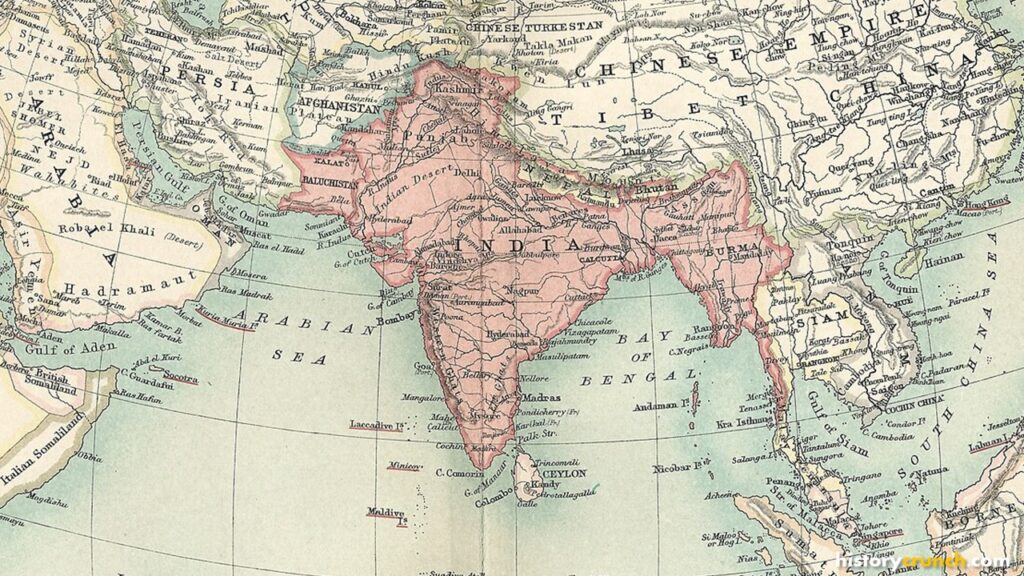
Aurangzeb died in 1707 after a reign of 49 years and was succeeded by his son Bahadur Shah I, who died in 1712. A run of short reigns and weak authority followed.
LEARN MORESHOW LESSwhy it mattersPOLITICALNo European power took India from a strong Mughal Empire. The Company moved into a vacuum left by its decline, backing rival Indian rulers against each other, which is a different story from conquest and the accurate one.
When Aurangzeb died in 1707 the Mughal Empire did not collapse; it loosened. Provincial rulers became independent in practice while still bowing to Delhi in theory, and a foreign company with money and soldiers could make private deals with them. At Plassey in 1757 a bribed commander stood aside and the East India Company came away with the tax revenue of Bengal. Its army went from 3,000 men in 1750 to 67,000 in 1778.
Bahadur Shah I died in 1712 after a reign of five years. The lack of stable leadership weakened Mughal authority over its enormous territory.
LEARN MORESHOW LESSwhy it mattersPOLITICALEmpires rarely collapse. They lose their grip province by province while still looking like empires on a map, which is exactly what makes the next fifty years possible.
Muhammad Shah ruled the Mughal Empire from 1719 to 1748. Central authority continued to weaken and provincial governors became effectively independent.
LEARN MORESHOW LESSwhy it mattersPOLITICALA Nawab who answers to Delhi in theory and nobody in practice is exactly the kind of ruler a foreign company can make a private deal with. That is what happened in Bengal.
By 1720 about 15 per cent of all imports into England came from India, and the Company handled almost all of it: cotton, silk, indigo, tea and spices.
LEARN MORESHOW LESSwhy it matters · key numbersECONOMICFollow the money and the politics follow. A company carrying a seventh of a country's imports has friends in Parliament, and it used them for the next century.
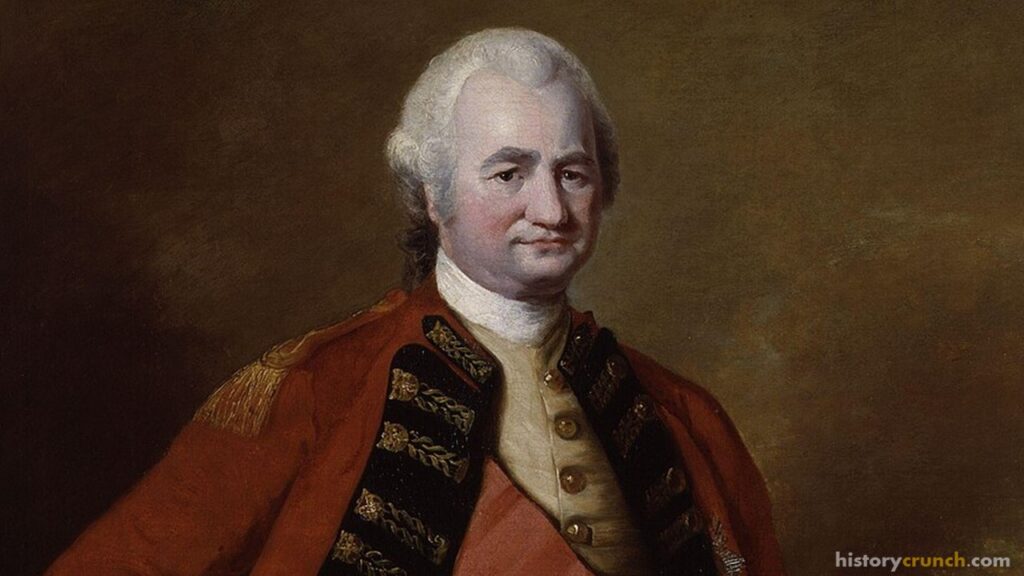
Robert Clive was born on 29 September 1725 in Shropshire, England. He went to India as a clerk in the East India Company, a job for a young man with no prospects at home.
LEARN MORESHOW LESSwhy it matters · 1 key figurePOLITICALThe man who won Bengal for a company was a difficult teenager sent abroad because nobody knew what else to do with him. Very little about this story was planned by anyone in London.
In 1750 the East India Company had about 3,000 soldiers of its own in India.
LEARN MORESHOW LESSwhy it matters · key numbersMILITARYHold this number next to the one dated 1778 and the whole transformation is visible in two figures twenty-eight years apart.
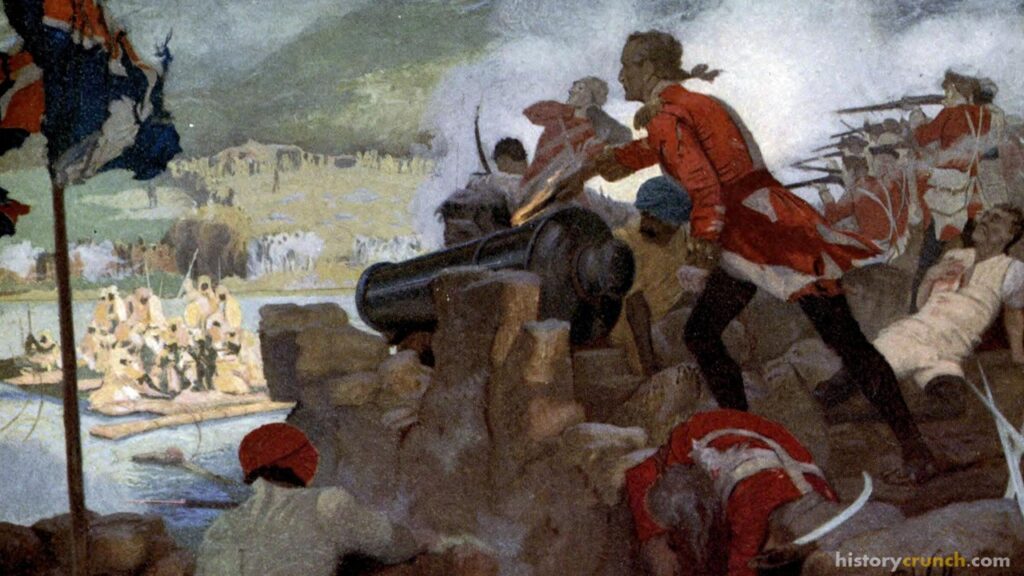
Clive's defense of Arcot in 1751, holding the town against a far larger force, made his reputation. He had no military training.
LEARN MORESHOW LESSwhy it matters · 1 key figureMILITARYThe Company's empire was built by employees acting on their own initiative six months' sailing from anyone who could stop them. London usually found out what had been done long after it was done.
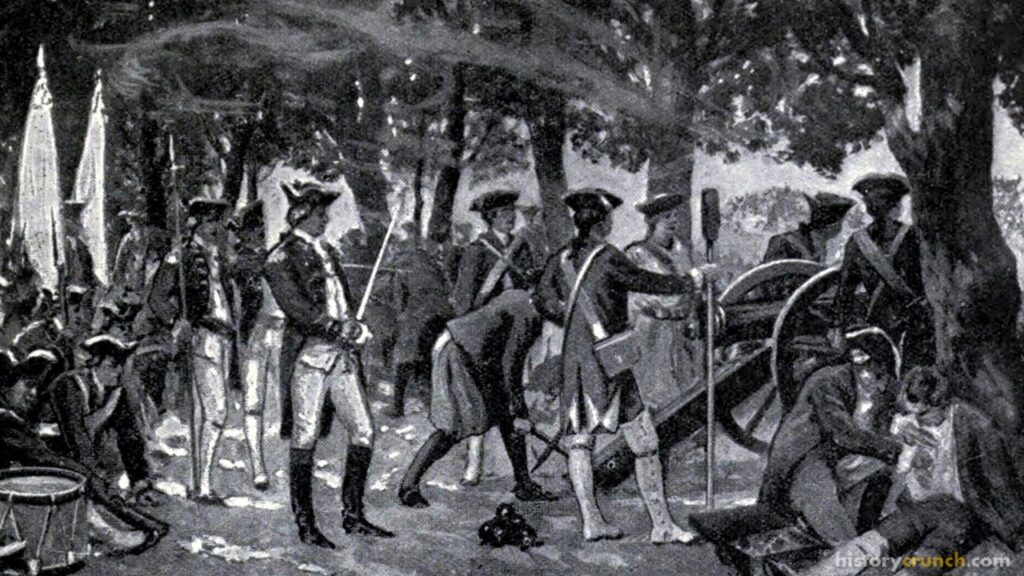
On 23 June 1757 Clive led Company forces to victory over the Nawab of Bengal and his French allies at Plassey. The battle was decided as much by a bribed Indian commander changing sides as by any fighting.
LEARN MORESHOW LESSwhy it matters · key numbers · 2 key figuresMILITARYA company won a province. From this day the East India Company collected taxes from tens of millions of people, which is not trade, and nobody in Britain had voted for it.
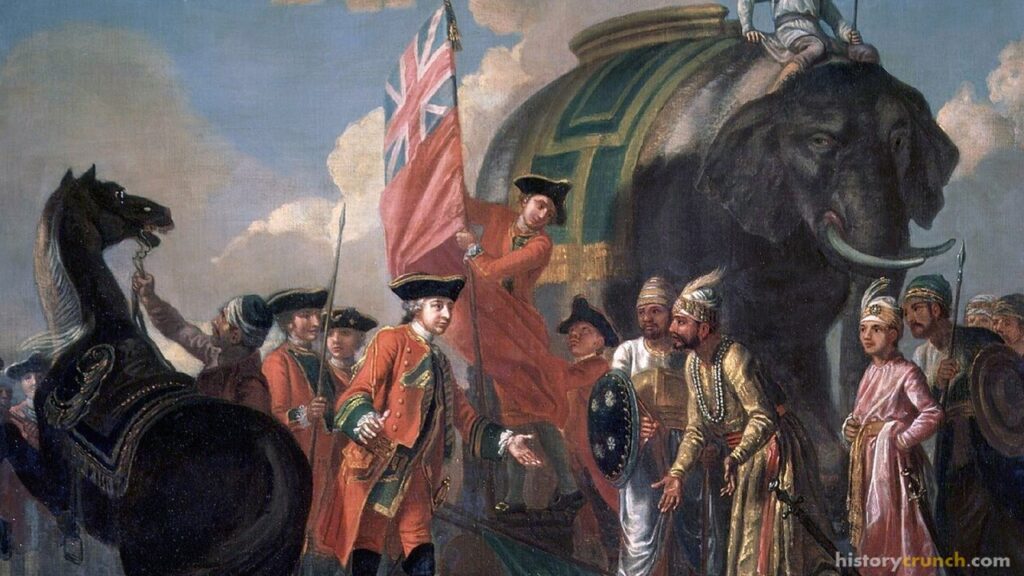
After Plassey the Company installed Mir Jafar, whose defection had decided the battle, as Nawab of Bengal. He held the title; the Company took the revenue.
LEARN MORESHOW LESSwhy it matters · 2 key figuresPOLITICALThis is indirect rule, used again in dozens of places over the next century: keep the local ruler, take the money. It costs less than governing and it looks less like conquest.
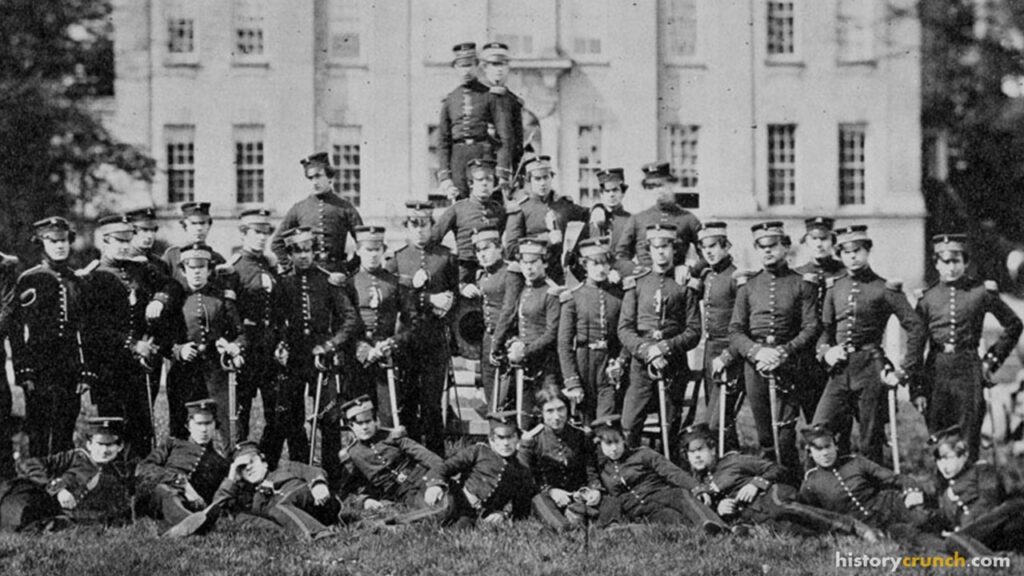
By 1778 the Company's forces had grown from about 3,000 men to over 67,000. By 1857 its armies totalled as many as 267,000 soldiers, most of them Indian.
LEARN MORESHOW LESSwhy it matters · key numbersMILITARYA private company with one of the largest armies in the world, answerable to shareholders. Nothing in English law had been written with that possibility in mind.
In 1793 the Company took direct control of the former Mughal province of Bengal-Bihar, settling the land revenue with local landholders on permanent terms.
LEARN MORESHOW LESSwhy it mattersPOLITICALThe fiction is wearing thin. A Mughal emperor still sits in Delhi while the taxes of his richest province are collected by a company with a London address.
By 1800 a private firm governed a subcontinent. In 1857 its own Indian soldiers rose against it, and within six weeks the rebellion had spread to princes, landholders and peasants across northern India. The rebels took Delhi and proclaimed the last Mughal emperor as their sovereign. Eighteen months later the rebellion was crushed, the emperor was exiled, and Parliament abolished the company that had caused it all.
The East India Company exerted its influence over India from the early 1600s until 1858, and by the early nineteenth century governed most of the subcontinent directly or through local rulers.
LEARN MORESHOW LESSwhy it matters · key numbersPOLITICALTwo and a half centuries of a private firm running a country. It is the longest and strangest arrangement on this page, and it ends only when it fails catastrophically in 1857.
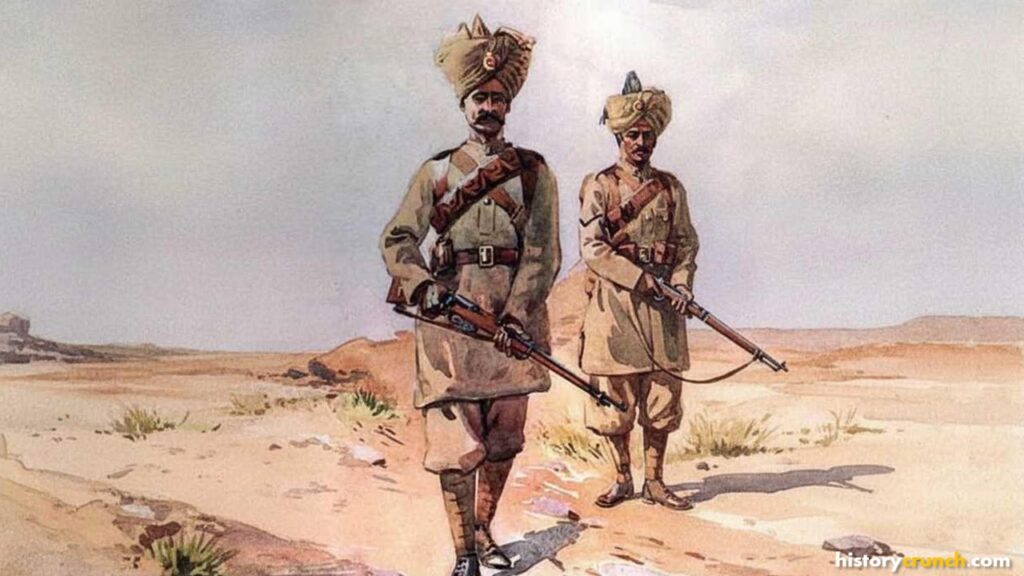
By 1857 the Company's armies contained over 267,000 Indian sepoys and only about 50,000 British soldiers.
LEARN MORESHOW LESSwhy it matters · key numbersMILITARYFive to one. British India was held by Indian soldiers, which is why the rebellion was so dangerous and why the whole recruiting system was rebuilt afterwards.
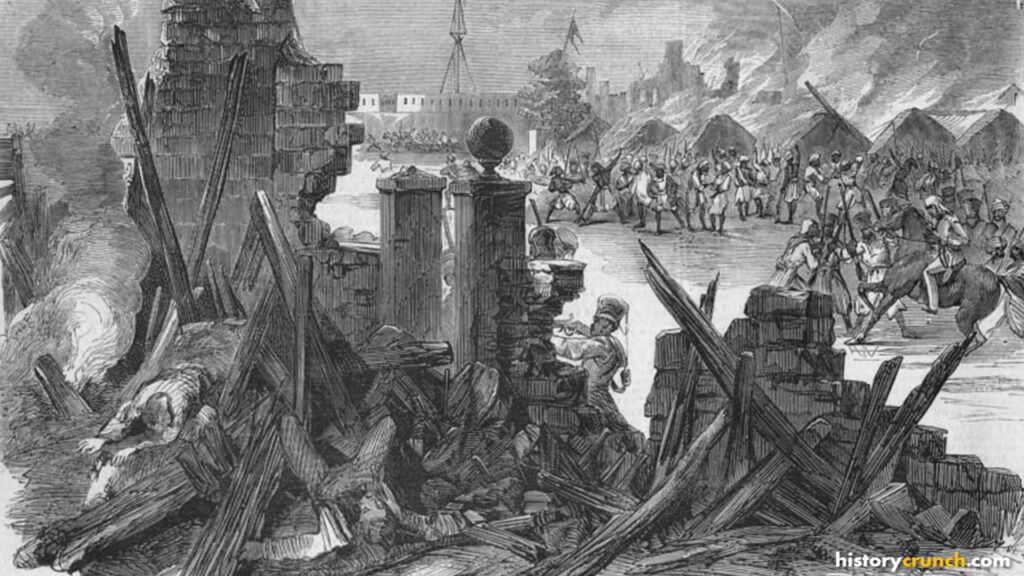
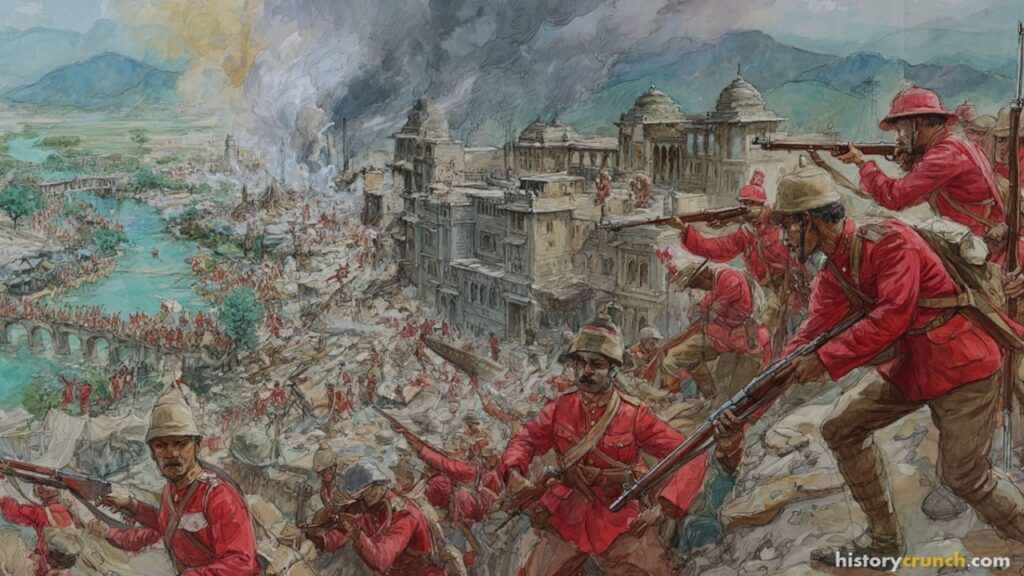
On 10 May 1857 Indian soldiers of the East India Company rose at Meerut. Within six weeks the rebellion had spread to local rulers and civilians across northern India. It lasted 18 months, until 1 November 1858.
LEARN MORESHOW LESSwhy it matters · key numbersMILITARYThe largest challenge to European rule anywhere in the nineteenth century, and it came from inside the Company's own army. Britain calls it a mutiny and India calls it the First War of Independence, and both names are arguments.
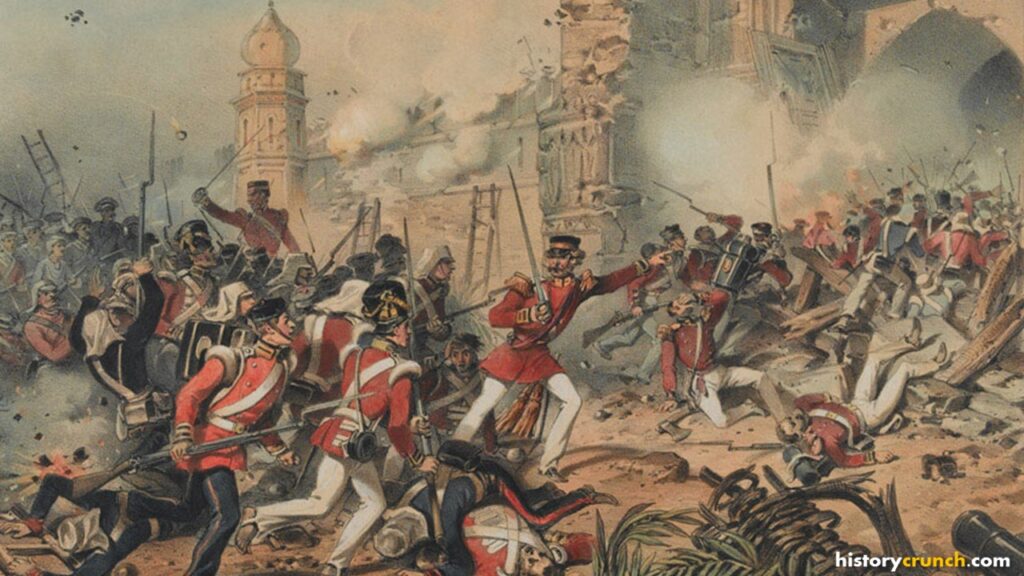
The rebels took Delhi and proclaimed the last Mughal emperor, Bahadur Shah II, as their sovereign. British forces retook the city after a siege and the reprisals were severe.
LEARN MORESHOW LESSwhy it matters · 1 key figureMILITARYProclaiming an emperor turns a mutiny into a claim to legitimate government, which is the strongest evidence for the Indian name for this event.
The Mughal Empire existed from 1526 until 1857. Bahadur Shah II was tried and exiled to Burma, and the dynasty Babur founded ended.
LEARN MORESHOW LESSwhy it matters · key numbersPOLITICALAn empire that had ruled a quarter of the human race in 1700 ended as an elderly poet being put on a ship. It is worth pausing on before moving to what replaced it.
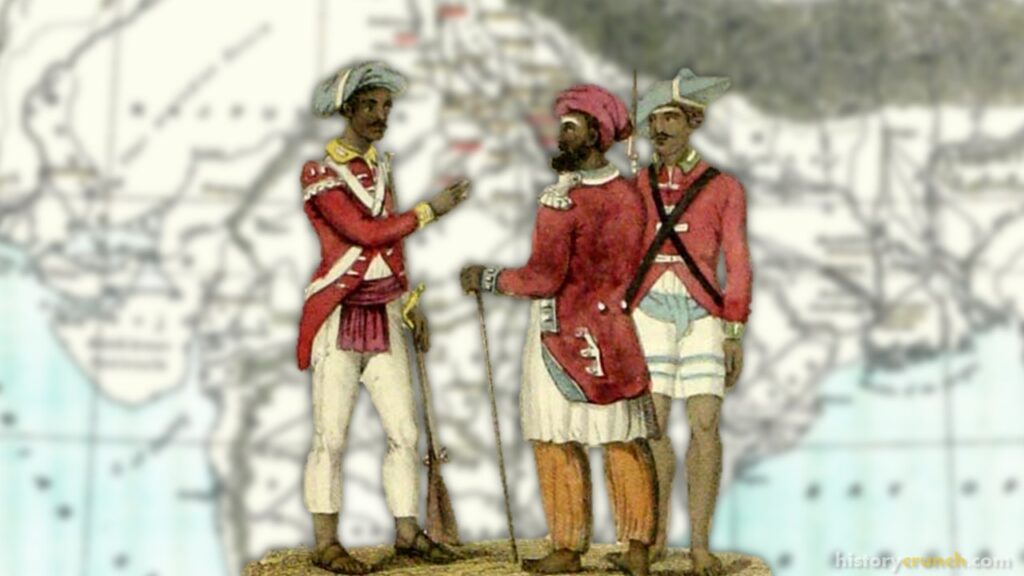
On 2 August 1858 the British Parliament passed the Government of India Act, ending the East India Company and transferring all its powers in India to the Crown.
LEARN MORESHOW LESSwhy it matters · key numbersPOLITICALTwo hundred and fifty-eight years after a charter was signed in London, the company that had accidentally acquired a country was wound up and the government took over what it had built.
The Sepoy Rebellion was formally ended on 1 November 1858 after eighteen months of fighting and reprisals on both sides.
LEARN MORESHOW LESSwhy it mattersMILITARYWhat followed was deliberate separation: British and Indian communities kept further apart, the army rebuilt so no single group could rise together again, and a public promise not to interfere with religion.
Direct rule by the Crown began in November 1858 and so, by most Indian accounts, did the independence movement. The next thirty years produced both halves of what followed: Queen Victoria proclaimed Empress, a famine that killed six to ten million people while grain was exported, a Salt Act that taxed something everybody needed, and a group of English-educated Indian lawyers founding the Indian National Congress in Bombay.
The British Raj, direct rule of India by the British Crown, ran from 1858 until 1947. It governed alongside and through hundreds of princely states, each keeping its own ruler under British oversight.
LEARN MORESHOW LESSwhy it matters · key numbersPOLITICALThree hundred million people governed by a few thousand British officials. That only works with the cooperation of Indian rulers, Indian soldiers and an Indian civil service, which is the fact the word Raj tends to hide.
Historians date the Indian Independence Movement from 1857 to 1947, about ninety years, and treat the Sepoy Rebellion as its starting point.
LEARN MORESHOW LESSwhy it matters · key numbersPOLITICALDirect British rule and organized Indian resistance to it start in the same moment. The two halves of this timeline are not sequential; they run side by side for the whole period.
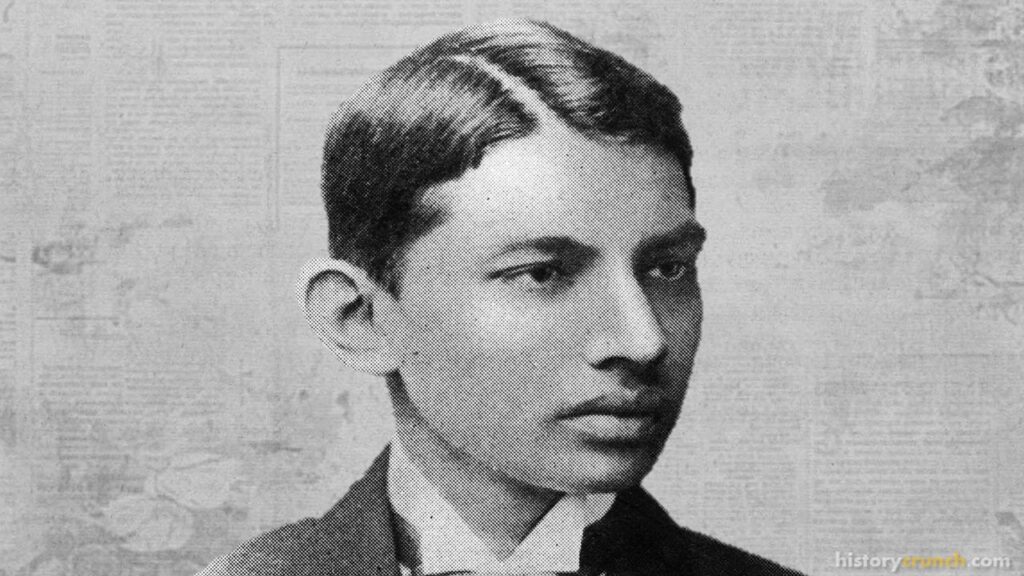
Mohandas Karamchand Gandhi was born on 2 October 1869 in Porbandar, in western British India, eleven years after the Raj began.
LEARN MORESHOW LESSwhy it matters · key numbers · 1 key figurePOLITICALHe was born into the Raj and died months after it ended. The whole of his life fits inside the period this timeline covers, which is why his biography and India's run together.
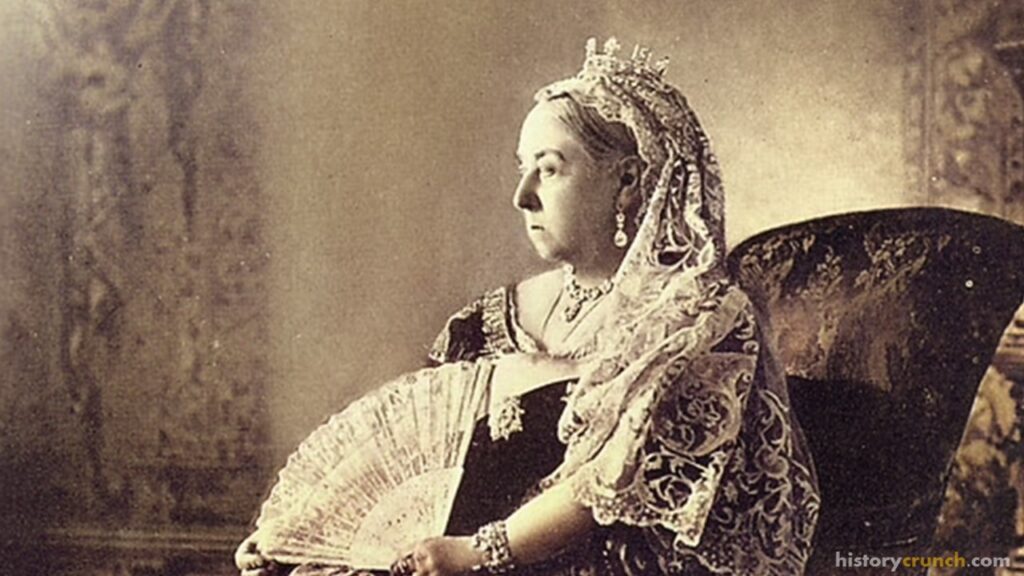
Queen Victoria formally became Empress of India on 1 May 1876. She never visited the country.
LEARN MORESHOW LESSwhy it matters · 1 key figurePOLITICALThe title was aimed at a British audience as much as an Indian one. It turned an administrative arrangement into something the British public could feel patriotic about.
The Great Famine of 1876 to 1878 killed between six and ten million people. Grain continued to be exported during it, and relief was limited by officials who believed that interfering with the market would do more harm than good.
LEARN MORESHOW LESSwhy it matters · key numbersSOCIALIt happened in the same years as the imperial pageantry, and it is the hardest fact to set beside the argument that British rule developed India.
In 1880 average life expectancy in India was around 25 years. By 1950, three years after independence, it had risen to about 35.
LEARN MORESHOW LESSwhy it matters · key numbersSOCIALBoth numbers are used as evidence, by opposite sides of the same argument. Ten years of life gained across seventy is either a real improvement or a very poor return, depending on what you compare it with.
The Salt Act of 1882 gave the British authorities effective control over the harvesting and sale of salt in India, and taxed it.
LEARN MORESHOW LESSwhy it matters · key numbersLAWAn obscure piece of revenue law, and the one British law that touched every single person in India including the poorest. Gandhi chose it forty-eight years later for exactly that reason.
In 1883, aged thirteen, Gandhi was married to fourteen-year-old Kasturbai Makhanji Kapadia in an arranged marriage, which was common practice in India at the time.
LEARN MORESHOW LESSwhy it matters · 1 key figureSOCIALGandhi later wrote about this himself and campaigned against child marriage. Including it is part of taking him seriously as a person rather than a symbol.
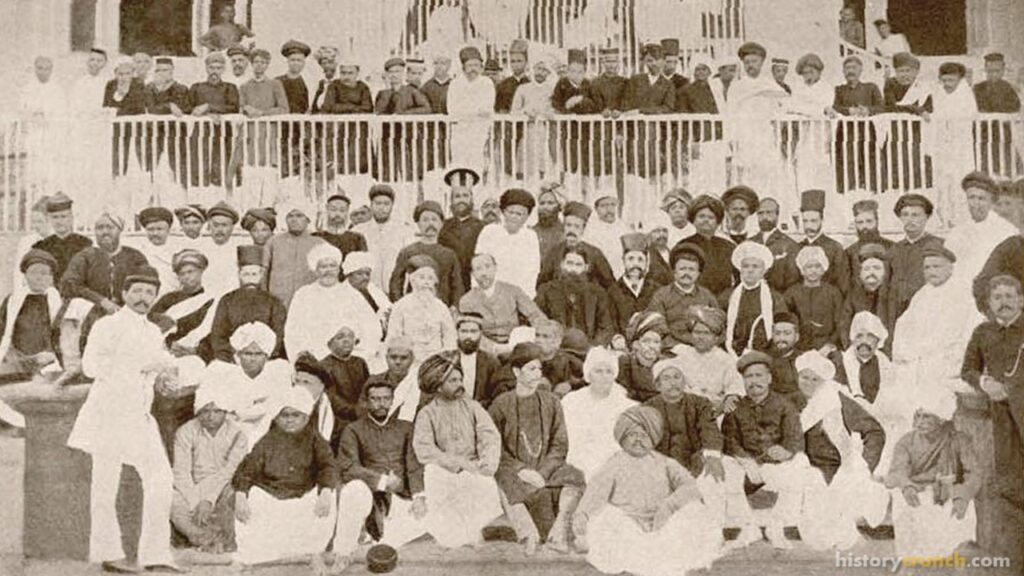
The Indian National Congress was founded on 23 December 1885 in Bombay. It began as a forum of educated Indians petitioning for a greater say in their own government.
LEARN MORESHOW LESSwhy it matters · key numbersPOLITICALThe men in that first session were lawyers and civil servants educated in English by the British system, asking for the rights that system said they had. Sixty-two years later they were the government.
Congress began by writing polite letters in English through proper channels. What changed it was the partition of Bengal in 1905, read across India as divide and rule, and answered with swadeshi: buy Indian, not British. Meanwhile a lawyer from Porbandar was in South Africa, spending twenty-two years building organizations and testing a method against a different arm of the same empire. He came home in 1915.
Gandhi graduated from high school in 1887 at the age of eighteen. He and Kasturbai went on to have four sons, the first born in 1888.
LEARN MORESHOW LESSwhy it matters · 1 key figureSOCIALNothing about the young Gandhi suggests what came later. He was an unremarkable student from a provincial town who was sent abroad to qualify as a lawyer.
Gandhi arrived in England in 1888 and studied law at University College London, finishing in 1892. He returned to India briefly before leaving for South Africa in 1893.
LEARN MORESHOW LESSwhy it matters · 1 key figureSOCIALHe was trained as a British lawyer, in Britain, in English. The man who ended the Raj argued against it in its own language, using its own law, which is exactly why it was so hard to answer him.
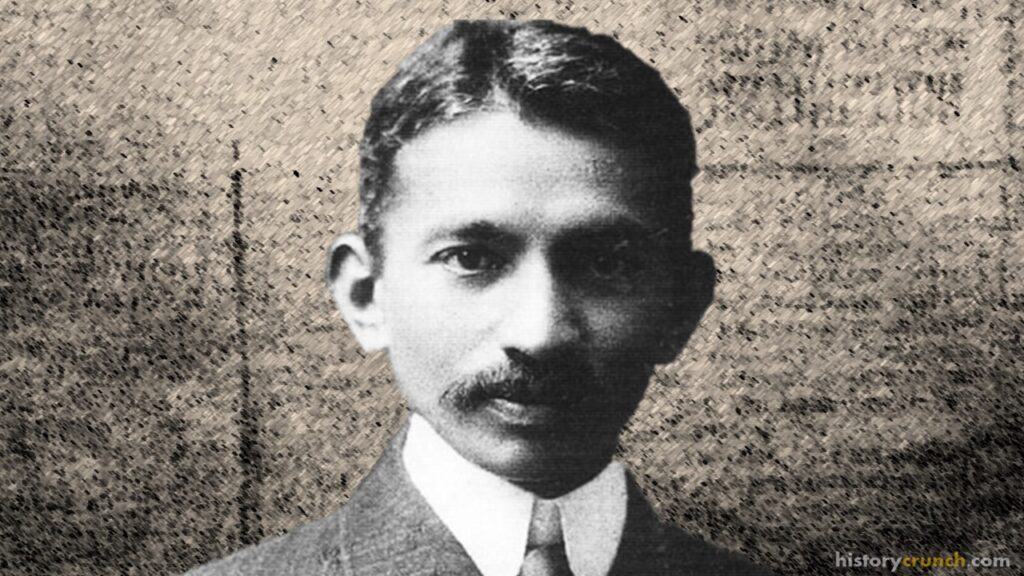
Gandhi went to South Africa in 1893 for what was meant to be a short legal engagement. He stayed until 1915, leading a campaign for the rights of the Indian community there.
LEARN MORESHOW LESSwhy it matters · key numbers · 1 key figureSOCIALThe method was invented here, on a different continent against a different arm of the same empire, and tested for twenty-two years before it was ever used in India.
In 1894 Gandhi helped create the Natal Indian Congress, a political organization set up to protest for Indian rights in South Africa.
LEARN MORESHOW LESSwhy it mattersPOLITICALHe learned organization before he learned protest. A movement needs a membership, a treasury and a newspaper before it needs a march, and he built all three in South Africa first.
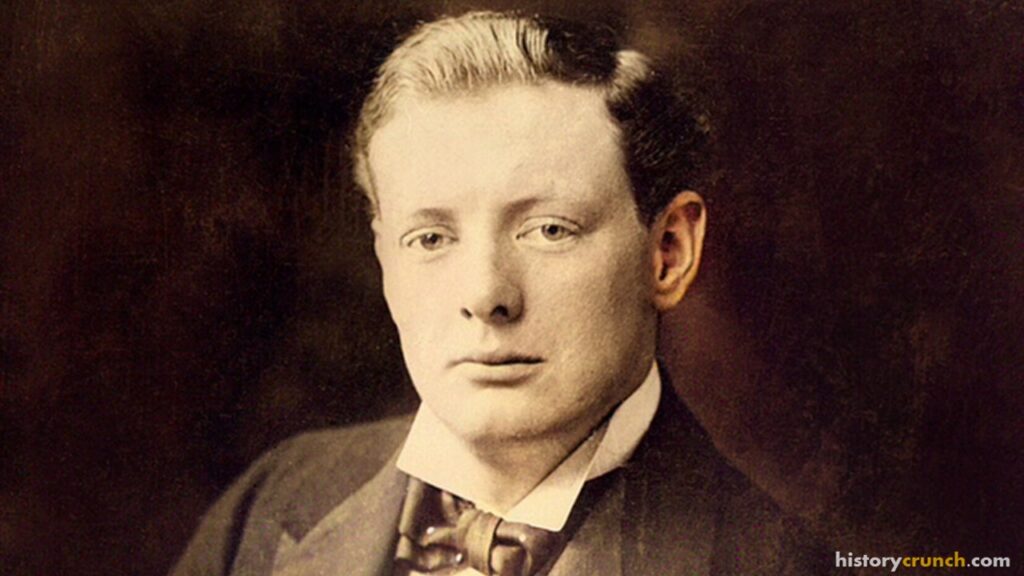
Winston Churchill was elected to Parliament in 1900, having made his name as a soldier and war correspondent in India, Sudan and South Africa.
LEARN MORESHOW LESSwhy it matters · 1 key figurePOLITICALHe appears on this timeline because he spent forty years opposing Indian self-government, including as Prime Minister, and was the most powerful single obstacle to it.
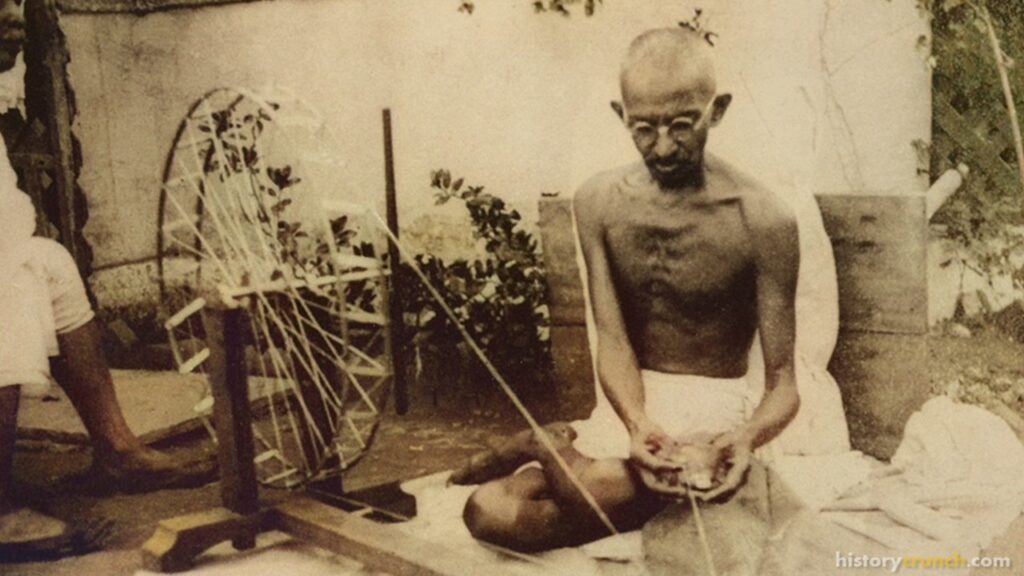
In 1905 the British divided Bengal along religious lines, forcing Hindus and Muslims of the province apart. Indians read it as divide and rule and answered with swadeshi, a boycott of British goods in favor of Indian-made ones.
LEARN MORESHOW LESSwhy it matters · key numbersPOLITICALThis is where Indian nationalism becomes a mass movement rather than a petition. Swadeshi gave ordinary people something to do, and Gandhi built his whole method on it twenty years later.
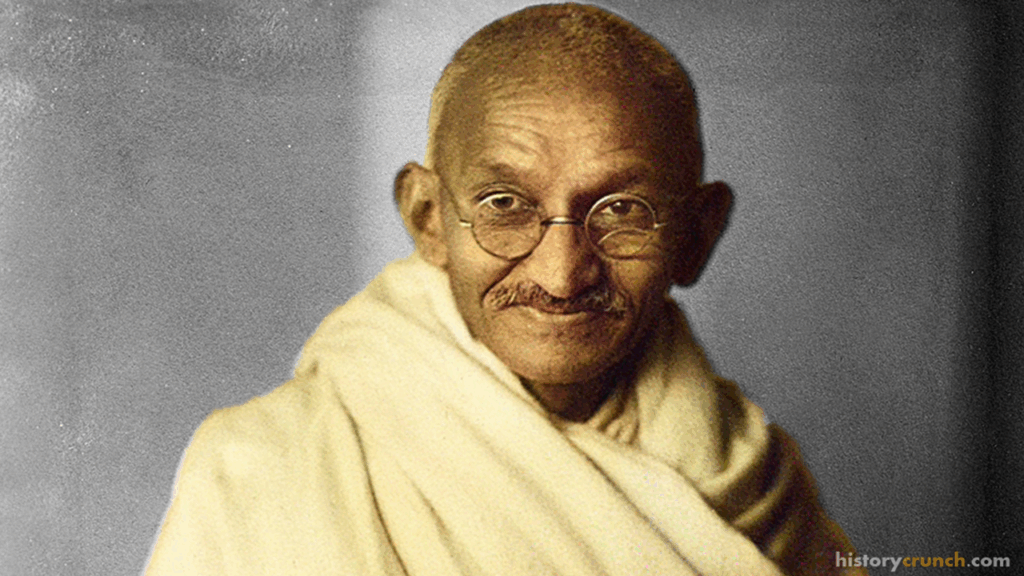
Gandhi left South Africa in 1915 and returned to India after twenty-two years away, bringing with him the methods of non-violent resistance he had developed there.
LEARN MORESHOW LESSwhy it matters · key numbers · 1 key figurePOLITICALThe single most important arrival in modern Indian history. He came back with a technique already tested on an empire, and within five years he had turned a movement of lawyers into a movement of millions.
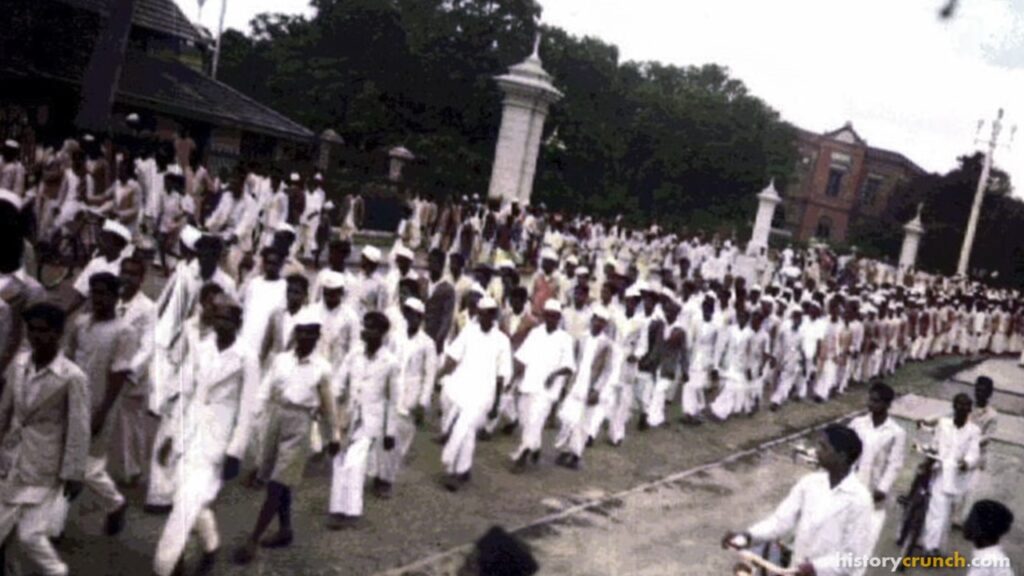
Indian nationalism grew during the First World War, which broke out in 1914. India supplied enormous numbers of soldiers and vast sums of money to the war effort.
LEARN MORESHOW LESSwhy it mattersMILITARYA country asked to fight for the freedom of small nations in Europe will ask about its own, and did. The gap between what was promised during the war and what was granted after it fed everything that followed.
Gandhi took over Congress in 1920 and rebuilt it around one fact: a few thousand officials cannot govern three hundred million people who decline to help. Then in 1930 he walked 240 miles to the sea to make salt, breaking the one British law that touched every person in India in a way anyone could copy. Britain could arrest him, which made it worse, or ignore him, which made the law meaningless.
Gandhi became leader of the Indian National Congress in 1920 and reorganized it around mass non-cooperation: boycotts of British goods, courts, schools, offices and titles.
LEARN MORESHOW LESSwhy it matters · key numbers · 1 key figurePOLITICALNon-cooperation rests on one fact about empire: a few thousand officials cannot govern three hundred million people who decline to help. He made that fact visible and then unavoidable.
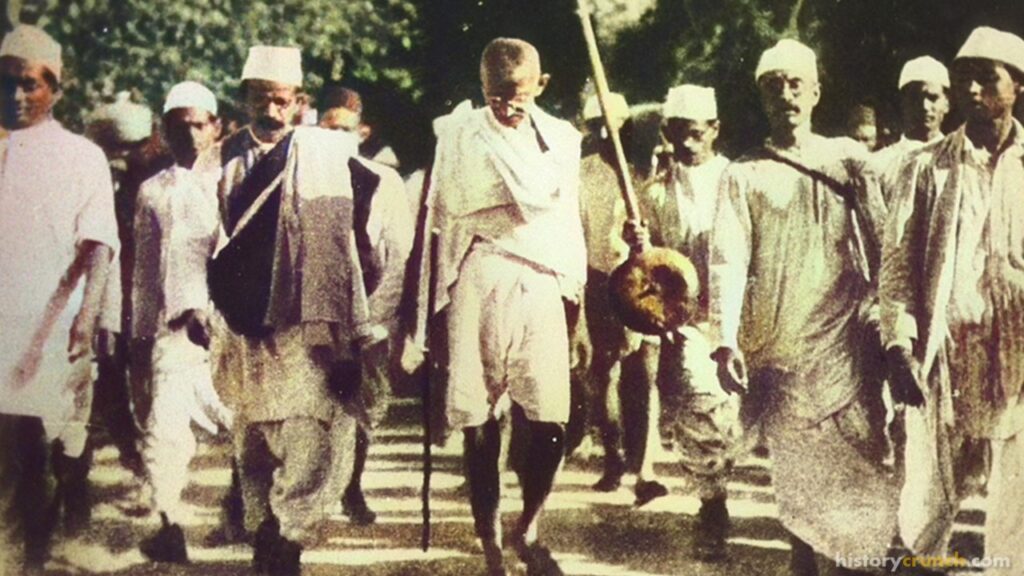
From 12 March to 6 April 1930 Gandhi walked 240 miles to the sea to make salt in defiance of the Salt Act of 1882. The march took 24 days and was reported around the world as it went.
LEARN MORESHOW LESSwhy it matters · key numbers · 1 key figureSOCIALHe picked the one British law that touched every person in India, and broke it in a way anybody could copy with no equipment and no organization. It is the best-designed act of protest in modern history.
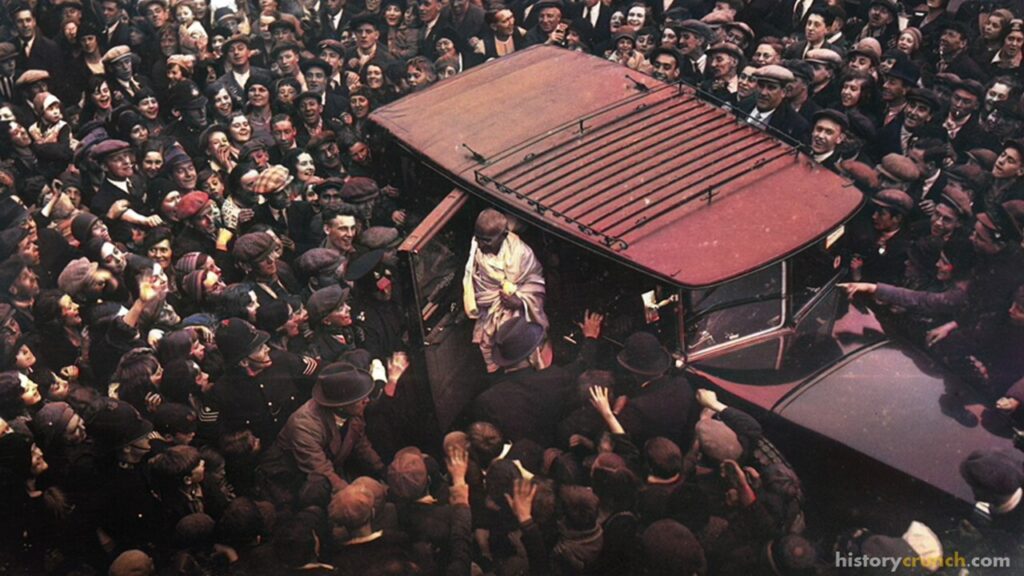
Gandhi reached the coast at Dandi on 6 April 1930 and made salt from seawater, breaking the law in front of the world's press. Millions of Indians broke the salt laws in the weeks that followed.
LEARN MORESHOW LESSwhy it matters · key numbers · 1 key figureSOCIALOne man picking up a handful of salt. The British authorities could arrest him, which made it worse, or ignore him, which made the law meaningless. There was no good answer and that was the design.
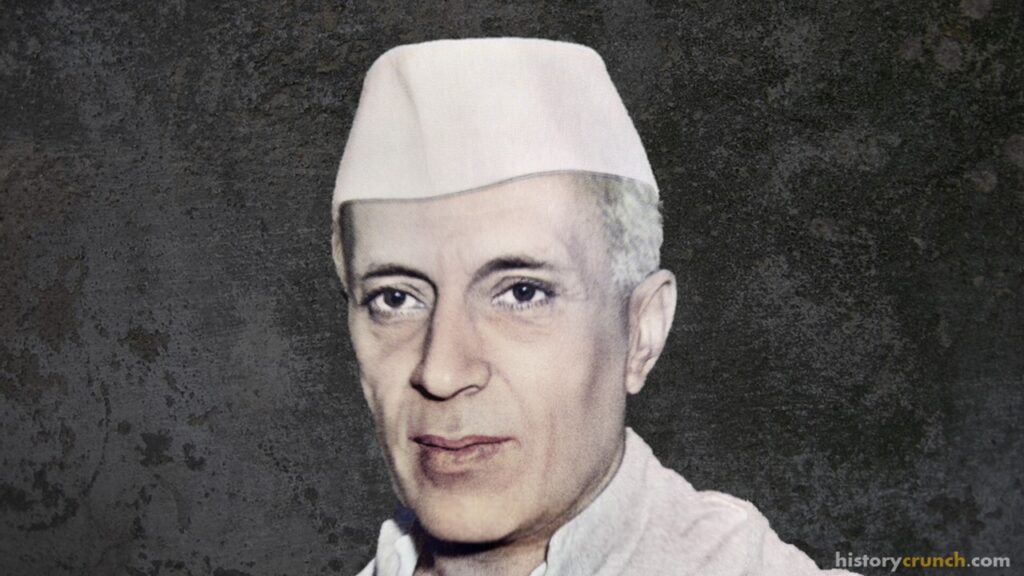
Time magazine named Gandhi Man of the Year for 1930, on the strength of the Salt March and the mass civil disobedience that followed it.
LEARN MORESHOW LESSwhy it matters · 1 key figureSOCIALThe argument was now being had in the imperial powers' own newspapers, in their own language, on terms Gandhi had set. That was what the march was for.
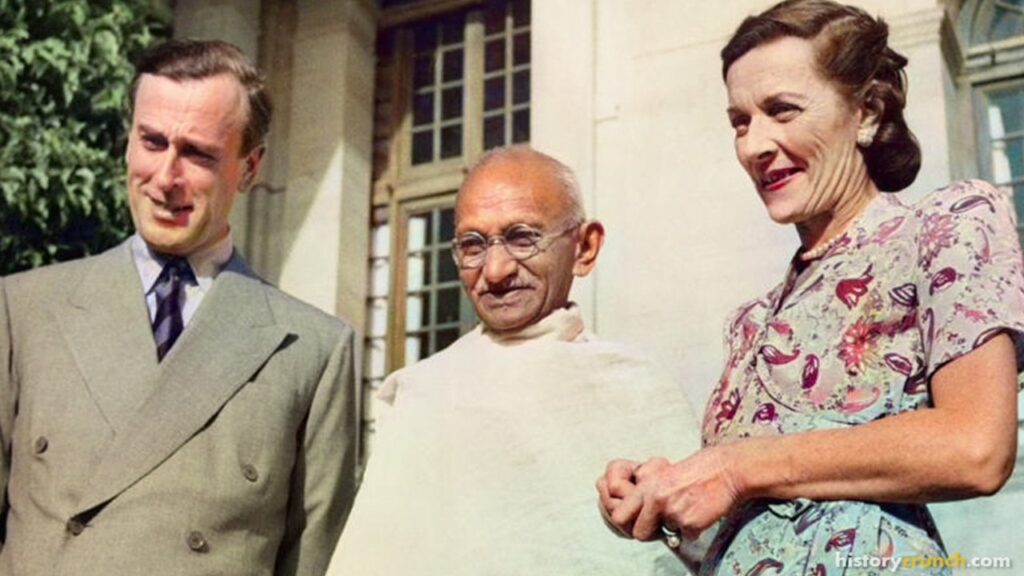
Gandhi travelled to London in 1931 for talks on India's future, wearing the homespun cloth he had urged Indians to make for themselves. Winston Churchill called him a half-naked fakir.
LEARN MORESHOW LESSwhy it matters · 2 key figuresPOLITICALThe clothes were the argument. A man who had given up British cloth walked into the imperial capital wearing the alternative, and the photographs did more work than the talks did.
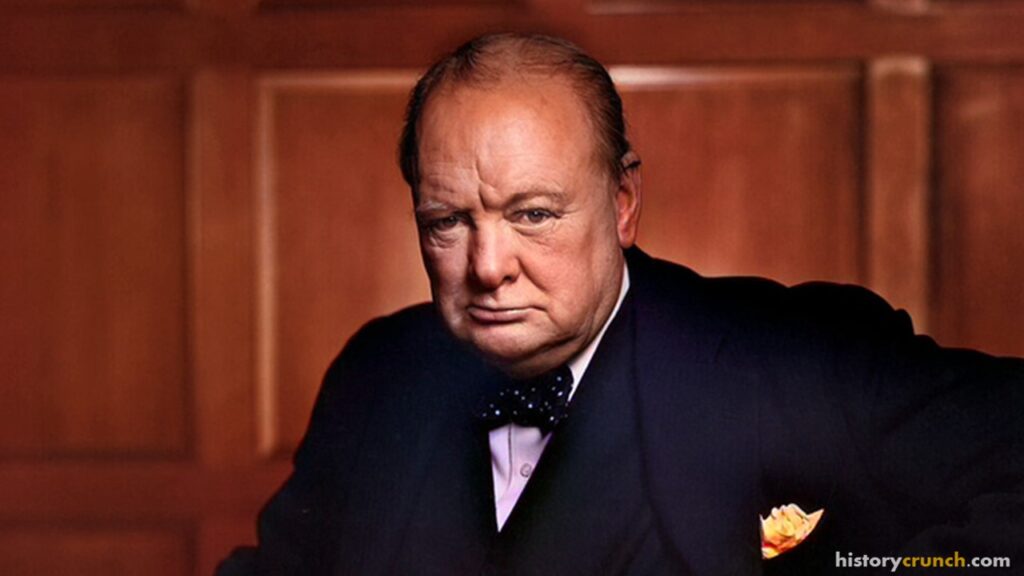
Congress launched the Quit India movement in 1942, demanding immediate British withdrawal while Britain was at war. Its leaders were arrested and held for most of the war. Winston Churchill, Prime Minister, was firmly opposed to Indian independence throughout.
LEARN MORESHOW LESSwhy it matters · key numbers · 2 key figuresPOLITICALBritain was fighting a war it described as being for freedom while imprisoning the elected leaders of a movement asking for exactly that. The contradiction was pointed out at the time, repeatedly, including by Americans.
It ended in weeks. Mountbatten brought the date forward, the border was published two days after independence, and between one and two million people died while about fifteen million crossed lines they had not known were there. Five months later Gandhi was shot by a Hindu nationalist for insisting the new country belong to everybody in it.
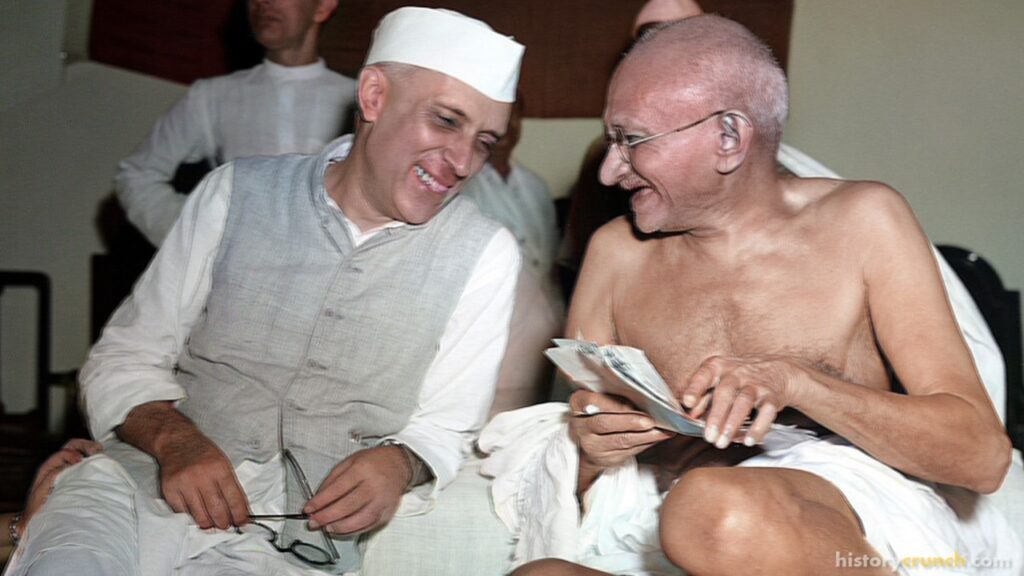
Gandhi and Jawaharlal Nehru met through 1946 as independence came into view. Nehru would become India's first Prime Minister. Gandhi held no office at all and never had.
LEARN MORESHOW LESSwhy it matters · 2 key figuresPOLITICALTwo very different visions of a free India: Nehru's industrial, secular and centralized, Gandhi's rural, spiritual and local. Nehru's won, and the argument between them has never really stopped.
Lord Mountbatten, the last Viceroy, moved the date of British withdrawal forward to August 1947, leaving a few weeks to divide an empire of four hundred million people between two new states.
LEARN MORESHOW LESSwhy it matters · a debate · 2 key figuresPOLITICALThe speed is the argument. Historians divide over whether the haste limited the violence by ending the uncertainty, or caused it by leaving no time to prepare.
Did the speed of the British withdrawal cause the violence of Partition, or limit it?
Moving in ten weeks ended a dangerous period of uncertainty in which communal violence was already rising, and Britain no longer had the troops, the money or the authority to hold the country together while a slower settlement was negotiated.
A few weeks was nowhere near enough to move populations, divide an army and a treasury, or even publish the border, which was announced two days after independence. Between one and two million people died and about fifteen million crossed the new lines.
British rule in India ended on 15 August 1947, eighty-nine years after the Raj began. The partition of the country into India and Pakistan took effect the same day.
LEARN MORESHOW LESSwhy it matters · key numbersPOLITICALAn empire of 400 million people losing the possession it was named for. Within twenty years most of the colonies on any imperial map had followed, because India had shown it was possible.
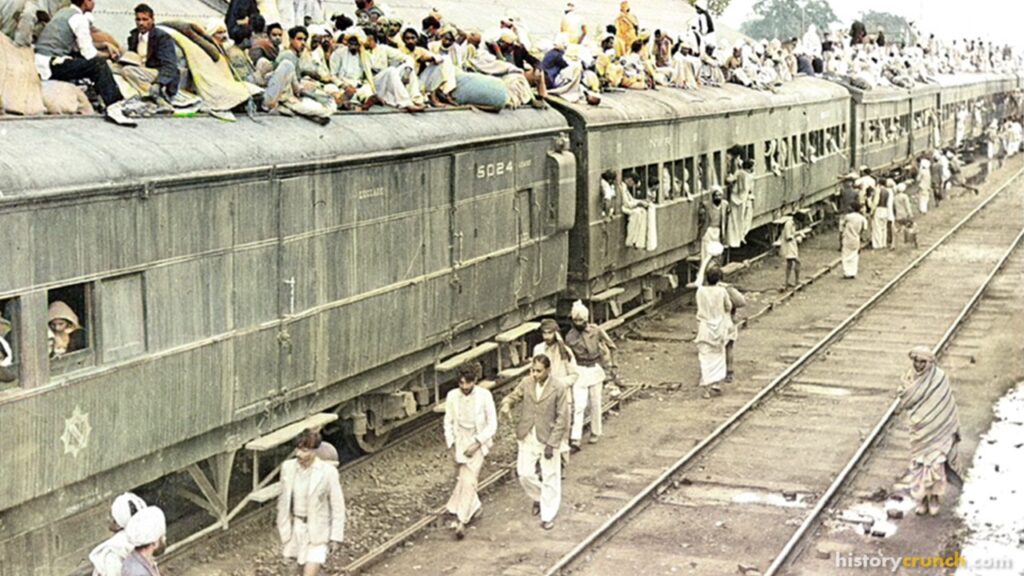
The line dividing India from Pakistan was published on 17 August 1947, two days after independence. About fifteen million people crossed it in both directions and between one and two million were killed in the violence.
LEARN MORESHOW LESSwhy it matters · key numbersSOCIALPeople did not know which country they were in until after they were in it. The trains that crossed the new border, in both directions, are the image the whole event is remembered by.
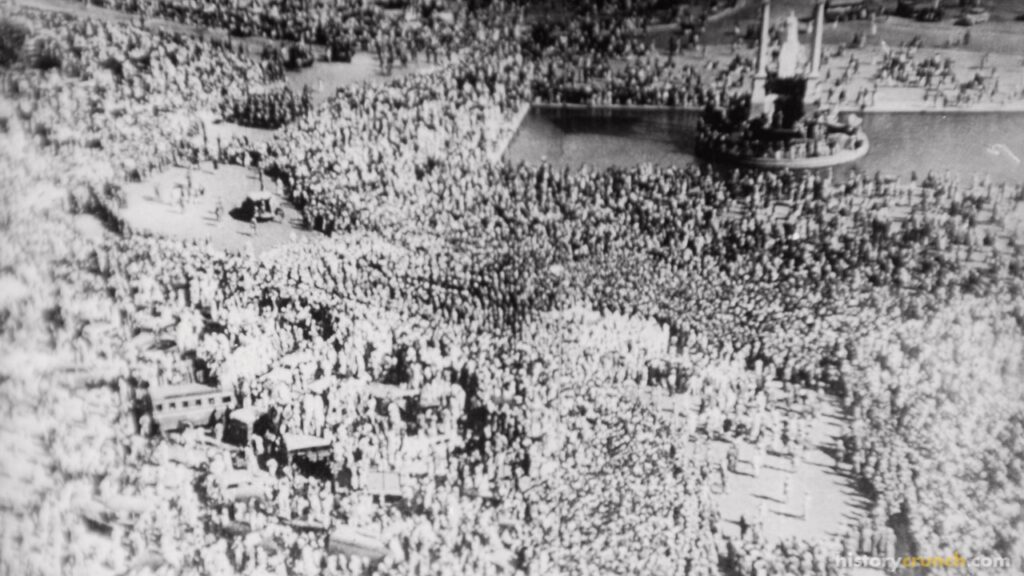
Gandhi was shot dead on 30 January 1948, five months after independence, by a Hindu nationalist who believed he had conceded too much to Muslims. Enormous crowds attended his funeral.
LEARN MORESHOW LESSwhy it matters · key numbers · 1 key figurePOLITICALHe was killed by someone from his own community for insisting that the new country belong to everybody in it. The argument he died over is still live in India today.
By 1950 average life expectancy in India had risen to about 35 years, from around 25 in 1880. Britain left behind railways, a legal code, an English-speaking administration, and an economy reshaped around exporting raw materials.
LEARN MORESHOW LESSwhy it matters · key numbers · a debateSOCIALThe ledger is genuinely contested and both columns are real. What settles it for most historians is the comparison: India was the world's largest textile producer in 1700 and one of the poorest countries in the world in 1947.
Did British rule develop India or drain it?
Railways, ports, telegraphs, a unified legal code, an English-speaking civil service and universities were all built and all survived independence, and life expectancy rose by ten years between 1880 and 1950.
The railways ran to the ports to move raw materials out, Indian textile production collapsed under British tariffs, six to ten million people died in a single famine while grain was exported, and a country with one of the strongest economies on earth in 1700 was among the poorest by 1947.

I'm a passionate history and geography teacher with over 15 years of experience working with students in the middle and high school years. I have an Education Degree with a focus in World History. I have been writing articles for History Crunch since 2015 and love the challenge of creating historical content for young learners!

K.L. is a content writer for History Crunch. She is a fantastic history and geography teacher that has been helping students learn about the past in new and meaningful ways since the mid-2000s. Her primary interest is Ancient History, but she is also driven by other topics, such as economics and political systems.
To cite this timeline as a source, use one of the formats below.
MLA: Beck, E., and K.L Woida. “British Imperialism in India Timeline.” HistoryCrunch, 13 September 2026, https://historycrunch.com/british-imperialism-in-india-timeline/.
APA: Beck, E., & Woida, K.L. (2026). British Imperialism in India Timeline. HistoryCrunch. https://historycrunch.com/british-imperialism-in-india-timeline/
Chicago: Beck, E., and K.L Woida. “British Imperialism in India Timeline.” HistoryCrunch. September 13, 2026. https://historycrunch.com/british-imperialism-in-india-timeline/
© History Crunch
Most accounts start with the East India Company. Start two hundred years earlier and the story changes shape.
Not land, not glory, at least not at first. Follow what was actually being carried.
The East India Company was a trading firm with shareholders. By 1857 it governed more people in India than lived in all of Britain.
A few thousand Company troops beat a far larger army. The reason is not military.
A difficult teenager sent abroad because nobody knew what else to do with him won a province.
The same event has two names, and the name you use is an argument about what it was.
This is a real historiographical dispute rather than a matter of taste. The case for 'mutiny' rests on its origin inside the Company army, the specific military grievances, and the absence of a unified political programme. The case for 'first war of independence' rests on how far it spread beyond the army, the proclamation of the Mughal emperor, and the participation of rulers and civilians with political aims. Most historians now describe it as a rebellion that began as a mutiny and became something larger without ever becoming a national movement, which satisfies nobody entirely.
It failed. Britain stayed for another eighty-nine years. So what was different afterwards?
The army that held British India was Indian. Working out why is harder than it sounds.
The arithmetic looks impossible. Work out how it was actually done.
The Great Famine of 1876 to 1878 killed six to ten million people while grain was exported.
India had one of the largest rail networks in the world by 1900. That is not in dispute. What it was for is.
India made the best and cheapest cotton cloth on earth in 1700. By 1900 it was importing British cloth.
The men who ended the Raj were trained by it. That was not an accident and it was not charity.
Hundreds of Indian rulers kept their thrones right through the Raj. That is not an oversight.
The Indian National Congress began in 1885 as lawyers writing polite letters. By 1930 it could shut the country down.
The partition of Bengal in 1905 split a province along religious lines. Forty-two years later a country was split the same way.
In 1905 India answered a partition by refusing to buy British goods. It worked better than any petition had.
In 1942 Congress demanded immediate British withdrawal while Winston Churchill's Britain was fighting Germany and Japan.
Gandhi never commanded troops. He ended British rule over four hundred million people.
He arrived in India in 1915 aged forty-five with the technique already finished. Where had he been?
Winston Churchill defined the war against Nazi Germany as a fight for freedom and spent forty years opposing it for India.
A tax on salt sounds trivial. It was the most carefully chosen target in the history of protest.
He was shot five months after independence by a Hindu nationalist, not by the British.
Between one and two million dead and about fifteen million people moved, in a few weeks.
Gandhi and Nehru wanted the British gone and disagreed about almost everything after that.
Gandhi gets the statues. Nehru got the job, and ran India for seventeen years.
Railways, a legal code and ten years of added life on one side. Famine, deindustrialization and partition on the other.
This is the oldest argument about British India and it is not settled. One position points to infrastructure, administration, education and law that outlasted independence, and to the ten years of life expectancy gained between 1880 and 1950. Another argues these served extraction and control, that Indian textile production collapsed under British tariffs and competition, and that a country with one of the strongest economies on earth in 1700 was among the world's poorest in 1947. A third holds that the question is badly framed, because it compares British India to an imagined India that never got to exist rather than to what India was actually doing beforehand.
Borders, a legal system, a language, a railway network and an argument that is still running.
The despatches, the reports and the histories were written by the people doing the governing.
Both held hundreds of millions of people and centuries of government. One became a colony; the other was carved into spheres of influence.
No question matches that word.
Research question 1Most accounts start with the East India Company. Start two hundred years earlier and the story changes shape.
Research question 2Not land, not glory, at least not at first. Follow what was actually being carried.
Research question 3The East India Company was a trading firm with shareholders. By 1857 it governed more people in India than lived in all of Britain.
Research question 4A few thousand Company troops beat a far larger army. The reason is not military.
Research question 5A difficult teenager sent abroad because nobody knew what else to do with him won a province.
Research question 6The same event has two names, and the name you use is an argument about what it was.
Research question 7It failed. Britain stayed for another eighty-nine years. So what was different afterwards?
Research question 8The army that held British India was Indian. Working out why is harder than it sounds.
Research question 9The arithmetic looks impossible. Work out how it was actually done.
Research question 10The Great Famine of 1876 to 1878 killed six to ten million people while grain was exported.
Research question 11India had one of the largest rail networks in the world by 1900. That is not in dispute. What it was for is.
Research question 12India made the best and cheapest cotton cloth on earth in 1700. By 1900 it was importing British cloth.
Research question 13The men who ended the Raj were trained by it. That was not an accident and it was not charity.
Research question 14Hundreds of Indian rulers kept their thrones right through the Raj. That is not an oversight.
Research question 15The Indian National Congress began in 1885 as lawyers writing polite letters. By 1930 it could shut the country down.
Research question 16The partition of Bengal in 1905 split a province along religious lines. Forty-two years later a country was split the same way.
Research question 17In 1905 India answered a partition by refusing to buy British goods. It worked better than any petition had.
Research question 18In 1942 Congress demanded immediate British withdrawal while Winston Churchill's Britain was fighting Germany and Japan.
Research question 19Gandhi never commanded troops. He ended British rule over four hundred million people.
Research question 20He arrived in India in 1915 aged forty-five with the technique already finished. Where had he been?
Research question 21Winston Churchill defined the war against Nazi Germany as a fight for freedom and spent forty years opposing it for India.
Research question 22A tax on salt sounds trivial. It was the most carefully chosen target in the history of protest.
Research question 23He was shot five months after independence by a Hindu nationalist, not by the British.
Research question 24Between one and two million dead and about fifteen million people moved, in a few weeks.
Research question 25Gandhi and Nehru wanted the British gone and disagreed about almost everything after that.
Research question 26Gandhi gets the statues. Nehru got the job, and ran India for seventeen years.
Research question 27Railways, a legal code and ten years of added life on one side. Famine, deindustrialization and partition on the other.
Research question 28Borders, a legal system, a language, a railway network and an argument that is still running.
Research question 29The despatches, the reports and the histories were written by the people doing the governing.
Research question 30Both held hundreds of millions of people and centuries of government. One became a colony; the other was carved into spheres of influence.