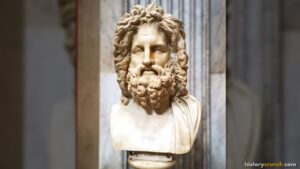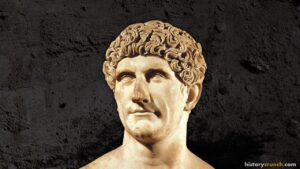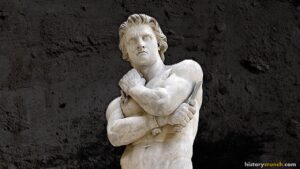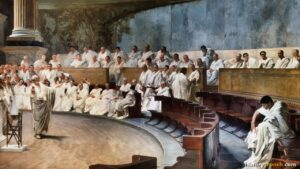
Ancient Roman gods and goddesses were central to Roman religion and to daily life across the whole of the Roman world. The Romans were a polytheistic people, which means they believed in and worshiped many gods at once, and each god was thought to control a different area of life or the natural world, such as war, love, the sea, or farming. These deities shaped how Romans made decisions, fought battles, planted crops, and governed their cities, and temples dedicated to the gods stood throughout Rome and across the entire empire.
A god or goddess in Roman belief was an immortal, superhuman being who watched over a piece of the world and expected honor in return. Romans thought that keeping the gods happy through prayer, sacrifice, and correct ritual would protect the city and its people. They called this careful, respectful relationship the pax deorum, a Latin phrase meaning the “peace of the gods.” When the gods were pleased, Romans believed the state would prosper, and when they were neglected, disaster could follow.
What Was Ancient Rome?
Ancient Rome was one of the most powerful civilizations in world history. Over the course of more than a thousand years, it grew from a small monarchy into a vast empire that ruled over much of Europe, North Africa, and the Middle East. Historians usually divide the history of Ancient Rome into three main periods, which included the Roman Kingdom, the Roman Republic, and the Roman Empire.
The Roman Kingdom lasted from 753 BCE to 509 BCE, when Rome was ruled by kings who led the army, made laws, and performed important religious duties. In fact, the earliest Romans were deeply superstitious and believed in spirits that stood for parts of the natural world, such as rivers, trees, and homes. As Rome grew and interacted with neighboring peoples, its religion began to expand, and its gods and goddesses became more clearly defined.
Religion in Ancient Rome remained important throughout the Republic, which lasted from 509 BCE to 27 BCE, and into the age of the emperors that followed. More specifically, the worship of the gods was tied to the government, the army, and the family alike. As such, understanding the Roman gods and goddesses is an important part of understanding Roman culture as a whole.
Where Did the Roman Gods Come From?
Roman religion had deep roots in the traditions of the early peoples of Italy, including the Etruscans to the north and the Latin tribes who settled the hills of central Italy. In fact, early Roman belief was animistic, meaning the Romans thought that spirits lived in objects and places all around them. Over time, these vague spirits developed into the named gods and goddesses that later Romans would recognize.
As Rome expanded and came into close contact with Greek civilization from the third century BCE onward, Roman religion absorbed a great deal of Greek influence. Many Roman gods were identified with Greek gods and took on similar personalities and stories. For instance, Jupiter became linked with the Greek Zeus, Neptune with Poseidon, and Mars with Ares.
Even so, the Roman gods kept their own distinct character. While they shared many symbols and myths with their Greek counterparts, they also reflected Roman values such as duty, order, and military strength. In reality, the Romans were happy to welcome foreign gods into their religion, since adding new deities helped bring conquered peoples into the culture of Rome.
Who Were the Main Roman Gods and Goddesses?
Jupiter was the king of the Roman gods and the equivalent of Zeus in Ancient Greece. He was the god of the sky, thunderstorms, lightning, and weather, and he was also connected to law, order, justice, and governance. Jupiter was considered one of the most important gods of the Romans, and for this reason he usually held the highest divine authority over the other gods. His identifying instrument was the thunderbolt, so statues and paintings of Jupiter often show him holding one.
Juno was the queen of the gods and the wife of Jupiter, as well as the daughter of the god Saturn. She was the goddess of marriage and women and was honored as a protector and counselor of Rome. Juno is often shown seated with a peacock and dressed in warlike attire, and one of her most famous roles was Juno Moneta, whose temple in Rome is where the first Roman coins were minted. In fact, the English word “money” comes from this title.
Minerva was the goddess of wisdom, useful arts, crafts, and strategy, and she was linked to the Greek goddess Athena. She watched over schoolchildren and skilled workers such as carpenters and stonemasons. Together, Jupiter, Juno, and Minerva formed the most important group of gods in Rome, known as the Capitoline Triad, who shared a great temple on the Capitoline Hill.
Neptune was one of the brothers of Jupiter and the ruler of the seas, which made him the counterpart of the Greek god Poseidon. Because he ruled the waters, Neptune was the patron of sailors and the protector of ships, and he was also associated with horses and horse racing. Mars, another leading god, was the god of war and spring and was seen as the divine father of Romulus and Remus, the legendary founders of Rome. As such, Mars was thought to be important in establishing the religious and cultural identity of the city.
Venus was the goddess of love and beauty and the counterpart of the Greek goddess Aphrodite. She was honored as the divine mother of Aeneas, a legendary ancestor of the Roman people, and she was one of the most widely referenced of all the Roman gods. Other important deities included Mercury, the swift messenger of the gods and patron of trade, and Ceres, the goddess of grain and the harvest, whom farmers were careful to keep pleased.
Some gods were more distinctly Roman than others. Janus, for example, was the god of beginnings, endings, doorways, and gates, and he was usually shown with two faces so he could look into the past and the future at the same time. Janus is thought to be the source of the name for the month of January, which the Roman calendar treated as the start of the new year. Vesta, the goddess of the home and hearth, was another important Roman deity, and her sacred fire was tended by a group of priestesses called the Vestal Virgins.
How Did Romans Worship Their Gods?
Roman worship was not mainly about personal faith. Instead, it focused on carefully performing the correct rituals, prayers, and sacrifices so that the gods would remain pleased. Temples honoring the gods were built throughout the empire, but the temple itself was seen as the home of the god, and most worship took place outside it, in front of an altar.
Religion in Rome was also woven into government and the army. Generals offered sacrifices before battles, and the Senate consulted religious officials before making major decisions. There was no separation between religion and the state, and the same leading men who held public office often served as priests as well.
Worship was just as important inside the home. In addition to the major gods, Romans honored household spirits called the Lares and Penates, who protected the family and the house. Every Roman household had a small shrine called a lararium, where daily offerings were made, which shows that religion was an essential part of ordinary family life and not just something for temples and priests.
How Did Roman Religion Change Over Time?
Roman religion was never fixed and changed a great deal across the centuries. During the age of the emperors, a new practice called the Imperial Cult developed. The first emperor, Augustus, understood the political value of religion, and he encouraged the idea of emperor worship, since citizens were far less likely to oppose a ruler who was treated as god-like. In fact, some emperors were declared gods after their death.
Because the empire was so large, many foreign beliefs also flowed into Rome. Among these were the so-called mystery cults, such as the worship of Cybele, the “Great Mother,” which came from what is now Turkey and was popular among women. Another was the cult of the Egyptian goddess Isis, and a third was Mithraism, which came from the region of modern Iran and became especially popular among Roman soldiers.
The greatest change came with Christianity. At first, Christians were persecuted, but the religion continued to gain followers. In 313 CE the emperor Constantine issued the Edict of Milan, which granted freedom of worship to Christians, and by the late fourth century, under the emperor Theodosius I, Christianity had become the official religion of the Roman Empire. As a result, centuries of polytheistic tradition slowly gave way to a single new faith.
Significance of Ancient Roman Gods and Goddesses
The Roman gods and goddesses were significant because they touched nearly every part of Roman life, from the government and the army to farming and the family home. Belief in the gods gave Romans a shared identity and a way to explain the world around them, and it tied together people across a huge and diverse empire. For this reason, religion helped hold Roman society together for more than a thousand years.
The legacy of these gods is still visible in the modern world. The names of the planets Mercury, Venus, Mars, Jupiter, Saturn, and Neptune all come from Roman gods, and several months and days on the calendar reflect Roman deities and festivals. Even after Rome adopted Christianity, many Roman symbols, stories, and ideas continued to shape Western art, language, and culture long afterward.
Finally, the Roman gods matter because they reveal what the Romans valued most, including duty, order, and strength. Studying these deities offers a clear window into how ordinary Romans understood their place in the world and how the state used religion to guide and unite its people. As stated above, understanding the gods is a key part of understanding Ancient Rome itself.
Frequently Asked Questions
How Many Gods Did the Ancient Romans Worship?
The Romans worshiped a very large number of gods, far more than the handful that are famous today. A special group of twelve leading deities was known as the Dii Consentes, and these were the most honored gods of the Roman state. Beyond these major figures, Romans also recognized countless smaller gods and spirits, including deities believed to protect specific tasks, places, and even moments of daily life.
Are Roman Gods the Same as Greek Gods?
Roman gods are closely related to Greek gods but are not exactly the same. As Rome came into contact with Greek culture, the Romans matched many of their own gods with Greek ones, so Jupiter was paired with Zeus and Venus with Aphrodite. However, the Roman versions kept different names and often reflected Roman ideas such as discipline and loyalty to the state, which set them apart from their Greek models.
Who Was the Most Important Roman God?
Jupiter was generally the most important Roman god and held the highest authority over the others. He was seen as the protector of the Roman state, and victorious generals would pay honor to him at his great temple after winning battles. His central place in Roman religion made his temple on the Capitoline Hill one of the most important religious sites in the entire city.
What Were the Vestal Virgins?
The Vestal Virgins were priestesses who served the goddess Vesta, the goddess of the hearth and home. Their most important duty was to keep a sacred fire burning at all times, since Romans believed the safety of the city depended on it. This priesthood was highly respected, and the women who served in it held a special and unusual position in Roman society.
Why Did Romans Stop Worshiping the Old Gods?
Romans gradually stopped worshiping the traditional gods as Christianity spread across the empire. After the emperor Constantine allowed Christians to worship freely in 313 CE, the new religion grew rapidly. By the end of the fourth century, Christianity had become the official religion of the Roman Empire, and the worship of the old gods slowly faded away in public life.
Cite This Article
To cite this article as a source, use one of the formats below.
MLA: Millar, B. “Ancient Roman Gods and Goddesses: A Detailed Summary.” HistoryCrunch, 9 July 2026, https://historycrunch.com/ancient-roman-gods-and-goddesses/.
APA: Millar, B. (2026). Ancient Roman Gods and Goddesses: A Detailed Summary. HistoryCrunch. https://historycrunch.com/ancient-roman-gods-and-goddesses/
Chicago: Millar, B. “Ancient Roman Gods and Goddesses: A Detailed Summary.” HistoryCrunch. July 9, 2026. https://historycrunch.com/ancient-roman-gods-and-goddesses/
Sources
- H.H. Scullard, From the Gracchi to Nero.
- Adrian Goldsworthy, How Rome Fell / Caesar (military and political).