
The American Revolution is the story of how thirteen British colonies argued themselves out of an empire and then had to invent a country. It begins in 1754 with a young Virginian firing the first shots of a war that made Britain master of North America and left it with a debt it could not pay, and it ends with ten amendments ratified in 1791. In between are twelve years of argument, eight years of fighting, and one sentence about equality that the country it founded did not live up to for another century.
From the first shots in 1754 to the Bill of Rights in 1791.
The American Revolution is the story of how thirteen British colonies argued themselves out of an empire and then had to invent a country. It begins in 1754 with a young Virginian firing the first shots of a war that made Britain master of North America and left it with a debt it could not pay, and it ends with ten amendments ratified in 1791. In between are twelve years of argument, eight years of fighting, and one sentence about equality that the country it founded did not live up to for another century.
Taxes are the usual answer, and the taxes were small. So why did they matter this much?
A war, a debt, and twelve years of arguing about who may take a man's money.
The same victory that made Britain master of North America started the quarrel that lost half of it.
One war, three consequences, and none of them intended.
Pick a date and defend it. Every candidate has a good case and a fatal flaw.
Five moments, any of which could be the answer.
It sounds like a complaint about money. It is an argument about who owns you.
An English idea, applied by Englishmen against England.
Twice before the war, the colonies forced Parliament to back down using nothing but shopping.
Non-importation, and the British merchants it aimed at.
In 1765 they barely corresponded. In 1774 twelve of them sat in one room and agreed a plan.
Committees of correspondence, and the post that carried them.
Five men died on King Street. The name it was given did more work than the event.
A crowd, a volley, an engraving and a trial.
The Tea Act lowered the price. That is exactly what made it dangerous.
A monopoly, a tax and a very disciplined night's work.
Not a nation in arms. A small army that kept dissolving, and a militia that came and went.
Continentals, militia, and the difference between them.
He lost more battles than he won. He is still the reason the war was won.
Retreat, survival, and the decision to go home.
Perhaps a fifth of the colonists sided with Britain. They are missing from most accounts.
Neighbours, exile and confiscated property.
Boycotts run through households, armies need feeding, and farms do not run themselves.
Spinning, following the army, running everything left behind.
Nobody knows, and both sides spent years insisting it was the other.
Two hundred witnesses and no agreement.
The British took the hill and lost over a thousand men doing it. There were not a thousand spare men in America.
Three assaults, and the arithmetic afterwards.
Eight years of bad food, no pay, smallpox and boots that did not exist.
Supply, pay, disease and the mutinies nobody teaches.
An entire British army surrendered in the woods of New York, and Paris changed its mind.
A plan that assumed three armies would meet, and did not.
French money, French guns, French troops and, at Yorktown, a French fleet.
What France supplied, and what it wanted for it.
Britain won most of the battles, took every major city it wanted, and still lost.
Distance, numbers, allies and the difference between holding ground and holding a country.
Britain switched theaters in 1778 on a promise of Loyalist support, and marched into a trap.
Savannah, Charleston, Camden, Cowpens, Yorktown.
Cornwallis surrendered 7,000 men. Britain had more men. It stopped anyway.
A march, a fleet, and a Parliament out of patience.
It is a legal document, a list of complaints, and one sentence that outgrew all of it.
The argument, the grievances, and the line that would not stay put.
The Articles of Confederation lasted eight years and could not tax, trade or enforce.
A union of sovereign states, built by men afraid of central power.
They were sent to amend the Articles. They shut the windows and wrote a new government.
A hot summer, closed doors, and a set of bargains.
Madison thought it was unnecessary. He wrote it anyway, and it became the most quoted text in American law.
A promise made to win ratification, and kept.
The man who wrote all men are created equal owned six hundred people over his lifetime.
A struck-out passage, a northern abolition, and a line on a map.
Both sides wanted the same land, and neither side was offering to share it.
A proclamation line, an alliance, and a border drawn without them.
The same men ran the country afterwards. The same people were enslaved. Nobody's land changed hands.
What changed, what did not, and how much a republic was worth in 1783.
It settled who governs. It left two questions that took another century each.
Independence won, slavery untouched, the west taken.
One rider got a poem eighty-five years later. The others did the same job and are forgotten.
A poem, a painting and a national story.
They start with the same ideas six years apart and finish in completely different places.
A comparison a student can actually make, using two timelines.
In 1754 a 22 year old Virginian named George Washington fired the first shots of a world war, and Britain won it. By 1763 France was gone from North America, Britain held everything east of the Mississippi, and the national debt had roughly doubled. The colonies had never been taxed directly by Parliament before. Within two years they had been, and within a year of that they had forced Parliament to back down, learned that they could, and been told by the Declaratory Act that it changed nothing.
A 22 year old Virginia militia officer named George Washington, with about 40 men and a small number of Mingo warriors under the leader known as Tanaghrisson, ambushed a French scouting party at Jumonville Glen. The French commander was killed.
LEARN MORESHOW LESSwhy it matters · key numbers · 1 key figureWARThe man who would command the army against Britain opened the war that made Britain master of North America. Everything on this timeline runs from that war, and from the debt it left behind.
General Edward Braddock marched roughly 1,500 soldiers toward Fort Duquesne and was ambushed at the Battle of the Monongahela. Braddock was mortally wounded and the British force was routed. Washington, serving on his staff, helped organize the retreat.
LEARN MORESHOW LESSwhy it matters · 1 key figureWARIt taught colonial officers that British regulars could be beaten, and it taught them how. Twenty years later they were the ones doing the beating.
The decisive battle of the French and Indian War was fought outside Quebec on a plateau known as the Plains of Abraham. Quebec surrendered five days later, on September 18th, 1759.
LEARN MORESHOW LESSwhy it mattersWARWith Quebec gone, French North America was finished. So was the reason the colonies had needed British protection, which is a point they would make repeatedly over the next twenty years.
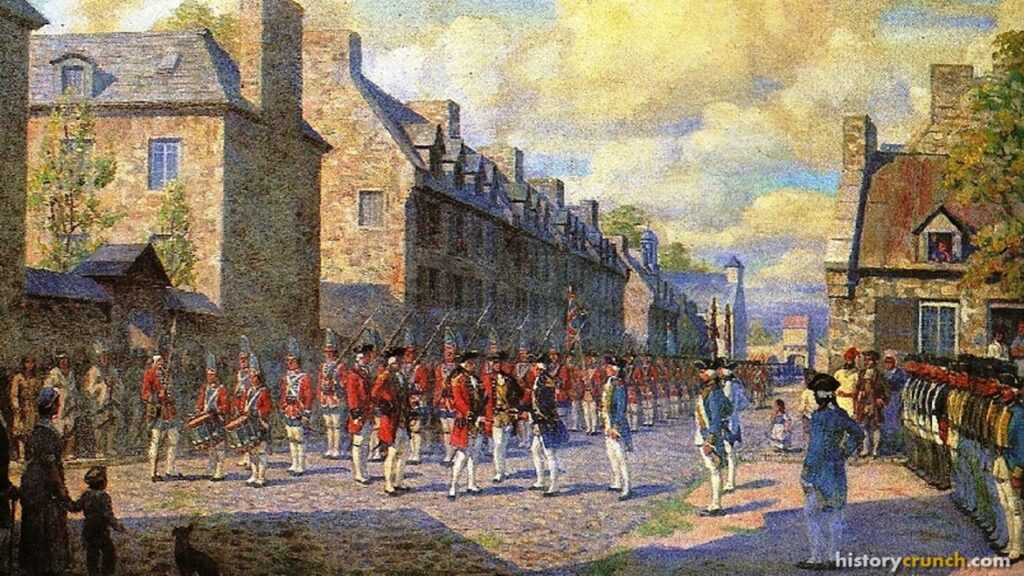
Under the Treaty of Paris of 1763, France ceded all of its territory east of the Mississippi River to Britain, giving the British Empire control of the entire eastern half of North America.
LEARN MORESHOW LESSwhy it matters · key numbersTREATYBritain won the largest empire in the world and a debt it had no way to pay. Every tax in the next twelve years is an attempt to make the colonies help pay it.
A coalition of Native nations led by the Ottawa chief Pontiac launched a coordinated uprising across the Great Lakes and Ohio Valley, capturing a string of British forts.
LEARN MORESHOW LESSwhy it mattersWARIt is the reason for the Proclamation Line. Britain drew the line to keep peace on a frontier it could not afford to garrison, not to be generous to anybody.
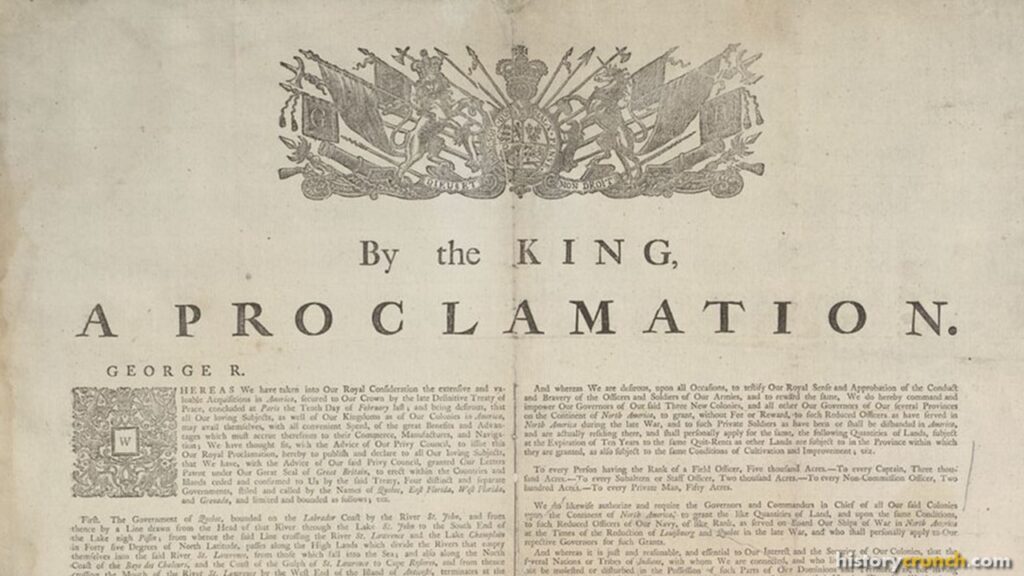
King George III issued a royal decree drawing a line along the crest of the Appalachian Mountains from Georgia to Quebec, and reserving all land west of it for Native American nations. Colonists were forbidden to settle beyond it.
LEARN MORESHOW LESSwhy it matters · a debate · 1 key figureLAWColonists had just fought a war they believed was about that land. Being told they could not have it, by a government in London, is the first grievance of the Revolution.
Was the Proclamation Line about protecting Native nations or about saving money?
Protection. It recognized Native land rights in law, and it is still cited in Canadian courts as an early statement of Aboriginal title.
Money. Britain could not afford another frontier war, and a line on a map was cheaper than an army. The rights language followed the accounting.
Parliament placed new duties on sugar, molasses and other goods imported into the colonies, and tightened enforcement against smuggling.
LEARN MORESHOW LESSwhy it mattersTAXIt was a trade duty rather than an internal tax, so the constitutional argument had not started yet. It began the habit of Parliament raising money in America.
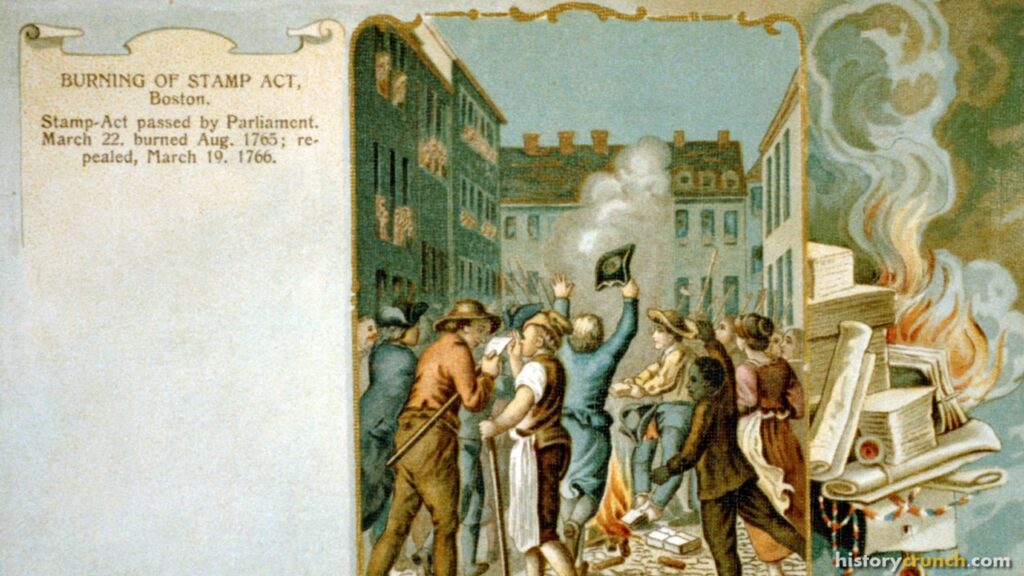
Parliament required colonists to buy stamped paper for newspapers, legal documents, licences, playing cards and dice. It was the first direct internal tax Parliament had ever imposed on the colonies, and it took effect on November 1st, 1765.
LEARN MORESHOW LESSwhy it matters · key numbers · 1 key figureTAXA trade duty falls on merchants. This one fell on every lawyer, printer, tavern keeper and card player in America, which is a remarkably efficient way to make enemies of the people who write and talk for a living.
The Virginia House of Burgesses passed a set of resolutions declaring that only Virginia's own assembly could tax Virginians. Patrick Henry, a new member, drove them through.
LEARN MORESHOW LESSwhy it mattersPOLITICSA colonial legislature had just told Parliament what Parliament could not do. Newspapers printed the resolves across the continent, often in stronger versions than those actually passed.
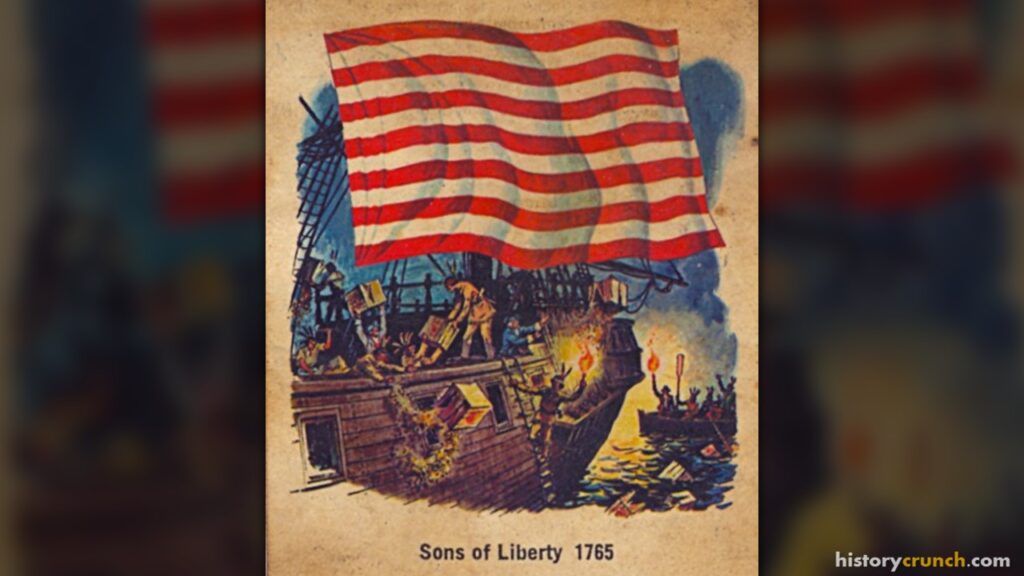
Groups calling themselves the Sons of Liberty began meeting in Boston and New York City and had chapters from Massachusetts to South Carolina within six months, coordinating boycotts, intimidating officials and organizing crowds.
LEARN MORESHOW LESSwhy it matters · 1 key figurePEOPLEThis is the machinery of the Revolution before it is a revolution: a communication network, a crowd that can be summoned, and a name every colony recognizes.
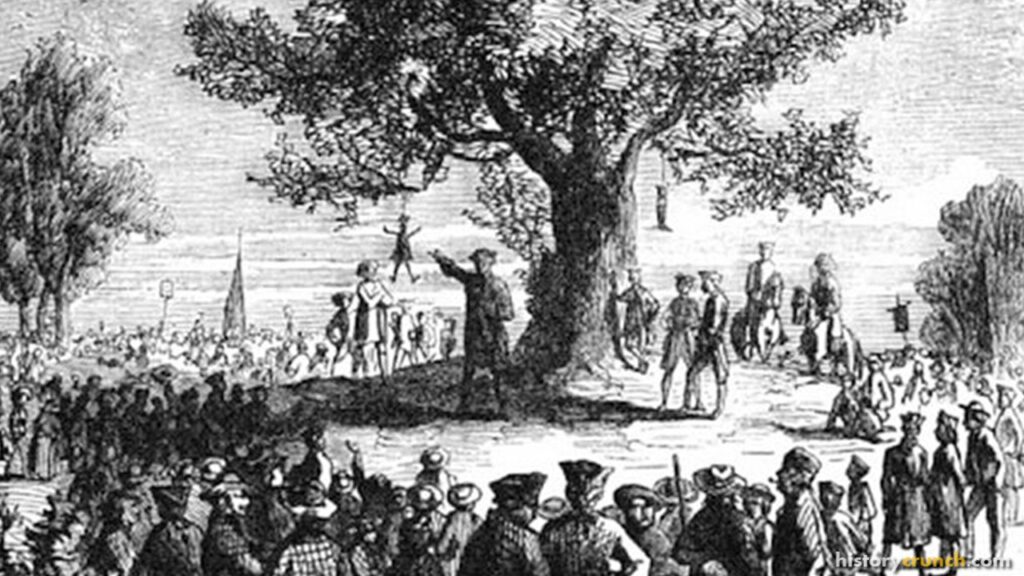
A Boston crowd hung an effigy of Andrew Oliver, the colony's appointed stamp distributor, from an elm near Boston Common, then destroyed his office and attacked his house. Oliver resigned the next day.
LEARN MORESHOW LESSwhy it mattersPROTESTBy the time the law took effect on November 1st, almost every stamp distributor in the colonies had resigned in fear, and a law nobody will enforce is not a law.
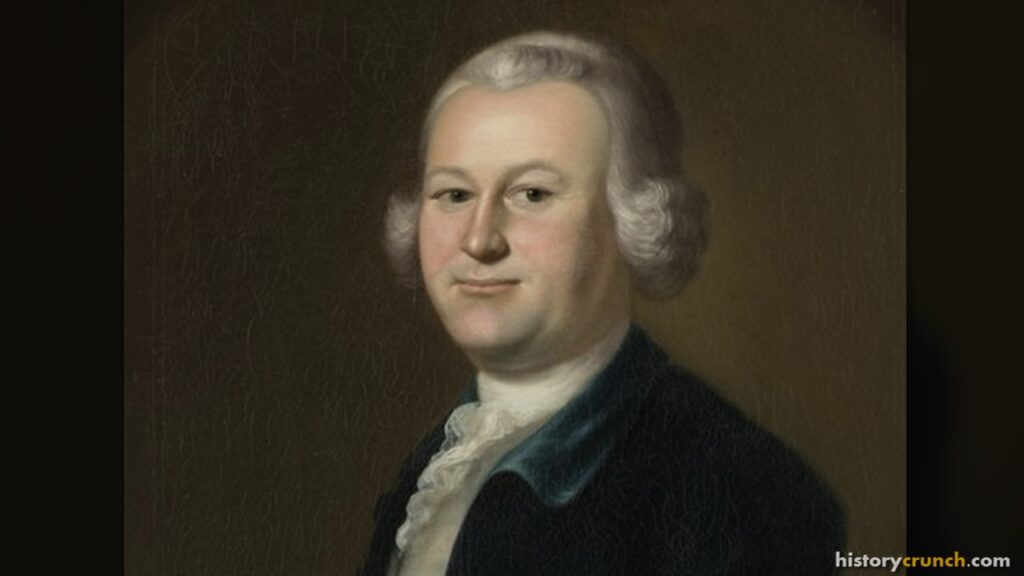
Delegates from nine colonies met in New York City as the Stamp Act Congress and declared that taxes could not constitutionally be imposed on colonists except by their own legislatures.
LEARN MORESHOW LESSwhy it matters · key numbersPOLITICSIt is the first time the colonies acted as a single body, and it happened ten years before there was a war to fight. Nobody there was asking for independence.
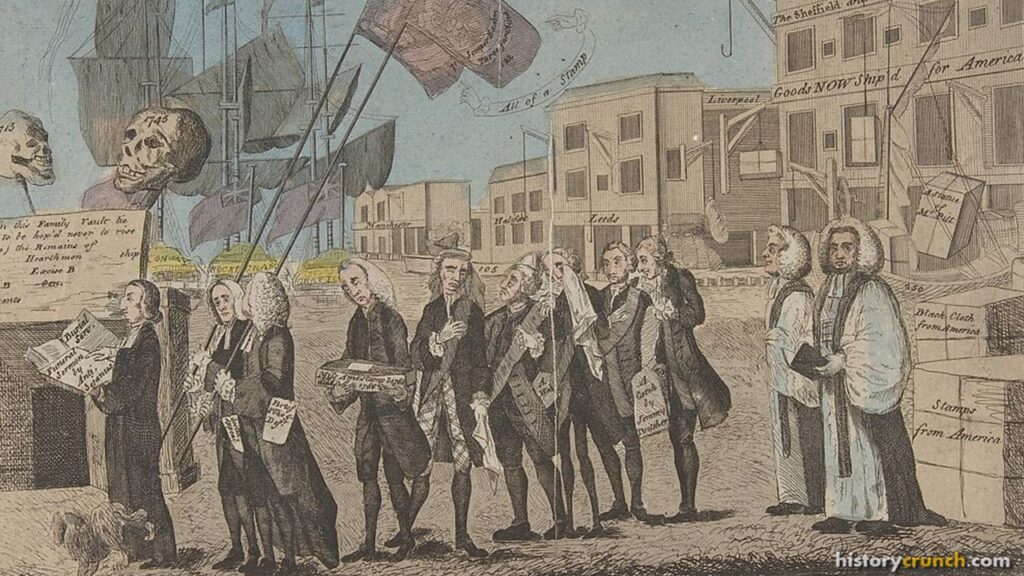
Parliament repealed the Stamp Act under pressure from British merchants hurt by the colonial non-importation agreements. On the same day it passed the Declaratory Act, asserting its right to legislate for the colonies in all cases whatsoever.
LEARN MORESHOW LESSwhy it matters · a debateLAWThe colonies celebrated the repeal and largely ignored the second half. Britain had conceded the tax and kept the principle, which guaranteed the argument would come back.
Did the boycotts win the repeal?
Yes. British merchants losing American orders lobbied Parliament hard, and Parliament listened to them rather than to the colonists.
Only partly. The tax was also close to unenforceable after every distributor resigned, so repeal admitted a fact rather than granting a demand.
Seven years in which every settlement made the next quarrel worse. New duties in 1767, two regiments landed in Boston in 1768, five men dead on King Street in 1770, and in 1772 a committee in Boston that started writing to every town in Massachusetts. That network is the thing that mattered. When Parliament closed the port of Boston in 1774 to punish one town for destroying one cargo of tea, the letters were already going out, and twelve colonies sent delegates to Philadelphia.
Parliament imposed new duties on glass, lead, paint, paper and tea imported into the colonies, and created a customs board in Boston with sweeping powers to enforce them.
LEARN MORESHOW LESSwhy it mattersTAXCharles Townshend thought he had found the loophole: the colonies objected to internal taxes, so he taxed imports instead. The colonies objected to those too, and he died in September before finding out.
The Philadelphia lawyer John Dickinson published twelve essays arguing that Parliament could regulate colonial trade but could not tax the colonies for revenue. They were reprinted in nearly every colonial newspaper.
LEARN MORESHOW LESSwhy it mattersIDEASDickinson gave the resistance a constitutional argument a moderate Whig could sign, which is why it spread so far. He later refused to sign the Declaration of Independence.
Samuel Adams and James Otis drafted a letter on behalf of the Massachusetts House of Representatives, sent to every other colonial assembly, urging a united response to the Townshend Acts. London ordered it withdrawn; Massachusetts refused by 92 votes to 17.
LEARN MORESHOW LESSwhy it matters · 1 key figurePOLITICSThe number 92 became a toast, a street name and a slogan. A procedural vote in Boston had become a continental cause.
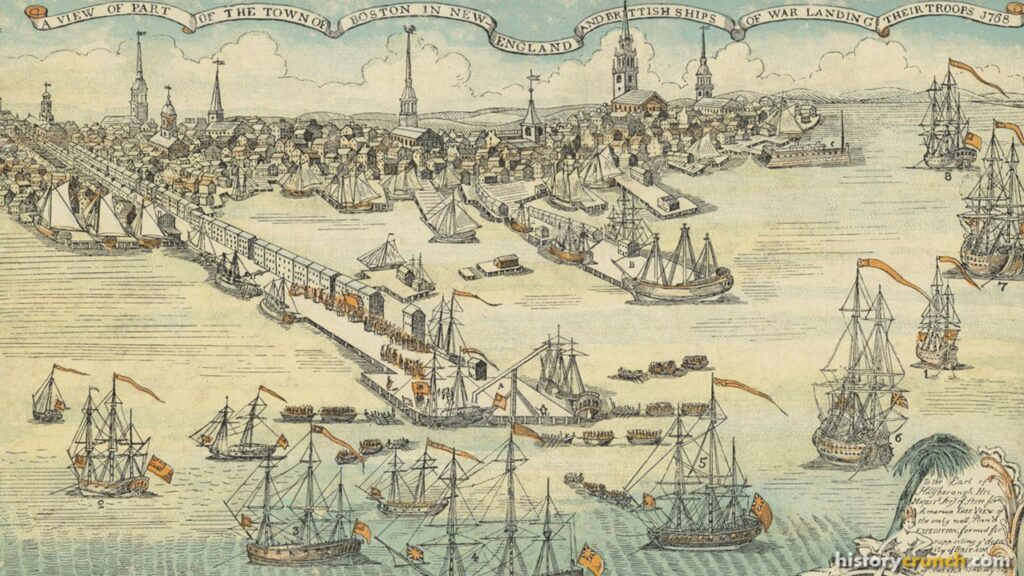
Britain landed two regiments of regular soldiers in Boston to protect customs officials and keep order. Paul Revere engraved the scene of warships landing their troops in a civilian town.
LEARN MORESHOW LESSwhy it matters · 1 key figureMILITARYAn army was now camped in a town that had not asked for it, with orders to enforce taxes the town denied were legal. Soldiers were on those streets for seventeen months before anyone was killed.
A customs informer fired into a crowd of boys who had been harassing him outside a loyalist merchant's shop and killed eleven year old Christopher Seider. His funeral drew a crowd of thousands.
LEARN MORESHOW LESSwhy it mattersDEATHEleven days before the Boston Massacre, the town had already buried a child and been taught by Samuel Adams how to hold a political funeral.
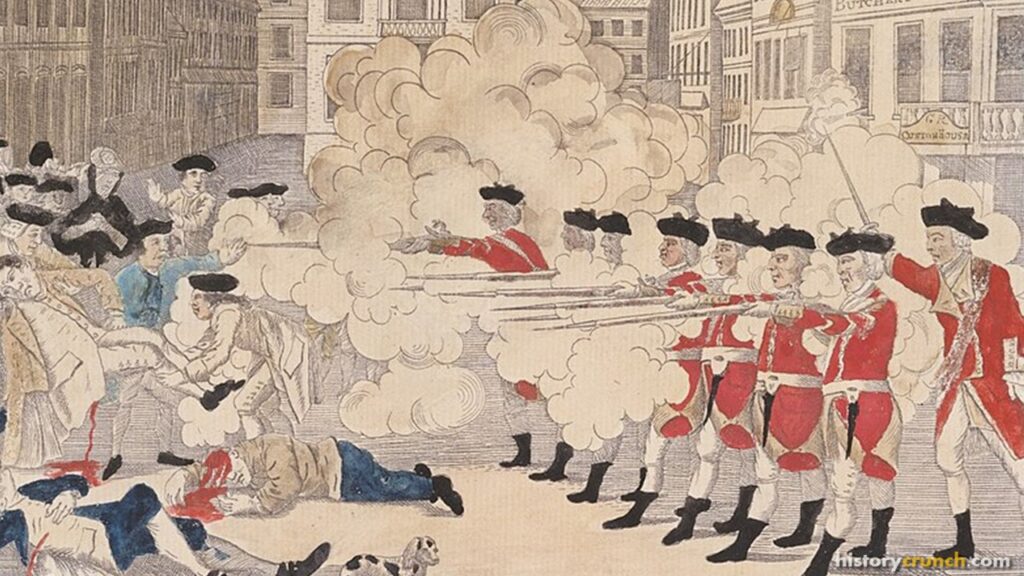
A crowd gathered around a sentry outside the Custom House on King Street and grew to several hundred. Soldiers fired into it, killing five, including the sailor Crispus Attucks. Paul Revere's engraving of the scene was on sale within three weeks.
LEARN MORESHOW LESSwhy it matters · key numbers · a sourceDEATHFive deaths in a street brawl became the most famous atrocity in America, because the people who told the story were better at telling it than the government that had to answer for it.
IN THEIR OWN WORDS“The soldiers were tried for their lives and the verdict rested on the evidence, not on the town's temper.”
John Adams, on his defense of the soldiers, October 1770WHAT TO NOTICEAdams was a leading Patriot and he defended the men who fired. He later called it one of the best things he ever did.
Parliament repealed most of the Townshend duties on the very day of the Boston Massacre, keeping only the tax on tea. News of each event took weeks to cross the Atlantic, so neither side knew about the other.
LEARN MORESHOW LESSwhy it mattersLAWThe tea tax was kept deliberately, to hold on to the principle. Three years later that is the tax sitting in Boston Harbor.
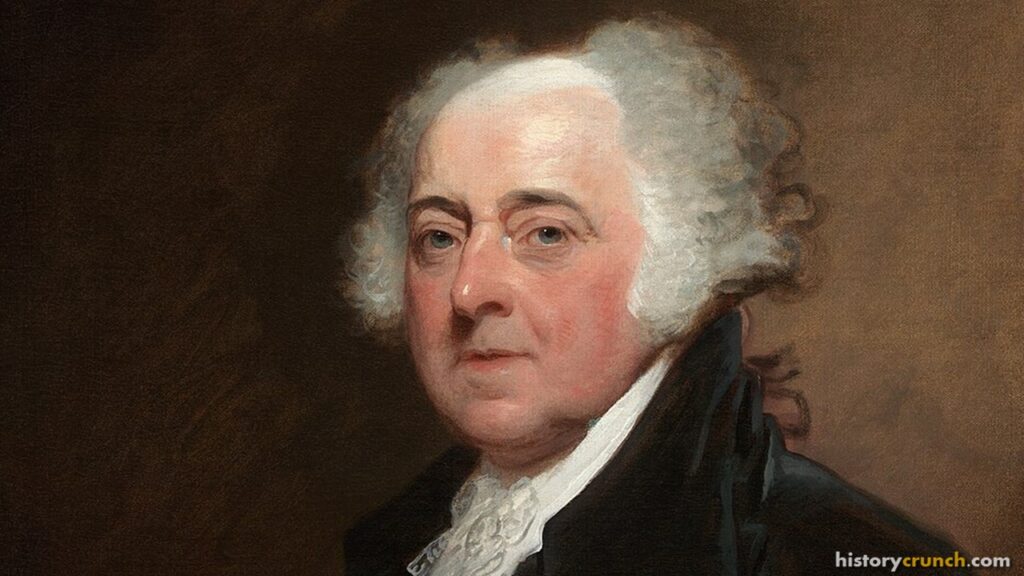
John Adams, a prominent Patriot lawyer, defended the British soldiers at their trial. Captain Preston was acquitted; six soldiers were acquitted and two were convicted of manslaughter and branded on the thumb.
LEARN MORESHOW LESSwhy it matters · 1 key figureLAWA town that had just buried five people gave the soldiers who shot them a defense lawyer and a fair trial. Adams thought that mattered more than the verdict.
A British customs schooner, the Gaspee, ran aground in Narragansett Bay while chasing a smuggler. Rhode Island colonists rowed out, shot the commander, put the crew ashore and burned the ship.
LEARN MORESHOW LESSwhy it mattersPROTESTLondon's answer was a commission with power to ship suspects to England for trial. That threat, more than the fire, is what drove the colonies to build a permanent network.
At a Boston town meeting, Samuel Adams proposed a standing 21-member Committee of Correspondence to record colonial rights and Parliament's violations of them, and to circulate both to every town in Massachusetts.
LEARN MORESHOW LESSwhy it matters · key numbers · 1 key figurePOLITICSThis is the most underrated invention of the Revolution. When the shooting started, the colonies already had a working communication system, written by the same people, arriving in every town.
The Virginia House of Burgesses set up its own intercolonial committee of correspondence, chaired by a group of eleven that included Thomas Jefferson and Patrick Henry. Other colonies followed within the year.
LEARN MORESHOW LESSwhy it matters · 1 key figurePOLITICSMassachusetts and Virginia were the two colonies that mattered most and had least in common. Once they were writing to each other every month, a continental congress was a short step.
Parliament gave the East India Company the right to ship tea directly to the colonies and undercut colonial merchants, while keeping the Townshend tax on tea in place.
LEARN MORESHOW LESSwhy it mattersLAWThe tea was actually going to be cheaper. That is what made it dangerous: buying it meant accepting the tax, and a bargain is harder to refuse than a burden.
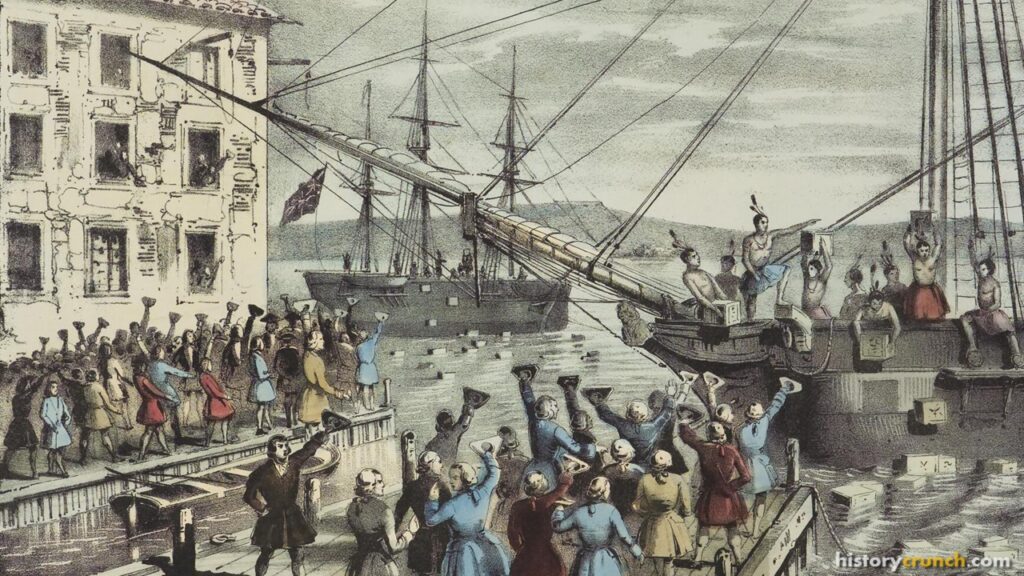
After a last mass meeting at the Old South Meeting House failed to get the ships turned back, men of the Sons of Liberty, some in Mohawk disguise, boarded three ships in Boston Harbor and threw 342 chests of tea into the water.
LEARN MORESHOW LESSwhy it matters · key numbers · 1 key figurePROTESTIt was a deliberately disciplined act of destruction: nothing else on the ships was touched and one broken padlock was replaced. That did not matter in London, where the point was that private property had been destroyed by a mob.
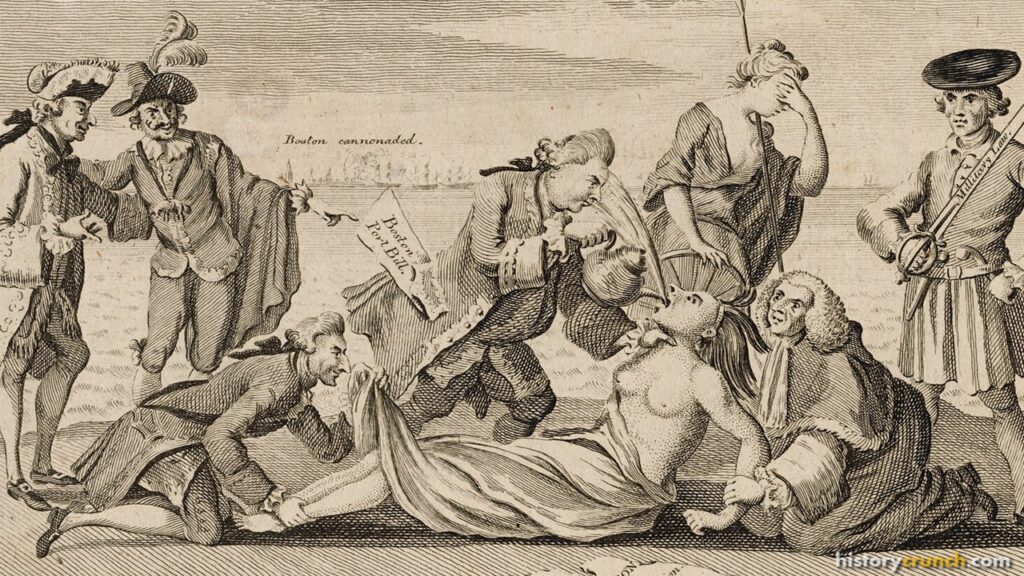
Parliament closed the port of Boston to all trade until the destroyed tea was paid for. A town that lived by the sea was cut off from it.
LEARN MORESHOW LESSwhy it mattersLAWIt was designed to isolate Boston and frighten the other colonies into behaving. Instead the other colonies sent food and money, and the punishment became the cause.
The Massachusetts Government Act put the colony's council under royal appointment, restricted town meetings to one a year without the governor's permission, and gave the governor control of appointments. The Administration of Justice Act, passed the same day, allowed officials accused of crimes to be tried in Britain instead.
LEARN MORESHOW LESSwhy it matters · key numbersLAWThis is the act that turned a tax argument into a constitutional one. If Parliament could abolish a colonial charter, no colony's government was safe.
Colonial authorities across British America were required to provide housing for British troops in unoccupied buildings. It revived the anger of an earlier Quartering Act that had been allowed to expire in 1770.
LEARN MORESHOW LESSwhy it mattersLAWNow every colony had a grievance, not just Massachusetts. The Third Amendment to the Constitution, seventeen years later, exists because of this law.
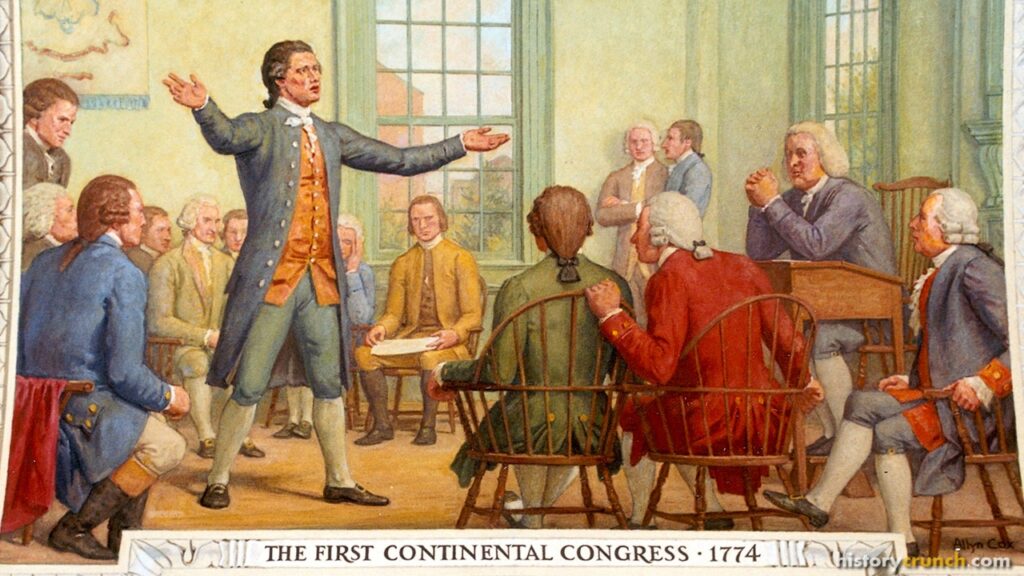
Fifty-six delegates from twelve colonies met at Carpenters' Hall in Philadelphia. Georgia stayed away. They agreed a boycott of British goods, endorsed the Suffolk Resolves on September 17th, and petitioned the king.
LEARN MORESHOW LESSwhy it matters · key numbers · 3 key figuresPOLITICSThey were not asking to leave the empire. They were asking to be left alone inside it, and they agreed to meet again in May if London said no.
About 700 British regulars marched out of Boston to seize weapons at Concord and came back under fire the whole way. Within days there were 20,000 militiamen on the hills around the town. Congress adopted them as an army, put George Washington at the head of it, and printed a million dollars to pay for it, while still petitioning the king. In August the king declared the colonies to be in rebellion, which is a word that carries a gallows with it.
Paul Revere rode to Philadelphia carrying resolutions from the towns of Suffolk County, Massachusetts, declaring the Intolerable Acts void, urging a boycott and calling on the militia to arm. Congress endorsed them.
LEARN MORESHOW LESSwhy it matters · 1 key figurePOLITICSTwelve colonies had just signed their names to advice that Massachusetts should ignore the law and drill its militia. That is a long way from a petition.
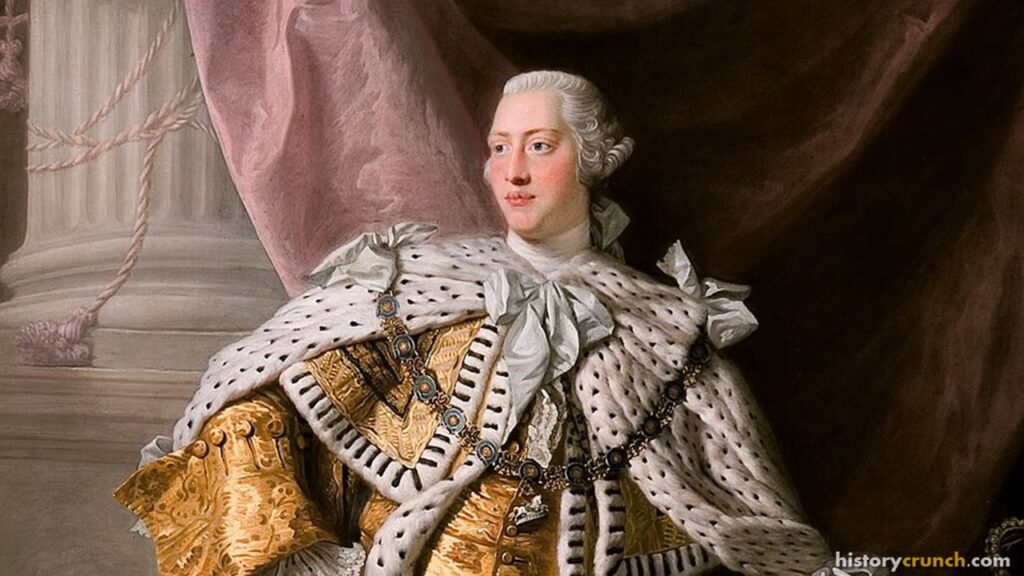
King George III opened Parliament with a speech condemning Massachusetts and colonial resistance, rather than answering the Congress's petition. Britain reinforced its garrison in Boston instead.
LEARN MORESHOW LESSwhy it matters · 1 key figurePOLITICSThe Congress had agreed to meet again in May if London refused. London refused. The second meeting was now certain, and so was what it would be discussing.
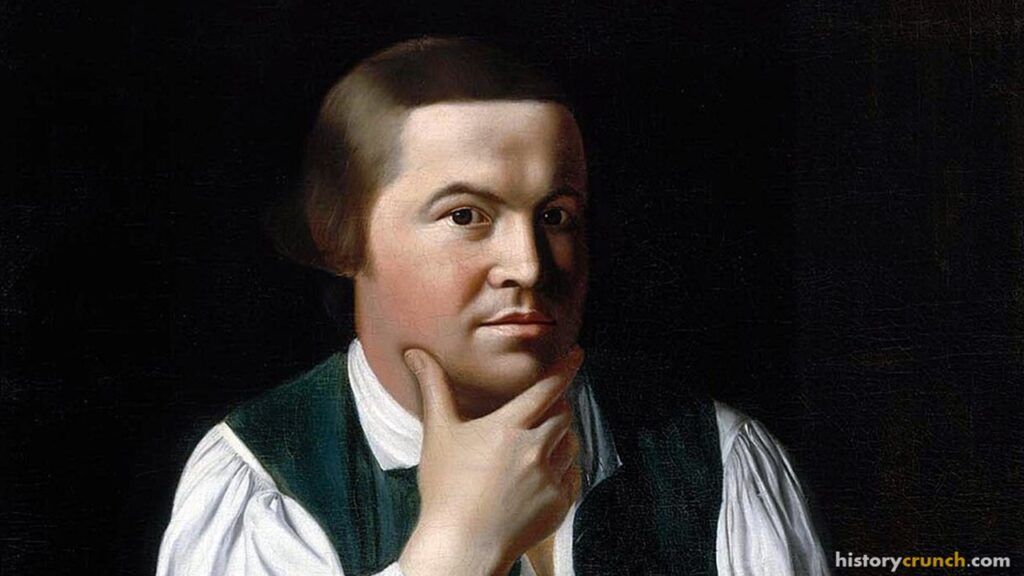
Warned that British troops were marching to seize weapons at Concord and possibly arrest Samuel Adams and John Hancock, Paul Revere and William Dawes rode out from Boston to raise the countryside. Revere was captured before reaching Concord; the alarm carried on without him.
LEARN MORESHOW LESSwhy it matters · 2 key figuresWARThe ride worked because the network already existed. Riders knew which houses to wake, because committees of correspondence had been writing to them for two years.
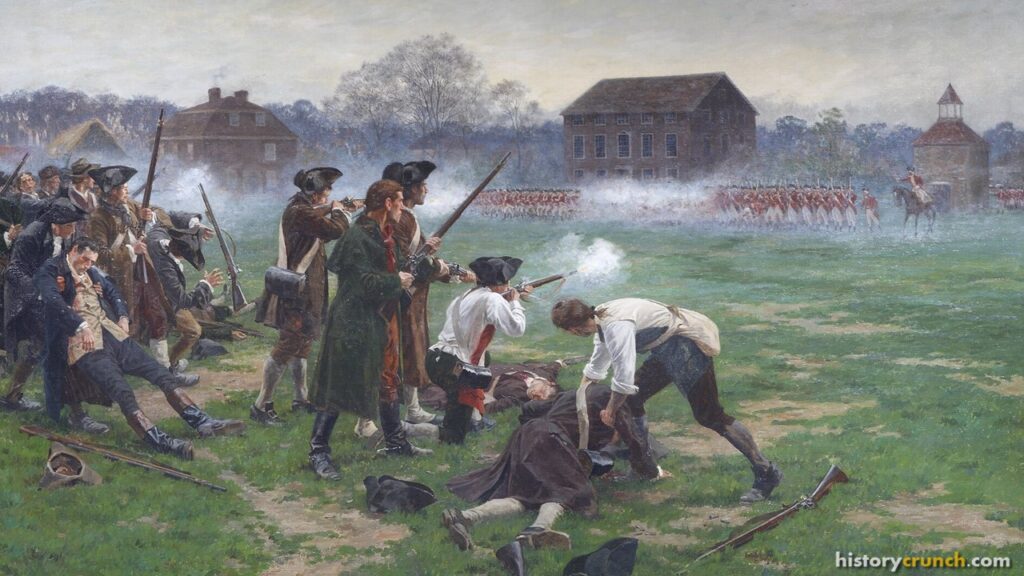
About 700 British regulars, the redcoats of the Boston garrison, met 77 militiamen on Lexington Green at dawn. Someone fired, eight Americans were killed, and the British marched on to Concord. At the North Bridge the militia fired back, and the British were shot at all the way back to Boston.
LEARN MORESHOW LESSwhy it matters · key numbersWARNobody ordered the war to start and nobody knows who fired first. By the evening, 273 British and 95 American casualties had settled the question of whether the argument would be resolved by negotiation.
Within days of Lexington, between 15,000 and 20,000 militiamen from Massachusetts, Connecticut, New Hampshire and Rhode Island had gathered on the hills around Boston, trapping the British garrison inside the town.
LEARN MORESHOW LESSwhy it mattersWARAn army had assembled without a government, a general, a supply system or a plan. The next year is largely the story of Congress trying to catch up with it.
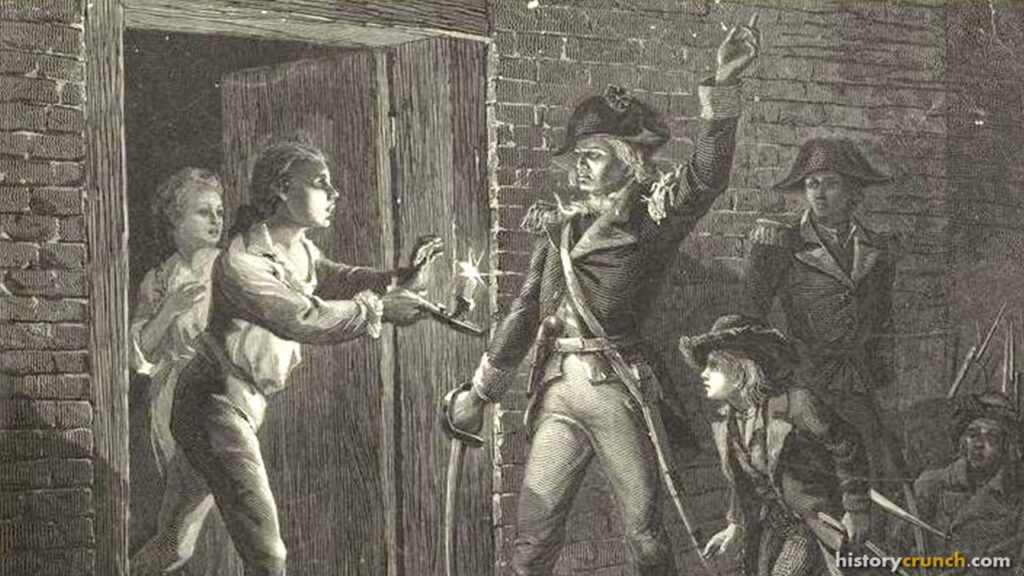
Ethan Allen's Green Mountain Boys and Benedict Arnold, after a dispute over who was in command, took the decayed British fort at dawn with about 150 men and no casualties on either side.
LEARN MORESHOW LESSwhy it matters · key numbers · 1 key figureWARThe fort was worthless. The 59 cannon inside it were not, and a bookseller named Henry Knox spent the winter dragging them 300 miles to Boston.
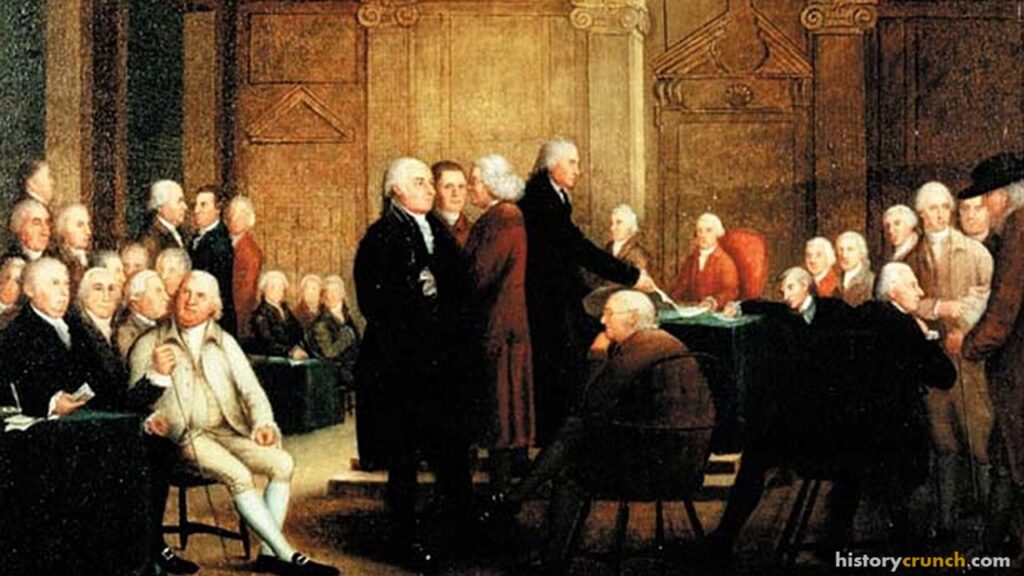
Delegates met at the Pennsylvania State House in Philadelphia, the building now called Independence Hall, with a war already under way outside. It had no legal authority and became the government of a nation anyway.
LEARN MORESHOW LESSwhy it matters · 3 key figuresPOLITICSIt printed money, raised an army, put George Washington in charge of it and negotiated with foreign powers while still petitioning George III, whose army it was fighting. That contradiction lasted fourteen months.
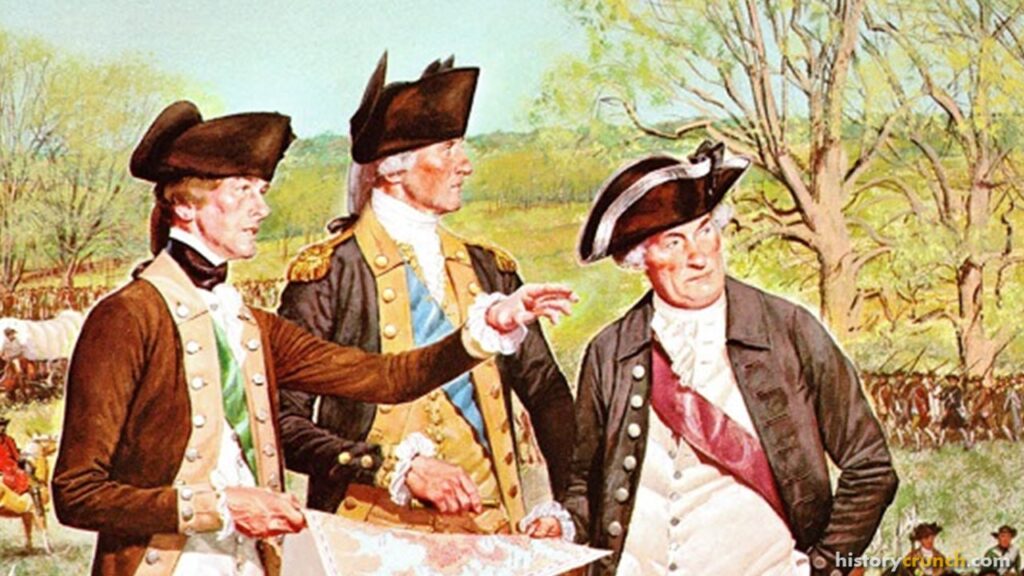
Congress resolved to adopt the militia forces around Boston as a Continental Army and to raise ten companies of riflemen from Pennsylvania, Maryland and Virginia.
LEARN MORESHOW LESSwhy it mattersMILITARYIt turned a New England quarrel into a continental one. Men from Virginia were now marching north to fight a war that had started in Massachusetts.
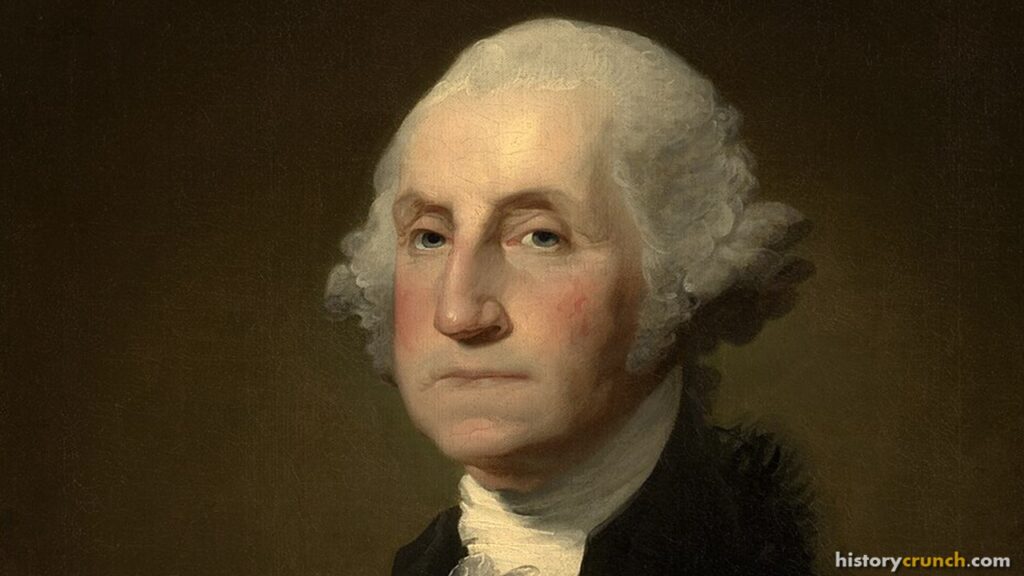
Congress unanimously elected George Washington of Virginia as Commander-in-Chief. He accepted, refused a salary, and took formal command at Cambridge on July 3rd, 1775.
LEARN MORESHOW LESSwhy it matters · key numbers · 2 key figuresMILITARYHe was chosen as much for his colony as his record: a Virginian at the head of a New England army made the war continental. He then kept that army in existence for eight years, which was the harder job.
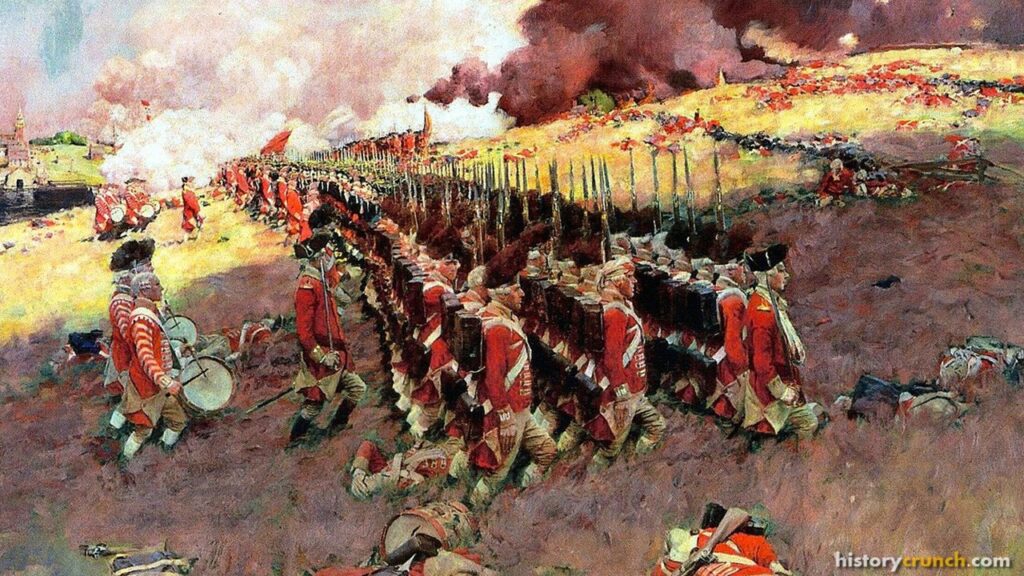
About 1,200 colonial soldiers dug in on Breed's Hill overnight. The British took the position on the third assault, after the defenders ran out of powder, and lost over 1,000 men doing it.
LEARN MORESHOW LESSwhy it matters · key numbersWARThe British held the field and could not replace the men. American militia had stood against regulars twice and stopped them twice, and every officer on both sides drew the same conclusion from that.
Congress approved the release of one million dollars in paper money, known as Continental Currency, backed by nothing but a promise. By the end of the year it had authorized six million.
LEARN MORESHOW LESSwhy it mattersMONEYCongress could not tax. It could only print, and it printed for eight years. The phrase not worth a Continental entered the language for a reason.
George III issued a proclamation declaring the colonies to be in open rebellion, and ordered officials to suppress it. In December, Parliament passed the Prohibitory Act, declaring American ships and cargoes forfeit to the Crown.
LEARN MORESHOW LESSwhy it matters · 1 key figurePOLITICSA rebel who loses is hanged. The proclamation removed the middle ground for every delegate in Philadelphia who had been hoping for reconciliation.
Henry Knox, a Boston bookseller with no military training, organized the transport of 59 artillery pieces weighing roughly 60 tons from Ticonderoga across frozen lakes and the Berkshire Mountains to Boston, arriving in January.
LEARN MORESHOW LESSwhy it matters · key numbersMILITARYIn March the guns appeared overnight on Dorchester Heights above Boston. The British sailed away eleven days later without a fight.
In January a pamphlet by a man who had been in America for fourteen months argued that monarchy itself was absurd, and sold in numbers nobody had seen before. In July Congress voted to leave, and Jefferson's draft was cut by a quarter, including the passage blaming the king for the slave trade. Then the army was beaten out of New York, chased across New Jersey, and saved on Christmas night by an attack launched because the enlistments ran out in six days.
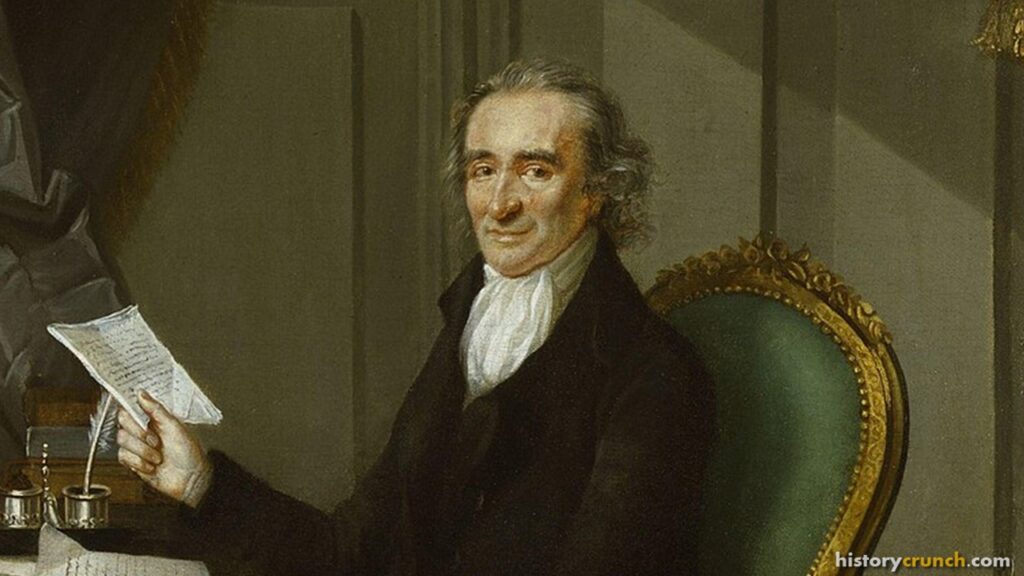
Thomas Paine, in America for fourteen months, published a pamphlet arguing in plain language that monarchy itself was absurd and that independence was the only sensible course. It sold in enormous numbers and was read aloud in taverns and camps.
LEARN MORESHOW LESSwhy it matters · key numbers · 1 key figureIDEASBefore Common Sense, the argument was about the rights of Englishmen. After it, the argument was about whether to have a king at all, and it was being had by people who had never read a political pamphlet before.
With Knox's guns on Dorchester Heights commanding the harbor, the British garrison and about 1,000 Loyalist civilians evacuated Boston by sea for Halifax.
LEARN MORESHOW LESSwhy it matters · 1 key figureWARThe town where it started was free within a year, without a battle. The war moved to New York, where it went considerably worse.
The Virginia Convention formally instructed its delegates in Philadelphia to propose independence. Richard Henry Lee introduced the resolution on June 7th.
LEARN MORESHOW LESSwhy it mattersPOLITICSCongress could not declare independence until the colonies told it to. This is the moment the largest colony told it to.
Congress appointed one committee to draft a declaration of independence and another, of one delegate from each colony, to draft a plan of union. The second job took sixteen months and the argument never really ended.
LEARN MORESHOW LESSwhy it mattersPOLITICSDeclaring independence took three weeks. Agreeing what the thirteen states would be to each other took until 1781, and then had to be done again in 1787.
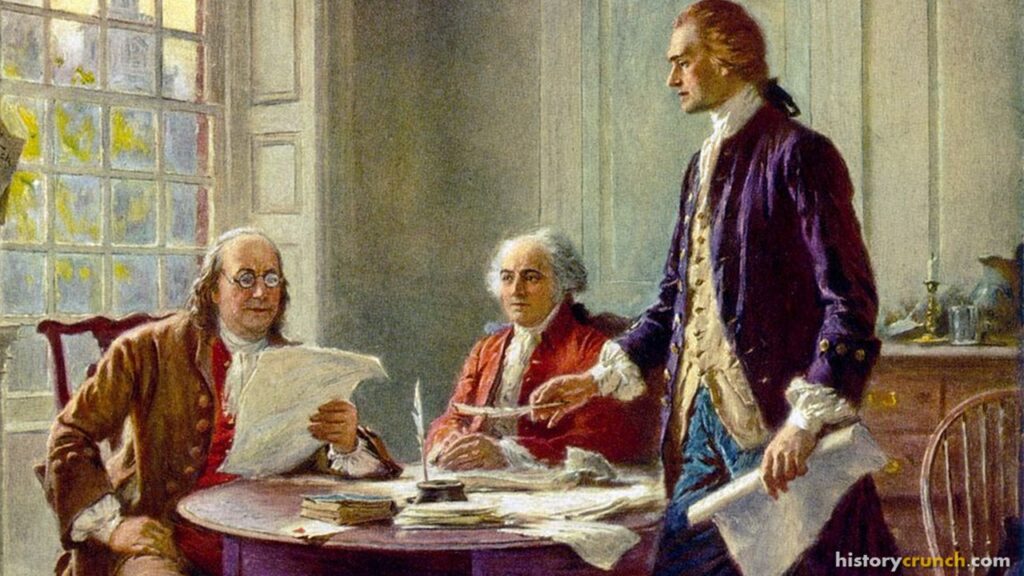
Congress voted for independence on July 2nd and adopted the text on July 4th. Thomas Jefferson wrote the draft in about seventeen days; Congress cut roughly a quarter of it, including a passage blaming the king for the slave trade.
LEARN MORESHOW LESSwhy it matters · key numbers · a debateIDEASIt is a legal document with a sentence in it that does not belong in one. All men are created equal was not true of the country that published it, and the next ninety years of American history are an argument with that sentence.
Did the men who signed it know the contradiction was there?
Yes. Jefferson's draft blamed George III for the slave trade and Congress struck it out to keep South Carolina and Georgia in. The argument happened in the room.
Knowing is not the same as acting. Most signers owned people, including Jefferson, and the document they published left slavery untouched for eighty-nine years.
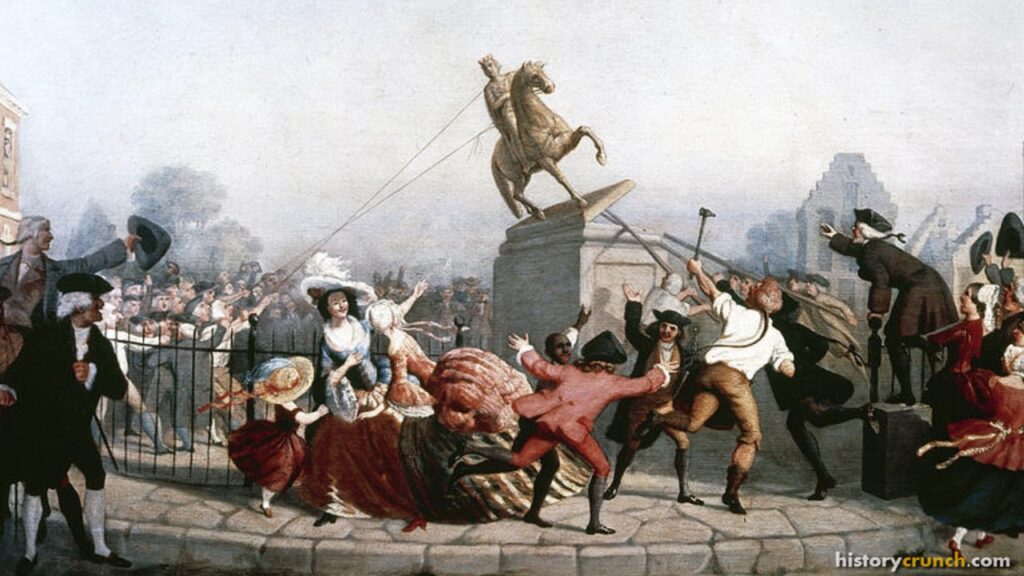
The Declaration was read to Washington's troops in New York. That evening a crowd pulled down the gilded lead statue of George III on Bowling Green. Much of the lead was melted into musket balls.
LEARN MORESHOW LESSwhy it matters · 1 key figurePROTESTTwo tons of the king went south to Connecticut and came back as ammunition. It is the neatest image of the whole Revolution.
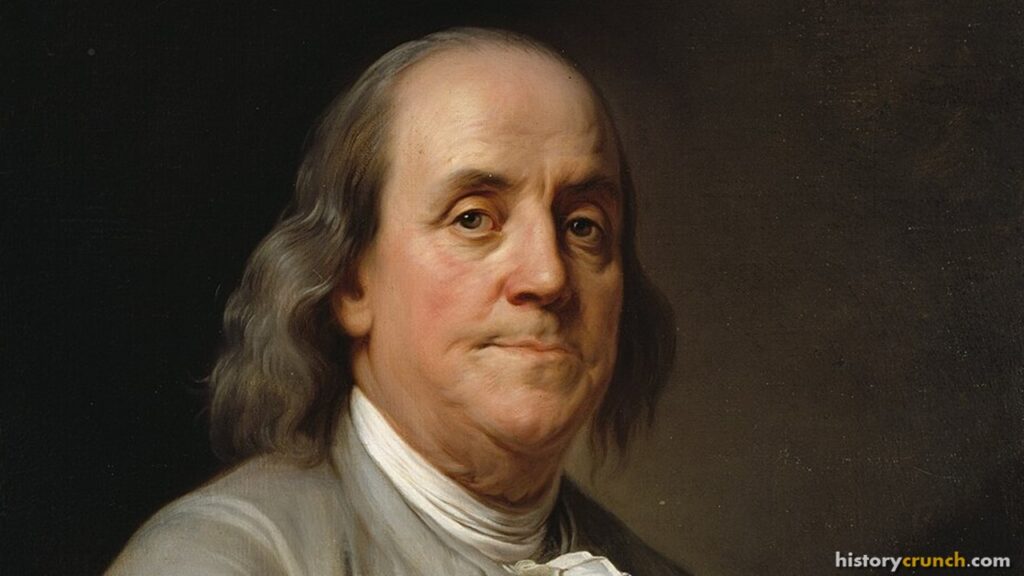
Most delegates signed the engrossed copy on August 2nd, a month after the vote. Signing was treason, and every man who did it was risking hanging.
LEARN MORESHOW LESSwhy it matters · 1 key figurePOLITICSFranklin was seventy and had spent eighteen years in London trying to hold the empire together. He signed the paper that ended it and sailed for France two months later to find the ally that would win it.
After defeats on Long Island and Manhattan, the British stormed Fort Washington and captured nearly 3,000 American soldiers. Washington retreated across New Jersey with an army melting away around him.
LEARN MORESHOW LESSwhy it matters · key numbersWARMost of those prisoners died in British prison ships in New York harbor. More Americans died in those hulks than in every battle of the war combined.
Benjamin Franklin landed in France as the first official American representative, wearing a plain fur cap and playing the part of the simple philosopher from the woods. Paris adored him.
LEARN MORESHOW LESSwhy it matters · 1 key figureDIPLOMACYHe was the best-known American in the world and he used it, turning French curiosity into loans, ships and eventually an alliance. The war was won in his drawing room as much as at Yorktown.
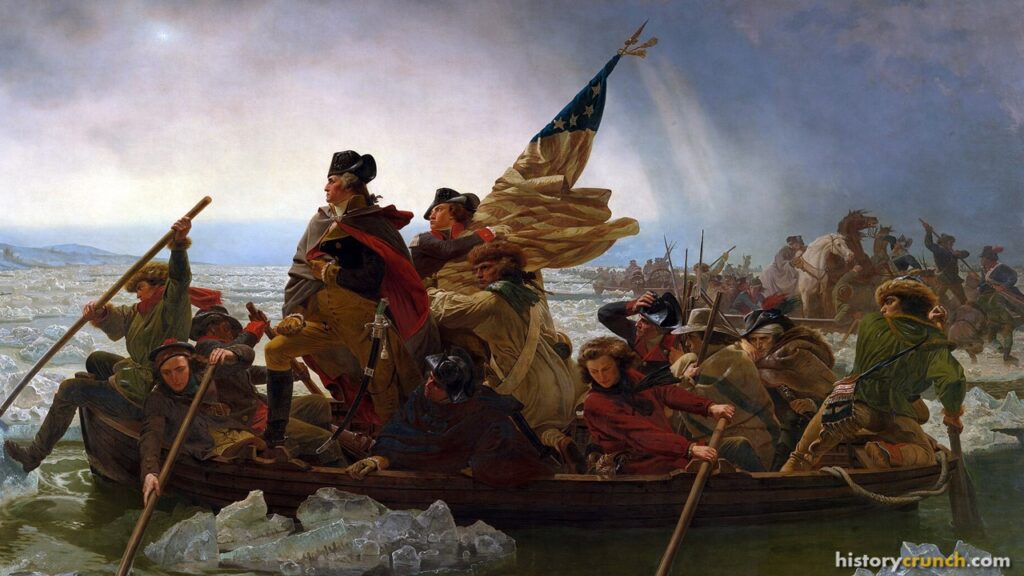
Washington crossed the ice-choked Delaware on Christmas night with about 2,400 men and attacked the Hessian garrison at Trenton at eight in the morning. The garrison surrendered in under two hours.
LEARN MORESHOW LESSwhy it matters · key numbers · 1 key figureWAREnlistments expired on December 31st and the army was about to cease to exist. Washington did not attack because the moment was right; he attacked because he had six days left.
A British plan to cut New England off ended with an entire British army surrendering at Saratoga, and four months later France signed an alliance. The war became a world war Britain had to fight in the Caribbean, in India and in the Channel. In between, the Continental Army spent a winter at Valley Forge where 2,000 men died and a Prussian officer taught the survivors to manoeuvre, which is why they held their ground at Monmouth in June.
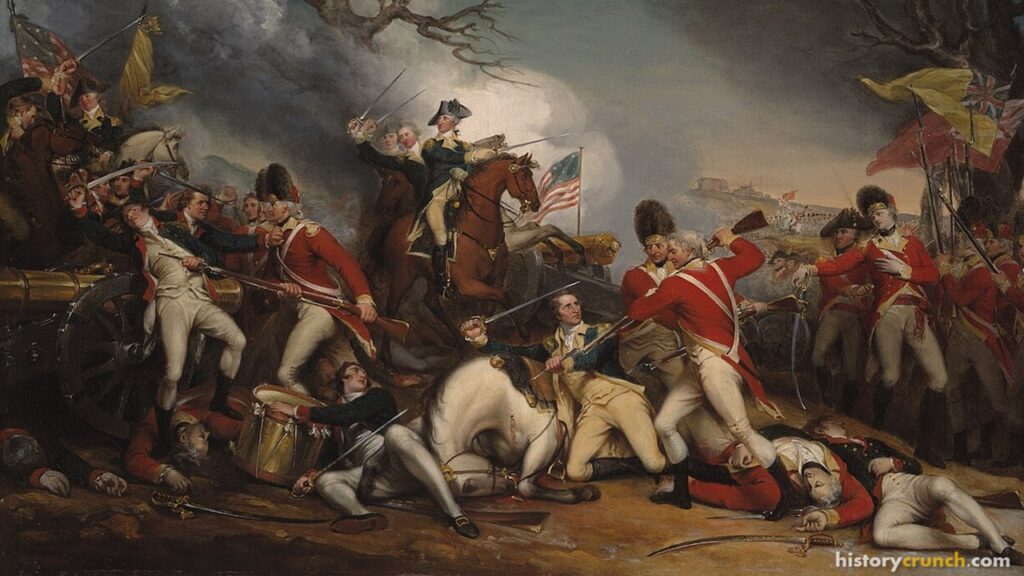
Cornwallis marched on Trenton with 7,000 men. Washington left campfires burning, slipped around the British army at night and beat a smaller force at Princeton the next morning, then went into winter quarters at Morristown.
LEARN MORESHOW LESSwhy it matters · 1 key figureWARTen days that saved the Revolution. Men re-enlisted, recruits came in, and the French began to consider that the Americans might be worth backing.
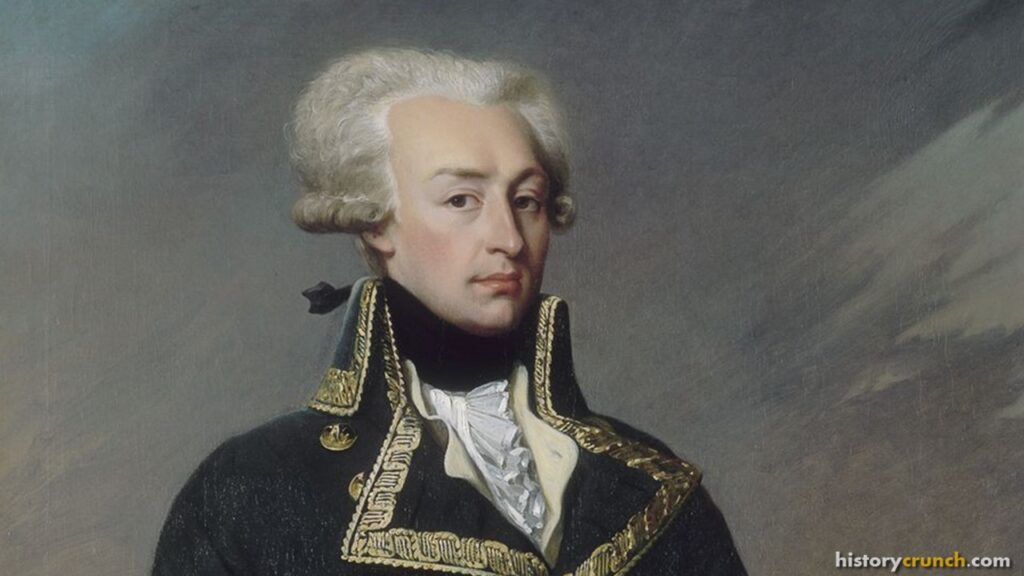
The Marquis de Lafayette, a wealthy French aristocrat of nineteen, paid for his own ship, arrived in Philadelphia in July and was commissioned a major general. He met Washington in August and the two became close.
LEARN MORESHOW LESSwhy it matters · key numbers · 2 key figuresPEOPLEHe was a volunteer with no command experience whose real value was political: proof to Paris that the Americans were worth joining, and proof to the Americans that France was listening.
Washington tried to block the British advance on Philadelphia at Brandywine Creek and was outflanked, losing about 1,300 men. Lafayette was shot in the leg and stayed on the field.
LEARN MORESHOW LESSwhy it matters · 1 key figureWARCongress fled to York and the British took the capital. Washington kept the army, which turned out to matter far more than the city did.
Burgoyne, marching south from Canada to cut New England off from the other colonies, met American forces under Horatio Gates at Freeman's Farm. He held the ground and lost around 600 men he could not replace.
LEARN MORESHOW LESSwhy it mattersWARBurgoyne was 200 miles from his supplies with an army that got smaller after every victory, while American numbers around him grew from about 7,000 to over 12,000.
British forces entered Philadelphia, the largest city in America and the seat of Congress. Washington attacked at Germantown on October 4th and was repulsed in thick fog.
LEARN MORESHOW LESSwhy it mattersWARBritain had taken the enemy capital, which in Europe usually ended a war. It ended nothing, because the thing that mattered was an army in the field, not a city.
Burgoyne attacked again and was thrown back. Benedict Arnold, relieved of command after quarrelling with Gates, rode onto the field anyway and led the assault that broke the British line, taking a musket ball in the leg.
LEARN MORESHOW LESSwhy it matters · 1 key figureWARThe best fighting general the Americans had was, three years later, the most famous traitor in American history. Both of those things are true of the same man on the same leg.
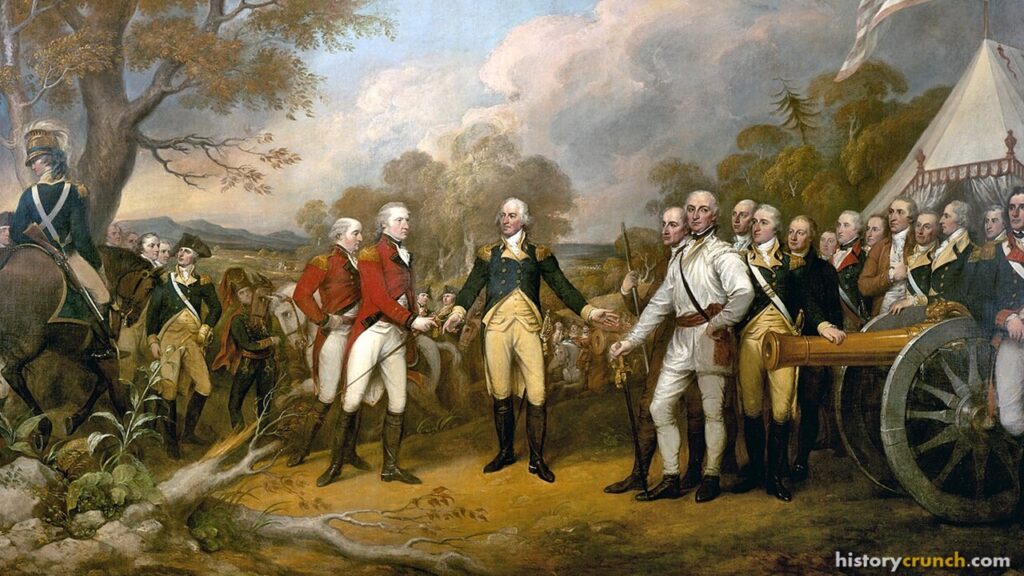
Surrounded and out of supplies, Burgoyne surrendered roughly 5,900 men and 27 guns at Saratoga. It was the first time in the war that a full British army had been captured.
LEARN MORESHOW LESSwhy it matters · key numbersWARThis is the hinge of the whole war. News reached Paris in December, and France decided the Americans could win.
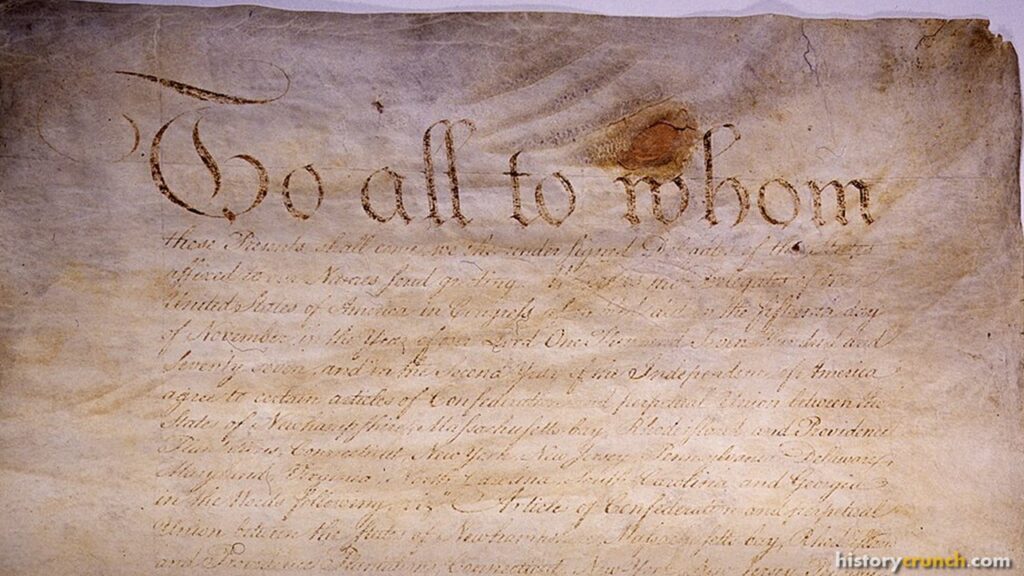
Congress adopted the Articles of Confederation and sent them to the states. They created a league of sovereign states with a Congress that could not tax, could not regulate trade and could not enforce anything.
LEARN MORESHOW LESSwhy it mattersPOLITICSThe states had just fought a decade-long argument about a distant government with too much power. They built one with almost none, and spent the next ten years discovering the cost.
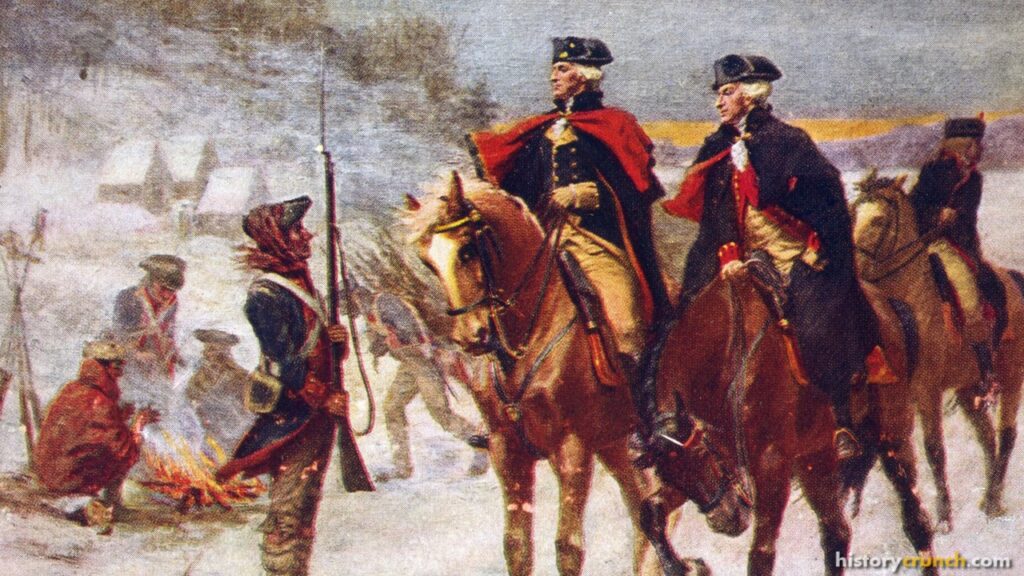
The Continental Army went into winter quarters at Valley Forge, eighteen miles from British-held Philadelphia. Roughly 2,000 men died of disease and exposure over six months. In February the Prussian officer Friedrich von Steuben began drilling what was left.
LEARN MORESHOW LESSwhy it matters · key numbers · 2 key figuresMILITARYThe famous suffering is only half the story. The army that marched out in June drilled, manoeuvred and held its formations, because somebody had spent the winter teaching it how.
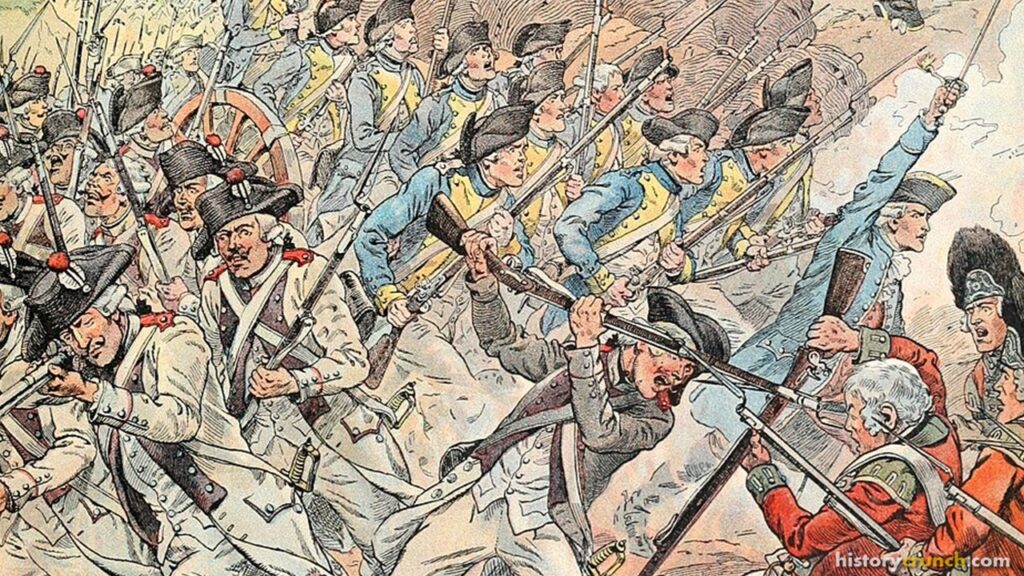
France recognized the United States and signed treaties of alliance and commerce, committing its army and navy. Spain and the Dutch Republic followed into the war against Britain.
LEARN MORESHOW LESSwhy it matters · 1 key figureDIPLOMACYIt turned a colonial rebellion into a world war Britain had to fight in the Caribbean, in India and in the Channel. From this point Britain could not concentrate on America even if it wanted to.
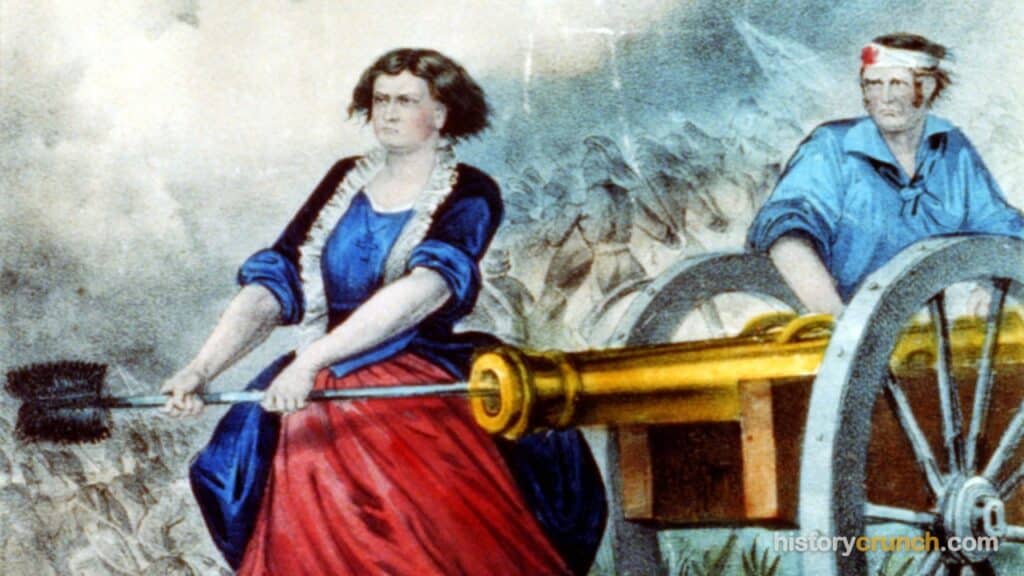
The armies met in fierce heat in New Jersey as the British withdrew to New York. The battle ended in a draw and the drilled Continental Army held its ground against regulars. The legend of Molly Pitcher, tied to a real woman named Mary Ludwig Hays, comes from this day.
LEARN MORESHOW LESSwhy it matters · 2 key figuresWARIt is the last major battle in the north and the proof that Valley Forge had worked. After Monmouth the war in the north settles into a stalemate that lasts three years.

Thousands of women followed the armies, cooking, nursing, washing and carrying water and cartridges. Others ran farms and businesses alone for years, and a few, like Deborah Sampson in 1782, enlisted in disguise.
LEARN MORESHOW LESSwhy it matters · 1 key figurePEOPLEAn eighteenth century army could not function without them, and almost none of them appear in the official records by name. Abigail Adams ran the family farm through the entire war while writing the letters we now read as political argument.
Britain gambled that the south was full of Loyalists waiting to rise, and for two years it looked right: Savannah, Charleston, Camden. Then Kings Mountain and Cowpens destroyed the Loyalist forces, Nathanael Greene made every British victory cost more than it was worth, and Cornwallis marched into Virginia and dug in at Yorktown to wait for the navy. A French fleet won the sea fight at the Chesapeake, and the navy never came.
British forces captured Savannah, Georgia, opening a new campaign in the south. The plan was to use Loyalist support to hold the southern colonies and roll the rebellion up from below.
LEARN MORESHOW LESSwhy it mattersWARThe strategy assumed the south was full of Loyalists waiting to rise. Some were. Far fewer than London had been told, which is what happens when a government believes its own informants.
After a six-week siege, an American army of about 5,000 men surrendered at Charleston, South Carolina, with the city, its ships and its guns.
LEARN MORESHOW LESSwhy it matters · key numbersWARIt is the largest single American loss of the war, and for a few months it looked as though the southern strategy was working exactly as designed.
Cornwallis destroyed an American army under Horatio Gates at Camden, South Carolina. Gates, the victor of Saratoga, rode 180 miles from the battlefield in three days and never held a field command again.
LEARN MORESHOW LESSwhy it mattersWARTwo months later Congress let Washington choose the southern commander. He chose Nathanael Greene, who lost most of his battles and won the campaign.
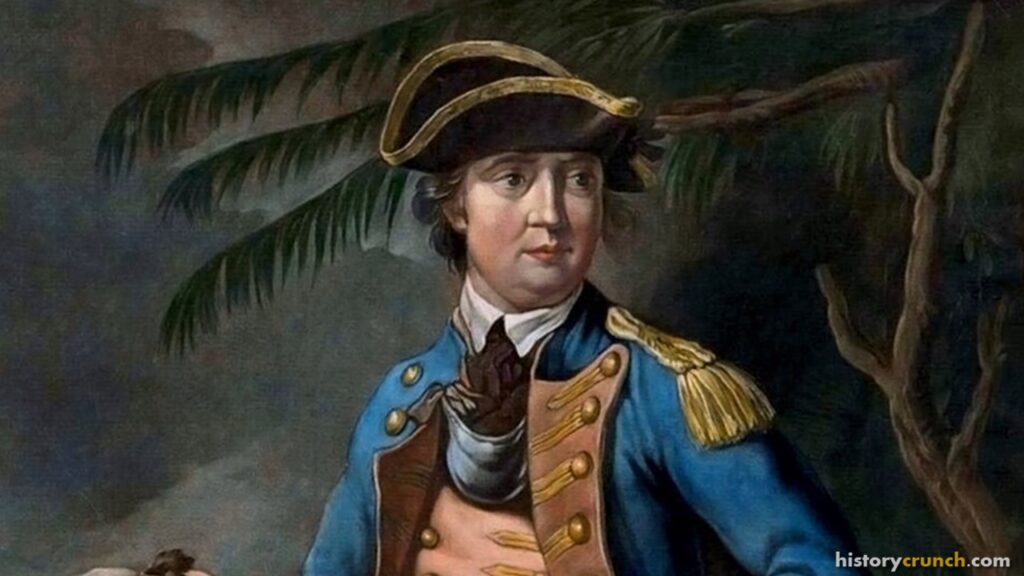
Arnold, the hero of Saratoga, embittered by debt, slights and a court martial, agreed to hand West Point to the British for money and a commission. The plot was discovered when his contact, Major John Andre, was captured with the plans in his boot.
LEARN MORESHOW LESSwhy it matters · 1 key figureTREASONArnold escaped and fought for Britain; Andre was hanged as a spy. The name Benedict Arnold has meant traitor in American English ever since, which is a heavy sentence for a man who saved the army twice.
Backcountry militia surrounded and destroyed a force of American Loyalists commanded by a British officer at Kings Mountain, South Carolina. Almost everyone on both sides was American.
LEARN MORESHOW LESSwhy it mattersWARThe southern war was a civil war, neighbor against neighbor, and it was uglier than anything in the north. This battle is the clearest proof of it.
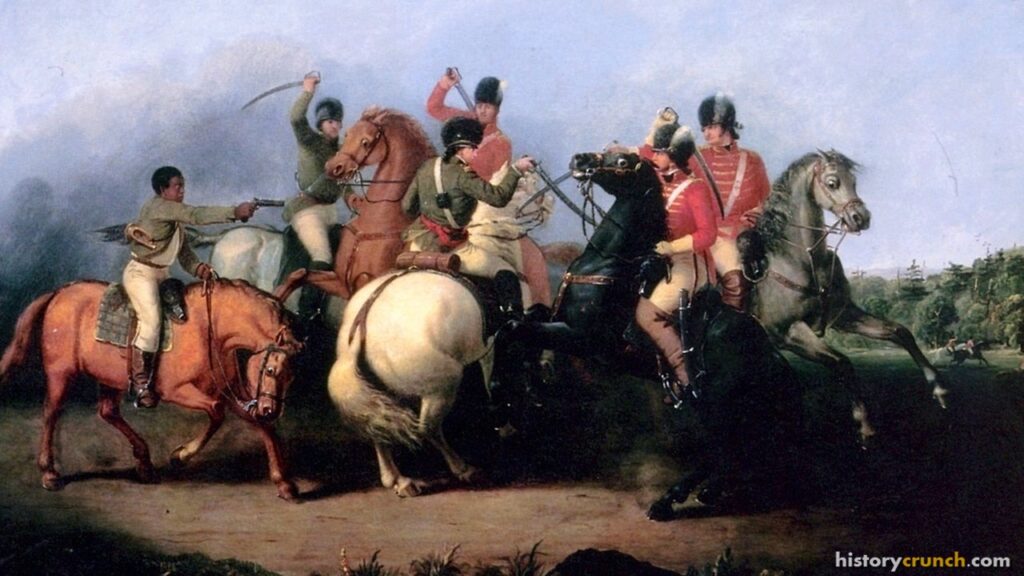
Daniel Morgan, with a mixed force of militia and Continentals, asked his militia to fire two volleys and then withdraw, which they did. Tarleton's men charged what they thought was a rout and ran into the regulars behind it. The British force was destroyed in under an hour.
LEARN MORESHOW LESSwhy it matters · key numbersWARIt is the best-planned American battle of the war, and it worked because Morgan planned around what his militia would actually do rather than what he wished they would do.
Maryland ratified the Articles at last, after Virginia and the other states with western land claims agreed to give them up to the common government. The Articles had been waiting three and a half years.
LEARN MORESHOW LESSwhy it mattersPOLITICSThe delay was about land, not principle. States with claims to the west could grow; states without them could not, and Maryland refused to join a union where that stayed true.
Cornwallis beat Nathanael Greene at Guilford Court House in North Carolina and lost a quarter of his army doing it. He abandoned the Carolinas and marched into Virginia.
LEARN MORESHOW LESSwhy it matters · key numbersWARGreene lost battle after battle and took the south back anyway, by making every British win cost more than it was worth. Cornwallis walked out of the Carolinas and into the trap.
Admiral de Grasse's French fleet fought off a British fleet at the mouth of Chesapeake Bay and held the anchorage. Cornwallis, dug in at Yorktown, lost his way out by sea.
LEARN MORESHOW LESSwhy it mattersWARThe most important naval battle in American history was fought entirely between French and British ships. Without it Yorktown is a siege the British army simply sails away from.
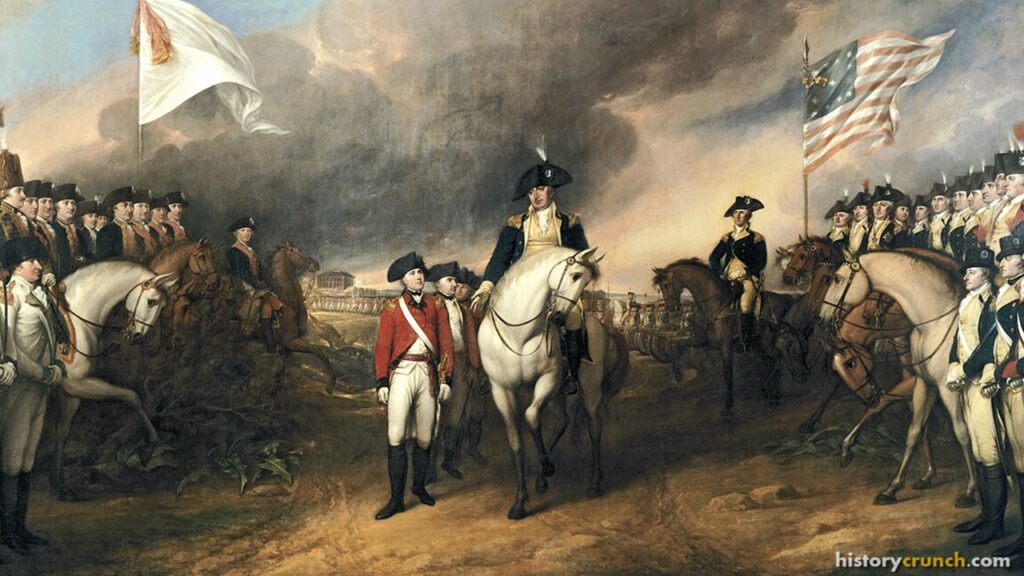
About 17,000 American and French troops surrounded Cornwallis's 9,000 men at Yorktown, Virginia, and began digging siege lines. French engineers directed the work.
LEARN MORESHOW LESSwhy it matters · key numbersWARWashington had marched an army 450 miles from New York in secret while convincing the British he was about to attack them there. It is the finest piece of deception of his career.
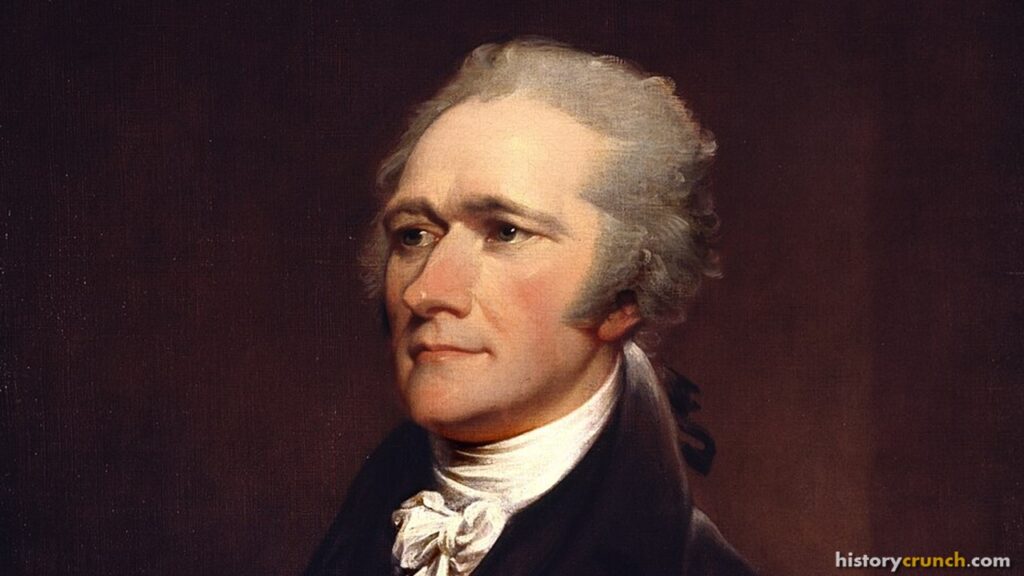
Washington ordered simultaneous night assaults on the two strongest British positions. Alexander Hamilton led the American column with unloaded muskets and bayonets only. Both redoubts fell in minutes.
LEARN MORESHOW LESSwhy it matters · 1 key figureWAROnce those two positions were gone, allied guns could reach every part of the British camp. Cornwallis asked for terms three days later.
Unable to escape by land or sea, Cornwallis surrendered about 7,000 men. He pleaded illness and sent his second in command to hand over his sword. The British army marched out between the French and American lines while the bands played.
LEARN MORESHOW LESSwhy it matters · a source · 2 key figuresWARIt did not formally end the war, and fighting went on elsewhere for two more years. It ended Britain's will to keep paying for it, which is the thing that actually decides wars.
IN THEIR OWN WORDS“Oh God, it is all over.”
Lord North, British Prime Minister, on hearing the news, November 1781WHAT TO NOTICENorth had wanted to resign for years. He was out of office four months later.
Winning was the easy part. The Articles of Confederation gave the new country a Congress that could not tax, could not regulate trade and could not enforce anything, and by 1787 the men who had been afraid of central power were more afraid of not having any. They shut the windows in Philadelphia and wrote a different government, bought southern signatures with twenty years of the slave trade, and then kept a promise nobody expected them to keep by adding ten amendments in 1791.
Parliament voted against continuing the war in America. North resigned and his successor opened talks in Paris in April, beginning with informal conversations between Benjamin Franklin and the British representative Richard Oswald.
LEARN MORESHOW LESSwhy it matters · 1 key figurePOLITICSBritain was still at war with France, Spain and the Dutch, and still had an empire to defend. Giving up thirteen colonies was the cheapest of its options.
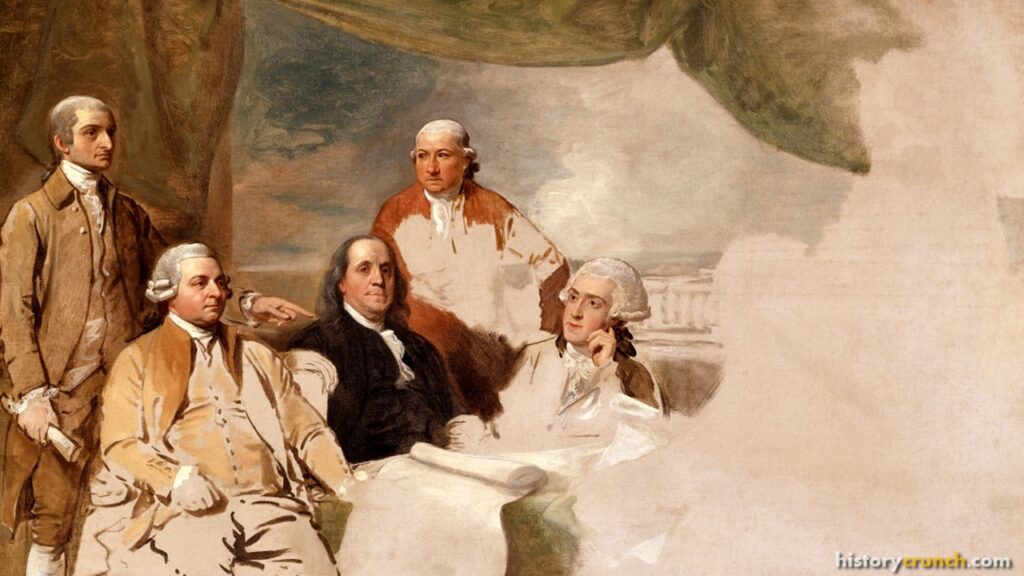
Franklin, John Adams and John Jay signed preliminary articles with Britain, having negotiated separately from France despite the alliance requiring consultation. The terms were far better than anyone expected: independence, and land west to the Mississippi.
LEARN MORESHOW LESSwhy it matters · 2 key figuresDIPLOMACYThe Americans played their ally and their enemy against each other and got a continent for it. Franklin then talked Vergennes out of his anger and into another loan, which is the single most impressive month of diplomacy in the story.
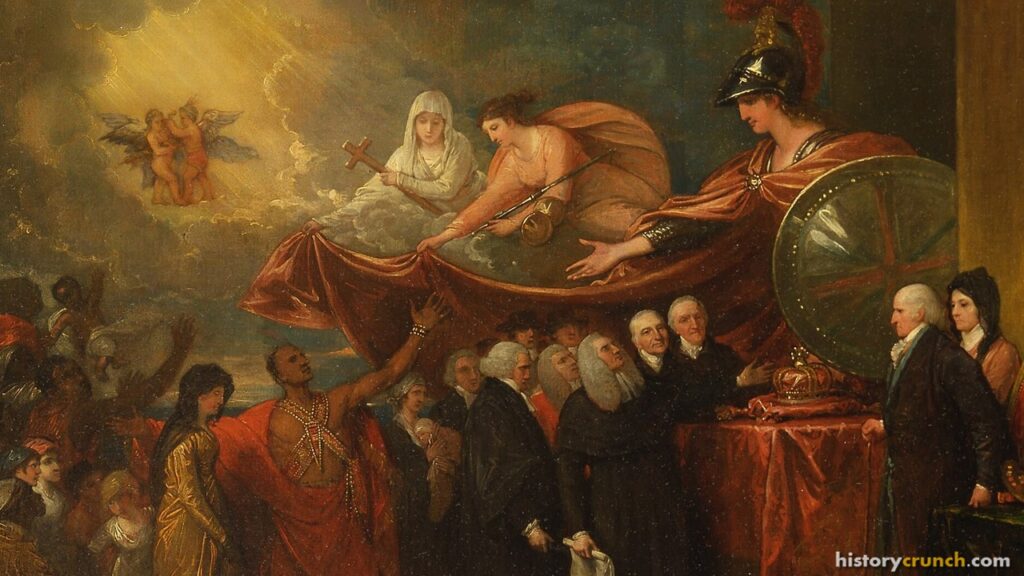
Britain recognized the United States as free, sovereign and independent, and set its western border at the Mississippi River. Benjamin West's painting of the signing was never finished because the British delegates refused to pose.
LEARN MORESHOW LESSwhy it matters · key numbersTREATYEight years and five months after Lexington, the thing was legal. The unfinished painting is the best single image of how Britain felt about it.
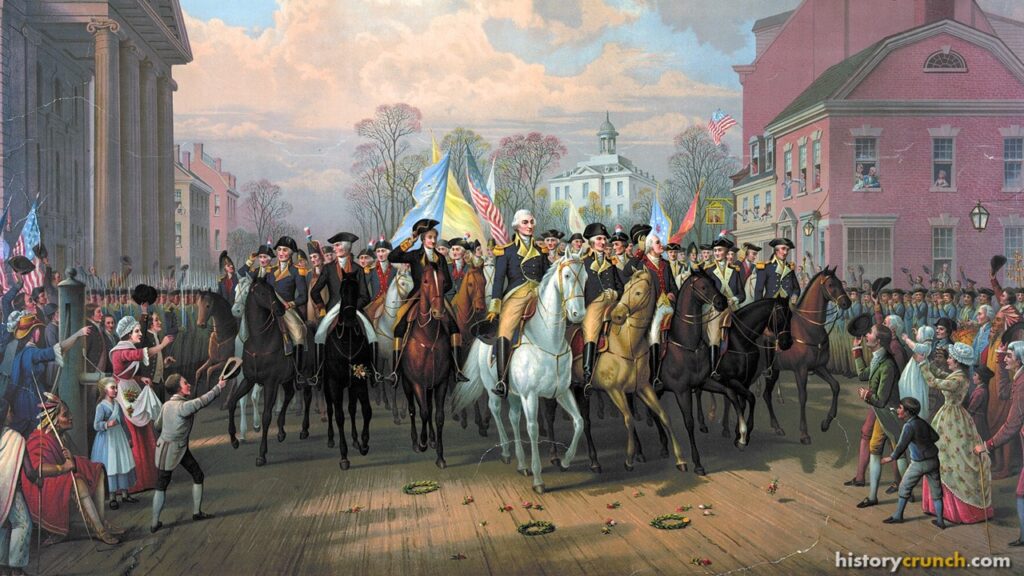
Washington appeared before Congress at Annapolis, resigned his commission as Commander-in-Chief and went home to Mount Vernon. George III, told he intended to do it, reportedly said it would make him the greatest man in the world.
LEARN MORESHOW LESSwhy it matters · 2 key figuresPOLITICSA victorious general handing power back to a civilian assembly was so unusual that it astonished Europe. It is the precedent the whole American system rests on, and it was set by one man choosing to go home.
Congress set up a system for surveying western land into square townships and selling it, which is why so much of the American map west of the Appalachians is drawn in straight lines.
LEARN MORESHOW LESSwhy it mattersLAWThe Confederation government could not tax, so the land was the only asset it had. Selling it was how the union paid its bills, and it was Native land in every case.
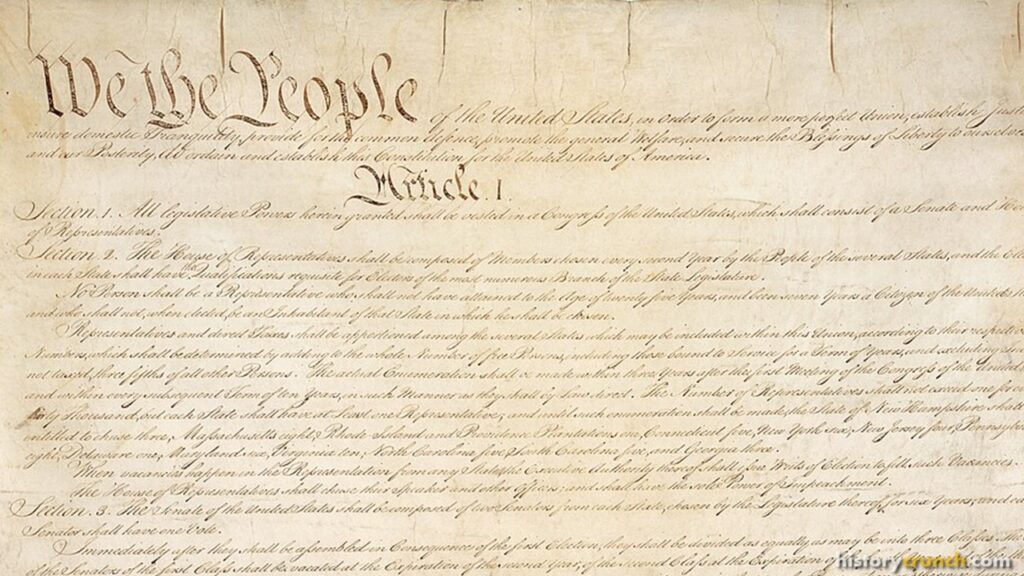
Delegates from twelve states met in Philadelphia to revise the Articles of Confederation and instead wrote a new constitution behind closed doors and shuttered windows through a hot summer. Washington presided; Madison took the notes.
LEARN MORESHOW LESSwhy it matters · 3 key figuresPOLITICSThey had no authority to do what they did. Every one of them knew it, which is why they kept the windows shut.
Congress created a process by which new territories could become states equal to the original thirteen, and banned slavery in the territory north and west of the Ohio River.
LEARN MORESHOW LESSwhy it mattersLAWIt settled two enormous questions at once: the United States would grow by adding equals rather than colonies, and the line between free and slave territory now ran along the Ohio. The Civil War timeline starts from that line.
Large and small states deadlocked over representation. The compromise gave one house based on population and one with two senators per state, and it passed by a single vote. The convention also agreed the international slave trade could not be banned for twenty years.
LEARN MORESHOW LESSwhy it matters · a debatePOLITICSThe same summer that balanced the small states against the large ones also wrote a twenty-year protection for the slave trade and counted enslaved people as three fifths of a person for representation. Both deals were the price of a single country.
Was the Constitution a pro-slavery document?
It protected slavery in practice: twenty years of the slave trade, the three fifths clause, and a fugitive slave clause. Southern delegates would not have signed anything else.
It never uses the word, and it gave the free states a structure they later used to contain and abolish slavery. Frederick Douglass changed his mind on exactly this question.
Delaware voted to ratify unanimously, the first of the nine states needed to bring the Constitution into force. The fight in Virginia and New York was much harder, and turned on a promise to add a bill of rights.
LEARN MORESHOW LESSwhy it mattersPOLITICSThe Constitution passed because its supporters promised amendments they did not want. Keeping that promise is the next card.
James Madison, who had argued a bill of rights was unnecessary, proposed nineteen amendments to the first Congress. He drew on George Mason's Virginia Declaration of Rights of 1776 and the English Bill of Rights of 1689. Congress narrowed them to twelve.
LEARN MORESHOW LESSwhy it matters · 1 key figureLAWMadison changed his mind because he had promised Virginia he would, and because he decided a written guarantee was worth having even if it was only a piece of paper. It turned out to be the most quoted paper in American law.
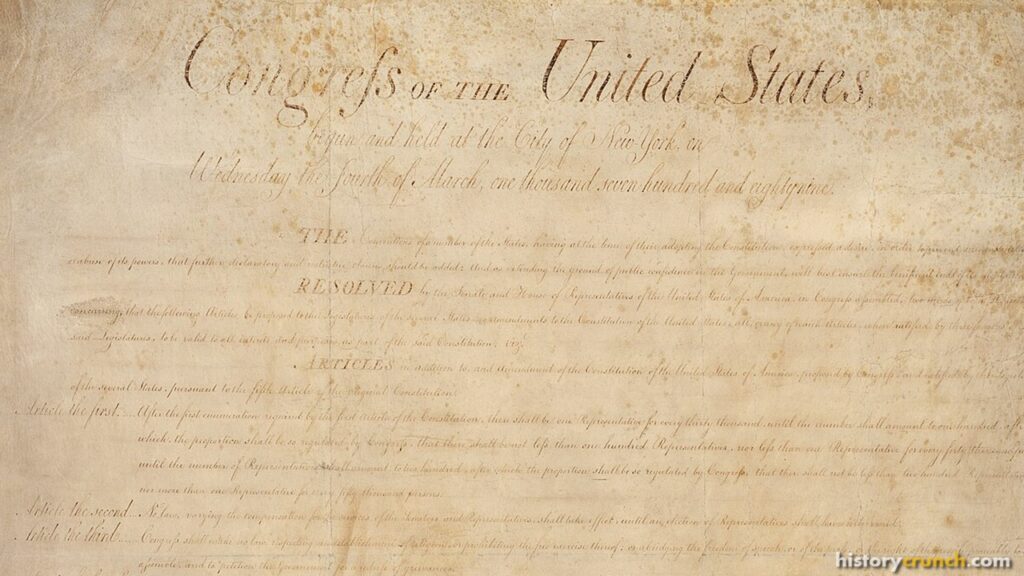
Ten of the twelve proposed amendments were ratified by three quarters of the states and became part of the Constitution: speech, religion, assembly, arms, searches, trials, and the rest. One of the other two was finally ratified in 1992.
LEARN MORESHOW LESSwhy it matters · key numbersLAWThe Revolution began with a colonist arguing that a government could not take his property without his consent. It ended with that argument written into the law of the country the argument created.
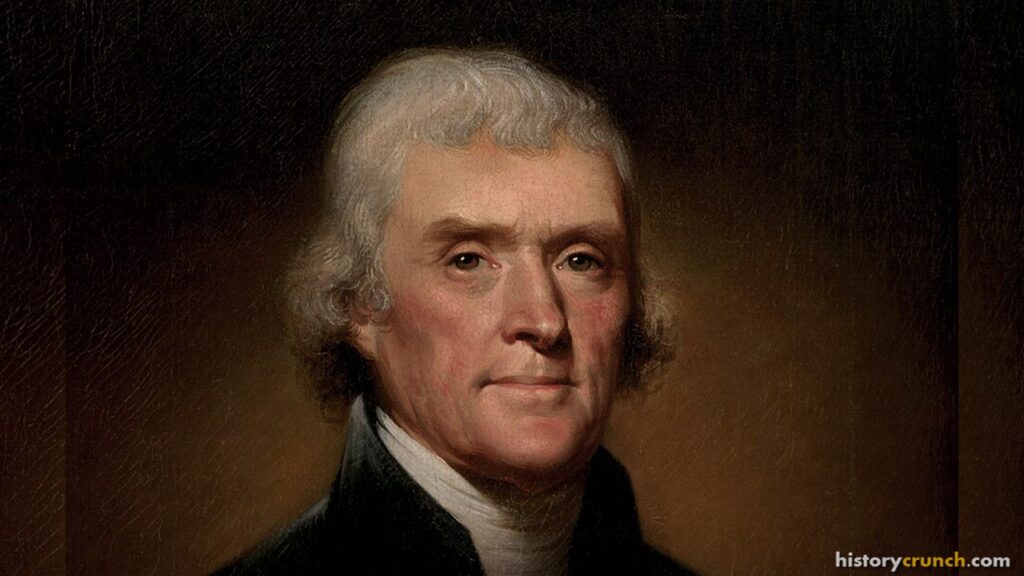
Pennsylvania passed a gradual emancipation law in 1780, Massachusetts and Vermont moved to abolish slavery outright in the early 1780s, and by 1804 every northern state had abolished it or begun phasing it out. The southern states did the opposite.
LEARN MORESHOW LESSwhy it matters · key numbers · 1 key figureSLAVERYA country founded on a sentence about equality split into a half that took the sentence literally and a half that did not. That split is the American Civil War, and it starts here.

I'm the founder of History Crunch, which I first began in 2015 with a small team of like-minded professionals. I have an Education Degree with a focus in Social Studies education. I spent nearly 15 years teaching history, geography and economics in secondary classrooms to thousands of students. Now I use my time and passion researching, writing and thinking about history education for today's students and teachers.

K.L. is a content writer for History Crunch. She is a fantastic history and geography teacher that has been helping students learn about the past in new and meaningful ways since the mid-2000s. Her primary interest is Ancient History, but she is also driven by other topics, such as economics and political systems.
To cite this timeline as a source, use one of the formats below.
MLA: Millar, B., and K.L Woida. “American Revolution Timeline.” HistoryCrunch, 14 September 2026, https://historycrunch.com/american-revolution-timeline/.
APA: Millar, B., & Woida, K.L. (2026). American Revolution Timeline. HistoryCrunch. https://historycrunch.com/american-revolution-timeline/
Chicago: Millar, B., and K.L Woida. “American Revolution Timeline.” HistoryCrunch. September 14, 2026. https://historycrunch.com/american-revolution-timeline/
© History Crunch
Taxes are the usual answer, and the taxes were small. So why did they matter this much?
The same victory that made Britain master of North America started the quarrel that lost half of it.
Pick a date and defend it. Every candidate has a good case and a fatal flaw.
It sounds like a complaint about money. It is an argument about who owns you.
Twice before the war, the colonies forced Parliament to back down using nothing but shopping.
In 1765 they barely corresponded. In 1774 twelve of them sat in one room and agreed a plan.
Five men died on King Street. The name it was given did more work than the event.
The Tea Act lowered the price. That is exactly what made it dangerous.
Not a nation in arms. A small army that kept dissolving, and a militia that came and went.
He lost more battles than he won. He is still the reason the war was won.
Perhaps a fifth of the colonists sided with Britain. They are missing from most accounts.
Boycotts run through households, armies need feeding, and farms do not run themselves.
Nobody knows, and both sides spent years insisting it was the other.
The British took the hill and lost over a thousand men doing it. There were not a thousand spare men in America.
Eight years of bad food, no pay, smallpox and boots that did not exist.
An entire British army surrendered in the woods of New York, and Paris changed its mind.
French money, French guns, French troops and, at Yorktown, a French fleet.
Britain won most of the battles, took every major city it wanted, and still lost.
Britain switched theaters in 1778 on a promise of Loyalist support, and marched into a trap.
Cornwallis surrendered 7,000 men. Britain had more men. It stopped anyway.
It is a legal document, a list of complaints, and one sentence that outgrew all of it.
The Articles of Confederation lasted eight years and could not tax, trade or enforce.
They were sent to amend the Articles. They shut the windows and wrote a new government.
Madison thought it was unnecessary. He wrote it anyway, and it became the most quoted text in American law.
The man who wrote all men are created equal owned six hundred people over his lifetime.
Both sides wanted the same land, and neither side was offering to share it.
The same men ran the country afterwards. The same people were enslaved. Nobody's land changed hands.
It settled who governs. It left two questions that took another century each.
One rider got a poem eighty-five years later. The others did the same job and are forgotten.
Historians largely agree on the events and argue about the memory. The Revolution was recast in the nineteenth century as a tidy national founding, with a cast of heroes, at the exact moment the country needed a shared story: Longfellow's Revere appeared in 1860, Leutze's crossing in 1851. That retelling wrote out the Loyalists, the enslaved people who fought on both sides, the women who kept the armies fed and the Native nations who lost the most. None of that makes the Revolution less important. It does mean the pictures in most textbooks are arguments made decades later, not records of what happened.
They start with the same ideas six years apart and finish in completely different places.
No question matches that word.
Research question 1Taxes are the usual answer, and the taxes were small. So why did they matter this much?
Research question 2The same victory that made Britain master of North America started the quarrel that lost half of it.
Research question 3Pick a date and defend it. Every candidate has a good case and a fatal flaw.
Research question 4It sounds like a complaint about money. It is an argument about who owns you.
Research question 5Twice before the war, the colonies forced Parliament to back down using nothing but shopping.
Research question 6In 1765 they barely corresponded. In 1774 twelve of them sat in one room and agreed a plan.
Research question 7Five men died on King Street. The name it was given did more work than the event.
Research question 8The Tea Act lowered the price. That is exactly what made it dangerous.
Research question 9Not a nation in arms. A small army that kept dissolving, and a militia that came and went.
Research question 10He lost more battles than he won. He is still the reason the war was won.
Research question 11Perhaps a fifth of the colonists sided with Britain. They are missing from most accounts.
Research question 12Boycotts run through households, armies need feeding, and farms do not run themselves.
Research question 13Nobody knows, and both sides spent years insisting it was the other.
Research question 14The British took the hill and lost over a thousand men doing it. There were not a thousand spare men in America.
Research question 15Eight years of bad food, no pay, smallpox and boots that did not exist.
Research question 16An entire British army surrendered in the woods of New York, and Paris changed its mind.
Research question 17French money, French guns, French troops and, at Yorktown, a French fleet.
Research question 18Britain won most of the battles, took every major city it wanted, and still lost.
Research question 19Britain switched theaters in 1778 on a promise of Loyalist support, and marched into a trap.
Research question 20Cornwallis surrendered 7,000 men. Britain had more men. It stopped anyway.
Research question 21It is a legal document, a list of complaints, and one sentence that outgrew all of it.
Research question 22The Articles of Confederation lasted eight years and could not tax, trade or enforce.
Research question 23They were sent to amend the Articles. They shut the windows and wrote a new government.
Research question 24Madison thought it was unnecessary. He wrote it anyway, and it became the most quoted text in American law.
Research question 25The man who wrote all men are created equal owned six hundred people over his lifetime.
Research question 26Both sides wanted the same land, and neither side was offering to share it.
Research question 27The same men ran the country afterwards. The same people were enslaved. Nobody's land changed hands.
Research question 28It settled who governs. It left two questions that took another century each.
Research question 29One rider got a poem eighty-five years later. The others did the same job and are forgotten.
Research question 30They start with the same ideas six years apart and finish in completely different places.