Ace Pilots of World War I: A Detailed Summary

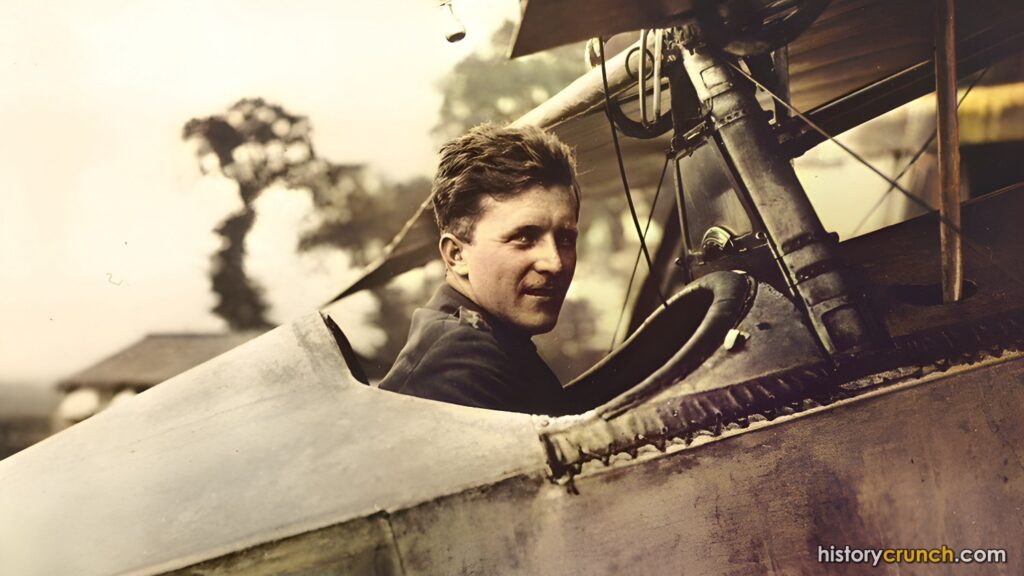
Colorized photo of Canadian flying ace Billy Bishop standing beside his fighter plane in World War I
Billy Bishop was a Canadian flying ace and Victoria Cross recipient who became the top Allied fighter pilot of World War I with 72 confirmed victories, making him a national hero in Canada. (Colorized by historycrunch.com)

Table of Contents

The top ace pilots of World War I were highly skilled airmen. In fact, an 'ace' pilot of World War I was one who had downed at least five enemy airplanes.

AceA pilot officially recognized for shooting down at least five enemy airplanes. pilots of World War I were an important topic in the history of the war.  In fact, airplanes were first invented only about a decade before the start of World War I and aircraft technology further developed as the war progressed.  This led to many ‘ace’ pilots from several countries gaining recognition for their ability to ‘dogfightA mid-air battle between fighter planes trying to shoot each other down.’ in World War I air battles.  World War I was a deadly conflict as shown by the millions of military and civil casualtiesPeople killed or wounded during a war, including both military and civilian victims. it caused.  The large number of casualties was the result, in part, of the development and use of weaponry that took place during the war.  The ace pilots of World War I played a key role in World War I and influenced its outcome.

World War IBulletin Board BioInteractive
Facts that CrunchFactsthatCrunch
Billy Bishop was a Canadian flying ace and Victoria Cross recipient. With 72 victories, he was the top ace of the British Empire in World War I. (Colorized by historycrunch.com)
Billy Bishop
At a Glance
BornFebruary 8th, 1894, in Owen Sound, Ontario, Canada
DiedSeptember 11th, 1956, in Palm Beach, Florida
RoleCanadian World War I fighter pilot and ace
Tap a heading to open the note.
Top Canadian Ace
Bishop was credited with shooting down 72 enemy aircraft during World War I, the highest total of any Canadian pilot in the war.
VC Award
He received the Victoria Cross, Britain's highest military honor, for a solo raid on a German airfield on June 2nd, 1917.
Solo Raid
During that June 2nd, 1917 raid, Bishop attacked a German aerodrome alone, shooting down three enemy planes that rose to intercept him.
Royal Flying Corps
Bishop transferred to the Royal Flying Corps in 1915 after serving with a Canadian cavalry unit, and trained as an observer before becoming a pilot.
Rank Reached
By the end of the war, Bishop held the rank of Lieutenant Colonel and was placed in charge of organizing a new Canadian Air Force.
Postwar Role
After the war, Bishop co-founded Bishop-Barker Aeroplanes Limited, one of Canada's earliest commercial aviation companies.
Source: Imperial War Museums© factsthatcrunch.comMore World War I Facts →

Why Were Some World War I Pilots Called ‘Aces’?

The development of airplane technology during World War I led to the creation of the fighter airplane.  These airplanes were used for ‘dogfights’, which were mid-air plane-to-plane battles.  Early mid-air battles were either not possible or basic due to the limitations of weapons.  For instance, early models of fighter airplanes did not have mountedAttached firmly to the airplane so the weapon could be aimed and fired while flying. machine guns.  Instead, the pilots used handheld weapons, which proved difficult when also flying a plane.  As such, shooting down an enemy plane was nearly impossible early on.  However, as the weapons technology improved on the fighter airplanes, the ability of World War I pilots became much more important.  For instance, once machine guns were reliably mounted to the front of fighter airplanes, the pilots were better able to shoot down enemy airplanes.​

French newspapers in World War I first used the term ‘ace’ for pilots that had downed at least five enemy airplanes.  For instance, the first person to receive the designationAn official title or label given to recognize a person’s achievement. was French pilot Adolphe Pégoud.  However, the most famous ace pilot from World War I was Manfred Albrecht Freiherr von Richthofen.  He flew for the German Army Air Service and was more commonly known as the ‘Red Baron’.  As such, the term ‘ace’ became used for any pilots that had downed at least five enemy airplanes.  Some of the most successful pilots of World War I had downed numerous enemy planes.  Regardless, the life for a World War I pilot was usually short-lived due to the dangerous nature of aircrafts at the time.
Ace Pilots WW1
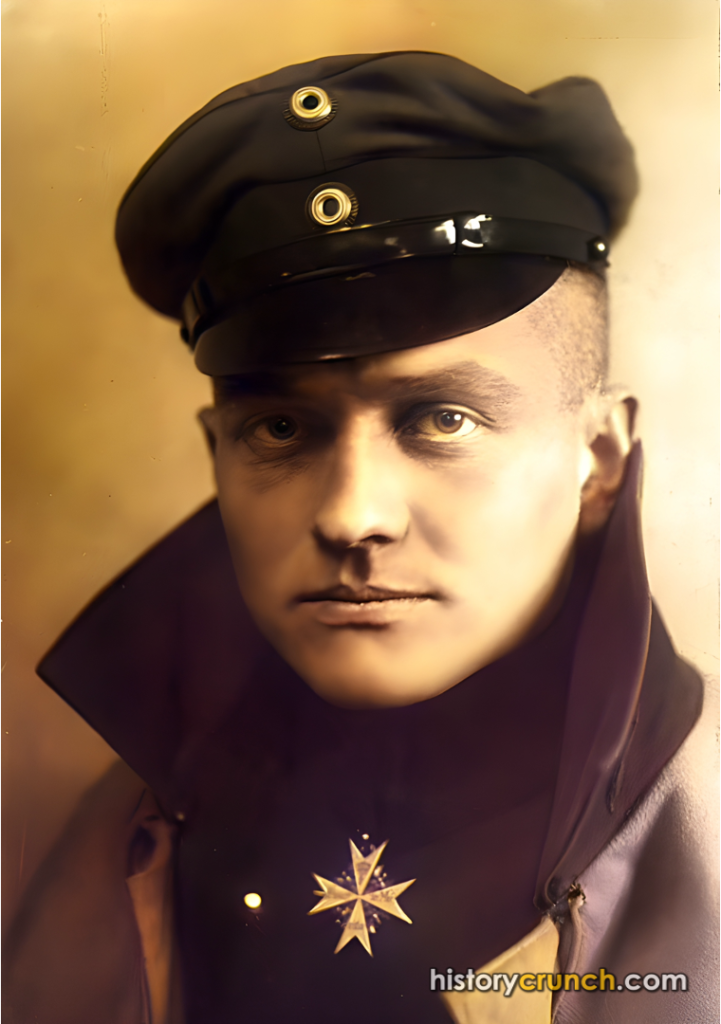
Manfred von Richthofen (Red Baron) from Germany was the top ace pilot of World War I. (Colorized by historycrunch.com)
World War IWho Am I?Interactive
Facts that CrunchFactsthatCrunch

Can you name this mystery person before the photo develops? Click through the hints and lock in your guess.
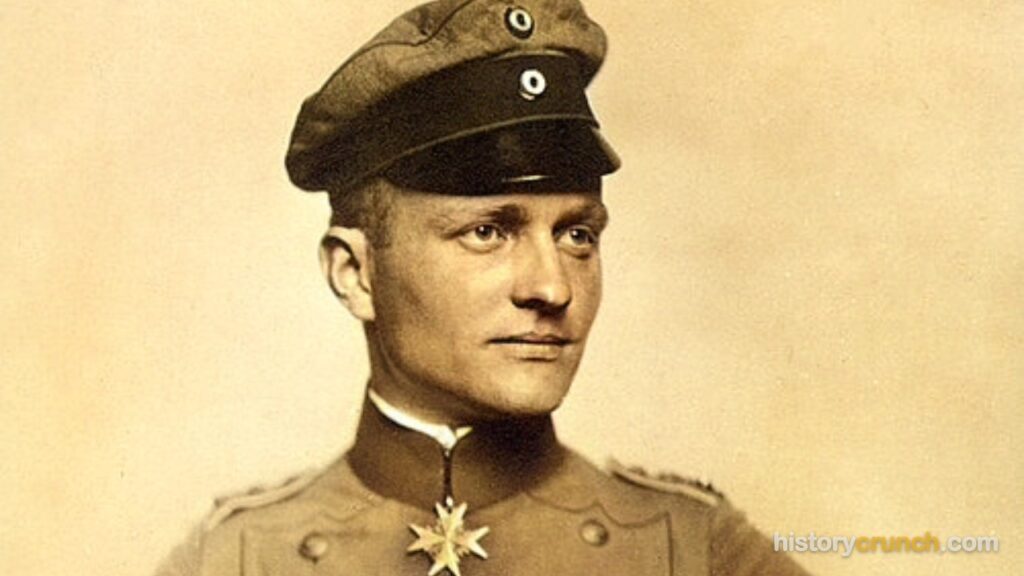
Manfred von Richthofen, the German fighter pilot known as the Red Baron, was the most successful flying ace of World War I with 80 confirmed aerial victories. (Colorized by historycrunch.com)
Unknown subjectManfred von Richthofen
Evidence
the Red Baron
heroes called aces
German fighter pilot
Hint 1 of 4
1I flew for a country that was the first to solve the problem of firing a machine gun through a spinning propeller without hitting the blades.
2I became so famous during the war that my nickname, the Red Baron, spread far beyond Germany.
3Pilots like me who shot down a significant number of enemy aircraft were celebrated as heroes called aces.
4I was a German fighter pilot in World War I, the most famous ace of the entire conflict.
Identified
Manfred von Richthofen
German World War I fighter pilot
Case closed
Why it mattersHe became the most celebrated fighter ace of World War I, and his nickname, the Red Baron, is still recognized more than a century later.
Source: Imperial War Museums© factsthatcrunch.comMore World War I Facts →

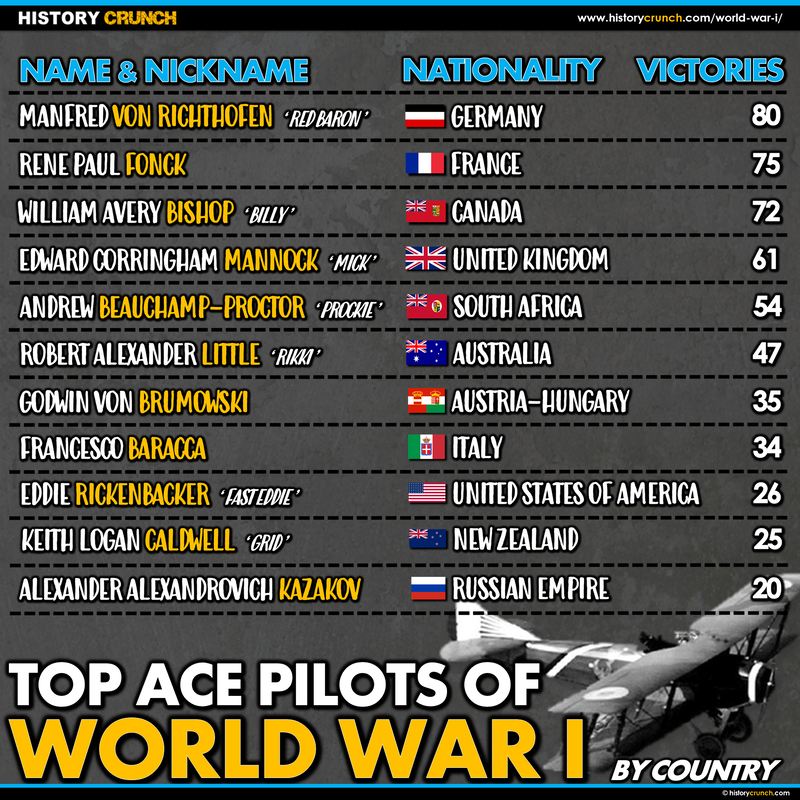
Top Ace Pilots of World War I by Country – Infographic
Ace Pilots of World War I Infographic
Top Ace Pilots of World War I – By Country (Created by historycrunch.com)

World War I timeline · 1914 – 1918

Four years of industrial war that killed about 8.5 million soldiers and ended four empires. The timeline sets the battles, the home fronts and the peace talks in order.
View Timeline →

Key Vocabulary

Dogfight
A mid-air battle between fighter planes trying to shoot each other down.
Mounted
Attached firmly to the airplane so the weapon could be aimed and fired while flying.
Ace
A pilot officially recognized for shooting down at least five enemy airplanes.
Designation
An official title or label given to recognize a person’s achievement.
Casualties
People killed or wounded during a war, including both military and civilian victims.

Frequently Asked Questions

What made a World War I pilot an ‘ace’?

A pilot became an ace by shooting down at least five enemy airplanes. French newspapers first used the term during the war. The title marked a pilot as highly skilled at winning mid-air battles called dogfights.

Who was the first pilot to be called an ace?

French pilot Adolphe Pégoud was the first person to receive the ace designation. He earned it after downing five enemy airplanes. His success helped make the term popular across several countries during the war.

Who was the top ace pilot of World War I?

Manfred von Richthofen of Germany was the top ace pilot of World War I. He flew for the German Army Air Service and was known as the ‘Red Baron’. He remains the most famous fighter pilot of the entire war.

Why were early dogfights so difficult?

Early dogfights were hard because fighter airplanes did not yet have mounted machine guns. Pilots had to use handheld weapons while also flying the plane. This made shooting down an enemy plane nearly impossible in the war’s first stages.

How did technology change air battles during the war?

Mounting machine guns to the front of fighter airplanes changed air battles greatly. This let pilots aim their planes and fire at the same time. As a result, skilled pilots could shoot down enemy aircraft far more often.

Was flying dangerous for World War I pilots?

Flying was very dangerous, and the life of a World War I pilot was often short. Aircraft at the time were fragile and unreliable. Even the most successful aces faced a high risk of being killed in combat.

Cite This Article

To cite this article as a source, use one of the formats below.

MLA: Beck, Elias. “Ace Pilots of World War I: A Detailed Summary.” HistoryCrunch, 29 September 2026, https://historycrunch.com/ace-pilots-of-world-war-i/.

APA: Beck, E. (2026). Ace Pilots of World War I: A Detailed Summary. HistoryCrunch. https://historycrunch.com/ace-pilots-of-world-war-i/

Chicago: Beck, Elias. “Ace Pilots of World War I: A Detailed Summary.” HistoryCrunch. September 29, 2026. https://historycrunch.com/ace-pilots-of-world-war-i/

Sources

  • Fordham Modern History Sourcebook
  • Hew Strachan, The First World War.
  • John Keegan, The First World War.
  • Margaret MacMillan, The War That Ended Peace.

Facebook
X
Reddit
Pinterest
LinkedIn

We strive to produce educational content that is accurate, engaging and appropriate for all learners. If you notice any issues with our content, please contact us and let us know!

AUTHOR INFORMATION
Picture of Elias Beck

Elias Beck

I'm a passionate history and geography teacher with over 15 years of experience working with students in the middle and high school years. I have an Education Degree with a focus in World History. I have been writing articles for History Crunch since 2015 and love the challenge of creating historical content for young learners!
Colorized photograph of the British battleship HMS Dreadnought
World War I

Dreadnought of World War I: A Detailed Summary

The dreadnought of World War I was an important battleship that was first developed by Britain and later copied by other countries. For instance, Germany famously modeled its own battleships after the British HMS Dreadnought.

Colorized photo of a French Renault FT-17 tank during the Battle of Saint-Mihiel in 1918
World War I

Tanks in World War I: A Detailed Summary

Tanks in World War I were an important new invention. The British first introduced the tank at the Battle of the Somme in 1916, and they quickly became an important weapon for the other nations.

Bulgaria in World War I Infographic
Infographics

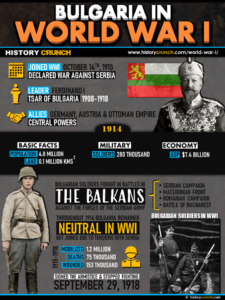
Bulgaria in World War I: Infographic

This Bulgaria in World War I infographic was created by History Crunch to help students and teachers quickly understand Bulgaria’s role in the First World War. It covers Bulgaria’s decision to join the Central Powers, its army, its major battles in the Serbian Campaign in the Balkans, the home front experience and the outcome of the war for the country. Designed for students in grades 5 to 12.

World War I soldiers with bolt-action rifles on the front lines
World War I

Rifles in World War I: A Detailed Summary

Rifles in World War I played an important role in the day-to-day lives of the soldiers. This is because the rifle was the main weapon for most soldiers, and the one that they most often went into battle with.

Maxim Gun
Age of Imperialism

Maxim Gun and the Age of Imperialism: A Detailed Summary

The Maxim gun, invented by Hiram Maxim in 1884, was the first fully automatic machine gun, significantly impacting warfare by providing European colonial forces with a powerful weapon that contributed to their dominance during the Scramble for Africa.