The Code of Hammurabi is a famous set of laws from the ancient Mesopotamian kingdom of Babylon, and dates from about 1754 BCE. Hammurabi was the Babylonian king at the time, and created the code to set down laws, punishments and rights related to the people of the kingdom. While not a definitive set of rights, the Code of Hammurabi is significant because it is one of the oldest known examples of the establishment of rights, especially in relation to the social and gender differences that existed in society. As such, the Code of Hammurabi is significant in history and topics such as human rights and laws.
CODE OF HAMMURABI – HUMAN RIGHTS
The development of human rights has a long and interesting history. The Code of Hammurabi is considered to be one of the most important milestones in the history of the development of human rights, especially in the timeframe of ancient history. In general, human rights are understood to be the rights provided to individuals which protect them from persecution or mistreatment by others or governments. They describe how we all expect to be treated with a focus on human dignity and respect.
CODE OF HAMMURABI – WHO WAS HAMMURABI?
As stated above, the Code of Hammurabi was first created by Hammurabi, who ruled over the kingdom of Babylon from 1792 to 1750 BCE. Babylon was located in ancient Mesopotamia, which was situated between the Tigris and Euphrates rivers in the Middle East. Hammurabi served as the sixth king of the Babylonian kingdom and is most famous for setting out the Code of Hammurabi.
CODE OF HAMMURABI – SUMMARY
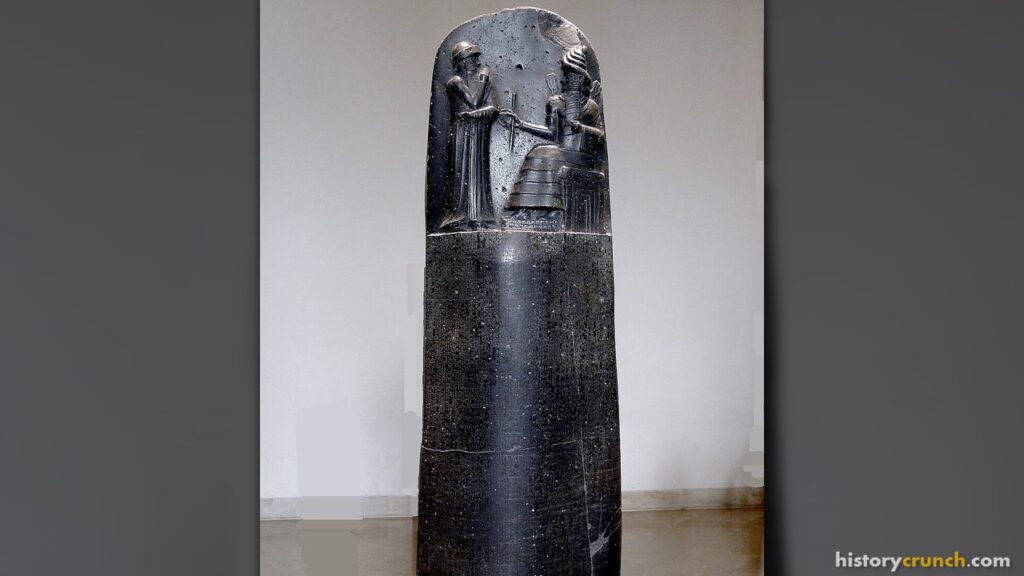
The Code of Hammurabi is significant because it is one of the first examples of codified laws in ancient history and inspired the development of laws and rights in the centuries that followed. In fact, the Code of Hammurabi is one of only a few texts from that time period that have survived into modern times. A copy of the Code of Hammurabi is currently located in the Louvre Museum in Paris, France. It is a large stone slab (referred to as a ‘stele’) that stretches 7 and a half feet tall. In the time of Hammurabi, it is said that the large slab was positioned in the center of the city, so that the Babylonian citizens could read and view the laws. Furthermore, the language used on the stone is Akkadian, which was the common language used in the kingdom.
As a text, the Code of Hammurabi totaled 282 laws, which were organized on the large stone slab in sets of different groups. The top portion of the stone slab states that Hammurabi received the laws contained in the Code of Hammurabi from the Babylonian god of justice, which is ‘Shamash’. In general, the laws of the Code of Hammurabi covered a wide range of topics, including: Adultery, Divorce, Duties of Workers, Fraud, Slander, Slavery, Theft, and Trade. Furthermore, the laws focused heavily on punishments for those guilty of disobeying the laws. For example, many of the laws in the Code of Hammurabi centered on the theme of ‘an eye for an eye’. In fact, law number 196 in the Code of Hammurabi was “If a man destroy the eye of another man, they shall destroy his eye. If one break a man’s bone, they shall break his bone. If one destroy the eye of a freeman or break the bone of a freeman he shall pay one gold mina. If one destroy the eye of a man’s slave or break a bone of a man’s slave he shall pay one-half his price”.
Although the Code of Hammurabi focused on trying to create equality between those who committed a crime, and those who were victims of crime, it should be noted that Babylonian society at the time was inherently unequal. For instance, the Code of Hammurabi distinguishes the punishments based on the status of the particular person in society. Those in the higher classes were punished less if their crime was against those in the lower classes, while the opposite was true if a lower class person committed a crime against someone in the higher class.
The Code of Hammurabi was lost in the 12th century and not rediscovered until 1901 CE when Egyptologist Gustave Jéquier found it during an archaeological dig in modern-day Iran. As stated above, the code is housed today in the Louvre Museum in Paris, France. While some other smaller copies of the code exist, the stone slab at the Louvre is the most famous.