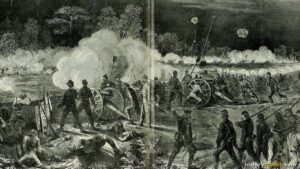
Abraham Lincoln is one of the most significant people in all of American history. He was the 16th President of the United States and served in office from March 4th, 1861 until April 15th, 1865 when he was assassinated by John Wilkes Booth. As President, Abraham Lincoln led the country through some of its most conflicted moments. For instance, he was President during the American Civil War, which saw the Northern states (Union) face off against the Southern states (Confederacy) in a series of bloody battles. As well, he dealt with the issue of slavery in the United States and eventually led the United States towards abolishing its practice. The assassination of Abraham Lincoln was a shocking event at the time and is still significant today for the role it played in the period of time after the end of the Civil War.
 FactsthatCrunch
On the same night Booth shot President Lincoln, conspirator Lewis Powell forced his way into Secretary of State William Seward's home and wounded five people with a knife and pistol, yet killed none of them.
Powell stabbed Seward several times in the face and neck, beat Seward's son Frederick with a pistol hard enough to fracture his skull, and also injured Augustus Seward, nurse George F. Robinson, and messenger Emerick Hansell. Seward survived partly because a neck brace he was already wearing from a carriage accident protected the blood vessels in his neck. The April 14th, 1865 attack was designed to kill three top government leaders in one night, but Lincoln was the only person who died as a direct result.
Abraham Lincoln’s Presidency
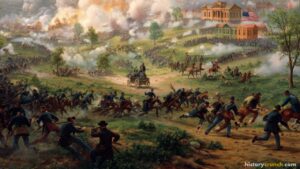
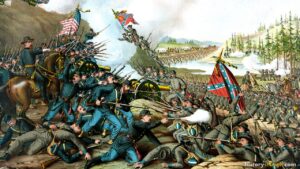
As stated above, Abraham Lincoln’s first term as President of the United States began in 1861. During the first years of his presidency, the Civil War began as the Southern ‘Confederate’ states cededWhen Southern states formally withdrew from the United States to form their own separate government. to form the Confederacy. In fact, historians consider Lincoln’s election as one of the main causes of the Civil War. Throughout the time of his first term, the United States was in the midst of the Civil War and suffered from several significant and bloody battles between the Union and the Confederacy. As such, Lincoln was relatively popular in the Northern states but was incredibly unpopular in the Southern states.
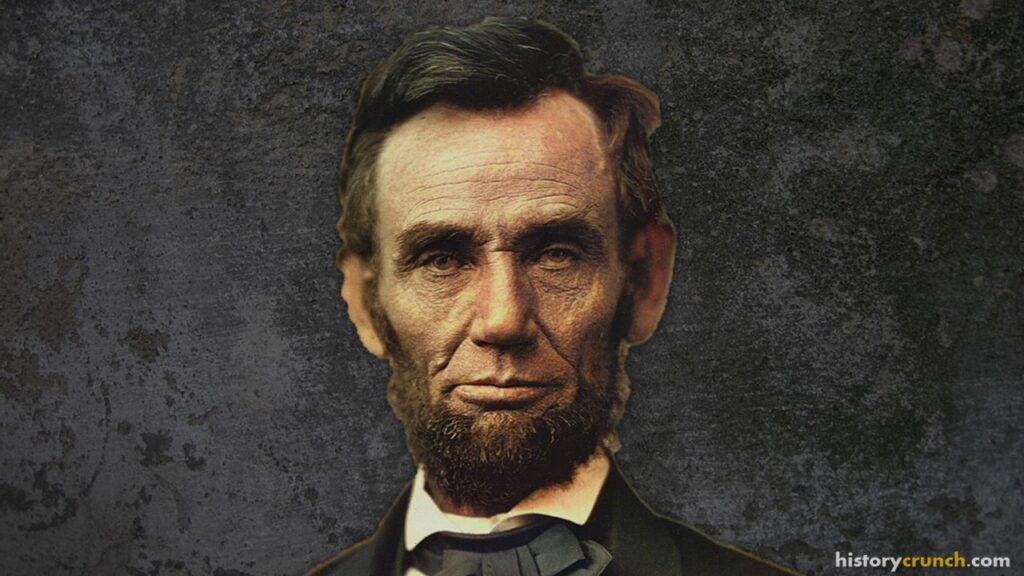
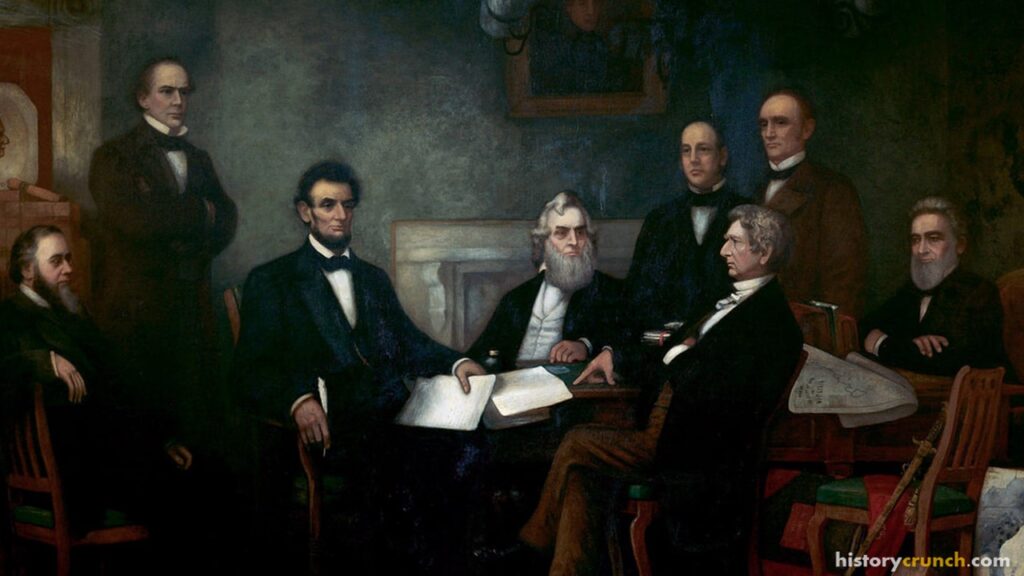
Before the end of the Civil War in 1865, Abraham Lincoln ran for re-election as President of the United States in 1864. It was not certain that he would win, as many at the time were angered with the ongoing issues of the Civil War. Regardless, he was re-elected and even gained further support than his 1860 election. On March 4th in 1865, Lincoln gave his second inaugural addressA speech given by a president at the ceremony marking the official start of their time in office., in which he argued that the Civil War was ‘God’s Will’ and called for reunification of the nation. For instance, he stated the following, which is also inscribed on the Lincoln Memorial in Washington D.C.:
“Fondly do we hope—fervently do we pray—that this mighty scourgeSomething that causes great suffering or destruction on a large scale. of war may speedily pass away. Yet, if God wills that it continue, until all the wealth piled by the bond-man’s 250 years of unrequited toil shall be sunk, and until every drop of blood drawn with the lash, shall be paid by another drawn with the sword, as was said 3,000 years ago, so still it must be said, “the judgments of the Lord, are true and righteous altogether”. With malice toward none; with charity for all; with firmness in the right, as God gives us to see the right, let us strive on to finish the work we are in; to bind up the nation’s wounds; to care for him who shall have borne the battle, and for his widow, and his orphan—to do all which may achieve and cherish a just and lasting peace, among ourselves, and with all nations.”
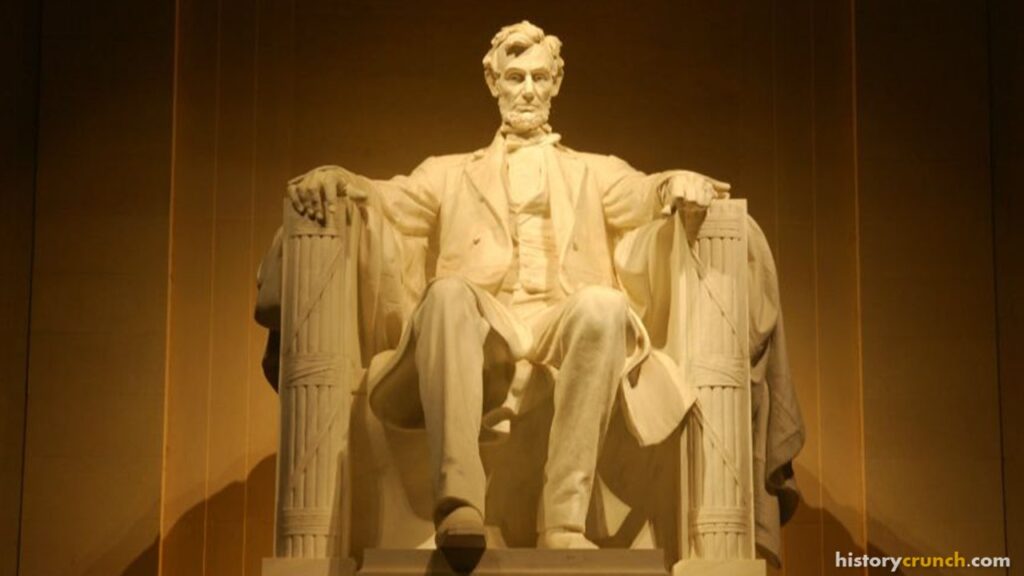
As the Civil War came to an end, and it became clear that the Confederacy could not maintain its war effort, Lincoln and his government began preparing for ‘ReconstructionThe period from 1865 to 1877 when the United States worked to recover and reunify after the Civil War.’. In short, Reconstruction refers to the time period in American history from 1865 until 1877, in which the country recovered and reunified following the division of the Civil War. Lincoln knew it was necessary to bring the Confederate states back into the Union once the war was over and sought to do so in a way that would preserve the United States. While Lincoln was responsible for starting the process of Reconstruction in American history, he was not able to see it through because he was assassinated in 1865.
FactsthatCrunchWhat Was Reconstruction After the Civil War?
Reconstruction was the period from 1865 to 1877 when the federal government worked to bring the Southern states back into the Union after the Civil War. The federal government passed new laws and amendments to give formerly enslaved people citizenship and the right to vote. Southern states had to meet conditions set by Congress before they could rejoin the Union.
Abraham Lincoln’s Assassination
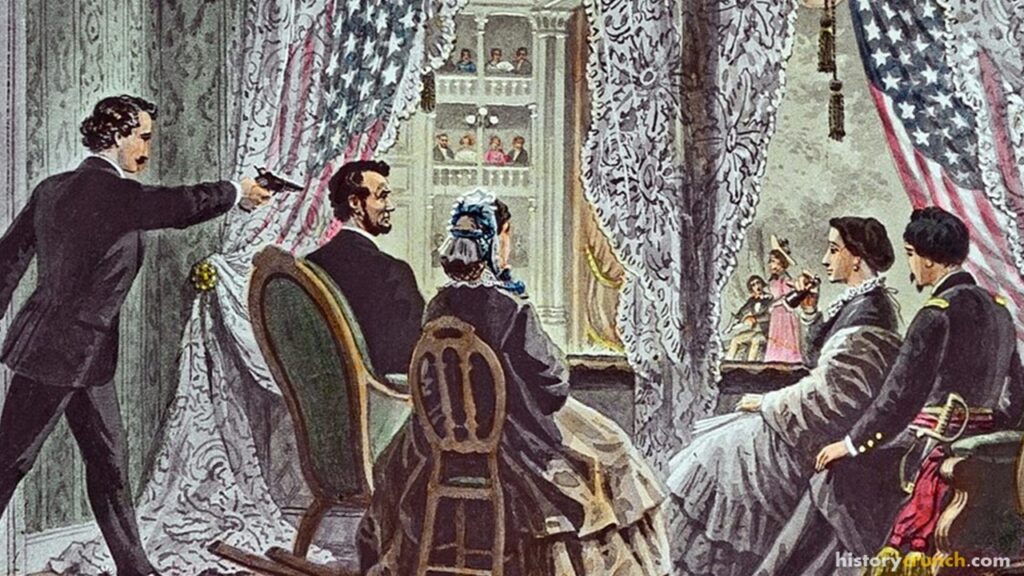
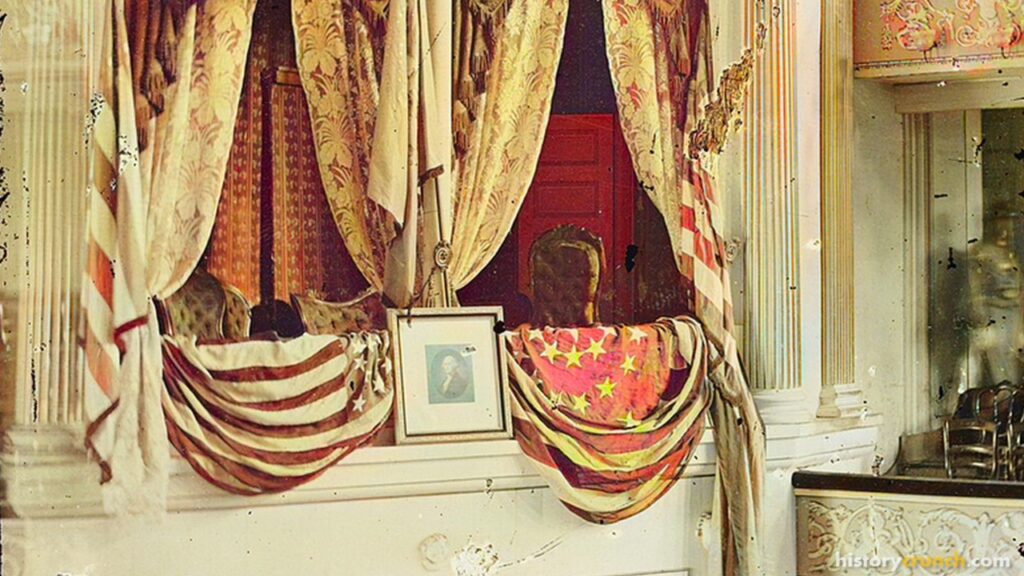
Abraham Lincoln was assassinated on the evening of April 14th in 1865, just over a month following his second inaugural address. He was assassinated by John Wilkes Booth, who was a relatively well-known actor of the day. At the time, Lincoln was attending a play called ‘Our American Cousin’ at Ford’s Theatre in Washington D.C. Booth approached Lincoln while he was watching the play in his theatre box and shot the president in the head. He shot the president with a ‘Philadelphia DerringerA small, easily concealed handgun used by Booth to shoot President Lincoln.’, which was a small styled handgun. Booth stabbed another person in the box and ran from the theatre in order to make his escape. Lincoln did not die right away from the gunshot, and remained alive, although in a coma, until early the next morning. As such, Lincoln’s death is officially dated as April 15th, 1865. His Vice President, Andrew Johnson, was sworn in as the next President of the United States.
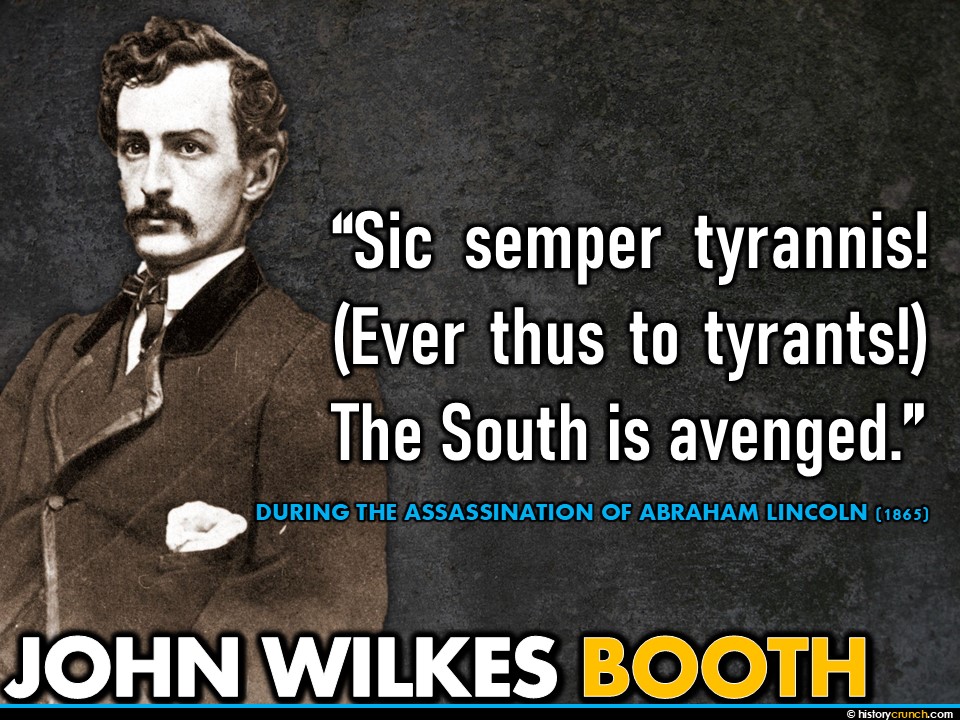
John Wilkes Booth assassinated Lincoln as part of a larger plot by loyalists to the Confederacy. Two other assassins, Lewis Powell and George Atzerodt, were supposed to assassinate Secretary of State William H. Seward and Vice President Johnson at their homes. The assassins were hoping to start a revolt by the Confederacy, and viewed Lincoln, Johnson and Seward as responsible for the Civil War. Regardless, the plot did not work as only Lincoln was assassinated. Secretary of State Seward was wounded but survived, and no attempt was ever made against Johnson, because the assassin decided against carrying it out.
As stated above, John Wilkes Booth escaped from Ford’s Theatre following his assassination of Lincoln. In fact, he went on the run from authorities and evaded capture for the next twelve days. He was eventually found hiding on a farm in Virginia where he died in a shootout on April 26th.
Lincoln’s body initially lay in stateWhen a deceased leader’s body is placed on public display so people can pay their respects. at the White House and then the Capitol building before it was transported to Springfield, Illinois. The trip to Illinois took about two weeks aboard a train called the ‘Lincoln Special’. It took a route from Washington D.C. to Springfield that allowed it to pass through many towns and cities, so that people could pay their respects. Ultimately, Lincoln was buried at Oak Ridge Cemetery in a large tomb referred to as the ‘Lincoln Tomb’. His wife, Mary Todd, and three of his sons were also buried at the site. He was the first American President to be assassinated while in office.
 FactsthatCrunch
In what order did these events happen on the night Lincoln was shot and the days that followed?
Abraham Lincoln’s Legacy
Abraham Lincoln is one of the most significant people in the entire history of the United States. He served as the 16th President of the United States and the first ever Republican President. As well, during his Presidency, the country was deeply divided by the events of the American Civil War and the lingering issue of slavery. He guided the Union during a very difficult time and eventually carried out the reunification of the states and started the process of ‘reconstruction’. As well, he laid the foundation for the end of the practice of slavery in the United States. For example, his Emancipation Proclamation was an incredibly important event that freed millions of slaves in 1863. Because of this, many African Americans at the time viewed him as an important factor in their freedom. Lincoln was also the first President of the United States to be assassinated. His death was shocking to the nation, especially to the Northern states who had depended on his guidance during the Civil War.
American Civil War timeline · 1861 – 1865
Key Vocabulary
Ceded
Inaugural address
Scourge
Reconstruction
Philadelphia Derringer
Lay in state
Emancipation Proclamation
Frequently Asked Questions
Who assassinated Abraham Lincoln?
John Wilkes Booth assassinated Abraham Lincoln on April 14th, 1865. Booth was a well-known actor and a loyal supporter of the Confederacy. He shot the president in the head with a small handgun called a Philadelphia Derringer.
Where and when was Lincoln shot?
Lincoln was shot on the evening of April 14th, 1865, at Ford’s Theatre in Washington D.C. He was watching a play called “Our American Cousin” from his theatre box. He did not die right away and passed early the next morning, so his death is dated April 15th, 1865.
Why did John Wilkes Booth kill Lincoln?
Booth killed Lincoln as part of a larger plot by Confederate loyalists who blamed him for the Civil War. Two other men were supposed to kill Secretary of State William H. Seward and Vice President Andrew Johnson. The attackers hoped to spark a Confederate revolt, but the plan failed.
What happened to John Wilkes Booth after the assassination?
Booth escaped Ford’s Theatre and stayed on the run for about two weeks. Authorities finally found him hiding on a farm in Virginia. He died in a shootout there on April 26th, 1865.
Who became president after Lincoln died?
Vice President Andrew Johnson became president after Lincoln died. He was sworn in on April 15th, 1865, the same day Lincoln passed. Johnson then took charge of Reconstruction, the effort to reunite the country after the Civil War.
Was Lincoln the first president to be assassinated?
Yes, Abraham Lincoln was the first American president to be assassinated while in office. His death shocked the nation, especially the Northern states that had relied on his leadership. His body traveled by train to Springfield, Illinois, where he was buried at Oak Ridge Cemetery.
Cite This Article
To cite this article as a source, use one of the formats below.
MLA: Beck, Elias. “Abraham Lincoln Assassination: A Detailed Summary.” HistoryCrunch, 20 September 2026, https://historycrunch.com/abraham-lincoln-assassination/.
APA: Beck, E. (2026). Abraham Lincoln Assassination: A Detailed Summary. HistoryCrunch. https://historycrunch.com/abraham-lincoln-assassination/
Chicago: Beck, Elias. “Abraham Lincoln Assassination: A Detailed Summary.” HistoryCrunch. September 20, 2026. https://historycrunch.com/abraham-lincoln-assassination/
Sources
- Eric Foner, Give Me Liberty!: An American History.