The impacts of the Black Death are related to the social, economic, political and artistic aspects of society at the time. It led to economic shifts, with surviving workers demanding higher wages and better living conditions. Socially and culturally, the plague caused widespread fear, challenged religious faith, and influenced art and literature with themes of death and mortalityUsed here to describe the widespread death of people caused by disease..
 FactsthatCrunch
The Black Death killed a large share of Europe's population in the mid-14th century CE, and the survivors faced a changed world that brought both new hardships and new opportunities.
What Was the Black Death?
The Black Death is one of the most important events in Western history and is the most famous pandemicA disease that spreads across a very wide area, potentially affecting the entire planet. in all of human history. A pandemic is the term used to describe the spread of an infectious disease over a wide area including the entire planet. The Black Death occurred during the 14th century and ravagedCaused severe damage or destruction to a population or place. human populations throughout Asia and Europe as it spread along trade routes and through trading ports. Throughout history it has also been referred to as the ‘Great MortalityUsed here to describe the widespread death of people caused by disease.’ and ‘Great PestilenceAn older name used throughout history for the catastrophic outbreak now called the Black Death.’. It had major impacts on both the Middle Ages and the Renaissance.
Social
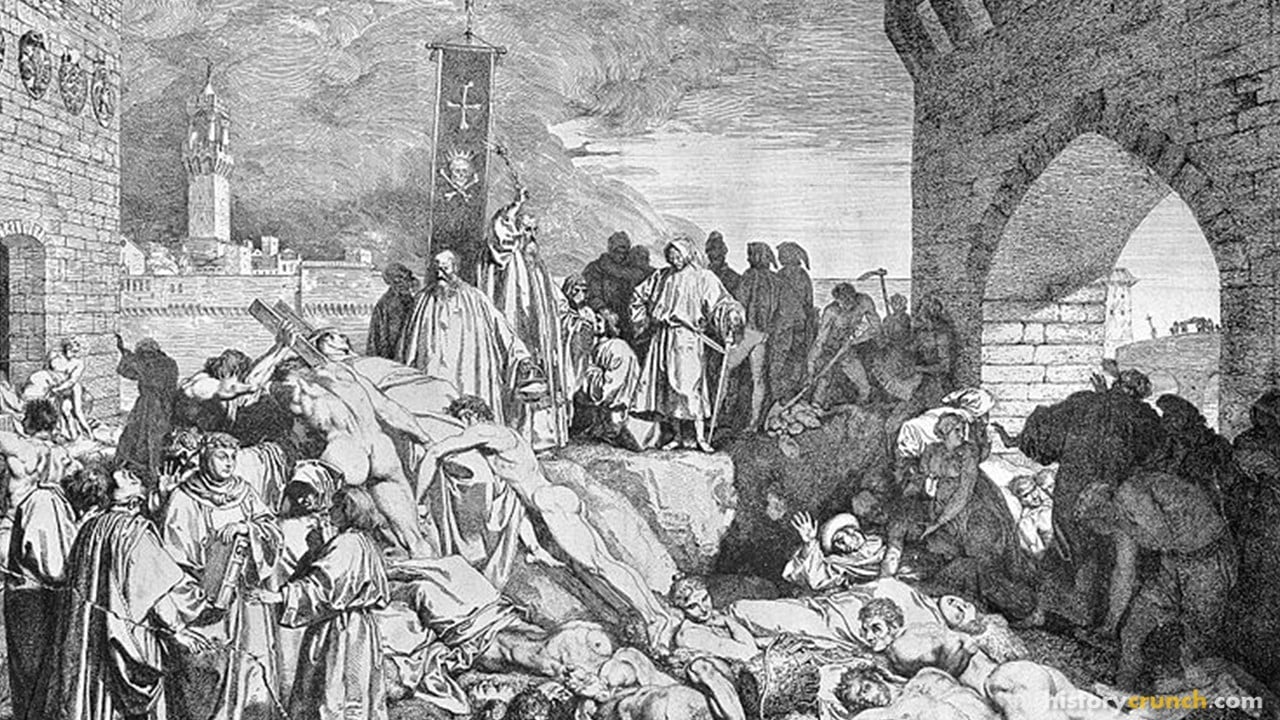
The first main impact of the Black Death was the sheer number of people that died. Historians agree that Europe’s population dropped by half in the first several decades of the Black Death, and this had a huge impact on social and family life for communities throughout Europe. For example, because people did not have a clear understanding of the causes of the plague they often went to the aid of their family members that became ill. This, of course, led to the caretakers also becoming sick after being bitten by the infected fleas. As such, people soon learned to avoid those that were showing symptoms of the plague. This situation meant that families and whole communities were often ripped apart as they tried to avoid the disease. As well, communalShared by or involving a whole community of people together. activities such as gathering for church and trading in marketplaces became difficult and dangerous. For example, the following excerpt from Giovanni Boccaccio, an Italian writer who lived from 1313 to 1375, shows the desperate situation of the time.
“Tedious were it to recount, how citizen avoided citizen, how among neighbors was scarce found any that showed fellow-feeling for another, how kinsfolkA person’s relatives or family members. held aloof, and never met, or but rarely; enough that this sore affliction entered so deep into the minds of men and women, that in the horror thereof brother was forsaken by brother, nephew by uncle, brother by sister, and oftentimes husband by wife: nay, what is more, and scarcely to be believed, fathers and mothers were found to abandon their own children, untended, unvisited, to their fate, as if they had been strangers.”
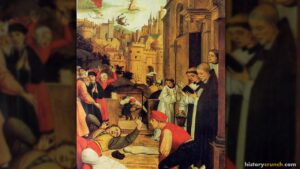
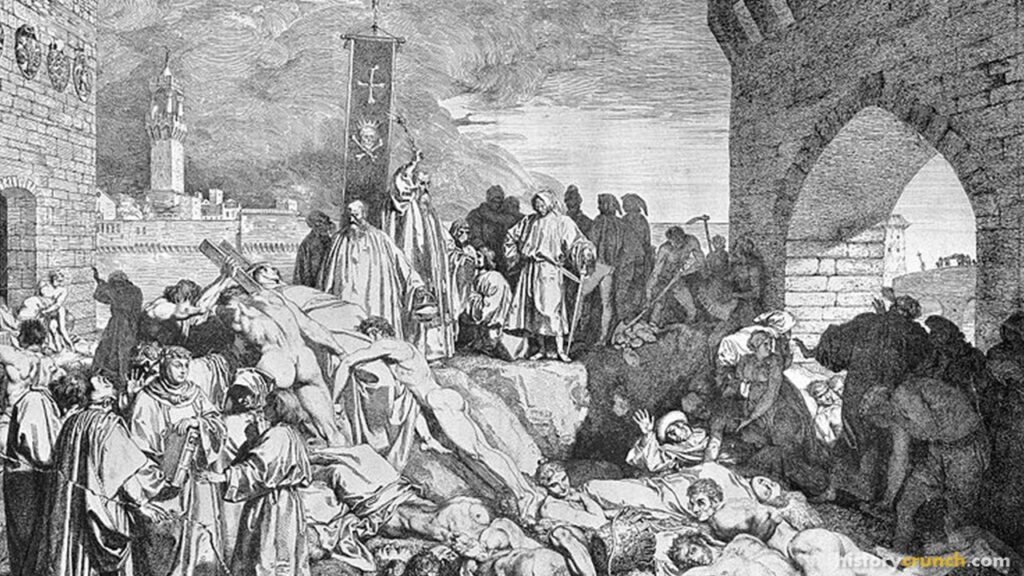
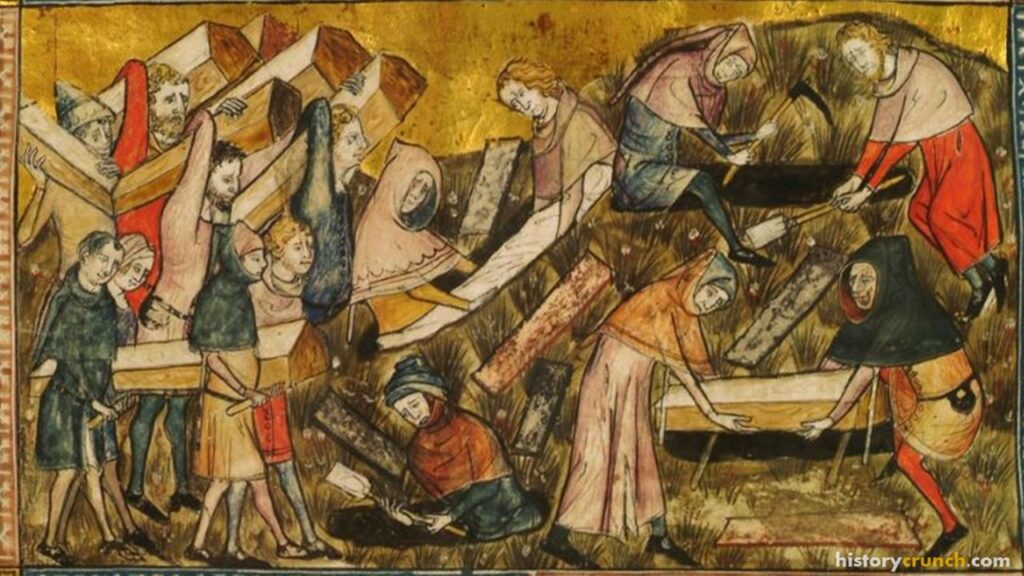
Furthermore, the massive death tolls and the growing fear of people to deal with those that were sick meant that the bodies of the dead literally collected in homes and on streets. In particular, poor areas of towns and cities quickly became littered with the bodies of the dead and overwhelmed communities often resorted to mass burials or burning of the bodies. This had a profound effect on European cities, as the disease ravaged whole areas.
FactsthatCrunchEnough that this sore affliction entered so deep into the minds of men and women, that in the horror thereof brother was forsaken by brother, nephew by uncle, brother by sister, and oftentimes husband by wife; nay, what is more, and scarcely to be believed, fathers and mothers were found to abandon their own children, untended, unvisited, to their fate, as if they had been strangers.
Written in the introduction to The Decameron, describing the plague that struck Florence in 1348.
Economic
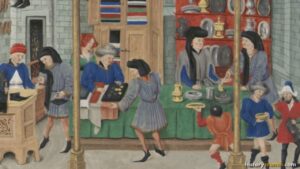
The second major impact of the Black Death was the economic loss or effect that resulted from the spread of the plague. As stated in the previous paragraph, the spread of the plague caused people to avoid crowded areas. As such, marketplaces and trade in general suffered. For example, some of the hardest hit areas in Europe and Asia were trading ports along the coast of the Mediterranean. These cities were often hotbedsPlaces where something harmful, like disease, develops or spreads very easily. for the plague since this was where the rats and mice that carried the fleas arrived after having stowed away on trading ships. This reality meant that trade in these port cities slowed as merchants and traders suffered.
FactsthatCrunchTap each impact to read what it led to.
Political
The third major impact of the Black Death was political. The nature of the plague meant that it impacted everyone equally. It did not matter if people were wealthy or poor, the plague spread to all people of all classes. As well, the massive death tolls put massive amounts of pressure on the monarchs across Europe to deal with the crisis. This strained the political structures of many countries and kingdoms and led to political crisis.
Why did the Black Death strain Europe's monarchs and governments?
Art
The fourth major impact of the Black Death was the effect it had on art. For example, the image below is called ‘The Dance of Death’ and was created by Michael Wolgemut in 1493. Artistic images such as this emerged out of the time period and display the focus that art took on death, which was a common reality for the people.
In all, the Black Death was an important event that fundamentally changed life for people across Europe and Asia. It was caused by the spread of the bubonic plague and caused massive death tolls wherever it occurred. It is remembered today as one of the most important pandemics in all of human history and for its role in other major events and time periods, such as: the Silk Road, the Middle Ages and the Renaissance.
FactsthatCrunch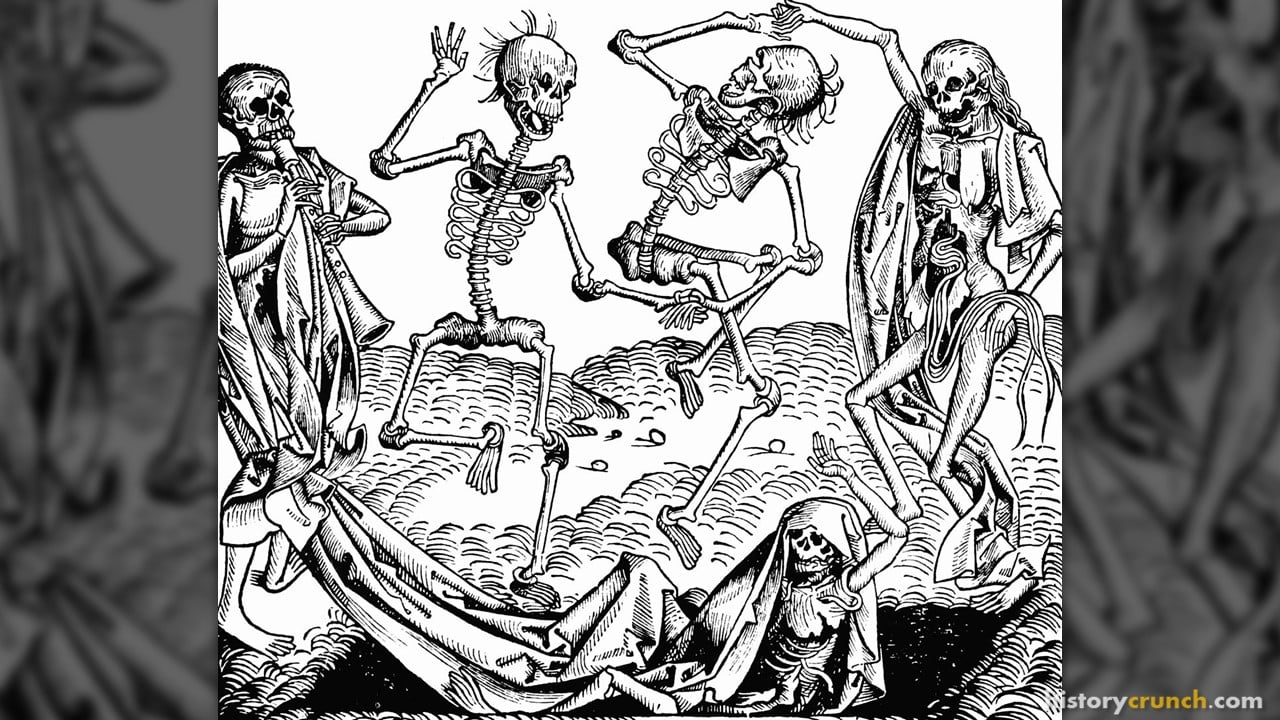
Middle Ages timeline · 476 – 1500 CE
Key Vocabulary
Pandemic
Great Pestilence
Kinsfolk
Communal
Hotbeds
Mortality
Frequently Asked Questions
How many people died in the Black Death?
Historians agree that Europe’s population dropped by about half during the first decades of the plague. Millions of people died across both Europe and Asia. The disease spread so fast that towns and cities could not bury the dead quickly enough.
How did the Black Death change wages for workers?
So many workers died that survivors could demand higher pay and better living conditions. With fewer people to farm and trade, labor suddenly became more valuable. This shift weakened the old feudal system that had tied peasants to the land.
Why did the Black Death hurt trade so badly?
People avoided crowded places like marketplaces, so trade slowed almost everywhere. Port cities on the Mediterranean were hit the hardest because plague arrived on trading ships. Merchants suffered as buyers and sellers stayed home to escape the disease.
How did the Black Death affect religion and faith?
The plague shook people’s faith because prayers and the church could not stop the deaths. Many wondered why God allowed such suffering to reach everyone equally. This doubt changed how some people viewed religion and the power of the church.
Why is the Black Death shown so often in art?
Death was a daily reality, so artists often made death the main subject of their work. A famous example is “The Dance of Death,” created by Michael Wolgemut in 1493. Images like this showed how deeply the plague shaped the way people thought about life and death.
Cite This Article
To cite this article as a source, use one of the formats below.
MLA: Beck, Elias. “Impacts of the Black Death: A Detailed Summary.” HistoryCrunch, 15 September 2026, https://historycrunch.com/impacts-of-the-black-death/.
APA: Beck, E. (2026). Impacts of the Black Death: A Detailed Summary. HistoryCrunch. https://historycrunch.com/impacts-of-the-black-death/
Chicago: Beck, Elias. “Impacts of the Black Death: A Detailed Summary.” HistoryCrunch. September 15, 2026. https://historycrunch.com/impacts-of-the-black-death/
Sources
- J.M. Roberts & Odd Arne Westad, The Penguin History of the World.
- Fordham Medieval Sourcebook