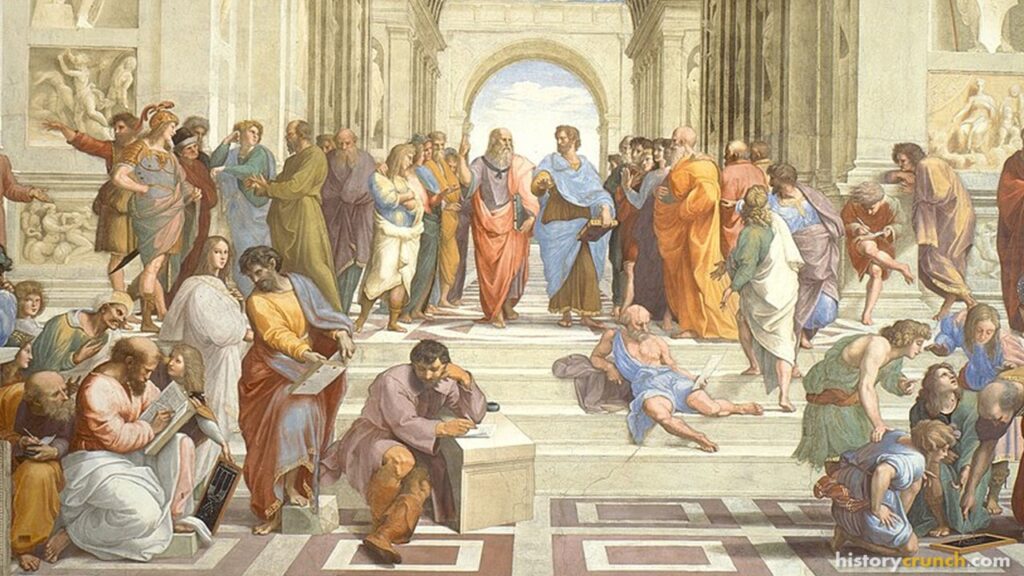
Raphael was a celebrated Renaissance artist known for his famous paintings. His most famous work, ‘The School of Athens’ is especially renowned for its use of perspectiveA technique in painting that creates the illusion of depth and distance on a flat surface., which gave the painting a sense of depth. Raphael’s art helped define the Renaissance style, and he was widely admired for his contributions to art.
 FactsthatCrunch
Raphael, born Raffaello Sanzio da Urbino, was commissioned by Pope Julius II around 1508 to paint frescoes in the Vatican Palace, producing a series of rooms now called the Raphael Rooms, which include 'The School of Athens' and 'The Parnassus'. His father, Giovanni Santi, was a court painter for the Duke of Urbino, and Raphael trained in his father's workshop before going on to develop a style shaped partly by the pyramidal compositions of Leonardo da Vinci during his Florentine Period from approximately 1504 to 1508.
Raphael (Renaissance Artist) – Early Life
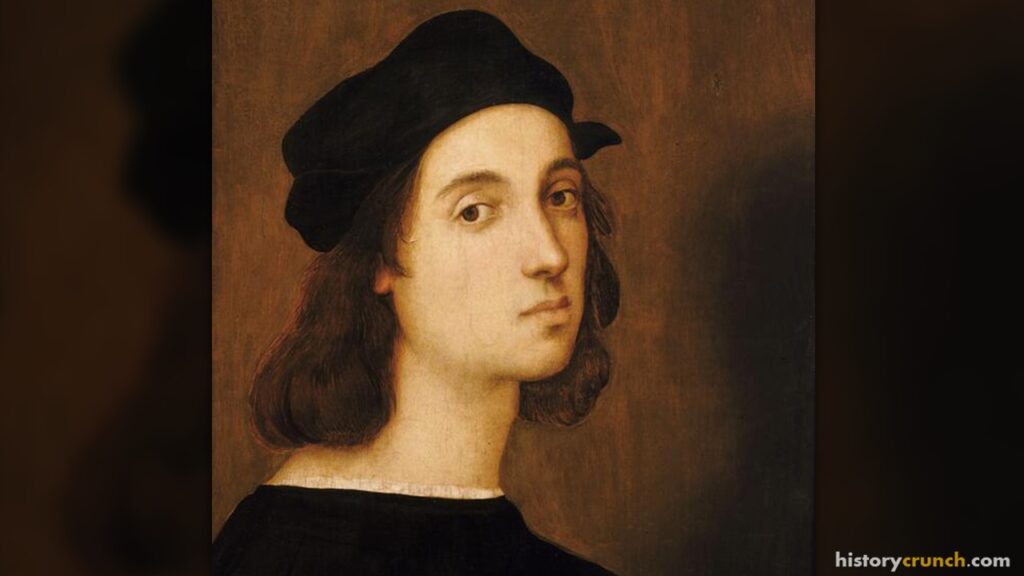
Raffaello Sanzio da Urbino, better known as Raphael, was born in Urbino, Italy in 1483. The exact date of his birth is unknown but historians have determined it to be either March 28th, 1483 or April 6th, 1483. Today he is famous for being one of the most important and influential artists of the Renaissance in Europe. Raphael’s mother, Magia, died when Raphael was just eight years old. Raphael’s father, Giovanni Santi was a poet and court painter for the Duke of Urbino. There is evidence that Raphael helped his father run his art workshop at the time, while developing his own artistic skills. Giovanni Santi remarried after Magia, Raphael’s mother, died; however, he too died young, leaving Raphael orphaned by the age of eleven. Following the death of both of his parents, Raphael was then cared for by his uncle and stepmother.
He spent some time working as an artist’s apprentice as a teenager, and likely helped his stepmother continue to operate his father’s workshop. It was during this time that his artistic skills became more apparent.
Raphael (Renaissance Artist) – Artist
Raphael is described as being a master painter by December of 1500 at the age of seventeen. This suggests that he was fully trained as an artist and able to take on his own commissionedOfficially hired and paid to create a specific work of art. works. The first documented piece that Raphael completed was the Baronci altarpieceA decorative artwork placed behind or above an altar inside a church. for the church of Sant’Agostino in Città di Castello, Italy. He began work on the altarpiece in 1500 and completed it in 1501. Following successful completion of the altarpiece, Raphael went on to complete many other works for other churches in Italy. He also painted cabinets as well as Madonnas and portraits.
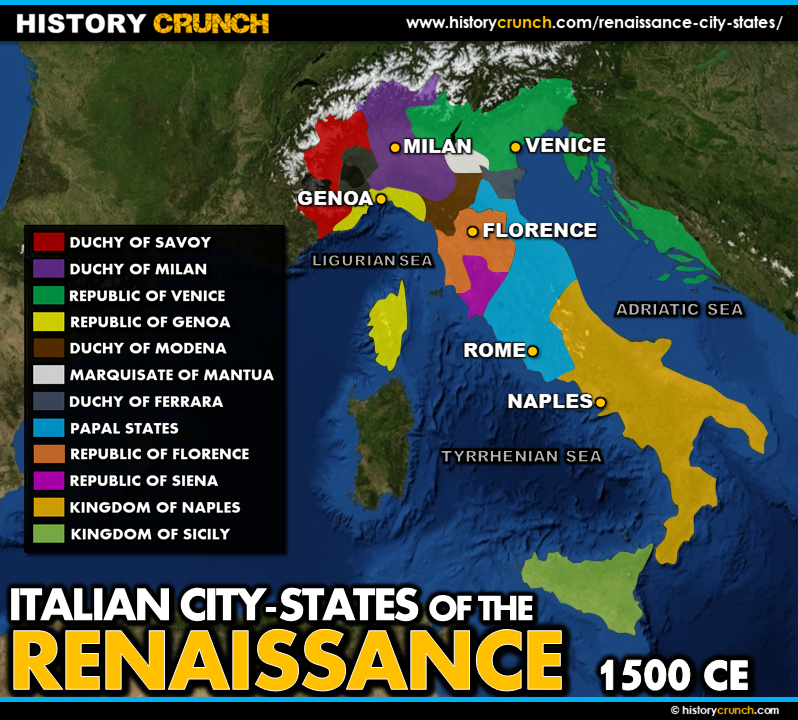
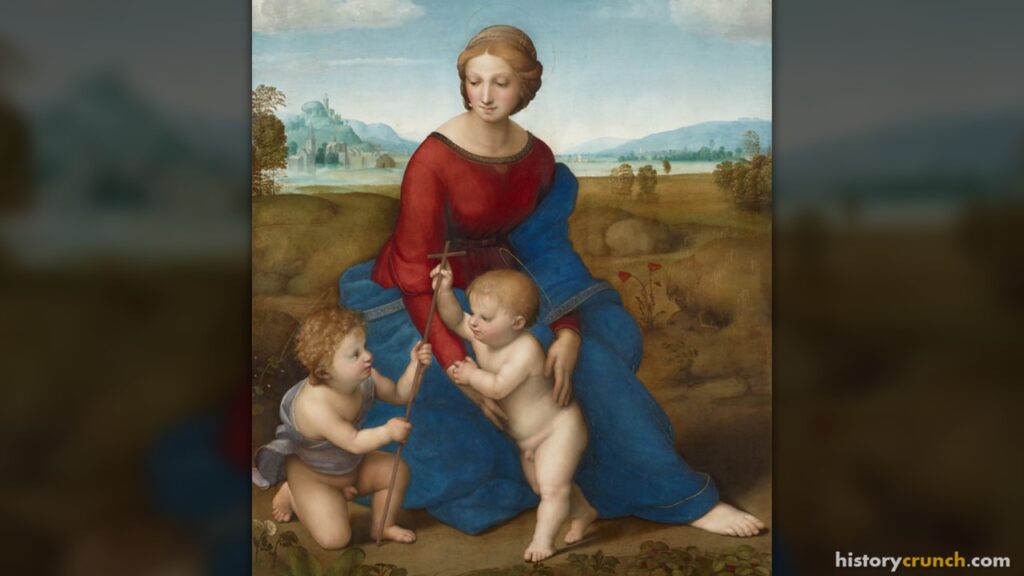
Working in various places across Italy, Raphael led a nomadicMoving from place to place rather than settling permanently in one location. lifestyle. However, he spent a large amount of time in Florence and was possibly in the Italian city-state from 1504 to 1508 during a period that some historians refer to as his ‘Florentine Period’. In addition to working on developing his own style, Raphael was also influenced by Florentine art and artists such as that by Leonardo da Vinci. The most noticeable influences of Florentine art were in the way that Raphael’s portraits and Madonnas were composed and the way that his figures took on a new complexity in terms of their positioning. For example, Raphael’s Madonna of the Meadow was composed using da Vinci’s pyramidal structureA compositional arrangement where figures are grouped to form a triangle shape.. This is something that Raphael had not done before and shows how the art and artists of Florence had influenced him. He maintained his own unique style of painting but incorporated some of the techniques and methods being used in Florence at the time.
Raphael moved to Rome in 1507 and arrived in the city-state by 1508. He would remain there for the rest of his life. Almost immediately, he was commissioned to paint frescoesPaintings made directly onto wet plaster walls or ceilings so the paint becomes part of the surface. at the Vatican Palace, which were the biggest and most important work of his career to date. As part of the commission he was to paint the walls in the Vatican library. The work became known as the ‘Raphael Rooms’ and today contains what many consider to be his masterpiecesWorks of art considered the greatest or most skillful a person has produced. in art. The first of these rooms contains ‘The Parnassus’ and the ‘School of Athens’. Pope Julius II commissioned him to complete the work for the Vatican. Around the same time, Michelangelo (another great Renaissance artist) was commissioned by the Pope to paint the ceiling of the Sistine Chapel. Regardless, soon after completing the first room, Raphael was commissioned to paint two more rooms. He often also painted the ceilings too. ‘The Mass at Bolsena’ was included in another Raphael Room. Along with these frescoes which were the largest work of his career, he also completed a number of smaller paintings and portraits such as the portrait of Pope Julius II, which today can be viewed at the Vatican Palace.
 FactsthatCrunch
Around 1508, Pope Julius II hired Raphael to paint frescoes on the walls of the Vatican Palace, giving him the largest and most important commission of his career to that point.
Nomadic painter working across Italian city-states, most recently in Florence
Settled in Rome for life, producing the celebrated Raphael Rooms and 'The School of Athens'
Raphael (Renaissance Artist) – Death and Significance
Although Raphael died on April 6th 1520, at just 37 years old, his workshop was extremely productive and he left behind a large body of work. His workshop completed a fourth room at the Vatican palace using drawings and sketches that Raphael had made. Today, he is remembered for being an influential painter and architect who lived during the European Renaissance and is often considered alongside other greats such as: Leonardo da Vinci, Michelangelo, Donatello and others.
FactsthatCrunchWhen Raphael died on April 6th, 1520, his workshop continued operating and used his own drawings and sketches to finish work he had left incomplete at the Vatican Palace.
Explore Renaissance · 1300 – 1600 CE
Keep exploring Renaissance with these History Crunch resources.
Key Vocabulary
Perspective
Commissioned
Altarpiece
Nomadic
Pyramidal structure
Frescoes
Masterpieces
Frequently Asked Questions
Why is Raphael famous?
Raphael is famous as one of the most important painters of the European Renaissance. He is best known for his frescoes in the Vatican, including ‘The School of Athens.’ He is often ranked alongside Leonardo da Vinci and Michelangelo as a master of the period.
When and where was Raphael born?
Raphael was born in Urbino, Italy, in 1483. The exact day is unknown, but historians believe it was either March 28th or April 6th, 1483. His full name was Raffaello Sanzio da Urbino.
What are the Raphael Rooms?
The Raphael Rooms are a set of rooms in the Vatican Palace that Raphael decorated with frescoes. Pope Julius II first hired him to paint the walls of the Vatican library around 1508. These rooms hold some of his most celebrated works, including ‘The School of Athens.’
How did Florence influence Raphael’s art?
Florence shaped how Raphael arranged his figures and composed his portraits and Madonnas. He likely lived there from 1504 to 1508, a time called his Florentine Period. He borrowed ideas from artists like Leonardo da Vinci, such as the pyramid shape seen in ‘Madonna of the Meadow.’
How did Raphael die?
Raphael died on April 6th, 1520, at just 37 years old. Even after his death, his busy workshop stayed productive and finished a fourth Vatican room from his drawings. He left behind a large body of work that still influences art today.
Cite This Article
To cite this article as a source, use one of the formats below.
MLA: Beck, Elias. “Raphael (Renaissance Artist): A Detailed Biography.” HistoryCrunch, 19 October 2026, https://historycrunch.com/raphael-renaissance-artist/.
APA: Beck, E. (2026). Raphael (Renaissance Artist): A Detailed Biography. HistoryCrunch. https://historycrunch.com/raphael-renaissance-artist/
Chicago: Beck, Elias. “Raphael (Renaissance Artist): A Detailed Biography.” HistoryCrunch. October 19, 2026. https://historycrunch.com/raphael-renaissance-artist/
Sources
- Jerry Brotton, The Renaissance: A Very Short Introduction.
- Peter Burke, The Italian Renaissance: Culture and Society in Italy.
- The Met (Heilbrunn Timeline)
- Fordham Modern History Sourcebook