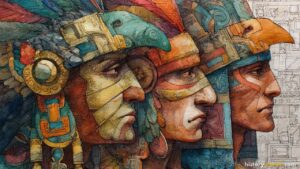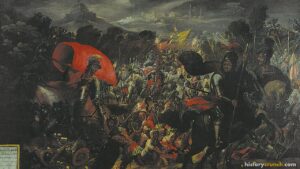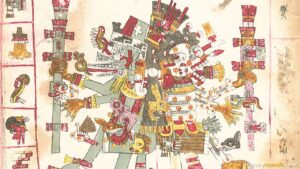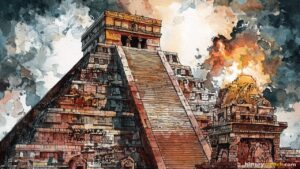
Aztec omensEvents believed to be signs from the gods that predict future good or bad happenings. played an important role in the history and development of the Aztec Empire. The Aztecs believed in omens as signs from the gods, predicting future events, especially concerning their empire’s fate. This article summarizes the history and significance of Aztec omens and offers insights into the 8 Aztec omens that were related to the Spanish conquest of the Aztec Empire.
Who Were the Aztec?
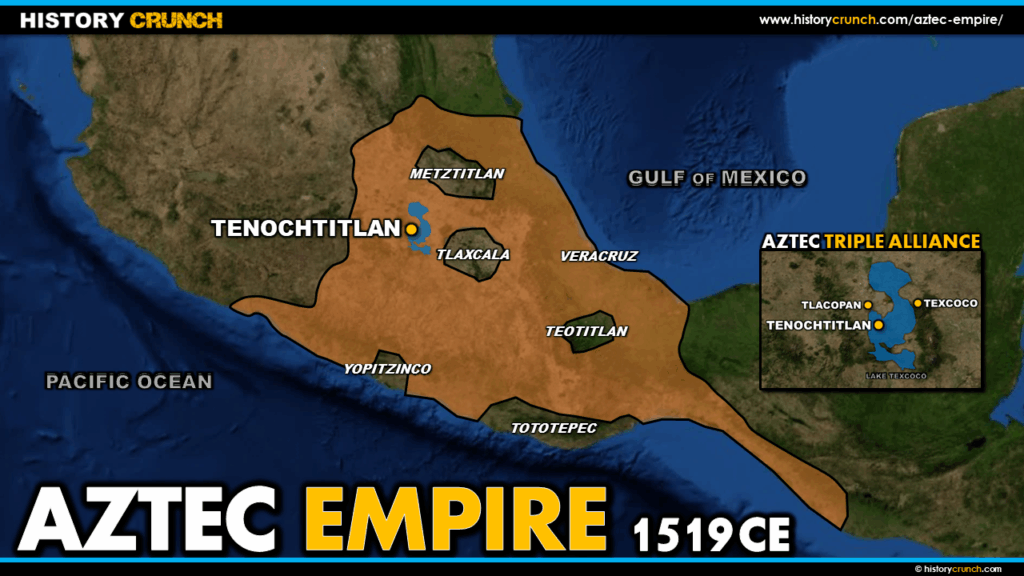
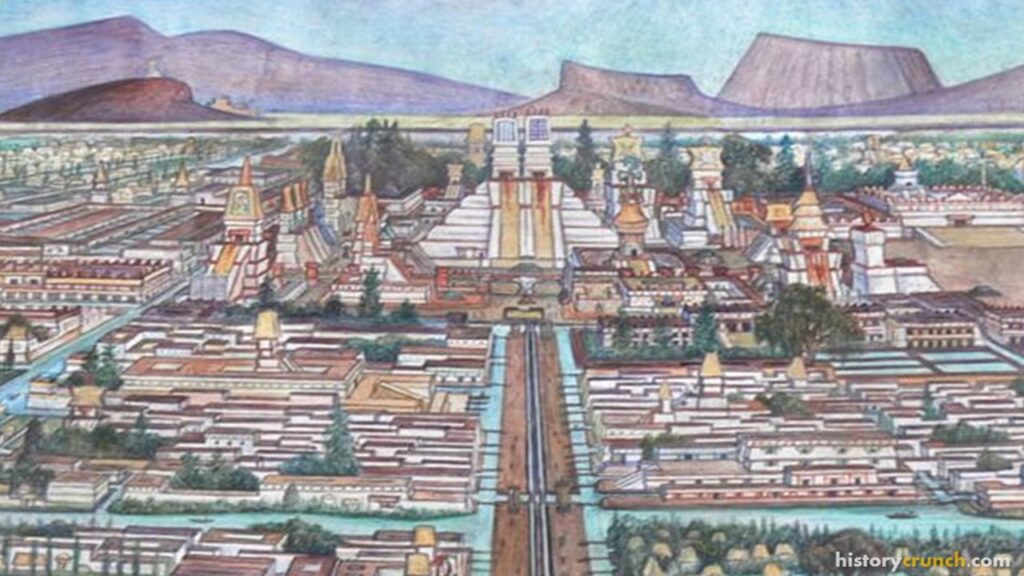
The Aztec Empire was a civilization in central Mexico that thrived in the time before the arrival of European explorers during the Age of Exploration. Throughout its history as a civilization the Aztec Empire expanded across much of central Mexico and other surrounding areas, to become the most dominant and powerful people in the region. Tenochtitlan, the main Aztec city (or altepetlThe Aztec word for a city or city-state, used as the basic unit of Aztec society.), was the center of this vast empire.
What term did the Aztec people use to refer to themselves?

Aztec Omens – Summary
An important aspect of the Aztec understanding of the world was their views on omens. These are events which are said to have significance on future events or occurrences. For instance, one of the roles of high priests in the Aztec religion was to interpret significant events to predict their impact on the huey tlatoani and the Aztec Empire. This is best exemplified by the series of omens that are related to the Spanish conquest of the Aztec Empire in 1521.
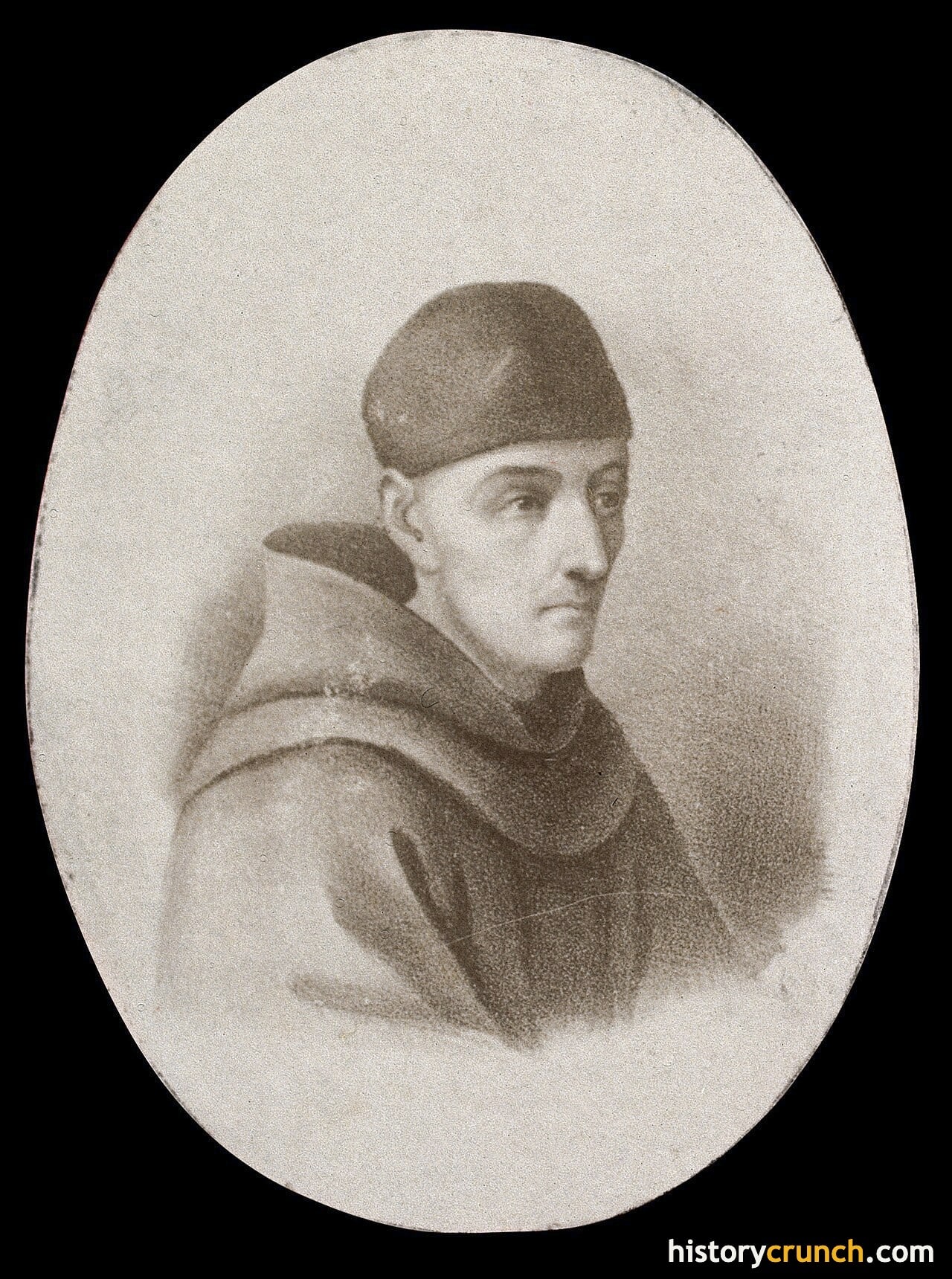
For instance, in the years before the arrival of the Spanish there were a series of events which some have suggested that the Aztec interpreted as bad omens. In fact, the record of these omens comes from Franciscan Bernardino de Sahagún and Dominican Diego Durán in the late 16th century. Sahagún was a Franciscan friar who went to New Spain (modern Mexico) in 1529, following the conquest of the Aztec Empire. He spent several decades in the Spanish colony studying Aztec history and mythology, including the supposed omens that Moctezuma II received before the arrival of the Spanish. Durán was a Dominican friar who studied the Aztec throughout much of his life and wrote one of the first accounts on Aztec history titled ‘The History of the Indies of New Spain’.
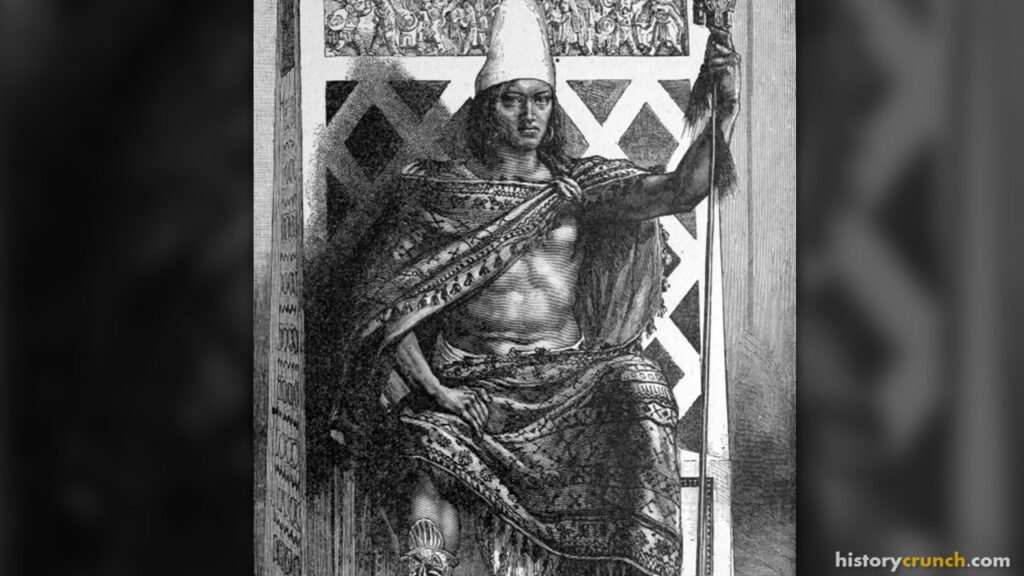
In regards to these omens, Moctezuma II (the huey tlatoaniThe supreme ruler or emperor of the Aztec Empire. of the Aztec when the Spanish arrived) was visited in 1510 by Nezahualpilli the tlatoaniA ruler of a Mesoamerican city-state, below the huey tlatoani in rank. of the Mesoamerican city-state of Texcoco. Nezahualpilli warned Moctezuma II of the downfall of the Aztec Empire and told Moctezuma II to be on guard for bad omens. As the account goes, there were said to be eight omens in total that foretold the arrival of the Spanish and the collapse of the Aztec Empire.
 FactsthatCrunch
8 Omens on the Conquest of the Aztec Empire
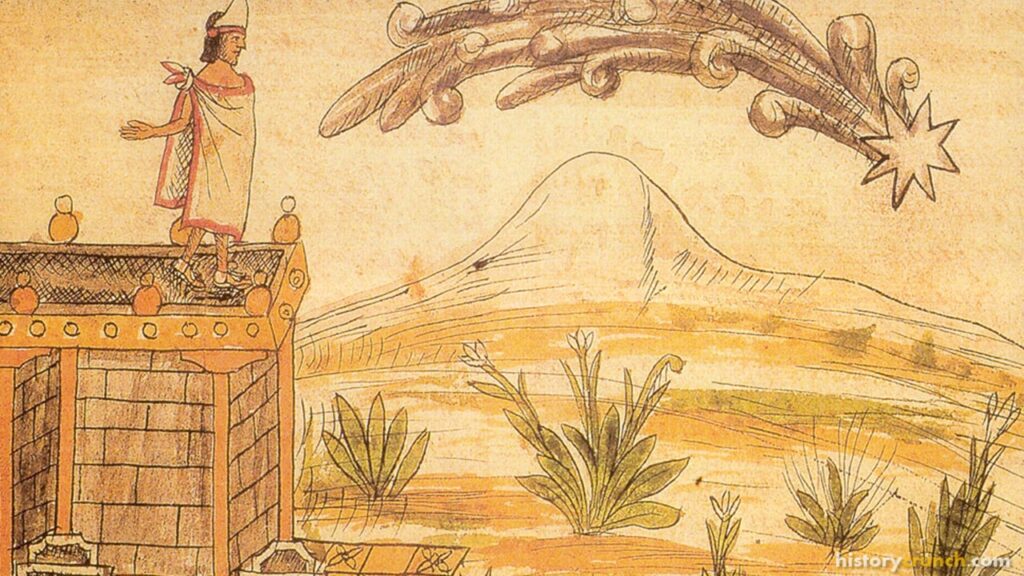
The first omen was supposedly a fire that burned in the night sky every night for just over a year. Supposedly, the fire was wide at its base and more pointed at the top, and seemed to ‘bleed’ fire across the sky. Some accounts of this omen refer to it as an ear of corn burning in the sky. Most historians interpret this as the appearance of a comet. It is believed that the event occurred in the decade before the arrival of Hernán Cortés and the other Spanish conquistadorsSpanish soldiers and explorers who led military campaigns to conquer peoples in the Americas..
The second omen was when the temple of Huitzilopochtli in Tenochtitlan was destroyed by fire. Supposedly, the temple ignited into flames for no known reason and attempts by the Aztec to put out the fire failed. As a result the entire temple was burned to the ground. Huitzilopochtli, whose name means ‘left-handed hummingbird’ or ‘southern hummingbird’ was one of the main gods of the Aztec and likely the most prominent. For instance, he was considered the national god of the ‘MexicaThe term the Aztec people used to refer to themselves.’ which is the term the Aztec used to refer to themselves. As well, he was the patron god of the Aztec capital Tenochtitlan. Huitzilopochtli represented several different things for the Aztecs, including: the sun and war.
The third omen was when a bolt of lightning apparently hit the temple for the Aztec god Xiuhtecuhtli. The account tells that the temple was destroyed by a fire that resulted from the lightning strike. However, for the Aztec the event was significant because they reported that the bolt of lightning had no thunder associated with it. As well, despite it raining a bit at the time, the fire overcame the temple and destroyed it.
The fourth omen was when a streak of fire was viewed in the sky during the day time. Supposedly, the fire began in the western sky and spread east. Along this path it divided into three pieces and sparks flew from the trails of the fire.
The fifth omen is related to a flood that occurred on Lake Texcoco, which was the lake upon which Tenochtitlan was built. According to the account, the Aztec believed that the water in the lake had appeared to begin to boil and became very choppy despite the absence of much of any wind. Then, the waters of the lake apparently rose to such levels that the waves crashed into the city and flooded homes and other buildings.
The sixth omen was the sound of a woman who was crying out to them in the night. She apparently called out to them in distress and told them they needed to flee the area. For example, she is reported to have said “My children, we must leave” and “My children, where will you go?” The Aztec supposedly heard her cries over a period of several nights.
The seventh omen is related to a bird that was caught by a hunter on Lake Texcoco. The bird was gray in color and apparently had a black mirror-like object on its forehead. The hunters reported seeing the stars and the night sky in the mirror. They took it to the Aztec leader, Moctezuma II, and when he looked into the mirror he reportedly saw a large number of warriors riding on animals that appeared to be large deer. Moctezuma II then gave the bird to his high priests who were told to view the mirror and interpret its meaning. However, when the priests looked into the mirror they saw nothing and were unable to offer their advice to the Aztec leader.
The eighth and final omen was when a two-headed monster was discovered in the city of Tenochtitlan. The Aztec people were terrified of it and took it to Moctezuma II. However, when the Aztec leader looked at the monster it is said to have disappeared. Apparently this occurred just before the arrival of the Spanish.
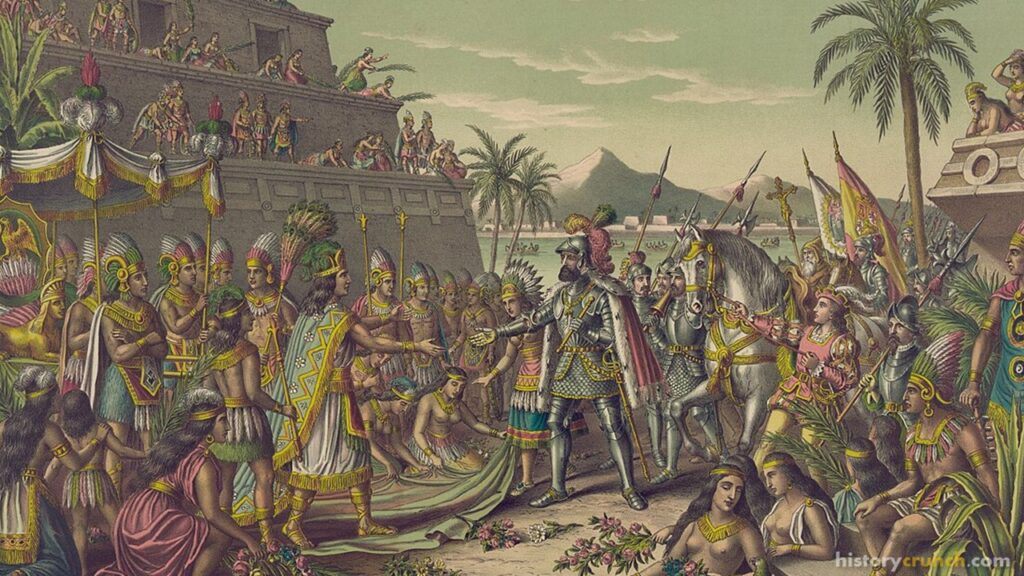
For the Aztec these omens were important events that predicted danger to the empire. For instance, some believe that the omens impacted Moctezuma II and his decision making during the arrival of the Spanish conquistadors. It has been suggested that Moctezuma II was unsure of how to respond to Hernan Cortés and the other Spanish conquistadors when they arrived in the Aztec territory. This is because the Spanish’s arrival into the Aztec territory apparently coincided with an important Aztec prophecy in relation to the Mesoamerican god Quetzalcoatl. The prophecy spoke of QuetzalcoatlA Mesoamerican god whose prophecy said he would return with white skin, which complicated Aztec response to Cortés.’s arrival at the same time as the Spanish, and Quetzalcoatl was said to have white skin. Unsure of whether or not Cortés was the god, Moctezuma II responded by greeting him with honor and giving him many gifts. Cortés then used this uncertainty by Moctezuma II to overthrow the Aztec Empire. Regardless, omens played an important role in the life of the Aztec and impacted how they viewed the world and the events that occurred around them.
 FactsthatCrunch
Explore Aztec Empire · 1325 – 1521 CE
Keep exploring Aztec Empire with these History Crunch resources.
Key Vocabulary
Omens
Huey tlatoani
Altepetl
Tlatoani
Conquistadors
Mexica
Quetzalcoatl
Frequently Asked Questions
What were the Aztec omens?
The Aztec omens were a series of strange events believed to warn of the empire’s downfall. There were said to be eight omens in total before the Spanish arrived. The Aztecs saw these signs as messages from the gods about the future.
How many Aztec omens were there?
There were eight Aztec omens linked to the Spanish conquest of the empire. They included a fire in the night sky, burning temples, a flood, and a two-headed monster. Together they were said to foretell danger to the Aztec Empire and its ruler.
What was the first Aztec omen?
The first omen was a fire that burned in the night sky every night for just over a year. It was wide at the base and pointed at the top, and seemed to bleed fire across the sky. Most historians believe this was actually a comet.
How did the omens affect Moctezuma II?
Some believe the omens made Moctezuma II unsure of how to respond when the Spanish arrived. The timing also matched a prophecy about the god Quetzalcoatl returning with white skin. Unsure if Hernán Cortés was the god, Moctezuma II greeted him with honor and many gifts.
Where does the record of the Aztec omens come from?
The record of the omens comes from two friars who wrote about the Aztecs in the late 16th century. One was a Franciscan who arrived in New Spain in 1529 and studied Aztec history for decades. The other was a Dominican who wrote one of the first accounts of Aztec history.
When did the Spanish conquer the Aztec Empire?
The Spanish conquest of the Aztec Empire was completed in 1521. The conquistadors were led by Hernán Cortés, who reached Aztec territory a couple of years earlier. The empire’s capital, Tenochtitlan, was the center of this powerful civilization in central Mexico.
Cite This Article
To cite this article as a source, use one of the formats below.
MLA: Beck, Elias. “Aztec Omens: A Detailed Summary.” HistoryCrunch, 24 October 2026, https://historycrunch.com/aztec-omens/.
APA: Beck, E. (2026). Aztec Omens: A Detailed Summary. HistoryCrunch. https://historycrunch.com/aztec-omens/
Chicago: Beck, Elias. “Aztec Omens: A Detailed Summary.” HistoryCrunch. October 24, 2026. https://historycrunch.com/aztec-omens/
Sources
- The Met (Heilbrunn Timeline): Aztec art
- Michael E. Smith, The Aztecs.
- Richard Townsend, The Aztecs.
- Fordham Internet History Sourcebooks