Slavery is often remembered as a Southern institution, but it was practiced in every part of colonial America, including the North. In fact, slavery existed in all thirteen of the original British colonies at some point, and enslaved people lived and labored in the port cities, farms, and workshops of New England and the Middle colonies. Understanding slavery in the American North helps explain how deeply the practice was woven into the early economy of the region and how the Northern states eventually became the center of the movement to end it.
Slavery is a system in which one person is legally owned by another and forced to work without pay and without freedom. In colonial America, this took the form of chattel slavery, meaning enslaved people were treated as property that could be bought, sold, and inherited. In the North, this system existed alongside free labor, and enslaved men, women, and children often worked in homes, on docks, and in trades rather than on the large plantations found in the South.
What Was Slavery in Colonial America?
Colonial America refers to the period when European nations, especially Great Britain, established and governed settlements along the eastern coast of North America. This era stretched from the early 1600s through the American Revolution, which began in 1775. During this time, the thirteen colonies were often grouped into three regions, the New England colonies in the north, the Middle colonies in between, and the Southern colonies to the south.
The first example of African slaves in the British colonies came in 1619, when about twenty enslaved Africans were brought to the Jamestown settlement in the Colony of Virginia. While this was the first example, it was certainly not the last, and over the following decades slavery became a legal and race-based institution across all thirteen colonies. More specifically, colonial governments passed laws that made slavery permanent and hereditary, meaning children born to enslaved mothers were also enslaved for life.
In reality, the use of slavery varied greatly from region to region. Some colonies used enslaved labor far more extensively than others, and this difference was shaped by geography, climate, and the type of economy each region developed. As stated above, the North differed sharply from the South in how it relied on slavery, even though the practice was legal everywhere.
How Common Was Slavery in the North?
Slavery was never as widespread in the North as it was in the South. For instance, in the 1770s enslaved people made up only about 3% of the total population of the Northern colonies. In the Middle colonies, enslaved people made up roughly 6% of the population, while in the Southern colonies the figure reached as high as 31%.
Even though the numbers were smaller, slavery was a real and legal part of daily life throughout the North. In fact, Massachusetts became the first North American colony to formally recognize slavery as a legal institution, passing a law to that effect in 1641. Enslaved people could be found in nearly every Northern community, but they were most concentrated in the larger port cities.
More specifically, slavery in the North was most prominent in busy trading centers such as New York City, Boston, Newport, and Philadelphia. In some places the enslaved population was significant, and by the middle of the 1700s a notable share of New York City’s residents were enslaved. This showed that even where plantations did not exist, slavery could still play an important role in urban life.
What Kind of Work Did Enslaved People Do in the North?
The Northern climate and rocky soil made it difficult to grow the labor-intensive cash crops that fueled slavery in the South, such as tobacco, rice, and sugar. As a result, slavery in the North rarely took the form of huge plantations with hundreds of workers. Instead, enslaved people usually worked in smaller numbers and performed many different kinds of jobs.
For example, enslaved men and women in the North often worked as household servants, cooks, and personal attendants in the homes of wealthy families. Others labored on the docks of port cities, loading and unloading ships, or worked as skilled artisans such as blacksmiths, carpenters, and shoemakers. Many also worked on small family farms, laboring side by side with free workers and the family that owned them.
This variety of work meant that slavery in the North looked different from slavery in the South, but it was no less a system of forced, unpaid labor. Enslaved people in the North were still bought and sold, still denied their freedom, and still separated from their families. In reality, the smaller scale of Northern slavery did not make it any less cruel for those who lived under it.
How Did the North Profit from Slavery and the Slave Trade?
Even where slavery itself was less common, the Northern economy was deeply tied to the slave trade. Regardless of how many enslaved people lived in the region, slavery was a major economic factor for Northern merchants and shipowners. Many businessmen in the North grew wealthy by taking part in the transatlantic trade in enslaved Africans.
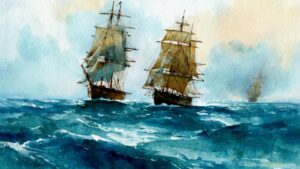
This trade was often described as the triangular trade, a system of exchange that connected the North American colonies, the Caribbean, Europe, and Africa. For instance, ships from New England carried rum to Africa, where it was traded for enslaved people. Those enslaved people were then carried to the Caribbean and sold, and the ships returned home with sugar and molasses, which was used to make more rum.
Ports such as Newport, Rhode Island, became major centers of this trade, and dozens of ships from a single town could be active in it at one time. The North also supplied food and manufactured goods to the plantations of the West Indies, which relied on enslaved labor. In this way, the wealth of many Northern merchants was closely linked to slavery, even in colonies where few enslaved people lived.
How Did Slavery End in the North?
While slavery remained popular in the Southern states, many Northerners began to openly oppose it. The American Revolution played an important role in this change, because the ideals of liberty and the belief that all men are created equal led many Northern leaders to question whether slavery could be justified. In fact, many believed that slavery was inconsistent with the principles for which the Revolution was fought.
As a result, Northern states began to take steps to end slavery within their borders decades before the South did. Pennsylvania passed a gradual emancipation law in 1780, and Connecticut and Rhode Island followed with similar laws in 1784. Other states, such as Massachusetts and Vermont, moved more directly, using court decisions and constitutional provisions to end slavery.
Most of these Northern laws provided for gradual emancipation rather than an immediate end to slavery. More specifically, gradual emancipation usually meant that children born to enslaved mothers after a certain date would eventually become free, while people already enslaved often remained in bondage for years. Because of this, slavery lingered in some Northern states well into the 1800s, ending in Connecticut only in 1848 and continuing in New Jersey in a limited form until the Civil War.
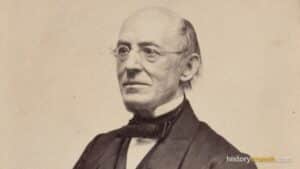
At the end of the 18th century, the American Abolitionist Movement began to grow in popularity in the North. Quakers in Pennsylvania were among the first to speak out against slavery, and their early efforts helped inspire a larger campaign. Over the following decades, this movement would grow into a powerful force that pushed the entire nation toward the end of slavery. You can learn more about this campaign in the American Abolitionist Movement article.
Significance of Slavery in the American North
The significance of slavery in the American North lies in the way it challenges the common belief that slavery was a purely Southern institution. In reality, slavery existed throughout the North, and the region’s economy was tied to the practice through both enslaved labor and the profits of the slave trade. This history shows that the entire nation, not just the South, was shaped by slavery during its early years.
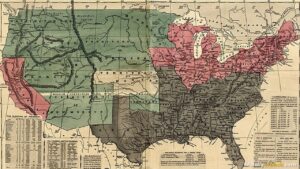
At the same time, the North’s decision to abolish slavery after the American Revolution was an important turning point. As stated above, Northern states became the first places in the country to pass laws against slavery, and this created a sharp divide between North and South. Over time, this divide would deepen and become one of the central causes of the American Civil War.
Finally, the growth of the abolitionist movement in the North gave the fight against slavery a lasting home. The North became the base for the writers, activists, and leaders who worked to end slavery everywhere in the United States. For this reason, the story of slavery in the American North is essential to understanding both the nation’s past and the long struggle for freedom that followed.
Frequently Asked Questions
Did the Northern colonies have slavery?
Yes, all of the Northern colonies practiced slavery, and it was legal throughout the region for well over a century. Enslaved people lived in New England and the Middle colonies, though in smaller numbers than in the South. Massachusetts was actually the first colony to make slavery legal by law, doing so in 1641.
Why was slavery less common in the North than the South?
Slavery was less common in the North mainly because of the region’s climate and geography. The cold winters and rocky soil made it hard to grow the large cash crops like tobacco, rice, and sugar that made plantation slavery so profitable in the South. Without those crops, Northern farms and towns had less demand for large groups of enslaved workers.
What was the triangular trade?
The triangular trade was a system of trade routes that connected the American colonies, Africa, Europe, and the Caribbean in a rough triangle shape. Northern merchants shipped goods like rum to Africa, traded them for enslaved people, and then exchanged those people in the Caribbean for sugar and molasses. This trade helped make many Northern shipowners and merchants very wealthy.
Which Northern state abolished slavery first?
Pennsylvania is often credited as the first state to pass a gradual emancipation law, which it did in 1780. Vermont had already banned slavery in its constitution in 1777, before it became a state. Other states such as Massachusetts ended slavery through court decisions during the same period.
What is gradual emancipation?
Gradual emancipation was a slow method of ending slavery that freed people over a long period of time rather than all at once. Under these laws, children born to enslaved mothers after a certain date would become free once they reached a set age, while people already enslaved often stayed in bondage. Because of this approach, slavery did not fully disappear in some Northern states until the mid-1800s.
Cite This Article
To cite this article as a source, use one of the formats below.
MLA: Millar, B. “Slavery in the American North: A Detailed Summary.” HistoryCrunch, 16 August 2026, https://historycrunch.com/slavery-in-the-american-north/.
APA: Millar, B. (2026). Slavery in the American North: A Detailed Summary. HistoryCrunch. https://historycrunch.com/slavery-in-the-american-north/
Chicago: Millar, B. “Slavery in the American North: A Detailed Summary.” HistoryCrunch. August 16, 2026. https://historycrunch.com/slavery-in-the-american-north/
Sources
- Bernard Bailyn, The Ideological Origins of the American Revolution.
- National Archives — Founders Online
- Yale Avalon Project
- Robert Middlekauff, The Glorious Cause.