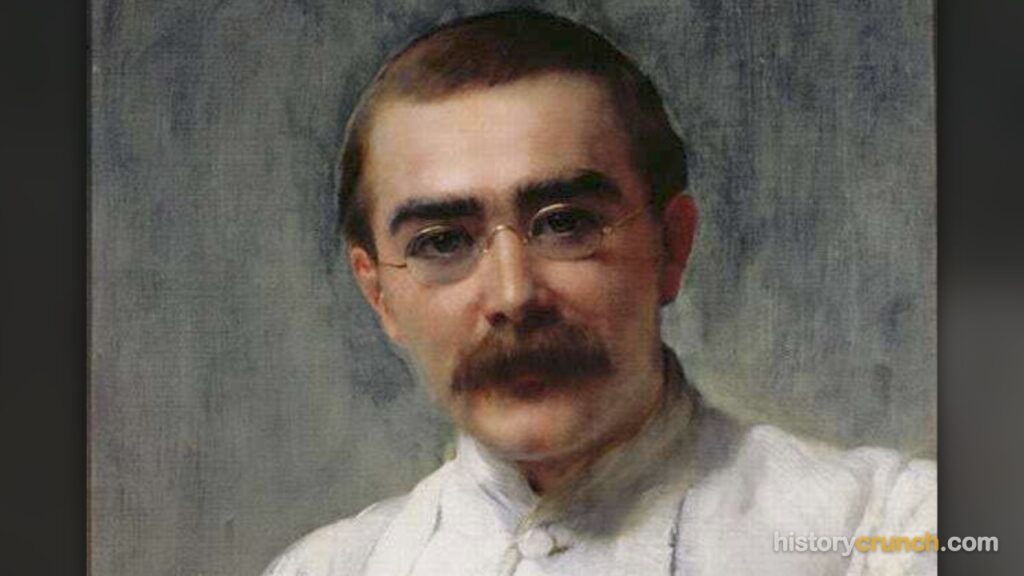
Rudyard Kipling was one of the most famous English writers of the late nineteenth and early twentieth centuries, and his stories and poems remain widely read more than a century after they were written. He is best known for children’s classics such as The Jungle Book and Just So Stories, for his novel Kim, and for popular poems including “If” and “Gunga Din.” At the same time, Kipling was closely tied to the age of European imperialism, the period when nations like Great Britain built large overseas empires. His writing celebrated the British Empire, which made him hugely popular in his own day but later drew heavy criticism.
Imperialism is the policy of one nation extending its power and control over other territories and peoples, usually through colonies. During Kipling’s lifetime, Great Britain controlled a vast empire that stretched across Asia, Africa, and other parts of the world, including his birthplace of India. Kipling supported this system and often defended it in his work, which is why his name is so closely connected to the ideas and attitudes of the imperial age.
Early Life and Background
Joseph Rudyard Kipling was born on December 30th, 1865, in Bombay, India, which is today the city of Mumbai. At the time, India was part of the British Empire, and Kipling’s family were part of British society there. His father, John Lockwood Kipling, was an artist and scholar who taught architectural sculpture at an art school in Bombay and later became the curator of a museum in Lahore.
Kipling always remembered his early childhood in India as an extremely happy time. He was surrounded by a loving family and by local servants who cared for him, and he grew fascinated by the sights, sounds, and languages of India from a very young age. In fact, this early affection for the country would shape much of his later writing.
This happy period ended in 1871, when his parents sent him and his younger sister back to England for their schooling. At the time, it was common for British families living in India to send their children home to be educated. Kipling was placed in the care of a family in Southsea, on the southern coast of England, where a strict widow ran the household. He was often bullied and harshly punished there, and he later remembered the place with such bitterness that he called it the “House of Desolation.”
In 1878, Kipling entered a boarding school called the United Services College at Westward Ho! in Devon. More specifically, the school was meant to prepare boys for careers in the military. Kipling was not suited for army life, partly because of his poor eyesight, but he made close friends and developed his love of reading and writing. His experiences there later inspired one of his books about schoolboy life.
Rise as a Writer
In 1882, at the age of sixteen, Kipling returned to India to begin his career. His father helped him find a job as an assistant editor at an English-language newspaper called the Civil and Military Gazette, published in Lahore. For the next several years, Kipling worked as a journalist, writing news reports along with short sketches, stories, and light verse to fill the pages of the paper.
These years shaped Kipling as a writer. As stated above, his parents belonged to the highest levels of British society in India, which gave him a close view of how the colony was governed. At the same time, he remained keenly observant of the everyday life of ordinary Indian people, and this mixture of experiences filled his early work.
Kipling’s literary career began in earnest with a collection of poems called Departmental Ditties, published in 1886. Two years later, in 1888, he published Plain Tales from the Hills, a collection of short stories about life in British India. Between 1887 and 1889, he brought out several more volumes of short stories, and these works were well received by readers both in India and back in England.
In 1889, Kipling left India and moved to London. There his reputation grew quickly, and he became famous almost overnight. His fame rose even higher in 1892 with the publication of Barrack-Room Ballads, a collection of poems written about and for the common British soldier. In reality, few writers in the English-speaking world had ever achieved such rapid success.
Major Achievements
In 1892, Kipling married Caroline Balestier, an American woman whose brother had been a close friend and writing partner. Soon after their marriage, the couple settled in Vermont in the United States, where they lived for several years and where Kipling wrote some of his most beloved work.
It was during this period, in 1894, that Kipling published The Jungle Book, followed by The Second Jungle Book in 1895. These collections of stories, many of which feature a boy named Mowgli raised by wolves in the Indian jungle, became children’s classics that are still read and adapted around the world today. In fact, they remain among the most famous children’s stories ever written.
After returning to live in England, Kipling continued to produce important work. In 1901, he published Kim, a novel about an orphaned boy of Irish descent who grows up on the streets of India and becomes caught up in adventure and espionage. Many readers and critics consider Kim to be his finest novel. The following year, in 1902, he published the Just So Stories, a set of playful tales that explain how animals came to have their features, such as how the leopard got its spots.
Kipling was also one of the most quoted poets of his era. His poem “Gunga Din,” about an Indian water carrier serving the British army, and his poem “If,” a set of fatherly instructions on how to live well, became especially famous. For instance, “If” is still often ranked among the best-loved poems in the English language.
In 1907, Kipling reached the peak of his public honors when he was awarded the Nobel Prize in Literature. He was the first English-language writer to receive the prize, and at just forty-one years old, he remains one of the youngest people ever to win it. This award confirmed his position as one of the leading writers of his time.
Connection to Imperialism
Kipling is remembered not only as a storyteller but also as a strong supporter of the British Empire. He believed that the spread of British rule and culture was a positive force in the world, and this belief runs through much of his writing. This is why he is often described as the poet of empire.
His most controversial work was the poem “The White Man’s Burden,” published in 1899. Kipling wrote it in response to the United States gaining control of the Philippines and other territories after the Spanish-American War. In the poem, he urged the United States to take up the difficult task of governing and “civilizing” the peoples of these new territories, presenting empire as a heavy but noble duty.
The phrase “the white man’s burden” came to stand for the idea that Western nations had a moral obligation to rule over and reshape non-Western peoples. Supporters at the time saw this as a call to responsibility, but critics then and now have viewed it as a defense of racism and conquest. More specifically, the poem treated taking another people’s land and labor as a sacrifice being made on their behalf, which many people found deeply troubling.
Later Life
Kipling’s later years were marked by great personal sorrow. In 1899, his eldest daughter, Josephine, died of illness while the family was traveling, a loss that affected him deeply for the rest of his life. His writing after this point often grew darker and more serious in tone.
A second terrible blow came during World War I. Kipling’s only son, John, was killed in 1915 at the Battle of Loos, when he was just eighteen years old. John had been rejected for military service twice because of his poor eyesight, but Kipling had used his personal connections to help his son gain a commission in the army. After John’s death, Kipling worked for the organization that cared for the graves of fallen soldiers, and his grief showed in his later poems.
In his final decades, Kipling remained a respected public figure and received many honors, including honorary degrees from leading universities. His health, however, had been declining for years, largely because of a painful stomach condition. Kipling died on January 18th, 1936, in London at the age of seventy. He was buried in Westminster Abbey, and his autobiography, Something of Myself, was published the year after his death.
Significance of Rudyard Kipling
Rudyard Kipling is significant as one of the most popular and influential writers of the late Victorian and early modern periods. His children’s stories, especially The Jungle Book and the Just So Stories, have entertained generations of readers and have been turned into films, plays, and cartoons around the world. As an innovator of the short story and a master of memorable verse, he left a lasting mark on English literature.
Kipling is also significant because his life and work reveal so much about the age of imperialism. He gave voice to the confidence and the attitudes of the British Empire at its height, and his writings help modern readers understand how empire was experienced and justified. For this reason, he is studied as an important window into a major period of world history.
Finally, Kipling’s reputation shows how the way people judge a writer can change over time. In his own day he was celebrated as a national hero and won the Nobel Prize, yet in later decades his support for empire and his racial attitudes led many to criticize him sharply. Today he remains a figure of both admiration and controversy, remembered as a gifted storyteller whose views reflected the divided legacy of the imperial age.
Frequently Asked Questions
What is Rudyard Kipling most famous for?
Rudyard Kipling is most famous for writing The Jungle Book and other beloved children’s stories. He also wrote the popular poems “If” and “Gunga Din” and the novel Kim, and he became known for celebrating the British Empire in his work. His storytelling made him one of the best-selling authors of his time.
Where was Rudyard Kipling born?
Rudyard Kipling was born in Bombay, India, which is now called Mumbai. India was part of the British Empire at the time, and his father worked there as an artist and teacher. Kipling’s memories of India shaped many of his most famous stories and poems.
Did Rudyard Kipling win the Nobel Prize?
Yes, Rudyard Kipling won the Nobel Prize in Literature in 1907. He was the first English-language writer to receive the award and remains one of the youngest winners in its history. The prize recognized the huge body of poetry and fiction he had produced.
Why is Rudyard Kipling controversial today?
Rudyard Kipling is controversial today mainly because he strongly supported imperialism and expressed racist attitudes toward non-European peoples. His 1899 poem “The White Man’s Burden” is often used as an example of how empire was defended in his era. While he is still admired as a writer, many modern readers reject the political views found in some of his work.
How did Rudyard Kipling die?
Rudyard Kipling died on January 18th, 1936, in London, at the age of seventy. His death followed years of declining health caused by a painful stomach condition. He was buried in Westminster Abbey, a great honor reserved for important figures in British history.
Cite This Article
To cite this article as a source, use one of the formats below.
MLA: Millar, B. “Rudyard Kipling: A Detailed Biography.” HistoryCrunch, 14 August 2026, https://historycrunch.com/rudyard-kipling/.
APA: Millar, B. (2026). Rudyard Kipling: A Detailed Biography. HistoryCrunch. https://historycrunch.com/rudyard-kipling/
Chicago: Millar, B. “Rudyard Kipling: A Detailed Biography.” HistoryCrunch. August 14, 2026. https://historycrunch.com/rudyard-kipling/
Sources
- Jerry Bentley & Herbert Ziegler, Traditions & Encounters: A Global Perspective on the Past.
- J.M. Roberts & Odd Arne Westad, The Penguin History of the World.