The Belgian Empire in Africa was one of the most important and troubling examples of European rule during the Age of Imperialism, and it began not with a government but with the personal ambitions of a single king. Although Belgium was a small nation, it came to control a vast territory in Central Africa many times larger than Belgium itself. This empire is remembered today both for the enormous wealth it produced for a few Europeans and for the terrible suffering it caused for millions of Africans. Over roughly eighty years, Belgian control stretched across the Congo River basin and later reached into the African Great Lakes region.
In simple terms, the Belgian Empire in Africa refers to the colonies and territories that Belgium and its king ruled on the African continent between the 1880s and 1962. It included the Congo Free State, which later became the Belgian Congo, as well as the territory of Ruanda-Urundi, which is today the two countries of Rwanda and Burundi. The empire was based on the control of land, people, and raw materials for the benefit of Belgium and Europe rather than for the Africans who lived there.
What Was the Scramble for Africa?
The Belgian Empire in Africa was part of a much larger event that historians call the Scramble for Africa. The Scramble for Africa is the term used to refer to the expansion of European empires into Africa during the Age of Imperialism, and it is referred to as a scramble due to the way in which the European nations raced to capture territory to expand their empires. During these years, the major powers of Europe competed fiercely to claim as much of the continent as they possibly could.
The Scramble for Africa is considered to have occurred from approximately 1870 until the outbreak of World War I in 1914. More specifically, the pace of this race increased sharply after a major meeting of European leaders in Berlin. In the 1870s only 10 percent of African territory was controlled by European countries, but by 1914 about 90 percent of African territory had been incorporated into one European empire or another, including the land of every present-day country on the continent except Ethiopia and Liberia.
The European nations had several reasons for wanting African colonies. In fact, they wanted access to valuable raw materials, new markets to sell their goods, and greater prestige among their rivals. Belgium, as a small and young country, was eager to join the larger powers and to gain the international status that came with owning an overseas empire.
How Did Belgium Gain Its African Empire?
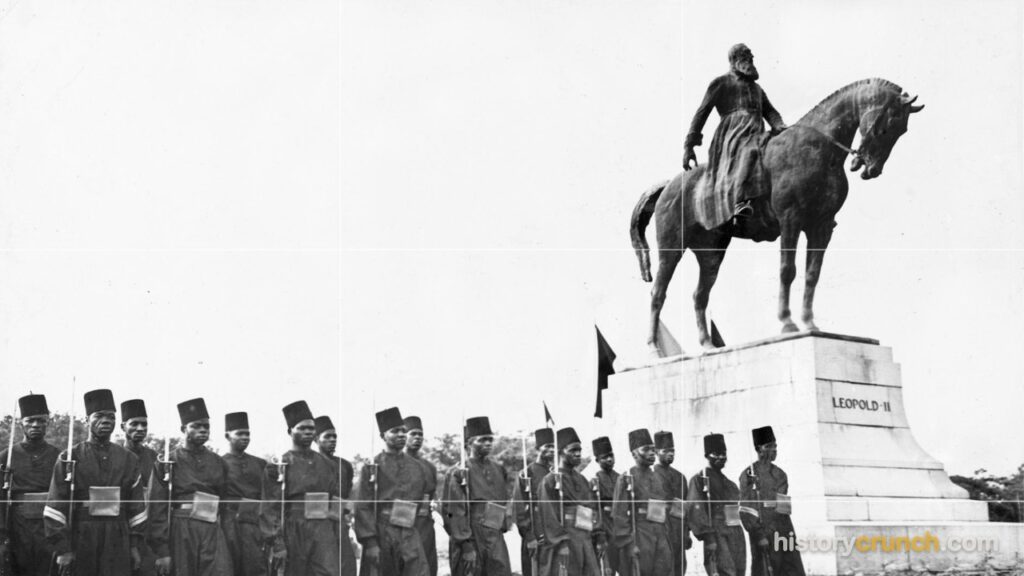
The story of the Belgian Empire in Africa begins with King Leopold II. Leopold II served as the King of Belgium from 1865 until 1909 and oversaw the Belgian role in the Age of Imperialism and the Scramble for Africa. Belgium itself was a new nation, having only become independent in 1831 after it broke away from the Netherlands. Leopold II was an ambitious ruler who wanted to enrich himself and raise his country’s standing by claiming land in Africa.
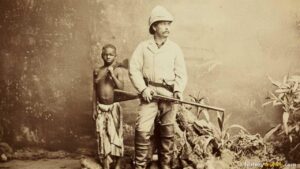
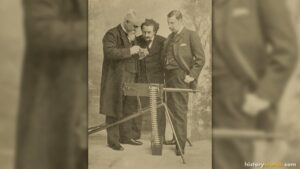
Leopold II gained access to the Congo through several key events. First, in 1878 he hired the famous explorer Henry Morton Stanley to carry out expeditions into the Congo River basin of west central Africa, hoping to build Belgium’s global empire of colonies alongside the other European powers, which were also racing to capture territory in Africa. Stanley explored the central regions of Africa, and his expeditions eventually took him to the Congo River basin, which led to Leopold II laying claim to the region.
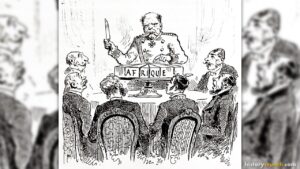
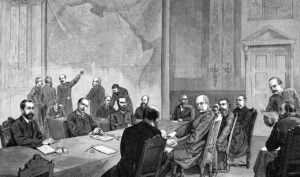
The second event that led to Leopold II gaining control of the region was the Berlin Conference. The Congo Free State directly resulted from an agreement between the Belgian king Leopold II and Europe’s great powers at the Conference of Berlin, held in 1884 and 1885. At this meeting the European powers set rules for dividing the continent among themselves. As a result, Leopold II officially formed the Congo Free State in 1885 and ruled over it as his own private possession.
What Was the Congo Free State?
The Congo Free State was the first and most infamous part of the Belgian Empire in Africa. What made it so unusual was that it did not belong to the Belgian government at all. Instead, it belonged personally to King Leopold II. The new colony comprised a land bigger than western Europe and seventy-four times larger than Belgium, and belonged to Leopold II as a personal possession.
The name of the state was deeply misleading, because the people who lived there were anything but free. In fact, Leopold II ruled over the Congo as his personal empire and was responsible for the death of millions of Congolese people. He used his control over the region as a way of amassing an enormous fortune for himself. The Congo held valuable resources such as rubber, ivory, and copper, and Leopold II was determined to squeeze as much profit from the land as possible.
To collect these resources, Leopold’s officials and private companies forced Congolese people into brutal labor. The Congo Free State was characterized by brutal exploitation and forced labor, particularly in the collection of rubber and ivory. Villages that failed to meet impossible rubber quotas faced beatings, hostage-taking, and killings. These horrors came to symbolize the very worst aspects of European imperialism in Africa.
Why Did Belgium Take Over the Congo?
Over time, the terrible conditions in the Congo Free State could no longer be kept hidden. Leopold’s administration faced scrutiny from various international figures, including journalists and missionaries, who documented the extensive human rights violations and helped raise global awareness. The reports of cruelty sparked outrage across Europe and the United States and placed heavy pressure on Belgium to act.
Because of this pressure, the Belgian government finally stepped in and took the colony away from its king. In September 1908, Belgium formally annexed the Congo Free State from King Leopold II, transitioning it into the Belgian Congo. From this point on, the territory was ruled directly by the government of Belgium rather than by one man. Following the annexation, there was a noted decrease in the most severe abuses, although colonial rule continued to exert political and economic control over the Congolese people.
How Did Belgium Rule the Belgian Congo?
Under direct Belgian rule, the colony was reorganized to serve the needs of Belgium’s economy. Opening the Congo and its mineral riches remained a central goal, and the region became an important supplier of valuable products. In the interior, workers mined gold, diamonds, copper, tin, cobalt, and zinc, and large plantations were developed to grow crops such as cotton, coffee, and rubber.
The way the Belgians governed the people was based on a strict and unequal system. The official Belgian attitude was paternalism, meaning that Africans were to be cared for and trained as if they were children, so they had no role in making laws, while traditional rulers were used as agents to collect taxes and recruit labor, and uncooperative rulers were deposed. This system created a sharp divide between the European settlers and the Congolese, keeping power and wealth in the hands of the colonizers.
Foreign investment poured into the colony in the twentieth century. Private European and American corporations invested heavily in the Belgian Congo after World War I, large plantations and livestock farms were developed, and the colony became an important source of uranium for the United States during World War II. Despite all this wealth, very little was done to prepare the Congolese people to one day govern themselves.
What Was Ruanda-Urundi?
The Belgian Empire in Africa grew larger during World War I with the addition of a second territory. Ruanda-Urundi, later called Rwanda-Burundi, was a colonial territory once part of German East Africa that was ruled by Belgium from 1916 to 1962, occupied by troops from the Belgian Congo during the East African campaign and administered by Belgium under military occupation from 1916 to 1922.
After Germany was defeated in the war, this land was formally handed to Belgium to govern. It was subsequently awarded to Belgium as a Class-B Mandate under the League of Nations in 1922 and became a Trust Territory of the United Nations after World War II and the dissolution of the League. In theory, this meant Belgium was supposed to help the people prepare for eventual self-rule.
In reality, Belgium ruled the territory much as it ruled the Congo. To gain control over the territory, Belgian officials established a Tutsi minority ruling class over a Hutu majority population, thereby dividing the society along racial lines and making the Tutsi minority the focus of the population’s anger, diverting attention away from the distant colonial ruler. This deliberate division would later have deadly consequences for the region.
How Did the Belgian Empire in Africa End?
After World War II, movements demanding freedom spread across colonial Africa, and the Belgian territories were no exception. In the late 1950s an independence movement arose in the Belgian Congo, and the Belgians became convinced they could no longer control the territory. Unrest and protests made continued colonial rule impossible.
Belgium had done little to prepare the colony for independence, yet it agreed to leave quickly. In 1960 the colony gained independence and was renamed the Democratic Republic of Congo. The rushed handover left the new nation with few trained leaders and set the stage for years of instability.
The end of the Congo colony soon led to the end of Belgian rule elsewhere. When the Belgian Congo gained independence in 1960, it became untenable for Belgium to continue to govern Ruanda-Urundi. As a result, on July 1, 1962, Ruanda-Urundi split into two separate, independent countries, Rwanda and Burundi. With this, the Belgian Empire in Africa came to an end.
Significance of Belgian Empire in Africa
The significance of the Belgian Empire in Africa lies in how clearly it shows both the greed and the cruelty of the Age of Imperialism. Leopold II’s actions in the Congo have come to symbolize the brutality of the period and how it created very different legacies for Europe and Africa. While a small number of Europeans grew rich, millions of Africans lost their lives and their freedom.
The empire also left lasting scars that shaped the future of Central Africa. The rushed departure of Belgium left its former colonies poorly prepared to govern themselves, which contributed to years of political instability in the region. More specifically, the way the Belgians divided groups against one another in Ruanda-Urundi helped set the stage for terrible ethnic violence in later decades.
Finally, the story of the Belgian Empire remains important because it forces people to confront the human cost of empire. It stands as one of the clearest examples of how colonial rule took far more from Africa than it ever gave in return. Studying it helps explain why the effects of imperialism are still felt in the modern nations that emerged from Belgian rule.
Frequently Asked Questions
What countries were part of the Belgian Empire in Africa?
The Belgian Empire in Africa covered the areas that are today the Democratic Republic of the Congo, Rwanda, and Burundi. The Congo was by far the largest part, while Rwanda and Burundi together made up the smaller territory of Ruanda-Urundi. All three of these modern nations gained their independence from Belgium in the early 1960s.
Who owned the Congo Free State?
The Congo Free State was owned personally by King Leopold II of Belgium, not by the Belgian government. This made it highly unusual, since it was essentially a private business venture controlled by one man. Leopold ran it to make himself wealthy, and he never once traveled to the colony he ruled.
Why is King Leopold II considered so cruel?
King Leopold II is considered cruel because his rule in the Congo caused the deaths of millions of people through forced labor, violence, and disease. His system demanded that Congolese workers gather rubber and other resources under threat of severe punishment. When word of these atrocities spread, the outrage was so strong that Belgium removed the colony from his control.
How did Belgium get Rwanda and Burundi?
Belgium gained Rwanda and Burundi after World War I, when they were taken from defeated Germany. The two regions had been part of German East Africa, and Belgian forces occupied them during the war. Afterward, the League of Nations officially placed the combined territory of Ruanda-Urundi under Belgian control.
When did the Belgian Empire in Africa end?
The Belgian Empire in Africa ended in the early 1960s as its colonies became independent. The Congo gained its independence in 1960, and Rwanda and Burundi followed in 1962. This wave of independence was part of a larger movement in which many African nations broke free from European rule after World War II.
Cite This Article
To cite this article as a source, use one of the formats below.
MLA: Millar, B. “Belgian Empire in Africa: A Detailed Summary.” HistoryCrunch, 14 August 2026, https://historycrunch.com/belgian-empire-in-africa/.
APA: Millar, B. (2026). Belgian Empire in Africa: A Detailed Summary. HistoryCrunch. https://historycrunch.com/belgian-empire-in-africa/
Chicago: Millar, B. “Belgian Empire in Africa: A Detailed Summary.” HistoryCrunch. August 14, 2026. https://historycrunch.com/belgian-empire-in-africa/
Sources
- Thomas Pakenham, The Scramble for Africa.
- Fordham Modern History Sourcebook