The British Empire in Africa was one of the most important developments of the Age of Imperialism, when the major European powers competed to control land, resources, and people across the African continent. During the 1800s and early 1900s, Britain built the largest overseas empire in world history, and a huge share of that empire was located in Africa. From Egypt in the north to the Cape Colony in the south, British control reshaped the map of Africa and left effects that are still visible today.
Imperialism is the practice of one country extending its power over other regions, usually through colonization, military force, or economic control. In the case of Britain in Africa, this meant taking direct or indirect control of large territories, governing the people who lived there, and using African land and resources to benefit the British economy. British imperialism in Africa was closely tied to the wider expansion of the European empires during the 19th century.
What Was the Age of Imperialism?
The Age of Imperialism refers to the period in the 19th and early 20th centuries when the powerful nations of Europe expanded their empires around the world. During this era, countries such as Britain, France, Germany, Belgium, Portugal, Spain, and Italy competed with one another for territory and control over large sections of the globe. Africa became one of the main targets of this competition.
The most famous part of this era in Africa is known as the Scramble for Africa, which is considered to have occurred from approximately 1870 until the outbreak of World War I in 1914. During these years, almost all of Africa came under the control of the major European powers. In fact, the amount of the continent under European control jumped from a small fraction in 1870 to nearly the entire continent by 1914, with only Liberia and Ethiopia remaining independent.
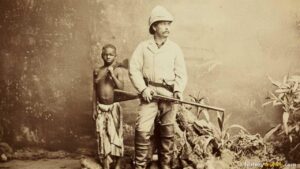
Several forces drove this rush for territory. European industry needed raw materials and new markets, and many Europeans wrongly believed in their own racial and cultural superiority. As stated above, Christian missionaries often accompanied early explorers into the African interior, and the spread of Christianity became a key feature of European imperialism. For instance, the missionary and explorer David Livingstone helped increase European interest in the African interior.
How Did Britain First Enter Africa?
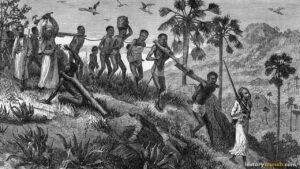
British involvement in Africa began long before the Scramble for Africa. For hundreds of years, British traders operated along the coast of West Africa, exchanging goods such as weapons for raw materials and, tragically, for enslaved people. Many of these enslaved Africans were shipped across the Atlantic Ocean to labor in British colonies in the Caribbean and North America.
For a long time, Europeans stayed mostly along the coasts, because the African interior was difficult and dangerous for outsiders to travel through. This began to change in the 1800s. After Britain abolished its slave trade in the early 19th century, British attention shifted toward controlling territory and trade routes instead. More specifically, Britain gained the Cape Colony in southern Africa around 1800, and this became an early base for later expansion.
Where Did the British Empire Rule in Africa?
By the turn of the 20th century, Britain controlled a vast collection of colonies across Africa. In West Africa, British holdings included Sierra Leone, the Gold Coast (modern Ghana), and Nigeria. These regions supplied valuable goods such as palm oil and cocoa that fed British industry.
In East Africa, Britain took control of British East Africa (modern Kenya) and Uganda, along with a protectorate over the island of Zanzibar. In the northeast, Britain gained enormous influence over Egypt and Sudan. Egypt was especially important because of the Suez Canal, a waterway that gave British ships a much faster route to India and the rest of the empire in Asia.
Southern Africa was the heart of British power on the continent. In addition to the Cape Colony, Britain expanded into the Colony of Natal and later into the territories that would become Rhodesia (modern Zimbabwe and Zambia) and Bechuanaland (modern Botswana). Taken together, these possessions made Britain the most dominant European empire in all of Africa.
Who Was Cecil Rhodes?
Cecil Rhodes was a British businessman and politician who played a major role in expanding British control across southern Africa. He moved to the Cape Colony as a young man and became enormously wealthy from the diamond mines near Kimberley. In fact, he co-founded the De Beers Diamond Company in 1888, which controlled much of the world’s diamond supply.
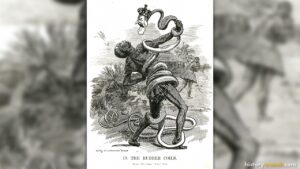
Rhodes also served as Prime Minister of the Cape Colony from 1890 until 1896, and he used both his money and his political power to push British expansion northward. He famously dreamed of a British-controlled corridor stretching the entire length of the continent, an idea known as the “Cape to Cairo” plan, which even imagined a railroad and telegraph line running from South Africa to Egypt. A well-known political cartoon of the time, “The Rhodes Colossus,” pictured him straddling Africa from top to bottom to show his influence.
What Was the Berlin Conference?
As European nations rushed to claim African land, their competition threatened to spill over into war. To manage these rivalries, the major powers met at the Berlin Conference, which was held from 1884 to 1885. At this meeting, European leaders set rules for how they would divide the continent among themselves.
Importantly, no African leaders were invited to the Berlin Conference, even though the decisions made there directly affected the lives of millions of Africans. The Europeans drew borders on maps without any concern for the existing cultures, languages, or kingdoms that lived within them. As a result, many of the boundaries created during this period cut through communities or forced rival groups together, causing problems that continued long after the Europeans left.
How Did the British Govern Their African Colonies?
Britain often governed its African colonies through a system known as indirect rule. Under this system, local chiefs and traditional leaders were allowed to keep some of their authority, but they answered to British colonial officials who held the real power. This approach allowed Britain to control large populations with relatively few British administrators.
In other regions, Britain used more direct forms of control, especially where it faced armed resistance. In reality, both systems were built on the idea that Europeans stood above Africans, and both were designed to serve British interests. African labor and resources were organized to produce goods for export, which kept colonial economies focused on Britain rather than on the needs of local people.
Did Africans Resist British Rule?
Africans resisted British expansion in many ways, from large wars to smaller, everyday acts of defiance. One of the most famous conflicts was the Anglo-Zulu War of 1879, in which the British fought against the powerful Zulu Kingdom led by King Cetshwayo. The British initially struggled and suffered a terrible defeat in the early battles, but they eventually overwhelmed the Zulu with their superior numbers and weapons.
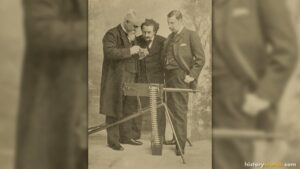
Britain also fought hard wars against the Boers, who were the descendants of earlier Dutch settlers in southern Africa. These conflicts, along with campaigns in Egypt, Sudan, and West Africa, showed that British control was often established through violence. In the end, though, the combination of advanced weapons, industrial power, and organized armies allowed Britain to overcome most African resistance during this period.
Significance of British Empire in Africa
The British Empire in Africa left a legacy that still affects the continent today. On one hand, the British built major infrastructure projects such as railroads, roads, bridges, and harbors, many of which remained useful well into the 20th century. In some regions, the British also introduced new schools, hospitals, and sanitation systems, along with new crops and farming methods.
However, these developments were built mainly to serve British interests, not African ones. The extraction of resources enriched Britain while exploiting African workers, and the schools that were built often emphasized European culture over African culture. This put enormous pressure on African societies that were expected to conform to European standards.
Perhaps the most lasting impact came from the artificial borders drawn during the Scramble for Africa. Many modern African countries still use the boundaries created by European powers, which has sometimes led to conflict between groups that were forced together or divided. In reality, the effects of British imperialism, both harmful and lasting, help explain much of the political and economic history of modern Africa.
Frequently Asked Questions
When did the British Empire control Africa?
Britain controlled large parts of Africa mainly from the 1800s until the middle of the 1900s. Although British traders had operated along the African coast for centuries, the empire took most of its African territory during the Scramble for Africa between about 1870 and 1914, and it held that territory until the wave of independence movements in the 1950s and 1960s.
Which African countries were part of the British Empire?
Many modern African nations were once British colonies, including Nigeria, Ghana, Sierra Leone, Kenya, Uganda, Egypt, Sudan, South Africa, Zimbabwe, Zambia, and Botswana. Because colonial borders changed frequently, some of these areas were combined, split, or renamed over time, which makes an exact count difficult.
Why did Britain want colonies in Africa?
Britain wanted African colonies mainly for economic and strategic reasons. African territory provided raw materials for British factories and new markets for British goods, while regions such as Egypt protected important trade routes to India through the Suez Canal. National pride and competition with other European powers also pushed Britain to grab as much land as possible.
What was the Cape to Cairo plan?
The Cape to Cairo plan was a British dream of controlling a continuous strip of territory from the Cape Colony in the south to Egypt in the north. Cecil Rhodes strongly promoted this idea and even imagined building a railroad and telegraph line to connect the two ends of the continent. The plan was never fully completed, but it shaped much of Britain’s expansion in Africa.
How did the British Empire in Africa come to an end?
The British Empire in Africa ended mostly through independence movements after World War II. Weakened by the costs of two world wars and facing growing demands for self-rule, Britain gradually granted independence to its African colonies during the 1950s and 1960s. Many of these newly independent nations later chose to remain connected through a voluntary association called the Commonwealth of Nations.
Cite This Article
To cite this article as a source, use one of the formats below.
MLA: Millar, B. “British Empire in Africa: A Detailed Summary.” HistoryCrunch, 14 August 2026, https://historycrunch.com/british-empire-in-africa/.
APA: Millar, B. (2026). British Empire in Africa: A Detailed Summary. HistoryCrunch. https://historycrunch.com/british-empire-in-africa/
Chicago: Millar, B. “British Empire in Africa: A Detailed Summary.” HistoryCrunch. August 14, 2026. https://historycrunch.com/british-empire-in-africa/
Sources
- Thomas Pakenham, The Scramble for Africa.
- H.L. Wesseling, Divide and Rule: The Partition of Africa.
- Fordham Modern History Sourcebook
- A. Adu Boahen, African Perspectives on Colonialism.