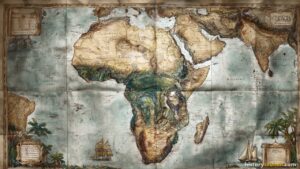
Long before European powers divided the African continent among themselves during the Scramble for Africa, Africa was home to a rich variety of powerful kingdoms, trading empires, and complex societies. Understanding what Africa looked like in the centuries before roughly 1870 is essential to seeing just how much was lost and changed when the European nations began their rapid colonization. The image of an “empty” or “backward” continent that many Europeans used to justify conquest was false. In reality, Africa in this earlier period was a land of great cities, wealthy rulers, wide trade networks, and deep religious and cultural traditions.
Precolonial Africa refers to the long span of African history before the European powers established formal political control over the continent during the Age of Imperialism. It includes the ancient and medieval kingdoms of West Africa, the trading states of East Africa, the empires of the north and northeast, and the many smaller societies spread across the continent. This period stretched over many centuries and ended, for most of Africa, only when the Scramble for Africa carved the continent into European colonies between about 1870 and 1914.
What Was the Age of Imperialism?
The Age of Imperialism was a major period in world history that ran from roughly the mid-18th century until the outbreak of World War I in 1914. During this era, the powerful nations of Europe, along with the United States and Japan, expanded their empires and forced their influence across large parts of the globe. More specifically, imperialism is the term used to describe the process by which one country extends its political, economic, or cultural authority over another country or region.
Africa became one of the main targets of this expansion. The competitive rush of European powers to claim African territory is known as the Scramble for Africa, and it took place mainly between 1870 and 1914. By the early 20th century, nearly the entire continent had been placed under European control. Yet the Africa that Europeans encountered was not a blank space waiting to be filled. It was a continent with a long and important history of its own, and that history is the subject explored below.
What Were the Great Empires of West Africa?
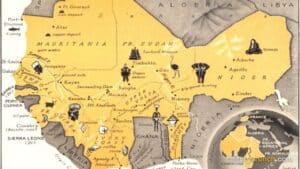
Some of the wealthiest and most famous states in precolonial Africa arose in West Africa, in a region known as the Sudan that lies between the Sahara Desert to the north and the tropical forests to the south. Three great empires rose there one after another over many centuries. These were Ghana, Mali, and Songhai, and each grew powerful by controlling the trade routes that crossed the Sahara.
The Kingdom of Ghana, also known as Wagadu, was the first of these empires and was at its strongest between roughly the 600s and the 1200s. It grew rich from its location near important goldfields and controlled much of the flow of gold heading north to North Africa and Europe. In fact, gold and salt were the most valuable goods carried across the desert by camel caravans, and Ghana taxed this trade to build its wealth.
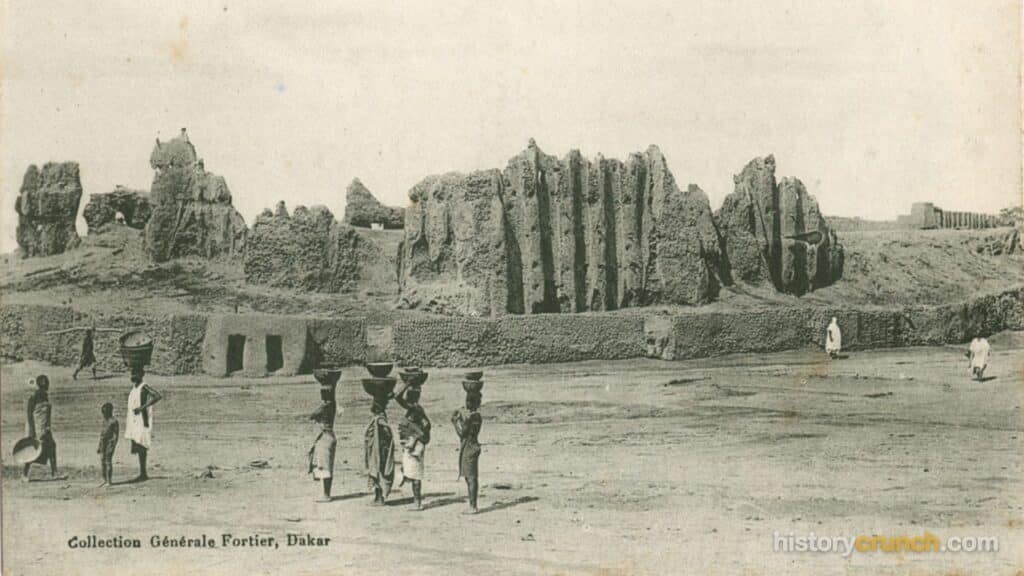
As Ghana declined, the Mali Empire rose to take its place and dominated the region from about 1240 into the 1400s. Mali reached its height under the ruler Mansa Musa, who became internationally famous after his pilgrimage to Mecca in 1324. Under Mali, cities such as Timbuktu and Djenné flourished as centers of trade and Islamic scholarship, attracting merchants, teachers, and students from across the Muslim world.
In the late 1400s, Mali gave way to the Songhai Empire, which was centered on the city of Gao along the Niger River. Through warfare, Songhai expanded until its territory was larger than either Ghana or Mali before it, and it too grew wealthy trading gold and salt. Songhai remained powerful until 1591, when a Moroccan army armed with muskets crossed the Sahara and defeated Songhai forces who did not have firearms.
What Other Kingdoms Existed Across Africa?
West Africa was home to many other states beyond the three great Sudanic empires. To the east, the Kanem-Bornu Empire controlled trade around Lake Chad from about the 800s all the way into the 1800s. The Hausa states of northern Nigeria sat between these larger empires and grew prosperous because their location gave them access to many trade routes.
Farther south along the West African coast, powerful kingdoms rose in the 1600s, 1700s, and 1800s. The Ashanti Empire controlled what is now southern Ghana, while the kingdom of Dahomey dominated what is now southern Benin. The kingdom of Benin, home to the Edo people, was famous for its skilled artists who produced remarkable bronze and brass sculptures. The kingdom of Oyo, meanwhile, grew to become the largest of the Yoruba states.
Africa’s other regions had strong states as well. In the northeast, the ancient kingdoms of Kush and later Aksum built wealthy trading civilizations along the Nile and the Red Sea. Aksum eventually developed into the Christian kingdom that became Ethiopia, one of the oldest continuous states in the world. In southern Africa, the Zulu kingdom rose to great power in the early 1800s under the leader Shaka, who built a formidable military state.
How Did Trade Shape Precolonial Africa?
Trade was the lifeblood of many African societies and connected the continent to distant parts of the world. Across the Sahara, camel caravans, sometimes called the “fleets of the desert,” carried gold, salt, ivory, and other goods between West Africa and North Africa. This trans-Saharan trade made the empires of Ghana, Mali, and Songhai enormously wealthy and helped spread ideas, religions, and learning across the region.
On the eastern side of the continent, a string of city-states grew up along the Indian Ocean coast, including places such as Kilwa, Mombasa, and Zanzibar. These Swahili trading cities exchanged African gold, ivory, and other goods with merchants from Arabia, Persia, India, and China. As a result, East Africa was tied into a vast Indian Ocean trading world centuries before the Europeans arrived.
This trade also brought religion. Islam spread across North Africa and into West and East Africa along the trade routes, carried by merchants and scholars. In many kingdoms, Islam became closely tied to trade and learning, while in Ethiopia Christianity had already taken root many centuries earlier. Alongside these faiths, a wide range of traditional African religions continued to be practiced across the continent.
How Did Early European Contact Affect Africa?
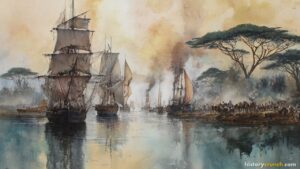
Europeans did not suddenly appear in Africa in 1870. In fact, they had been trading along the African coast for centuries before the Scramble for Africa. Beginning in the 1400s, Portuguese sailors explored the West African coastline and set up trading posts, and other European nations soon followed. For a long time, however, this contact was limited mostly to the coast.
Before the late 1800s, European presence remained small, with roughly only a tenth of the continent under any European control, mainly in places such as Algeria, South Africa, and scattered coastal settlements. The vast interior of Africa stayed independent, governed by African kingdoms, empires, and smaller societies. Europeans often lacked the medicine and military power needed to push deep into the continent, so the interior remained under African rule.
The most destructive result of this early contact was the transatlantic slave trade. For roughly three centuries, European traders bought enslaved Africans, and millions of people were carried across the Atlantic Ocean to work on plantations in the Americas. This trade brought terrible suffering, disrupted African societies, and reshaped the economies and politics of large parts of the continent. Some African kingdoms, such as Dahomey and the Ashanti, grew wealthy through their role in the trade, while other rulers tried to resist it.
Significance of Africa Before the Scramble for Africa
Understanding Africa before the Scramble for Africa is significant because it corrects one of the most damaging myths used to justify European conquest. European powers often claimed that Africa was uncivilized and needed to be “improved” by outsiders. In reality, Africa was home to organized states, wealthy rulers, busy cities, and cultures that had thrived for many centuries.
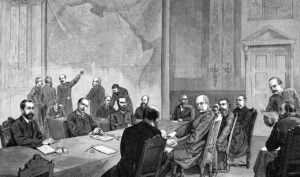
This history also helps explain why the later colonization of Africa was so damaging. When the European nations divided the continent at events such as the Berlin Conference of 1884, they drew borders with little regard for the existing kingdoms, peoples, and boundaries that had developed over centuries. As a result, communities that had long belonged together were split apart, and rival groups were forced into the same colonies.
Finally, the story of precolonial Africa reminds readers that African history did not begin with European arrival. The empires of Ghana, Mali, and Songhai, the trading cities of the Swahili coast, and the kingdoms of Ethiopia, Benin, and the Zulu were part of a long and important chapter in world history. Their achievements continue to shape African identity and pride today, and they stand as proof of the richness of Africa long before the Scramble for Africa changed the continent forever.
Frequently Asked Questions
What was Africa like before European colonization?
Before European colonization, Africa was a continent of thousands of diverse states, kingdoms, and societies with their own governments, economies, and cultures. Many regions had large cities, complex trade networks, and long traditions of art, learning, and religion. Far from being empty or undeveloped, Africa was connected to trading partners across the Sahara, the Indian Ocean, and the Mediterranean.
What were the three great empires of West Africa?
The three great empires of West Africa were Ghana, Mali, and Songhai, which rose to power one after another. Each controlled the trans-Saharan trade in gold and salt, and each reached its height in a different century. Together they dominated the West African region for close to a thousand years.
Why was Timbuktu important in African history?
Timbuktu was important because it became one of the greatest centers of trade and Islamic learning in the medieval world. Located on the edge of the Sahara near the Niger River, it attracted merchants, scholars, and students from across Africa and the Muslim world. Its libraries and schools held thousands of manuscripts, showing that West Africa had a deep tradition of reading and scholarship.
Did Europeans control Africa before the Scramble for Africa?
No, Europeans controlled only a small portion of Africa before the Scramble for Africa began around 1870. Their presence was mostly limited to coastal trading posts and a few settlements, while the vast interior remained ruled by African kingdoms and societies. It was only in the late 1800s that European powers pushed inland and rapidly seized nearly the entire continent.
How did the slave trade affect precolonial Africa?
The transatlantic slave trade caused immense harm to precolonial Africa over roughly three centuries. Millions of Africans were captured and shipped across the Atlantic, which devastated families, disrupted societies, and increased warfare between groups. While a few kingdoms grew wealthy from their role in the trade, the overall effect was deeply destructive to the continent.
Cite This Article
To cite this article as a source, use one of the formats below.
MLA: Millar, B. “Africa Before the Scramble for Africa: A Detailed Summary.” HistoryCrunch, 14 August 2026, https://historycrunch.com/africa-before-the-scramble-for-africa/.
APA: Millar, B. (2026). Africa Before the Scramble for Africa: A Detailed Summary. HistoryCrunch. https://historycrunch.com/africa-before-the-scramble-for-africa/
Chicago: Millar, B. “Africa Before the Scramble for Africa: A Detailed Summary.” HistoryCrunch. August 14, 2026. https://historycrunch.com/africa-before-the-scramble-for-africa/
Sources
- Fordham Modern History Sourcebook
- Thomas Pakenham, The Scramble for Africa.
- A. Adu Boahen, African Perspectives on Colonialism.