Spain in the Age of Imperialism is an important topic because it shows how one of the oldest colonial powers in the world struggled to keep up with the newer European empires of the 18th and 19th centuries. During the Age of Imperialism, Spain still controlled valuable colonies in the Caribbean, the Pacific, and North and West Africa. However, Spain had already lost most of its enormous American empire, and by the end of the period it had lost nearly all of what remained. As such, the Spanish story during this era is largely one of decline, even as Spain took part in the same global competition for land and power that drove the other imperial powers.
Imperialism is a policy in which a powerful nation extends its control over weaker regions and peoples, usually by taking direct political control, settling colonists, or dominating the local economy. A colony is a territory that is ruled by a foreign country rather than governing itself. During the Age of Imperialism, the major powers built large empires by claiming colonies far from their home borders, and Spain was one of these powers even though its empire was shrinking.
What Was the Age of Imperialism?
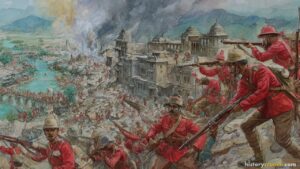
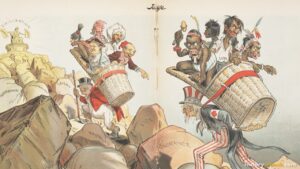
The Age of Imperialism was a period that lasted from about the middle of the 18th century until the early years of the 20th century. During this time, the major powers of the world raced to expand their empires and take control of vast regions across the globe. These powers included Britain, France, Germany, Belgium, Italy, Portugal, and Spain, along with the United States, Russia, and Japan.
More specifically, these nations conquered and exerted control over large parts of Africa and Asia. The most famous example was the Scramble for Africa, which occurred from about 1870 until the outbreak of World War I in 1914. During these decades, the European powers divided nearly the entire African continent among themselves. Britain built the largest empire of them all, while France was second in size, and the remaining nations, including Spain, controlled smaller portions of the world.
Historians usually explain the Age of Imperialism through five main causes or motives. These were economic gain, colonization, religion, ethnocentrism, and prestige. For instance, imperial powers wanted new colonies in order to harvest raw materials and natural resources, to resettle growing populations, to spread Christianity through missionaries, and to prove their national strength against rival empires. Spain shared many of these same motives, even though it entered the period as a fading rather than a rising power.
How Did Spain Enter the Age of Imperialism?
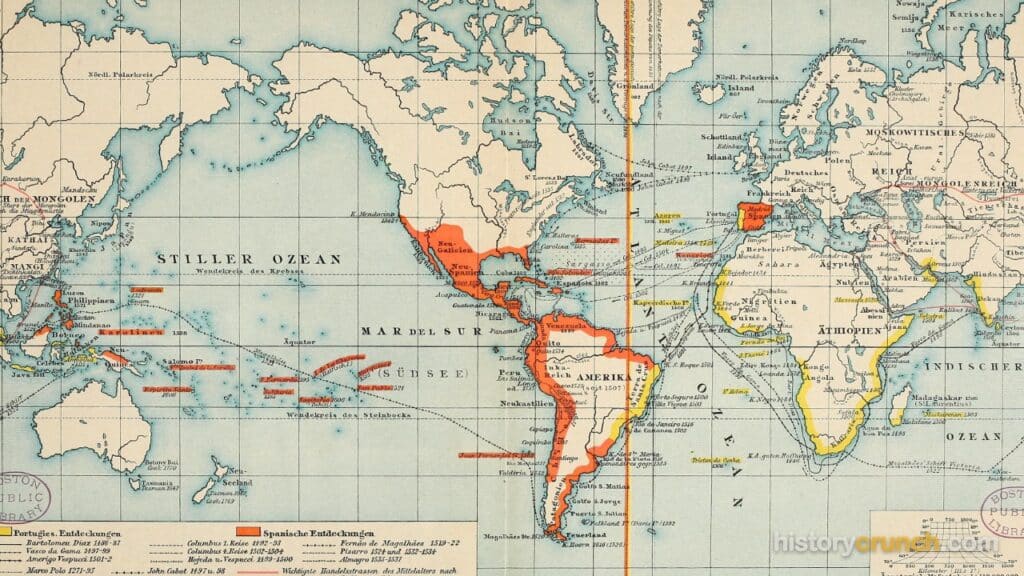
Spain entered the Age of Imperialism as one of the oldest colonial powers in the world. Centuries earlier, during the Age of Exploration, Spain had built one of the largest empires in history, stretching across much of the Americas, the Caribbean, and the Pacific. This early empire made Spain rich and powerful, especially through the mining of gold and silver in its American colonies.
By the start of the 19th century, however, Spain’s grip on its empire was weakening. In reality, most of Spain’s colonies in Central and South America broke away and won their independence during the early 1800s. As a result, by the time the Age of Imperialism reached its height, Spain no longer ruled the huge American empire it had once controlled. Instead, it held on to a handful of remaining territories that it tried to defend against both local rebellions and the ambitions of rival powers.
What Colonies Did Spain Control?
During the Age of Imperialism, Spain still controlled several important colonies scattered across different parts of the world. In the Caribbean, Spain ruled the islands of Cuba and Puerto Rico, which were valuable for their sugar plantations. In the Pacific, Spain governed the Philippines and the island of Guam, which served as key trading and military outposts far from the Spanish homeland.
These colonies were run mainly for the benefit of Spain, much like the colonies of other imperial powers. For example, Cuba’s sugar industry produced enormous wealth, and both Spanish officials and foreign investors profited from it. However, Spanish rule was often harsh, and the people living in these colonies frequently resented the taxes, restrictions, and lack of self-government that came with being ruled from Spain.
Discontent in the colonies grew into open rebellion in several places. More specifically, Cuban nationalists launched repeated uprisings against Spanish rule throughout the 19th century, seeking independence. In response, Spain sent large armies and used brutal methods to try to crush the rebellions, which only deepened the anger of the colonized peoples and drew international attention to the conflict.
What Was Spain’s Role in Africa?
Spain also took part in the Scramble for Africa, although its role was much smaller than that of Britain or France. As stated above, the European powers divided nearly all of Africa among themselves during the late 19th and early 20th centuries, and Spain claimed a few territories for itself. These holdings were modest, but they show that Spain still wanted to be counted among the imperial powers.
In northwestern Africa, Spain claimed a stretch of desert coastline that became known as Spanish Sahara, in the region of modern Western Sahara. Spain also established a protectorate in the northern part of Morocco in the early 20th century. A protectorate is a territory that keeps some of its own local rulers but is controlled and protected by a stronger foreign power. In addition, Spain held the small coastal cities of Ceuta and Melilla, which remain Spanish territory even today.
Further south, Spain controlled a colony in Central Africa that later became the country of Equatorial Guinea. This territory included the mainland region of Río Muni and nearby islands. For instance, Spain developed plantations there to grow cocoa, relying heavily on forced labor from the local population. As with Spain’s other colonies, the main purpose was to extract resources and profit from the land rather than to benefit the African people who lived there.
How Did the Spanish-American War Change Spain’s Empire?
The most important event for Spain during the Age of Imperialism was the Spanish-American War of 1898. This was a brief conflict between the United States and Spain that grew out of the long struggle for independence in Cuba. American newspapers published exaggerated and sensational stories about Spanish cruelty in Cuba, a practice known as yellow journalism, which stirred up American anger against Spain.
Tensions rose sharply in February of 1898 when the American battleship Maine exploded and sank in the harbor of Havana, Cuba, killing hundreds of American sailors. Many Americans blamed Spain for the disaster, and public pressure for war grew rapidly. As a result, the United States declared war on Spain, and fighting broke out in both the Caribbean and the Pacific.
The war was short but decisive, and Spain suffered a crushing defeat. The two sides signed the Treaty of Paris in December of 1898, which ended the conflict. Under the treaty, Spain gave up its claim to Cuba, which became independent, and handed over Puerto Rico, Guam, and the Philippines to the United States. In this way, Spain lost nearly all of its remaining overseas empire, while the United States emerged as a new global power.
Significance of Spain in the Age of Imperialism
Spain in the Age of Imperialism is significant because it shows the decline of an old empire during a time when other powers were rapidly expanding. Spain had once ruled one of the largest empires in world history, but during the 19th century it lost most of its American colonies, and in 1898 it lost nearly all of the rest. As such, the Spanish experience stands in sharp contrast to the rise of empires like Britain and the newly powerful United States.
In addition, Spain’s story helps explain how imperial power could shift from one nation to another. The defeat of Spain in 1898 marked the emergence of the United States as a major imperial power, since the Americans took over former Spanish colonies in both the Caribbean and the Pacific. In reality, this transfer of colonies helped set the stage for the era of American Imperialism that followed.
Finally, Spain’s colonial holdings left lasting effects on the regions it once ruled. For instance, the Spanish language and culture remain deeply rooted in places such as Cuba, Puerto Rico, the Philippines, and Equatorial Guinea. Meanwhile, Spain’s departure from Western Sahara in the 1970s left behind a territorial dispute that has never been fully resolved. In these ways, the effects of Spanish imperialism continue to shape the modern world long after the empire itself disappeared.
Frequently Asked Questions
Why was Spain a declining power during the Age of Imperialism?
Spain was a declining power because it had already lost most of its empire before the Age of Imperialism reached its height. During the early 1800s, most of Spain’s colonies in Central and South America rebelled and won their independence. This left Spain with only a few scattered territories, and its economy and military were far weaker than those of rising powers like Britain, Germany, and the United States.
What colonies did Spain lose in 1898?
Spain lost Cuba, Puerto Rico, Guam, and the Philippines as a result of the Spanish-American War in 1898. Cuba became independent, while Puerto Rico, Guam, and the Philippines were handed over to the United States under the Treaty of Paris. This loss ended Spain’s empire in the Americas and the Pacific and marked a turning point in its national history.
Did Spain take part in the Scramble for Africa?
Yes, Spain took part in the Scramble for Africa, but it claimed only a small share of the continent. Spain controlled territories such as Spanish Sahara, a protectorate in northern Morocco, the coastal cities of Ceuta and Melilla, and a colony in Central Africa that became Equatorial Guinea. These holdings were far smaller than the vast African empires built by Britain and France.
Why did the United States go to war with Spain?
The United States went to war with Spain mainly because of the conflict in Cuba and the sinking of the battleship Maine. American newspapers printed sensational stories about Spanish cruelty toward Cuban rebels, which turned public opinion against Spain. When the Maine exploded in Havana harbor in 1898, many Americans blamed Spain, and the demand for war became too strong to resist.
What lasting effects did Spanish imperialism have?
Spanish imperialism left lasting effects on language, culture, and politics in many parts of the world. The Spanish language is still widely spoken in former colonies such as Cuba, Puerto Rico, and Equatorial Guinea, and Spanish influence remains strong in the Philippines. In addition, Spain’s later withdrawal from Western Sahara created a territorial dispute that continues to affect North Africa today.
Cite This Article
To cite this article as a source, use one of the formats below.
MLA: Millar, B. “Spain in the Age of Imperialism: A Detailed Summary.” HistoryCrunch, 12 August 2026, https://historycrunch.com/spain-in-the-age-of-imperialism/.
APA: Millar, B. (2026). Spain in the Age of Imperialism: A Detailed Summary. HistoryCrunch. https://historycrunch.com/spain-in-the-age-of-imperialism/
Chicago: Millar, B. “Spain in the Age of Imperialism: A Detailed Summary.” HistoryCrunch. August 12, 2026. https://historycrunch.com/spain-in-the-age-of-imperialism/
Sources
- Fordham Modern History Sourcebook
- Eric Hobsbawm, The Age of Empire 1875-1914.
- John Darwin, After Tamerlane / Unfinished Empire.
- Daniel R. Headrick, The Tools of Empire.