Japan in the Age of Imperialism stands as one of the most important stories in modern world history, because it shows a nation that transformed itself from an isolated feudal society into a powerful empire in only a few decades. During the Age of Imperialism, most of the powerful nations that built empires were European, but Japan was the major exception in Asia. In fact, Japan modernized so quickly and so completely that it began to build its own overseas empire and eventually challenged the great powers of Europe. As such, Japan’s rise reshaped the balance of power in East Asia and had lasting effects that stretched into the twentieth century.
Imperialism is the policy of a nation extending its power and control over other territories and peoples, usually through military force, colonization, or economic domination. In the case of Japan, imperialism meant seizing colonies such as Taiwan and Korea, expanding into Manchuria, and forcing weaker neighbors to accept Japanese influence. More specifically, Japanese imperialism combined a modern industrial economy, a Western-style military, and a strong sense of national pride to create an empire that rivaled those of Europe.
What Was the Age of Imperialism?
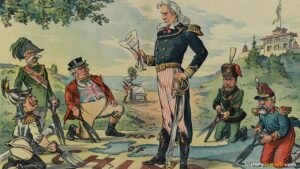
The Age of Imperialism was a period that lasted from roughly the middle of the 18th century until the early part of the 20th century. During this time, the major powers of the world expanded their empires and spread their influence across large sections of Africa and Asia. In fact, the leading imperial powers of the era included Britain, France, Germany, Belgium, Italy, Portugal, Spain, and later the United States, Russia, and Japan. These nations competed with one another to seize colonies, control trade, and gain resources.
Historians point to several main causes of the Age of Imperialism, including economic gain, the desire to settle growing populations, the spread of religion, ethnocentrism, and national prestige. Ethnocentrism is the belief that one’s own culture or people are superior to others, and it was used to justify the conquest of foreign lands. As stated above, most of these imperial powers were European, and events such as the Scramble for Africa, British imperialism in India, and imperialism in China defined the period. Japan, however, was unusual because it was an Asian nation that avoided being colonized and instead became a colonizer itself.
How Did Japan Become an Imperial Power?
For more than two centuries before the Age of Imperialism, Japan had cut itself off from most of the outside world under a policy of isolation. During this time, Japan was ruled by military governors called shoguns, and the emperor held little real power. The government of the shoguns was known as the Tokugawa shogunate, and it kept foreign traders and ideas out of the country in order to preserve stability. As a result, Japan remained a feudal society while European nations grew stronger through industry and technology.
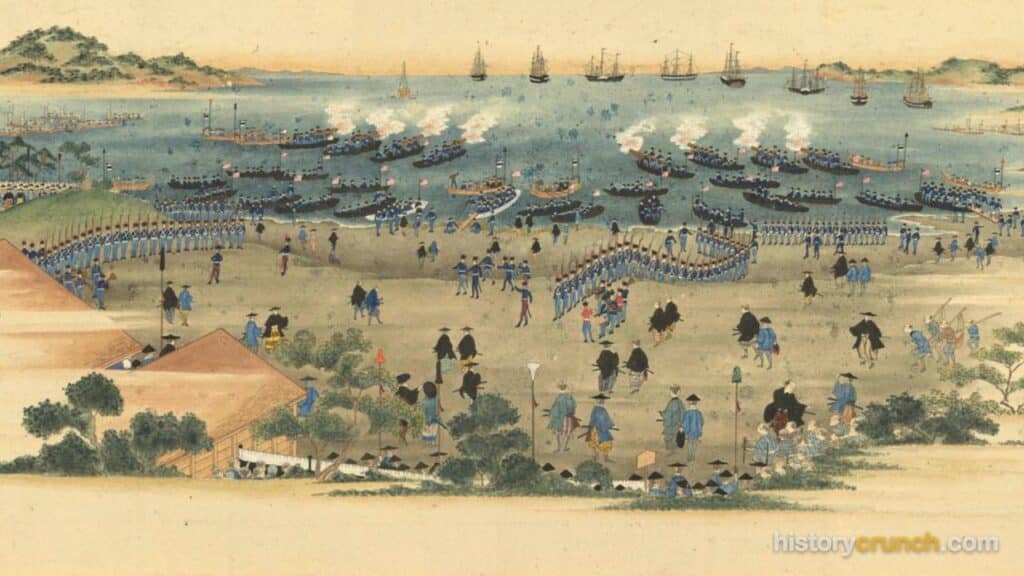
This isolation ended dramatically in the 1850s. United States Commodore Matthew Perry’s 1853 expedition to Japan ended the country’s isolation, and Perry forced the Tokugawa shogunate into a trade agreement with the threat of a naval attack. Perry arrived with a fleet of steam-powered warships that were far more advanced than anything Japan possessed. Japan’s shogun realized that his nation could not win a war against the United States and reluctantly accepted the US terms. In fact, the Japanese had no navy capable of defending against these ships, so they had little choice but to negotiate.
In 1854, the two nations signed the Treaty of Kanagawa. The treaty secured protections for American sailors and opened two Japanese ports for refueling and resupply, and it gave the United States favored-nation trade status, which provided the basis for future trade with Japan. Soon after, many European nations negotiated similar treaties with Japan. As a result, Japanese leaders came to believe that their nation would be dominated by foreigners unless it changed quickly.
What Was the Meiji Restoration?
The pressure from the West weakened the Tokugawa shogunate and led to one of the most important turning points in Japanese history. The process by which the United States and the Western powers forced Japan into modern commercial intercourse, along with other internal factors, weakened the position of the Tokugawa Shogunate to the point that the shogun fell from power. In 1868, a group of reformers overthrew the shogunate and returned power to the emperor. The Emperor gained formal control of the country in the Meiji Restoration of 1868, with long-term effects for the rule and modernization of Japan.
The young emperor took the reign name Meiji, which means “enlightened rule,” and the period is known as the Meiji era. The new leaders were determined to make Japan strong enough to resist the Western powers. More specifically, they launched a sweeping program of reform that touched almost every part of Japanese life. This era saw the dismantling of the feudal system, the abolition of the samurai class, and significant reforms aimed at modernization, including the establishment of universal military conscription and compulsory education.
To catch up with the West, Japan studied the most powerful nations of the world and borrowed their best ideas. The government sought to learn from Western nations, sending missions abroad and inviting foreign experts to facilitate rapid industrialization. In fact, Japanese leaders built railroads, factories, telegraph lines, and a modern banking system. As a result, once Japan opened its ports it took advantage of the new access to modern technological developments, and its opening to the West enabled it to modernize its military and to rise quickly to the position of the most formidable Asian power in the Pacific.
Why Did Japan Build an Empire?
Once Japan had modernized, its leaders looked to expand their nation’s power in the same way European nations had. There were several reasons for this. First, Japan is a small group of islands with limited natural resources, so it needed raw materials such as coal and iron to fuel its growing industries. Second, Japanese leaders wanted to be treated as equals by the Western powers, and building an empire was seen as proof of strength and prestige.
In addition, a strong sense of nationalism took hold in Japan during this period. Many Japanese believed their nation had a special destiny to lead Asia, and the military gained great influence over the government. As such, Japan followed the example of the European imperial powers and began to seek colonies and territory of its own. The most important early targets of Japanese expansion were nearby Korea and China.
What Wars Did Japan Fight During the Age of Imperialism?
Japan’s rise as an imperial power was proven on the battlefield in two major wars. The first was the First Sino-Japanese War, which was fought between Japan and China from 1894 to 1895. The two nations went to war over control of Korea, which had long been influenced by China. Although foreign observers had predicted an easy victory for the more massive Chinese forces, the Japanese had done a more successful job of modernizing, and they were better equipped and prepared, and Japanese troops scored quick and overwhelming victories on both land and sea.
The war ended with the Treaty of Shimonoseki in 1895. China recognized the independence of Korea and ceded Taiwan, the adjoining Pescadores, and the Liaodong Peninsula in Manchuria to Japan, and China also agreed to pay a large indemnity and to give Japan trading privileges on Chinese territory. In this way, Japan gained its first overseas colony in Taiwan, establishing itself as an imperial power. The victory stunned the world and showed that Japan had become the dominant power in East Asia.
The second major conflict was the Russo-Japanese War, fought from 1904 to 1905. This war grew out of competition between Japan and Russia over Manchuria and Korea. To the surprise of many observers, Japan defeated the much larger Russian Empire on both land and sea. In fact, during the Russo-Japanese War, Japan became the first modern Asian nation to win a war against a European nation. The United States helped bring the war to an end, as President Theodore Roosevelt invited Japanese and Russian negotiators to the U.S. Naval station at Portsmouth, New Hampshire and brokered the peace treaty, for which Roosevelt won the Nobel Prize in 1906.
Following these victories, Japan tightened its grip on Korea. The 1904 to 1905 Russo-Japanese War established Japan’s sphere of influence over Manchuria and Korea, and Korea was annexed in 1910. As such, Korea became a Japanese colony, and Japanese rule there would last until the end of World War II. These conquests made Japan one of the great imperial powers of the early twentieth century.
Significance of Japan in the Age of Imperialism
The significance of Japan in the Age of Imperialism is that it was the only Asian nation to avoid being colonized and instead become a major imperial power in its own right. While European nations carved up much of Africa and Asia, Japan modernized so rapidly that it joined the ranks of the colonizers. In fact, Japan became the first modern Asian nation to defeat a European power, and its victory over Russia inspired many people across Asia and Africa who lived under foreign rule.
At the same time, Japan’s rise had serious consequences for the peoples it conquered. The people of Taiwan, Korea, and Manchuria came under harsh Japanese control and lost their independence. More specifically, Japanese rule often suppressed local languages, cultures, and traditions in the same way European empires did in their colonies. As such, Japanese imperialism brought suffering to millions of people across East Asia.
Finally, the growth of Japanese power set the stage for even larger conflicts in the twentieth century. The nationalism and military ambition that drove Japan’s empire continued to grow after the Age of Imperialism ended. In reality, these forces eventually led Japan into World War II and its expansion across the Pacific. For this reason, Japan’s transformation during the Age of Imperialism remains one of the most important developments in modern world history.
Frequently Asked Questions
When was the Age of Imperialism in Japan?
Japan’s age of imperialism began in the second half of the 19th century and lasted into the early 20th century. It started after Commodore Matthew Perry forced Japan to open its ports in the 1850s, gained speed with the Meiji Restoration of 1868, and reached its height with the conquest of Taiwan and Korea in the years around 1900.
Why was Japan the only Asian country to become an imperial power?
Japan became the only major Asian imperial power because it modernized faster and more completely than any of its neighbors. While China and other Asian nations struggled to reform, Japan quickly adopted Western industry, weapons, and government systems, which gave it the strength to resist European control and build its own empire.
Who was Emperor Meiji?
Emperor Meiji was the ruler of Japan whose reign began with the Meiji Restoration of 1868 and lasted until 1912. His personal name was Mutsuhito, and although the era carries his name, most of the actual reforms were carried out by a small group of powerful advisers who wanted to modernize Japan and protect it from foreign domination.
What territories did Japan control during the Age of Imperialism?
By the early 20th century, Japan controlled Taiwan, Korea, and areas of Manchuria in northeastern China. Taiwan became a Japanese colony after the First Sino-Japanese War in 1895, Korea was annexed in 1910, and Japan steadily expanded its influence across the region in the decades that followed.
How did Japanese imperialism affect the rest of the world?
Japanese imperialism shifted the balance of power in East Asia and challenged the idea that only European nations could build empires. Japan’s defeat of Russia in 1905 encouraged anti-colonial movements around the world, but the empire’s continued expansion also created tensions that eventually helped lead to World War II in the Pacific.
Cite This Article
To cite this article as a source, use one of the formats below.
MLA: Millar, B. “Japan in the Age of Imperialism: A Detailed Summary.” HistoryCrunch, 12 August 2026, https://historycrunch.com/japan-in-the-age-of-imperialism/.
APA: Millar, B. (2026). Japan in the Age of Imperialism: A Detailed Summary. HistoryCrunch. https://historycrunch.com/japan-in-the-age-of-imperialism/
Chicago: Millar, B. “Japan in the Age of Imperialism: A Detailed Summary.” HistoryCrunch. August 12, 2026. https://historycrunch.com/japan-in-the-age-of-imperialism/
Sources
- Daniel R. Headrick, The Tools of Empire.
- State Department — Office of the Historian