Globalization is one of the most important developments in modern world history, because it explains how distant regions that once had little contact grew into a single, connected world. At its heart, globalization is the process by which people, goods, money, ideas, and cultures move across the globe and become linked together. Over the centuries it has reshaped economies, changed daily life, and brought together civilizations that were once separated by vast oceans and land barriers. Understanding globalization helps explain why a person today can eat food grown on another continent, wear clothing sewn thousands of miles away, and share news with someone on the far side of the planet in seconds.
In simple terms, globalization refers to the growing interconnectedness of the world’s people and nations. It happens through trade, travel, communication, and the exchange of ideas and customs. While the word itself is fairly new and became common in the late 20th century, the process it describes has been unfolding for hundreds of years. In fact, globalization is often divided into different waves, each driven by new technology, new trade routes, or new political arrangements that pushed the world closer together.
How Did Early Global Contact Begin?
Globalization belongs to a long stretch of history that stretches back several centuries, when distant parts of the world first came into regular contact. Early global connections grew as sailors, traders, and explorers crossed the seas in search of new trade routes, wealth, and knowledge. These journeys tied together regions that had once been separated by vast oceans and land barriers.
This early contact matters so much because it gave birth to the first phase of globalization. As regular sea travel and trade spread, the world became more interconnected than it had ever been before. For the first time, the continents of the world were tied together by steady exchange. That process has continued to grow, and it forms the foundation of the connected world that exists today.
How Did Early Sea Voyages Begin Globalization?
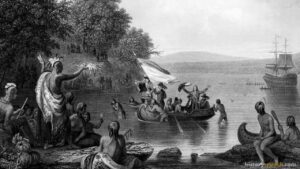
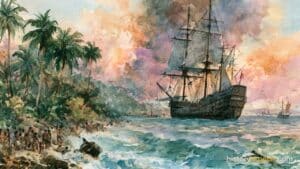
The great sea voyages of the fifteenth and sixteenth centuries created the first true links between distant parts of the world. The discovery of new lands and the circumnavigation of the globe were hugely significant developments in the growth of globalization. Explorers opened sea routes that connected Europe, Africa, Asia, and the Americas for the first time.
These new connections joined regions that had never before had direct contact. The newly formed links between the East and the West made possible both positive and negative exchanges between the Old World, mainly Europe, and the New World, primarily the Americas. More specifically, this contact set off one of the most important exchanges in all of world history, which historians later named the Columbian Exchange.
What Was the Columbian Exchange?
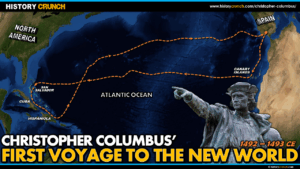
The Columbian Exchange was the transfer of plants, animals, people, diseases, and ideas that followed the meeting of the Old World and the New World. Historians refer to this as the Columbian Exchange, which was the transfer of plants, animals, people, diseases, and ideas between the Old World and the New World. It is named after Christopher Columbus, whose 1492 voyage first connected Europe with the Americas.
The effects of this exchange were enormous and reached every part of the globe. This exchange radically altered diets, economies, and populations worldwide, and while it enriched Europe and transformed global agriculture, it also led to the devastation of indigenous populations, particularly in the Americas, due to disease and conquest. Foods such as potatoes, corn, and tomatoes traveled from the Americas to Europe, Africa, and Asia, while horses, wheat, and sugarcane moved in the opposite direction. In reality, this was one of the clearest early signs of how deeply globalization would reshape the world.
What Were the Waves of Globalization?
Globalization did not happen all at once, but instead grew in several waves over time. The first wave came after the earliest era of global contact. The first wave of globalization is considered to have taken place prior to 1914, beginning in 1800, after the early globalism that came with the first sea voyages between continents, and this wave came to an end with the First World War. This wave was powered by the Industrial Revolution, which produced railroads, steamships, and factories that moved goods faster and farther than ever before.
The two World Wars interrupted this progress and closed borders across the globe. By the end of World War II, trade as a percentage of world GDP had fallen to a level not seen in more than a hundred years. After 1945, however, globalization surged forward again in a powerful new wave. The World Wars altered the course of globalization, placing a focus on international peace, stability, and cooperation, free-market capitalism became a dominant world economic force, and technological advancements in transportation, communication, and resource development facilitated rapid economic growth and international connectedness.
What Caused Modern Globalization?
Modern globalization has been driven by several powerful forces working together. The most important of these is technology, especially advances in transportation and communication. Technological advances have dramatically reduced transportation and communication costs, enabling greater flows of goods, capital, ideas, and people across borders. Airplanes, container ships, telephones, and the internet have all made it far easier to move products and information around the world.
Other causes include government policies and the rise of large companies. Key drivers of globalization include improved communications like the internet, improved transportation infrastructure, free trade agreements, global banking, and the growth of multinational corporations. Multinational corporations are businesses that operate in many countries at once. The investment of these corporations in farms, mines, and factories across the world is a major part of globalization, and it allows them to produce goods and services and to sell products on a massive scale throughout the world.
What Are the Positive Effects of Globalization?
Globalization has brought many benefits to people and nations around the world. One of the largest is economic growth, since countries can trade freely and focus on what they produce best. In general, globalization has been shown to increase the standard of living in developing countries. Trade gives people access to a wider range of goods, and it allows nations to obtain resources they cannot produce themselves.
Globalization also spreads knowledge and brings cultures closer together. Socially, globalization has facilitated the exchange of ideas and cultures, contributing to a world view in which people are more open and tolerant of one another. For instance, music, food, film, and fashion now travel easily from one country to another, allowing people to enjoy and learn from traditions very different from their own. In addition, nations can work together more closely to face shared challenges.
What Are the Negative Effects of Globalization?
Despite its benefits, globalization has also created serious problems and drawn many critics. One major concern is that its rewards are not shared equally. Critics argue that unregulated free trade can often lead to inequality, and free trade has caused job losses in some countries as manufacturers move production to where labor costs are least expensive. When companies move factories overseas to save money, workers in wealthier nations can lose their jobs.
Globalization can also harm the environment and threaten local cultures. In some places, free trade has led to environmental problems and the depletion of natural resources. The transport of goods over long distances adds pollution, and the spread of a single global culture can weaken unique local traditions. There is also a risk that closely linked economies can spread trouble quickly. Because of globalization, an economic crisis in one nation is likely to affect other nations, and for example, the financial crisis in the United States in 2008 created a global economic recession.
Significance of Globalization
Globalization is one of the defining forces of the modern world, and its significance is hard to overstate. It transformed a collection of separate regions into a single connected system in which events in one place can affect people everywhere. The world has become more interdependent in the modern era of globalization, and one particular example is how much easier it is for pandemics to spread and affect billions of people. This became especially clear during the COVID-19 pandemic, which showed just how tightly the nations of the world are bound together.
The importance of globalization also lies in how deeply it shapes everyday life. The clothes people wear, the food they eat, the technology they use, and the news they follow are all products of a connected global system. As stated above, this process began centuries ago with the first regular contact between continents, and it continues to grow through trade, travel, and communication today. Because globalization touches nearly every part of life, understanding it is essential to making sense of both the past and the world of the present.
Frequently Asked Questions
What Is Globalization in Simple Terms?
Globalization is the process by which the world’s people and nations become more connected through trade, travel, communication, and the exchange of ideas and culture. It means that goods, money, information, and people move more easily across borders than ever before. Because of globalization, distant countries now depend on one another for products, resources, and cooperation.
When Did Globalization Start?
The first major phase of globalization began several centuries ago, when long sea voyages first linked the continents together. Although the word “globalization” only became common in the late 20th century, the process it describes has been unfolding for hundreds of years. Each new wave has been pushed forward by new technology and new trade routes.
How Does Globalization Affect Everyday Life?
Globalization affects everyday life through the products people buy, the food they eat, and the entertainment and information they enjoy. Many everyday items, such as smartphones and clothing, are made from parts and materials gathered from several different countries. It also allows people to communicate instantly with others around the world and to experience music, movies, and food from many cultures.
Why Do Some People Oppose Globalization?
Some people oppose globalization because they believe its benefits are not shared fairly and that it can harm workers, cultures, and the environment. Critics point out that jobs are sometimes lost when companies move factories to countries with cheaper labor. Others worry that a single global culture can weaken unique local traditions and that closely linked economies can spread financial crises quickly.
What Is the Difference Between Globalization and Trade?
Trade is the buying and selling of goods and services, while globalization is the overall process of the world becoming more connected. Trade is one of the main engines of globalization, but globalization also includes the movement of people, money, ideas, technology, and culture. In other words, trade is a key part of globalization, but globalization is much larger than trade alone.
Cite This Article
To cite this article as a source, use one of the formats below.
MLA: Millar, B. “Globalization: A Detailed Overview.” HistoryCrunch, 2 August 2026, https://historycrunch.com/globalization/.
APA: Millar, B. (2026). Globalization: A Detailed Overview. HistoryCrunch. https://historycrunch.com/globalization/
Chicago: Millar, B. “Globalization: A Detailed Overview.” HistoryCrunch. August 2, 2026. https://historycrunch.com/globalization/
Sources
- J.M. Roberts & Odd Arne Westad, The Penguin History of the World.
- Jerry Bentley & Herbert Ziegler, Traditions & Encounters: A Global Perspective on the Past.