The spice trade was one of the most important forces behind the Age of Exploration, and it helped reshape the economies of Europe, Africa, Asia, and eventually the Americas. During the 15th and 16th centuries, European kingdoms were willing to risk enormous amounts of money and human life to gain direct access to the spices of Asia. These goods, including pepper, cinnamon, cloves, nutmeg, and ginger, were rare and expensive in Europe, and whoever controlled their supply could grow enormously wealthy. As a result, the search for a sea route to the spice-producing regions of the East pushed explorers into unknown oceans and changed the course of world history.
In simple terms, the spice trade was the buying, selling, and transporting of valuable seasonings and plant products between Asia and the rest of the world. Spices were used to flavor and preserve food, to make medicines, and to display wealth, and they traveled thousands of miles from where they grew to reach markets in Europe. Because the trade crossed so many lands and seas, control over its routes meant control over great riches, which is exactly why it became a central goal of European exploration.
What Was the Age of Exploration?
The Age of Exploration, also called the Age of Discovery, is one of the most important events in the history of the western world. It began in the early 15th century and continued until the end of the 17th century, and it involved European explorers using their navigational skills to travel the world. During this time, several European nations launched expeditions that led to the “discovery” of new lands, the expansion of trade routes, and the rise of colonial empires.
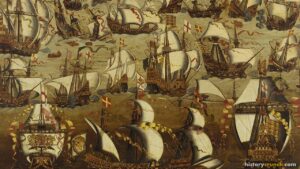
In general, the Age of Exploration was driven by a combination of economic, political, religious, intellectual, and technological factors. The four European nations most closely associated with the era were Portugal, Spain, France, and England. Each of these countries shared an important advantage, since they all bordered the Atlantic Ocean and had access to experienced sailors, well-developed sea ports, and the financial resources needed to fund long ocean voyages. Improvements in ship design, such as the development of the carrack and the caravel, also made it possible for explorers to travel farther than ever before and to carry larger amounts of cargo.
Why Were Spices So Valuable in Europe?
Spices were prized in Europe for many reasons, and their high value made them worth risking dangerous voyages to obtain. Before modern refrigeration, spices such as pepper and cloves helped preserve meat and other foods that would otherwise spoil quickly. In fact, spices could hide the taste and smell of food that was no longer fresh, which made them useful in kitchens across the continent.
Spices were also believed to have medical value, and doctors of the time used them to treat illnesses and to mix into remedies. More than this, spices were a symbol of wealth and status. A noble family that could serve heavily spiced dishes was showing off its riches, which increased the demand among the European elite.
The most sought-after spices came from specific regions of Asia. For instance, pepper came mostly from India, cinnamon came from Sri Lanka and nearby lands, and cloves and nutmeg came from a small group of islands in Southeast Asia known as the Spice Islands, or the Moluccas. Because these regions were so far away, the spices became rarer and more expensive with every mile they traveled toward Europe.
How Did Spices Reach Europe Before the Age of Exploration?
For centuries before European ships sailed to Asia, spices reached Europe through a long chain of overland and sea routes. Traders carried spices from Asia across the Indian Ocean, up through the Persian Gulf and the Red Sea, and across Egypt or Arabia into the Mediterranean world. The famous Silk Road, which stretched across Eurasia, was another path along which spices and other goods entered European markets.
These routes passed through many hands, and each merchant along the way added to the price. By the time spices reached European buyers, they had become extremely expensive. More specifically, Middle Eastern traders and the powerful Italian city of Venice controlled much of this trade, and no European ruler had been able to break their grip on it.
The situation grew worse in 1453, when the city of Constantinople fell to the Ottoman Empire. This event disrupted many of the traditional overland trade routes, including parts of the Silk Road. As a result, European nations were pushed to look for a new way to reach the East, one that would let them bypass the middlemen and buy spices directly at the source.
How Did Portugal Open a Sea Route to the Spices?
Portugal led the early search for a sea route to Asia, and it did so by exploring the coast of Africa. Beginning in the early 15th century, Portuguese sailors, encouraged by Prince Henry the Navigator, pushed farther and farther south along the African coastline. Their goal was to find a way around the southern tip of Africa and into the Indian Ocean, which would connect them directly to the spice markets of the East.
A major breakthrough came in 1488, when the explorer Bartolomeu Dias became the first European to round the southern tip of Africa, known as the Cape of Good Hope. His voyage proved that ships could reach the Indian Ocean by sea. Building on this success, the explorer Vasco da Gama set sail from Portugal in 1497 with a small fleet.
Da Gama rounded the Cape of Good Hope, sailed up the coast of East Africa, and crossed the Indian Ocean with the help of a local navigator. In May of 1498, he reached the trading port of Calicut on the western coast of India. This was a turning point in history, because it established the first direct sea route between Europe and the spice markets of Asia. Even though only a small part of da Gama’s crew survived the long and dangerous journey, the spices his ships brought home earned enormous profits, which encouraged more voyages.
How Did the Spice Trade Lead to the Discovery of the Americas?
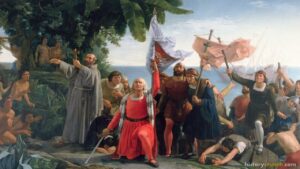
While Portugal sailed east around Africa, other explorers tried to reach Asia by sailing west across the Atlantic Ocean. The most famous of these was Christopher Columbus, who sailed under the flag of Spain in 1492. Columbus believed he could reach the spice lands of the East by crossing the Atlantic, but he badly underestimated the size of the Earth.
Instead of reaching Asia, Columbus landed in the Americas, a part of the world unknown to Europeans at the time. In reality, he never found the pepper or cinnamon he was searching for, but his voyages opened the door to European exploration and colonization of the New World. He did return with new plants, including chili peppers, that would later spread around the globe.
The desire to reach the Spice Islands also drove the expedition of Ferdinand Magellan, which set out in 1519. Sailing for Spain, Magellan’s fleet became the first to sail all the way around the world, even though Magellan himself died during the journey. As stated above, the hunt for spices was pushing explorers into every corner of the globe.
Who Controlled the Spice Trade During the Age of Exploration?
Control of the spice trade passed through several different hands during the Age of Exploration, and each shift brought conflict and competition. From about 1500 onward, Portugal was the first European power to dominate the sea routes to Asia. The Portuguese built forts and trading posts along the coasts of Africa, India, and Southeast Asia, and for much of the 16th century they controlled the flow of spices to Europe.
Portuguese dominance did not last forever, however. By the 17th century, the Dutch and the English had grown into major sea powers and began to break the Portuguese hold on the trade. The Dutch, in particular, created the powerful Dutch East India Company and built a trading empire that stretched across Asia, seizing control of much of the spice trade for themselves.
This competition for spices often turned violent. European nations fought one another and clashed with local rulers and traders in Asia as they struggled for a monopoly, meaning complete control over the buying and selling of a good. In this way, the desire for spices helped launch centuries of European colonization and empire-building around the world.
Significance of Spice Trade in the Age of Exploration
The significance of the spice trade in the Age of Exploration is difficult to overstate, since it was one of the main reasons Europeans set out to explore the world in the first place. The search for a direct route to the spices of Asia led to some of the most famous voyages in history, including those of Vasco da Gama, Christopher Columbus, and Ferdinand Magellan. Without the demand for spices, many of these journeys might never have taken place.
The spice trade also helped create the first truly global economy, one that connected Asia, Africa, Europe, and the Americas through the exchange of goods. In fact, the wealth gained from spices funded the growth of powerful European empires and encouraged the rise of large trading companies. This new global network of trade laid the foundation for the modern world economy.
At the same time, the spice trade carried a darker legacy. The competition for spices drove European colonization, warfare, and the exploitation of many peoples across Asia, Africa, and the Americas. As a result, the spice trade stands as both a story of remarkable exploration and a reminder of the harmful effects that came with the age of empire.
Frequently Asked Questions
What spices were most important during the Age of Exploration?
The most important spices were pepper, cinnamon, cloves, nutmeg, and ginger. Pepper was by far the most traded and came mostly from India, while cloves and nutmeg came from the Spice Islands in Southeast Asia. These spices were so valuable that at times they were worth many times their weight in precious metals.
Where are the Spice Islands located?
The Spice Islands are a group of islands in modern-day Indonesia, historically known as the Moluccas or Maluku Islands. They were the only place in the world where cloves and nutmeg grew naturally for much of this period. Because of this, European nations competed fiercely to control them, since they were the true source of some of the most valuable spices.
Why did Europeans want to bypass Venice and Middle Eastern traders?
Europeans wanted to bypass these middlemen because they controlled the spice routes and charged very high prices. The city of Venice and Middle Eastern merchants profited by acting as go-betweens for Asian producers and European buyers. By finding a direct sea route to Asia, other European nations hoped to buy spices at the source and keep the profits for themselves.
How did the spice trade affect the people of Asia?
The spice trade brought major disruption to many communities across Asia. European powers built forts, seized ports, and sometimes used force to control local rulers and traders who had managed the trade for centuries. In some places, entire islands were taken over so that European companies could control the growing and selling of spices.
Why did the spice trade become less important over time?
The spice trade slowly lost some of its power as tastes and supplies changed in Europe. Over time, cooking styles shifted toward lighter flavors, so the demand for heavy spicing decreased. In addition, spices became more common and less expensive as new sources and larger supplies reached European markets, which reduced the huge profits that had once driven exploration.
Cite This Article
To cite this article as a source, use one of the formats below.
MLA: Millar, B. “Spice Trade in the Age of Exploration: A Detailed Summary.” HistoryCrunch, 2 August 2026, https://historycrunch.com/spice-trade-in-the-age-of-exploration/.
APA: Millar, B. (2026). Spice Trade in the Age of Exploration: A Detailed Summary. HistoryCrunch. https://historycrunch.com/spice-trade-in-the-age-of-exploration/
Chicago: Millar, B. “Spice Trade in the Age of Exploration: A Detailed Summary.” HistoryCrunch. August 2, 2026. https://historycrunch.com/spice-trade-in-the-age-of-exploration/
Sources
- Fordham Modern History Sourcebook
- J.H. Parry, The Age of Reconnaissance.
- Gilder Lehrman Institute
- Felipe Fernández-Armesto, Pathfinders: A Global History of Exploration.