Roman Judea was one of the most important provinces in the eastern part of the Roman Empire, and its history shaped the ancient world in ways that still matter today. Located in the region of the southern Levant, along the eastern coast of the Mediterranean Sea, Judea was the historic homeland of the Jewish people. For roughly two centuries, the Jews of this land lived under the growing power of Rome, first through local client kings and later through direct Roman rule. This period saw the birth of Christianity, several major Jewish revolts, and the destruction of the great Temple in Jerusalem.
In simple terms, Roman Judea refers to the time when the Roman Empire controlled the region known as Judea, either directly as a Roman province or indirectly through kings who answered to Rome. A province was a territory outside of Italy that Rome governed and taxed, usually with a governor appointed by the emperor. Judea officially became a Roman province in 6 CE, though Roman influence over the area began decades earlier.
What Was the Roman Empire?
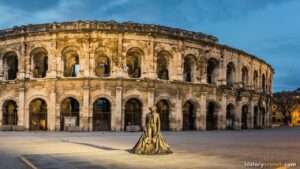
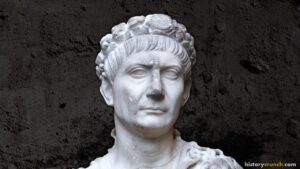
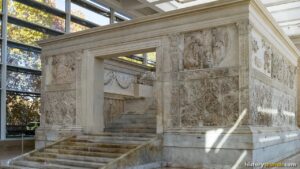
To understand Roman Judea, it helps to first understand the empire that ruled it. Ancient Rome was a civilization that grew from the city of Rome in modern-day Italy, and over many centuries it expanded into a vast empire that stretched across much of Europe, North Africa, and the Middle East. The Roman Empire officially began in 27 BCE, when a leader named Augustus became the first Roman emperor after years of civil war.
The Roman Empire was an autocracy, which means it was ruled by a single powerful person known as the emperor. The emperor controlled the army, the treasury, and the government, and he appointed governors to manage the many provinces of the empire. Judea was one of these provinces, sitting on the eastern edge of Roman territory. For Rome, Judea was strategically valuable because it helped guard the land and sea routes to Egypt, which supplied much of the empire’s grain, and it acted as a buffer against the powerful Parthian Empire to the east.
How Did Rome Gain Control of Judea?
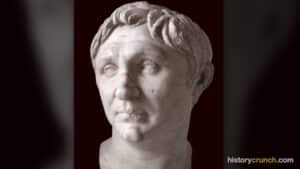
Before Rome arrived, Judea was an independent Jewish kingdom ruled by the Hasmonean dynasty, a family of priest-kings who had won freedom from earlier foreign rulers. In 63 BCE, a Roman general named Pompey the Great conquered Jerusalem during a Hasmonean civil war. Two Jewish princes had been fighting over who would rule, and both had asked Rome for help. In the end, Pompey simply took the city for Rome and placed one of the princes in charge as high priest, but without the power of a true king.
From this point on, Judea was no longer truly independent. The region was attached to the nearby Roman province of Syria, and its rulers governed only with Roman approval. In reality, Rome preferred to let local leaders handle everyday affairs as long as taxes were paid, order was kept, and Roman interests were protected. This system of ruling through local kings and officials would shape Judea for decades.
Who Was Herod the Great?
One of the most famous rulers of this era was Herod the Great, who was named “King of the Jews” by the Roman Senate around 40 BCE. By 37 BCE, with Roman military support, Herod had driven out the Parthians and taken control of Judea, Galilee, Samaria, and Idumea. Although he ruled as a king, his power depended entirely on the goodwill of Rome and the emperor Augustus.
Herod is remembered as a ruler of two very different sides. On one hand, he launched a massive building program that transformed the region. For instance, he built the grand port city of Caesarea Maritima, the mountain fortress of Masada, and he greatly expanded the Second Temple in Jerusalem into one of the most impressive structures in the ancient world. On the other hand, he was widely feared and resented, and ancient accounts describe him as a suspicious ruler who even had members of his own family killed. When Herod died in 4 BCE, his kingdom was divided among three of his sons.
When Did Judea Become a Roman Province?
After Herod’s death, his son Archelaus ruled the central region of Judea, Samaria, and Idumea. His rule was so harsh and troubled that his own subjects complained to Rome. As a result, the emperor Augustus removed him from power in 6 CE and placed the territory under direct Roman administration. This marked the official beginning of Judea as a Roman province.
With this change, Rome sent its own governors to rule the province, and the capital was moved from Jerusalem to the coastal city of Caesarea Maritima. One of the first acts of Roman rule was a tax census, which counted the population so that Rome could collect taxes. More specifically, this census angered many Jews and sparked a revolt led by a man known as Judas of Galilee, which Roman forces quickly crushed.
Even under direct rule, the Jewish people continued to manage many of their own religious and legal affairs. The high priest oversaw worship in the Temple, and a council known as the Sanhedrin handled matters of Jewish law. However, Roman governors held the final authority, including the power over life and death. The most famous of these governors was Pontius Pilate, who, according to Christian tradition, ordered the crucifixion of Jesus of Nazareth. In fact, it was during this era of Roman Judea that Christianity was born, later spreading across the entire Roman Empire.
What Were the Jewish Revolts Against Rome?
Life under Roman rule created deep tensions in Judea. Many Jews resented paying taxes to a foreign, non-Jewish empire, and they felt it was wrong to submit to pagan rulers. Roman governors were often harsh, and heavy taxation and disrespect toward Jewish religion built up anger over many years. This tension finally exploded into open war.
The First Jewish-Roman War, sometimes called the Great Revolt, began in 66 CE. It started with unrest and protests, partly triggered when a Roman official demanded money from the Temple treasury. The revolt grew into a full-scale war that lasted several years. The Roman generals Vespasian and his son Titus led the campaign to crush the rebellion. In 70 CE, Roman forces captured Jerusalem and destroyed the Second Temple, an event that was catastrophic for the Jewish people. The last rebel stronghold, the fortress of Masada, held out until around 73 CE.
The Jewish population recovered over the next generation, but tensions with Rome remained. In 132 CE, a second major uprising broke out, known as the Bar Kokhba revolt, named after its leader Simon bar Kokhba. This revolt was partly a response to the emperor Hadrian’s plan to build a Roman city dedicated to the god Jupiter on the ruins of Jerusalem. Using guerrilla tactics and hidden tunnels, the rebels briefly established an independent Jewish state and even minted their own coins. However, Rome crushed the revolt by 135 CE, leaving much of Judea destroyed and its population greatly reduced.
What Happened to Judea After the Revolts?
After the defeat of the Bar Kokhba revolt, Rome took harsh steps to punish the region and erase memories of Jewish rebellion. Jerusalem was rebuilt as a Roman city called Aelia Capitolina, and Jews were largely forbidden from living there. In addition, the province itself was renamed Syria Palaestina, a change meant to weaken the connection between the Jewish people and their homeland.
Even so, the Jewish people and their faith survived. Without the Temple as the center of worship, Jewish life gradually reorganized around rabbis, synagogues, and the study of religious law. As stated above, many Jews had already spread to other parts of the Roman world, and the destruction of Judea pushed even more people into these scattered communities, known as the diaspora. In this way, the events in Roman Judea reshaped the future of the Jewish people for centuries to come.
Significance of Roman Judea
The significance of Roman Judea comes from the way this single province influenced world history far beyond its small size. It was here, during the time of Roman rule, that Christianity began. Over the following centuries, this new faith spread across the Roman Empire and eventually became one of the largest religions in the world. Without the specific conditions of Roman Judea, the story of early Christianity would have unfolded very differently.
Roman Judea was also a turning point in Jewish history. The destruction of the Second Temple in 70 CE and the failure of the later revolts brought an end to Jewish self-rule in the region for a very long time. In reality, these events transformed how Judaism was practiced, shifting its focus from the Temple to synagogues, rabbis, and sacred texts. This new form of Jewish life would carry the religion through the many centuries that followed.
Finally, Roman Judea offers a clear example of how the Roman Empire governed its many provinces and how it dealt with resistance. Rome preferred to rule through local leaders and to keep order at almost any cost, responding to rebellion with overwhelming force. The story of Roman Judea shows both the power of Rome and the strength of a people determined to hold onto their identity, faith, and freedom.
Frequently Asked Questions
When did Judea become a Roman province?
Judea officially became a Roman province in 6 CE, when the emperor Augustus removed the ruler Archelaus and placed the territory under direct Roman control. Before this, Rome had controlled Judea indirectly since 63 BCE through local kings, most notably Herod the Great. The change in 6 CE meant that Roman governors, rather than local kings, now held the highest authority in the region.
Where was Roman Judea located?
Roman Judea was located in the southern Levant, along the eastern coast of the Mediterranean Sea, in a region that includes parts of modern-day Israel and Palestine. At its largest, the province included areas such as Judea, Samaria, Idumea, Galilee, and Peraea. Its most important cities included Jerusalem and the Roman-built port of Caesarea Maritima, which served as the provincial capital.
Why did the Jews revolt against Rome?
The Jews revolted against Rome because of heavy taxation, harsh governors, and deep religious differences with their pagan rulers. Many Jews believed it was wrong to submit to a foreign empire that did not respect their faith, and this anger built up over decades. Specific events, such as a Roman official demanding money from the Temple treasury, helped push these tensions into open war in 66 CE.
What happened to the Temple in Jerusalem?
The Second Temple in Jerusalem was destroyed by Roman forces in 70 CE during the First Jewish-Roman War. Led by the Roman general Titus, the army captured the city after a long siege and burned the Temple to the ground. This event was devastating for the Jewish people and permanently changed how Judaism was practiced, since worship could no longer center on the Temple.
Why was Judea renamed Syria Palaestina?
Judea was renamed Syria Palaestina by the Romans around 135 CE, after they crushed the Bar Kokhba revolt. The renaming was meant to punish the Jewish people and weaken the strong connection between them and their homeland. Around the same time, Jerusalem was rebuilt as a Roman city called Aelia Capitolina, and Jews were largely banned from living there.
Cite This Article
To cite this article as a source, use one of the formats below.
MLA: Millar, B. “Roman Judea: A Detailed Summary.” HistoryCrunch, 7 July 2026, https://historycrunch.com/roman-judea/.
APA: Millar, B. (2026). Roman Judea: A Detailed Summary. HistoryCrunch. https://historycrunch.com/roman-judea/
Chicago: Millar, B. “Roman Judea: A Detailed Summary.” HistoryCrunch. July 7, 2026. https://historycrunch.com/roman-judea/
Sources
- Fordham Ancient History Sourcebook
- H.H. Scullard, From the Gracchi to Nero.
- Adrian Goldsworthy, How Rome Fell / Caesar (military and political).
- The Met (Heilbrunn Timeline) — Roman art