Native Americans played a major role in the American Revolution, and the war changed their lives more than almost any other group in North America. When the Thirteen Colonies fought for independence from Great Britain between 1775 and 1783, Native nations were forced to make hard choices about whether to join the fighting, whom to support, and how to protect their homelands. Their decisions shaped battles, frontier raids, and treaties, and the outcome of the war left many Native peoples with less land and less power than before.
Native Americans were not one united group with a single opinion. They belonged to many separate nations, each with its own leaders, languages, and interests. Some sided with the American colonists, known as Patriots, while others allied with the British, called Loyalists. Many tried to stay neutral for as long as they could. Understanding their story means looking at how independent nations reacted to a war that was fought across their lands and that threatened their future.
What Was the American Revolution?
The American Revolution was the political and military struggle through which the Thirteen Colonies broke free from British rule and created the United States of America. Open fighting began in April of 1775 at Lexington and Concord, and the colonies formally declared independence on July 4th, 1776. The war lasted until 1783. During those years, the Continental Army, led by George Washington, fought the British army in a long war that eventually drew in France and Spain on the side of the colonists.
The roots of the conflict stretched back more than a decade. The American Revolution grew out of more than a decade of escalating tension between Britain and its thirteen American colonies, driven by disputes over taxation, self-government, trade, and the rights of colonists as British subjects. Over time, a population that had once considered itself loyally British came to believe that independence was the only choice left. That same tension over land and control would pull Native nations into the war as well.
How Did Land and the Proclamation of 1763 Set the Stage?
The story of Native Americans in the Revolution begins with land. After the French and Indian War ended in 1763, Britain gained control of a huge stretch of territory between the Appalachian Mountains and the Mississippi River. Settlers from the colonies wanted to move west into this land, but doing so meant pushing into the homelands of many Native nations. This created constant conflict on the frontier.
To calm the violence, the British government issued the Proclamation of 1763. It sought to establish a boundary line along the Appalachian Mountains, prohibiting colonial settlers from encroaching on lands reserved for Native Americans. In fact, the law was one of the first to treat Native land as belonging to Native peoples. For the first time in the history of European colonization of the Americas, the proclamation made official the concept of Indigenous land ownership.
Colonists, however, resented the boundary and largely ignored it. Despite its intentions, the Proclamation of 1763 struggled to maintain order, as many settlers ignored its terms, and British military presence in the region proved inadequate. This helps explain why many Native nations later saw the British, who tried to limit western settlement, as the safer ally, while they viewed land-hungry colonists as the greater threat.
Which Side Did Native Americans Support?
There was no single answer to which side Native Americans supported, because each nation decided for itself. Native Americans were not passive observers in the conflict. While most Native communities tried to remain neutral in the fighting between the Crown and its colonists, as the war continued many of them had to make difficult decisions about how and when to support one side or the other.
Some of the earliest Native involvement was actually on the American side. The Native community at Stockbridge, Massachusetts, sent seventeen men to join the army of militiamen that was laying siege to Boston in 1775. Meanwhile, other Native Americans joined the British side and fought to defeat the American invasion of Canada in 1775-1776.
Overall, though, more Native nations leaned toward the British as the war went on. The British controlled trade goods that many communities depended on, and Britain had at least tried to protect Native land through the Proclamation Line. In reality, the colonists who wanted independence were often the same settlers pressing westward, which made an American victory frightening for many Native leaders.
How Was the Iroquois Confederacy Divided?
One of the clearest examples of how the war split Native nations was the Iroquois Confederacy, also called the Haudenosaunee, a powerful alliance of six nations based in what is now New York. The Iroquois Confederacy, an alliance of six Native American nations in New York, was divided by the Revolutionary War. Before the fighting, these nations had worked together for generations, but the Revolution forced them apart.
The split fell along the choice of allies. During the American Revolution the Tuscarora and Oneida sided with the colonists, whereas the Mohawk, Seneca, Cayuga, and Onondaga sided with the British. This meant that Iroquois warriors sometimes found themselves fighting against members of their own confederacy, a painful break for an alliance that had stood for so long.
A key figure in this story was the Mohawk leader Joseph Brant, known in the Mohawk language as Thayendanegea. He convinced four of the six Iroquois nations to join him in an alliance with the British and was instrumental in leading combined Indian, British, and Loyalist forces on punishing raids in western New York and Pennsylvania in 1778 and 1779. These raids brought hard fighting to the frontier and led George Washington to send an army to destroy Iroquois villages and crops in return.
How Were Other Nations Like the Cherokee Affected?
The Iroquois were not the only nation divided by the war. Farther south, the Cherokee faced the same painful split. The Cherokee nation was split between a faction that supported the colonists and another that sided with Britain. Cherokee warriors launched attacks on frontier settlements, and American militias responded by burning Cherokee towns and fields.
The results of this fighting were devastating. The Revolution left the Cherokee Nation devastated and divided, but the Chickamaugas remained defiant and continued to fight against American dominance until 1795. Many other nations across the frontier, including the Shawnee, Delaware, and Creek peoples, were also drawn into the conflict as raids and counter-raids spread violence across their homelands.
For nearly every nation involved, the war brought destruction rather than reward. Villages were burned, food supplies were destroyed, and families were forced to flee. More specifically, the fighting often did the most damage not to armies but to the Native communities caught in the middle.
What Happened to Native Americans After the War?
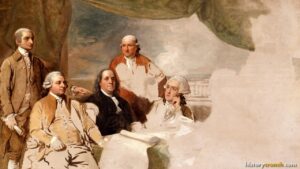
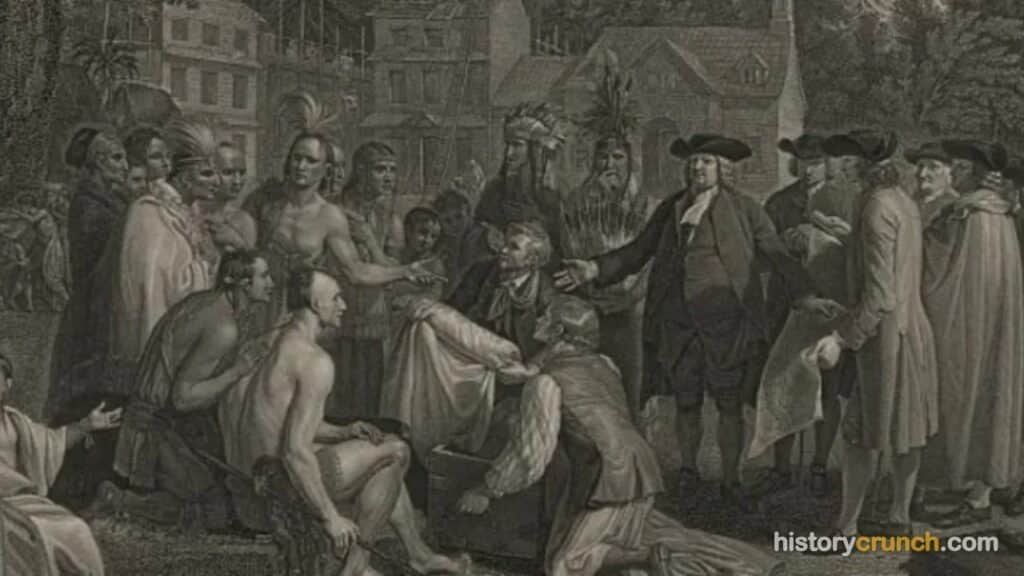
When the fighting ended, Native nations discovered that their sacrifices had won them very little. The Treaty of Paris of 1783 officially ended the war and recognized American independence, but it did not protect Native interests. Even though they fought on both sides in the American Revolution and inhabited territories negotiated between Great Britain and the United States, the Six Nations were ignored in the Treaty of Paris of 1783, which ended the war.
Britain handed over its claims to the land between the Appalachians and the Mississippi without consulting the Native nations who actually lived there. The end of fighting presented them with a difficult path as they struggled to protect their homelands from their growing insignificance within the shifting international politics of eighteenth-century America. New treaties soon forced many nations to give up large stretches of territory. In 1784 the newly established U.S. government negotiated another treaty with the confederation, in which the Iroquois agreed to give up land in Pennsylvania, New York, and Kentucky.
Even those who had allied with the winning American side, such as the Oneida, still lost land in the years that followed. As stated above, the westward push of settlers that had helped start the conflict only grew stronger after independence, and the new United States was determined to expand.
Significance of Native Americans in the American Revolution
The significance of Native Americans in the American Revolution lies in how deeply the war reshaped their world. The Revolutionary War did not only determine the future of the American colonies, but it also shaped the future of the Native peoples who lived in and around them. Their alliances influenced battles and frontier raids, and their homelands became battlegrounds in a war they had not started.
Sadly, the outcome was a disaster for most Native nations. For the Iroquois, the war shattered an alliance that had lasted for centuries. During the American Revolution, the Confederacy fell apart for the first time since its creation as different Iroquois groups fought against one another. Nations that had once been powerful found themselves weakened, divided, and pushed off their land.
The struggle did not end in 1783. Not until General Anthony Wayne defeated the allied northwestern tribes at the Battle of Fallen Timbers in 1794 did the Indians make peace at the Treaty of Greenville and cede most of Ohio to the United States. In this way, the American Revolution marked the beginning of a long period of land loss and resistance that would continue for many decades, making Native Americans one of the groups most affected by the birth of the United States.
Frequently Asked Questions
Why did most Native Americans side with the British?
Most Native nations that took a side chose the British because Britain seemed more likely to protect their land. The British government had tried to limit western settlement with the Proclamation of 1763, while the colonists were often the very settlers pushing into Native territory. The British also supplied trade goods, weapons, and gifts that many communities relied on, which made an alliance with the Crown appealing.
Did any Native Americans fight for the Americans?
Yes, several Native groups supported the American Patriots during the war. The Oneida and Tuscarora nations of the Iroquois Confederacy were among the most notable, providing scouts, warriors, and even food during difficult winters. The Oneida in particular are remembered for helping the Continental Army, though their loyalty did not spare them from later land losses.
Who was Joseph Brant?
Joseph Brant was a Mohawk leader and one of the most important Native figures of the Revolution. Known in his own language as Thayendanegea, he was educated in English, worked as a translator, and traveled to Britain before the war. He led Iroquois and Loyalist forces in raids against American frontier settlements and later helped his followers resettle in Canada after the fighting ended.
How did the American Revolution affect Native American land?
The Revolution led to enormous land losses for Native Americans. Because the Treaty of Paris ignored Native nations, the United States claimed vast western territories and then pressured many nations to sign away their homelands in later treaties. Waves of American settlers moved west, and this pressure continued long after the war officially ended.
Were Native Americans included in the Treaty of Paris?
No, Native Americans were left out of the Treaty of Paris of 1783 entirely. Britain and the United States negotiated the treaty without any Native representatives, even though the war had been fought partly across Native lands. As a result, nations that had fought on both sides felt betrayed, since the peace gave away territory that was still theirs.
Cite This Article
To cite this article as a source, use one of the formats below.
MLA: Millar, B. “Native Americans in the American Revolution: A Detailed Summary.” HistoryCrunch, 10 August 2026, https://historycrunch.com/native-americans-in-the-american-revolution/.
APA: Millar, B. (2026). Native Americans in the American Revolution: A Detailed Summary. HistoryCrunch. https://historycrunch.com/native-americans-in-the-american-revolution/
Chicago: Millar, B. “Native Americans in the American Revolution: A Detailed Summary.” HistoryCrunch. August 10, 2026. https://historycrunch.com/native-americans-in-the-american-revolution/
Sources
- Bernard Bailyn, The Ideological Origins of the American Revolution.
- National Archives — Founders Online