The British Army was one of the most important forces of the American Revolution, since it was the professional fighting force that Great Britain relied on to keep its thirteen American colonies under royal control. When war broke out in 1775, this army was widely respected as one of the best trained and most disciplined in the world, yet it would spend eight long years struggling to defeat a rebellion thousands of miles from home. In fact, the story of the British Army during the conflict helps explain both how close Britain came to victory and why it ultimately failed to hold on to the colonies.
The British Army was the land fighting force of the British Empire, made up mainly of professional soldiers who volunteered for long-term service and were paid, fed, and clothed by the crown. During the American Revolution it fought alongside German auxiliary troops and colonial Loyalists to try to put down the rebellion and restore royal authority over the Thirteen Colonies.
What Was the American Revolution?
The American Revolution was the political and military struggle through which the Thirteen Colonies broke free from British rule and created the United States of America. It was principally caused by colonial opposition to British attempts to impose greater control over the colonies and to make them repay the crown for its defense of them during the French and Indian War of 1754 to 1763. Britain tried to raise money through a series of unpopular laws and taxes, and the colonists came to believe that their rights as British subjects were being ignored.
The first shots of the Revolutionary War were fired at Lexington and Concord in Massachusetts on April 19th, 1775. The colonies formally declared independence on July 4th, 1776, and the fighting continued until 1783. More specifically, what had started as a civil war inside the British Empire grew into an international war when France joined the American side in 1778 and Spain followed in 1779. This overall shift made Britain’s military task far harder, because its army now had to fight in North America, the Caribbean, and beyond all at once.
How Large Was the British Army?
By the standards of the day, the British Army was surprisingly small. In the century that followed the English Civil War the size of the army grew and shrank depending on the circumstances, and by 1775 it numbered around 48,000 men. By European standards the British Army was extremely small, since the French maintained a force nearly four times larger, and many people in Britain did not see the need for a large army.
There were clear reasons for keeping the army small during peacetime. For one, there was political resistance to maintaining a large army, because many British subjects looked back to earlier times and saw how a professional force could be used to oppress the people. In addition to the dangers it posed to liberty, a standing army was extremely expensive to maintain during peacetime, and as an island nation at the heart of a colonial empire, Britain viewed the navy as vastly more important for protecting trade and projecting power.
Because the army was small at the start, only a fraction of it was actually stationed in the colonies. On the morning in April of 1775 when the first shots were fired, the total effective strength of the British Army worldwide was some 45,000 officers and men, and about 8,500 of them were stationed in North America. As stated above, this meant the army had to grow quickly once the war began.
Who Were the British Soldiers?
The British Army was a volunteer force rather than one built through forced service. The British Army of the late 18th century was a volunteer force, and unlike the navy there was no impressment or conscription into the army, a point of pride for most British subjects. The majority of men who volunteered were farm laborers or tradesmen who were out of work, and life in the army promised steady pay, regular meals, and a way to escape grinding poverty.
Service was demanding and, at first, nearly permanent. Before the war, enlistment in the army was a lifelong commitment, but during the war shorter enlistments of several years were introduced to encourage recruitment, and recruits were generally young, averaging in their early twenties, drawn from all over Britain and Ireland. For instance, most of these men had little combat experience when the fighting started. By the eve of the American Revolution, the majority of the men in the ranks had never seen active military service and were not battle-hardened.
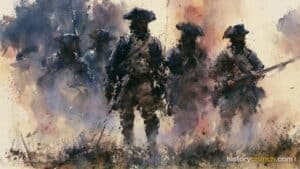
British soldiers earned the nickname “redcoats” because of the bright red uniform coats worn by most regiments. This color made them easy to recognize on the battlefield, and it became a lasting symbol of the British Army during the era of the American Revolution.
How Was the British Army Organized?
The army was built around a small, high-quality core that could be expanded in wartime. The structure of the army was designed to have a small, high-quality army that the government could supplement and expand in times of war. It was composed primarily of three arms of service, which were the infantry, the cavalry, and the artillery, and within each of these arms the soldiers were organized into regiments.
The regiment was the basic building block of the army. Each infantry regiment was divided into ten companies of equal size, with three commissioned officers, five or six non-commissioned officers, one or two drummers, and thirty-eight to seventy private soldiers. Officers were usually gentlemen who often purchased their commissions, while the enlisted men in the ranks came from the working classes. This system gave the British Army a clear chain of command and a level of discipline that many opponents found difficult to match in open battle.
Who Were the Hessians?
Because the British Army was too small to fight the war on its own, Britain hired German soldiers to fill out its ranks. In 1776 the British hired German troops to help supplement their army in the war against America, and at that time Germany was not a unified nation but was divided into numerous different principalities that operated independently. The princes of many of these states would offer their soldiers and armies to fight in return for monetary compensation.
These soldiers were not exactly mercenaries in the usual sense. They served as auxiliary troops to the British Army and fought in their own units, commanded by their own officers, with their own flags and uniforms, and were loyal to their individual princes. These German auxiliaries were commonly known throughout the conflict as Hessians, a term derived from the fact that the majority of the German troops came from the states of Hesse-Cassel and Hesse-Hanau.
The Hessians made up a large share of Britain’s fighting strength. The British ended up using more than 30,000 German troops during the Revolutionary War, and these made up about a quarter of all the troops in the British Army. In reality, their presence angered the colonists deeply. The Americans were outraged at the idea of King George III hiring foreign troops to subdue them and specifically called out this practice in the Declaration of Independence.
Where Did the British Army Fight?
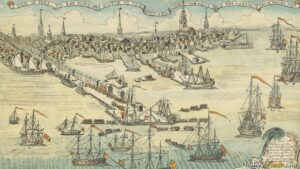
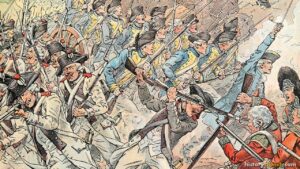
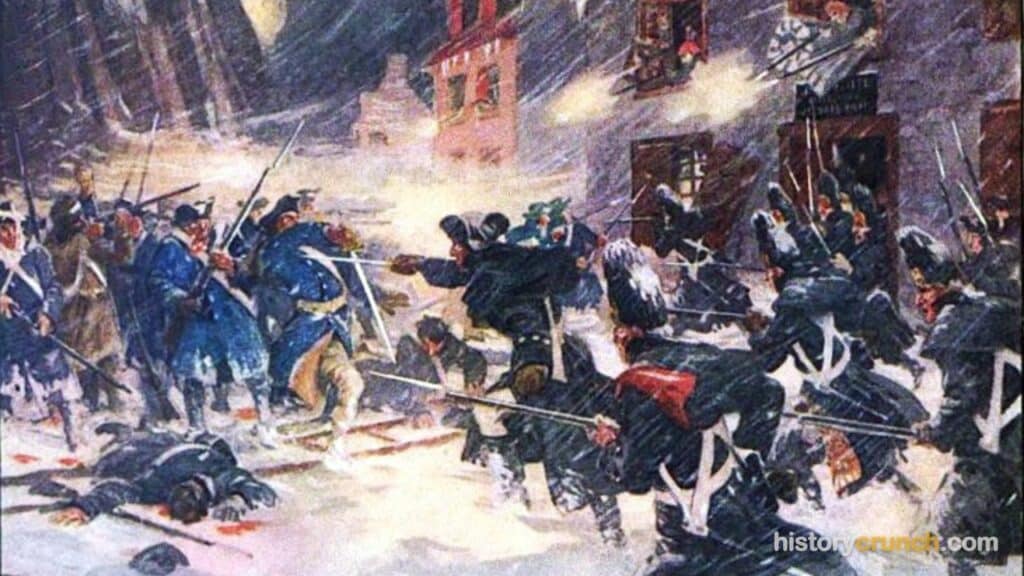
The British Army fought across a huge stretch of territory during the war. In the early years it drove the Continental Army out of New York in 1776 and occupied major cities such as New York and Philadelphia. The battles of Trenton in 1776 and Saratoga in 1777 showed how long delays and the resulting caution shown by British commanders allowed the American forces to concentrate their troops at critical locations and avoid potentially crushing defeats. The American victory at Saratoga was especially important, since it helped convince France to enter the war on the American side.
Later in the war, Britain shifted its efforts toward the southern colonies, hoping to rally Loyalist support there. In January of 1781, Continental soldiers and patriot militia under General Daniel Morgan defeated a British force under Banastre Tarleton at Cowpens. The fighting in the South wore down British strength and pushed the army toward its final crisis. In September and October of 1781, combined American and French forces of roughly 17,000 troops besieged Cornwallis’s 8,000 British soldiers on the Virginia peninsula at Yorktown.
Why Did the British Army Lose?
Despite its training and discipline, the British Army faced problems that it could never fully solve. The single greatest challenge was distance. The biggest challenge was the 3,000 mile ocean separating Great Britain from the American colonies, and the British over-relied on resources from their homeland, which strained their supply lines and hampered troops in the field. Food, weapons, and reinforcements all had to cross the Atlantic, which took time and left the army short of supplies at key moments.
American forces also refused to fight in the way the British wanted. Established supply lines became targets for Patriot partisans, and these groups, usually living locally, had stronger knowledge of the roads, farms, and geography than the British did. In the end, a mix of stretched supply lines, cautious commanders, and a lack of firm Loyalist support left the army unable to crush the rebellion. At Yorktown in 1781 the British Army, then led by Charles Cornwallis, was forced to surrender, which brought offensive British military operations in North America to an end.
Significance of British Army in the American Revolution
The British Army mattered greatly to the outcome of the American Revolution, because it was the main tool Britain used to try to hold on to its colonies. The British army fought for Great Britain in the Revolutionary War and was considered the most well-trained and disciplined army in the world, serving for the entire eight years of the conflict from 1775 to 1783 in campaigns fought around the globe. Its early victories showed just how strong a professional force could be, yet its later struggles showed the limits of military power when fighting far from home against a determined population.
The army’s defeat carried lasting importance. The British army used a number of different military strategies in the Revolutionary War but ultimately failed to suppress the rebellion and surrendered in 1783. That failure secured American independence and led directly to the peace that recognized the new United States. In the long run, the war forced Britain to rethink how it governed and defended the rest of its empire, making the conflict a turning point in world history as well as American history.
Frequently Asked Questions
Why were British soldiers called redcoats?
British soldiers were called redcoats because most regiments wore bright red uniform coats. The color had been used by the British Army for well over a century, and it made soldiers easy to identify in the smoke and confusion of battle. The nickname stuck so strongly that “redcoat” became a common way for colonists to refer to any British regular.
How big was the British Army during the American Revolution?
The British Army numbered roughly 48,000 men worldwide in 1775, but only a small part was in North America at first. As the war expanded, Britain increased its forces by adding new recruits, Loyalist units, and tens of thousands of German auxiliaries, so the total force fighting in America grew far larger than the peacetime army had been.
Were the Hessians part of the British Army?
The Hessians fought for Britain but were technically auxiliary troops rather than regular members of the British Army. They were German soldiers hired from their princes, and they served in their own units under their own officers while cooperating closely with British commanders. The first large group of Hessians arrived in New York in August of 1776.
Did British soldiers volunteer or were they forced to serve?
British soldiers volunteered for the army, since there was no forced conscription into it during this period. Many joined because army life offered steady pay and food at a time when work was hard to find. This was different from the British navy, which sometimes forced men into service through a practice called impressment.
Why did the strong British Army lose to the colonists?
The British Army lost mainly because it had to fight a long war 3,000 miles from home against an enemy that would not quit. Supply problems, cautious generals, weaker Loyalist support than expected, and the entry of France and Spain into the war all worked against Britain. The surrender at Yorktown in 1781 finally convinced British leaders that the war could not be won.
Cite This Article
To cite this article as a source, use one of the formats below.
MLA: Millar, B. “British Army in the American Revolution: A Detailed Summary.” HistoryCrunch, 10 August 2026, https://historycrunch.com/british-army-in-the-american-revolution/.
APA: Millar, B. (2026). British Army in the American Revolution: A Detailed Summary. HistoryCrunch. https://historycrunch.com/british-army-in-the-american-revolution/
Chicago: Millar, B. “British Army in the American Revolution: A Detailed Summary.” HistoryCrunch. August 10, 2026. https://historycrunch.com/british-army-in-the-american-revolution/
Sources
- Yale Avalon Project
- Robert Middlekauff, The Glorious Cause.
- Bernard Bailyn, The Ideological Origins of the American Revolution.
- National Archives — Founders Online