Augustus was the first emperor of Ancient Rome and one of the most important figures in world history. He transformed Rome from a republic torn by civil war into a powerful and stable empire that lasted for centuries. Known as ‘Octavian’ before taking the title ‘Augustus’, his reign is considered to be a ‘golden age’ of stability, prosperity, and cultural achievement for the Ancient Roman Empire. In fact, historians consider his leadership and political reforms as the foundation of the Roman Empire.
AUGUSTUS – EARLY LIFE
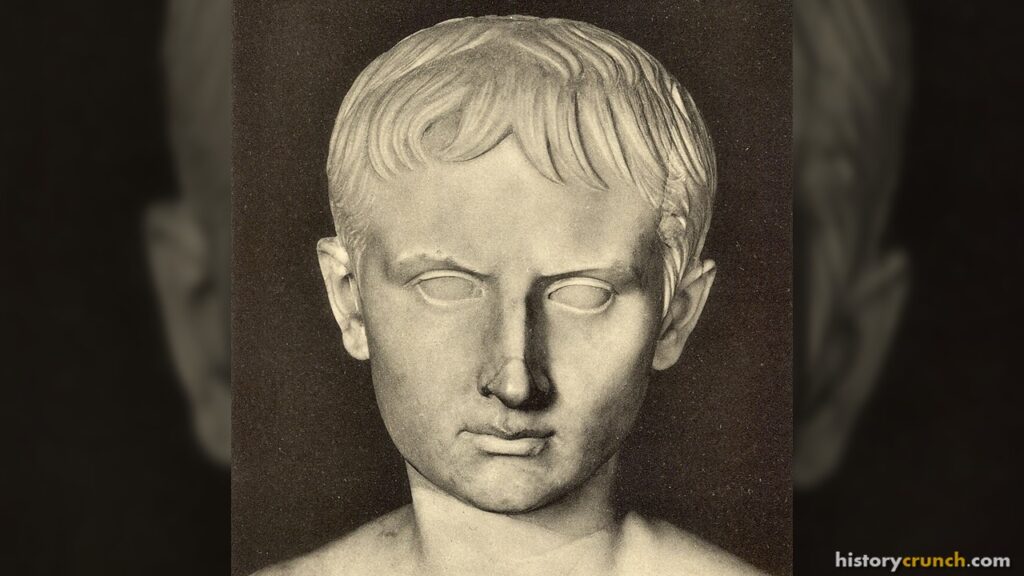
Augustus was born as Gaius Octavius Thurnius in Velletri, which was about 20 miles outside of Rome in 63 BCE. It should be noted that he had a history of different names. For instance, when Octavius was adopted by Julius Caesar in 44 BCE, who was his great-uncle, his name was changed to Octavian. This is important, because Julius Caesar was the famous Roman general. In fact, when Caesar was assassinated in 44 BCE, he named Octavian his adopted son and heir in his will.
Then, in 26 BCE Octavian was renamed Augustus by the Roman Senate and it is this name that remained for the rest of his life. Augustus’ father was a governor and senator in the Roman Republic, and his mother, Atai, was Caesar’s niece. When young, Augustus, then called Octavius, was looked after by his grandmother, who was also Caesar’s sister. When Augustus was 16, he started to wear a toga, which was the sign of manhood in Ancient Rome, and took on some responsibilities which included joining the military and fighting alongside Caesar.
AUGUSTUS – RISE TO POWER
Then, in 43 BC, Augustus established a power sharing agreement with Mark Antony and Marcus Lepidus called the Second Triumvirate. It was a political alliance to defeat Julius Caesar’s assassins, Brutus and Cassius, who had fled to Greece. However, after their victory at the Battle of Philippi in 42 BCE, tensions grew among the three which led to a period of tensions and conflict.
For instance, over the next decade, Augustus and Mark Antony became rivals for control of Rome. Antony allied himself with Cleopatra, the famous queen of Egypt. Further, Antony and Cleopatra actually began a romantic affair. However, in 31 BCE, Augustus’s forces defeated Antony and Cleopatra at the Battle of Actium, which was one of the most decisive battles in history. After their defeat, both Antony and Cleopatra committed suicide, which allowed Augustus to rise as the sole authority of Rome.
AUGUSTUS – EMPEROR
Augustus began his reign as the first Emperor of Rome in 27 BCE and continued for over 40 years. Augustus established a new political system known as the Principate, which balanced traditional republican institutions with imperial authority. The Senate still existed, but real power rested with Augustus, who controlled the army, appointed officials, and oversaw foreign policy. His reign marked the end of nearly a century of political chaos and civil war. As such, his reign is viewed as a relatively peaceful time in the history of Ancient Rome.
In fact, under the leadership of Augustus, Rome entered the Pax Romana, which was a two century long period of relative peace. During this time, trade expanded, the economy grew and arts and literature thrived. Furthermore, Augustus doubled the size of the Roman Empire by adding territories in Asia and Europe, and also by developing alliances with other territories. As a result, he effectively ruled from modern-day India to Britain. Throughout Augustus’ reign he travelled around the world in order to build power, begin censuses and taxation schemes, and also to develop and expand the network of Roman roads across the vast empire. The Roman Empire continued for over 1500 years after the reign of Augustus.
AUGUSTUS – LATER LIFE AND DEATH
Despite his absolute control over Rome, Augustus ruled with caution. For instance, he maintained an image of cooperation with the Senate. However, behind this image, he exercised absolute control over the empire, using propaganda, public works, and other methods to strengthen his rule.
In all, Augustus ruled for over 40 years, from 27 BCE until his death on August 19th, 14 CE. In his final years, he carefully planned for succession, ensuring that his stepson, Tiberius, would inherit his power peacefully. Upon his death, the Senate officially declared Augustus a god, beginning a tradition of emperor worship that lasted throughout the rest of Roman history.
AUGUSTUS – SIGNIFICANCE
As as been shown in this article, Augustus was a highly significant person and leader in the time of Ancient Rome. Not only was he Rome’s first emperor but he was also an important figure in reshaping the culture and society of Tome. For example, his reign transformed Rome from a republic that was engulfed by civil war into a unified empire that endured for centuries. His political and administrative reforms created stability, while his cultural and architectural achievements symbolized Rome’s success and prosperity at the time. Furthermore, some historians have argued that Augustus’s model of leadership influenced later emperors, European monarchs, and even modern political systems.