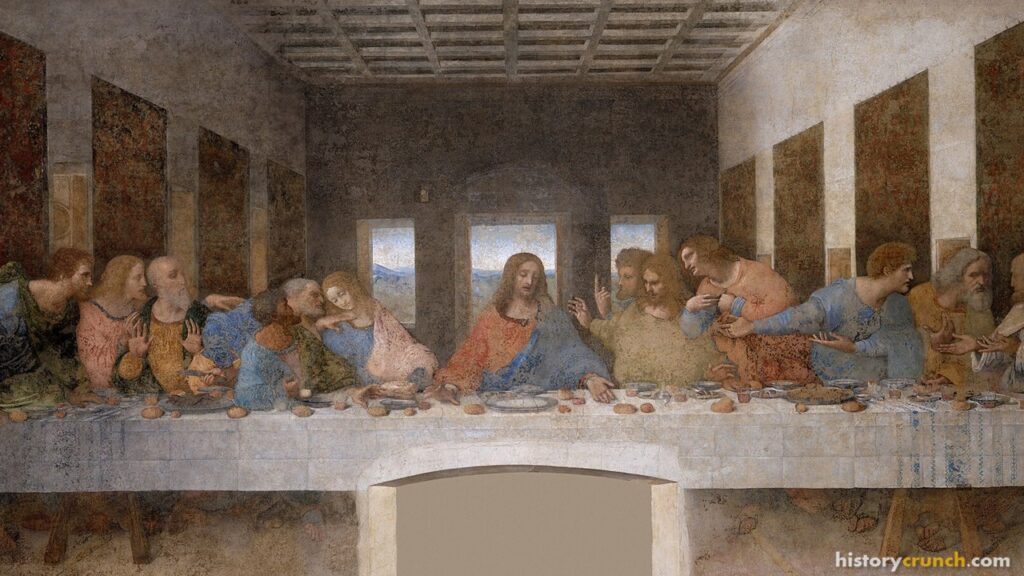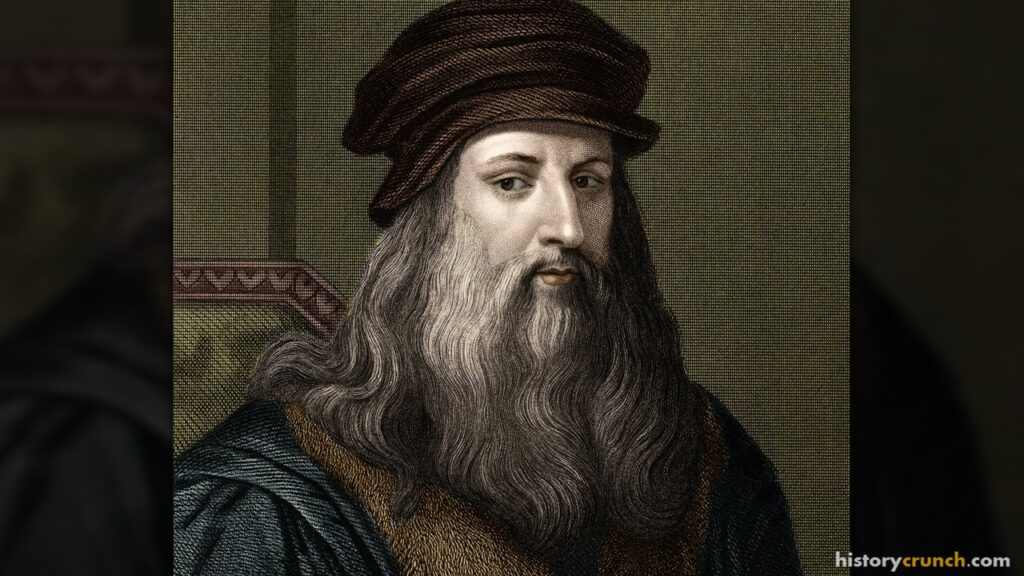
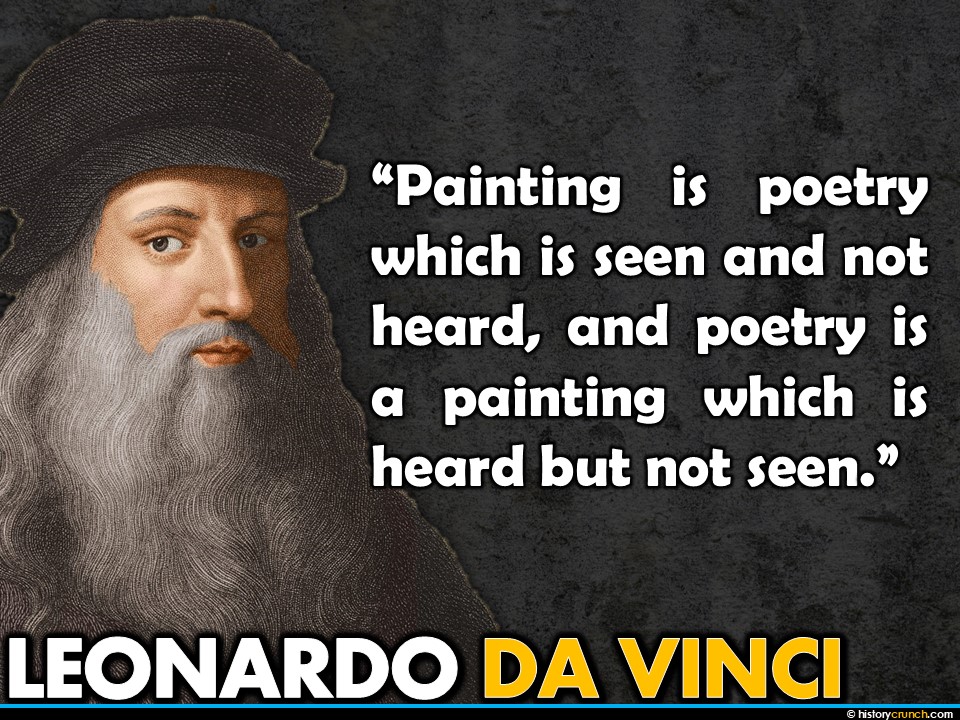
Leonardo da Vinci is often considered to be a true Renaissance genius. He excelled as a painter, inventor, scientist, and engineer. For instance, he created iconic artworks like ‘The Last Supper’ and ‘Mona Lisa‘, which have come to represent the amazing achievements of Renaissance art.
LEONARDO DA VINCI (RENAISSANCE ARTIST) – EARLY LIFE
Leonardo da Vinci was born on April 15th, 1452 in the hills of Tuscany, near to the village of Anchiano in the Republic of Florence, which is now in modern-day Italy. He is remembered today as an incredibly important figure from the timeframe of the Renaissance in Europe. For instance, he was influential in many different fields of study, including: painting, drawing, inventions, biology, architecture, science, history, engineering, humanism and more. Because of his many different talents, historians often refer to him as the quintessential ‘Renaissance Man’. This refers to his impact on the Renaissance in many different fields of study.
Da Vinci’s parents were not married when he was born, and this was highly frowned upon at the time. His father was the Florentine notary Ser Piero and his mother was a peasant woman named Caterina. Da Vinci’s mother was poor and alone, so he was taken to be raised by his father and stepmother. As a child, Leonardo did not get much in the way of a formal education beyond reading, writing and math. However, he was naturally creative, and his artistic talents were evident from a young age.
When Leonardo was just fourteen years old he moved to Florence, Italy where he started working as an apprentice with Andrea del Verrocchio, a respected artist of the time. Under Verrocchio’s tutorship, da Vinci learned many skills that he would later develop and use in his own artworks. He stayed with Verrocchio until 1478 when da Vinci became an independent master.
LEONARDO DA VINCI (RENAISSANCE ARTIST) – ARTIST
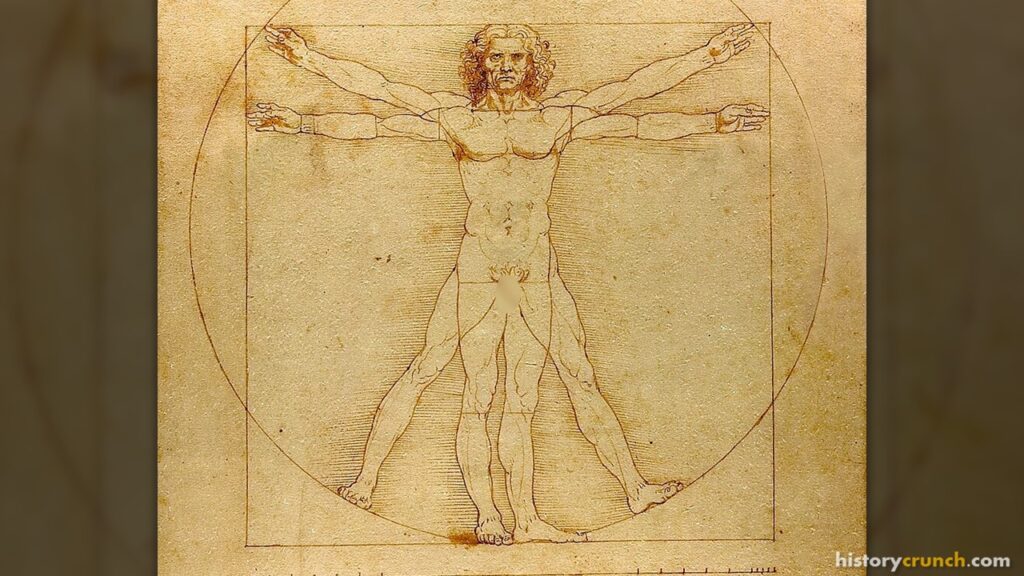
Da Vinci stayed with Verrocchio for about five years after completing his apprenticeship. He then moved to Milan where he worked for the Sforza family, who were ruling at that time. During his employment, da Vinci worked as an engineer, architect, sculptor and artist. This varied career allowed him to learn more skills, and time to develop interests in a variety of fields which included anatomy, botany, geology, zoology, hydraulics, aeronautics and physics. Da Vinci’s ‘The Vitruvian Man’ shows how he linked his love of science with art. During his time in Milan, he painted a large mural on the wall of a monastery. The mural was titled ‘The Last Supper’, and it captured the moment when Jesus informs his disciples that one of them will betray him. This mural is one of the most famous and well-known works in existence.
Da Vinci moved to Florence when Milan was invaded in 1499. During his time in Florence he focused his efforts on paintings. However the only work that remains is the ‘Mona Lisa’, with the famous half-smile that displays da Vinci’s Sfumato technique. The ‘Mona Lisa’ is particularly intriguing due to the mysterious subject. Although many think that the woman is an unknown female, some historians argue that she is ‘Lisa del Giocondo’ the wife of a Florentine silk merchant. However, others speculate that the subject was actually da Vinci’s male apprentice, Salai, who was dressed in women’s clothing. Whoever the subject was, they never received the painting, as da Vinci never parted with it and instead tirelessly worked on it, striving for perfection. He worked on the piece right up to his death and although he never ‘finished’ the ‘Mona Lisa’, da Vinci, gave it to Salai, his apprentice. The ‘Mona Lisa’ now hangs in the Louvre Museum in Paris, France and is regarded as a national treasure.
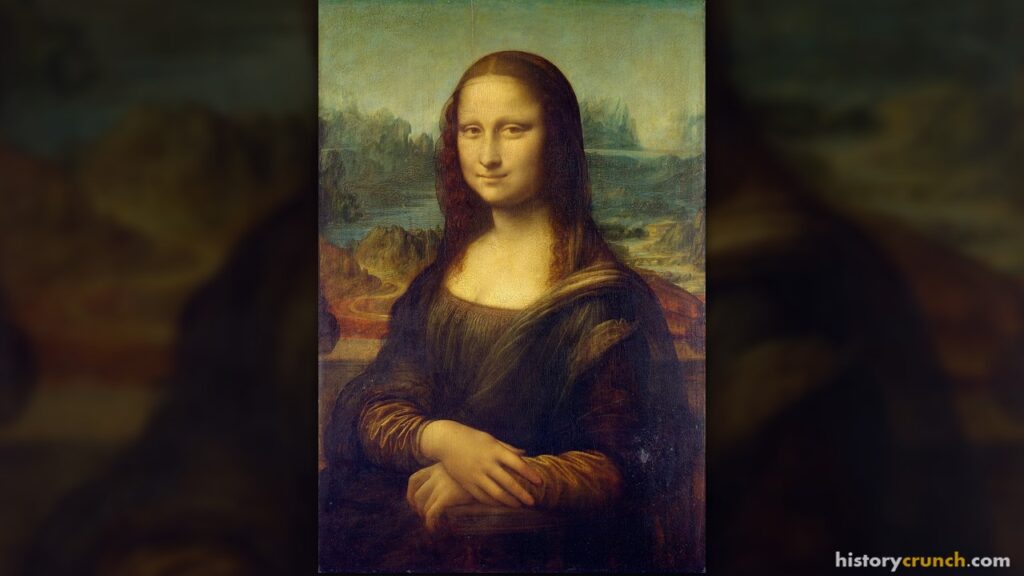
Da Vinci is best known as an artist, due to the fame of his works, and the influence that he and his work had on other artists during the Renaissance, and continue to influence artists today. Da Vinci’s painting techniques, which he pioneered, are of particular influence. The two techniques include; Chiaroscur which involved the use of a stark contrast between darkness and light, and allowed da Vinci to give his figures three-dimensionality. The second technique, Sfumato, used subtle gradations of colour instead of strict borders and this gave paintings a soft, smoky characteristic. This technique helped to give da Vinci’s Mona Lisa its mysterious aura.
LEONARDO DA VINCI (RENAISSANCE ARTIST) – INVENTOR
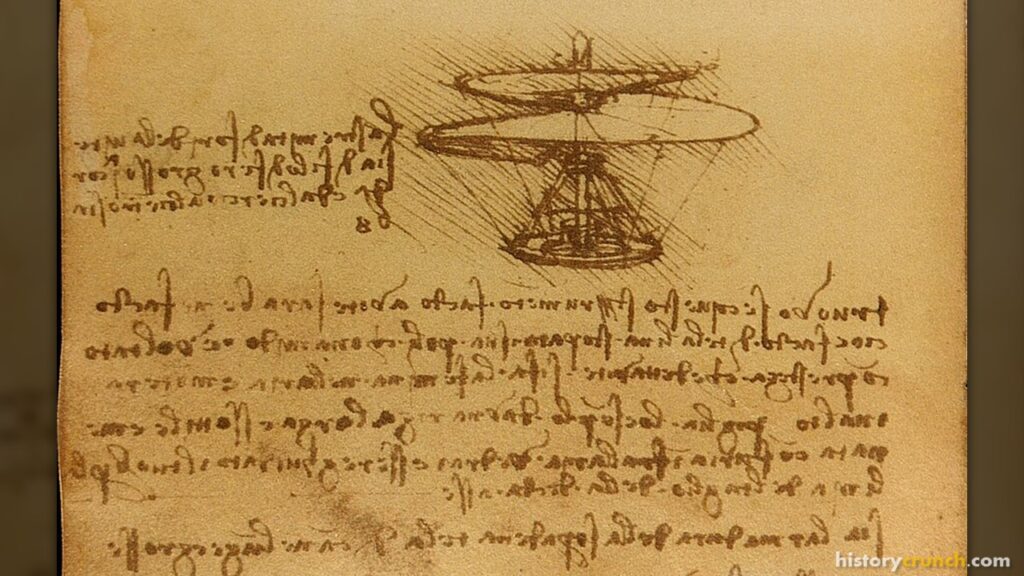
In addition to da Vinci’s legacy as an artist, he was also a talented inventor. Very few of his inventions were ever actually completed because the necessary engineering did not exist at the time of the Renaissance. Instead, his journals contained detailed drawings of his inventions. As such, da Vinci’s inventions were forward thinking and almost prophetic. For example, his ‘Flying Machine’ invention, which is the most well-known of his inventions, was based on the physiology of a bat, but it resembled a helicopter and a bicycle, neither of which had been invented at the time. Other prominent inventions included a vehicle that resembled a tank, and an adding machine.
His journals were important works of art in their own right. As stated above, he drew out and explained inventions, but he also cataloged detailed accounts of human anatomy. While he never published his journals, today they offer a deep insight into what studies he was undertaking and what discoveries he had made. Curiously, his journals were written from right to left instead of the usual left to right. This meant that it could be read most clearly when viewed in a mirror. Some have suggested he did this for secrecy and to protect his ideas, but not all historians agree on this conclusion.
LEONARDO DA VINCI (RENAISSANCE ARTIST) – DEATH
Da Vinci died on May 2nd, 1519 aged 67. As a result of his multitude of talents and interests, he is remembered as being the epitome of a ‘Renaissance Man’. A ‘Renaissance Man’ was someone who excelled in multiple fields of study, especially during the time of the Renaissance. As such, historians consider Leonardo da Vinci to be an example of a ‘Renaissance Man’ due to his skill as a painter, scientist, inventor, and writer.