The Spanish conquest of the Aztec Empire is not only one of the most significant events in the early exploration and conquest of the Americas, but also one of the most significant events in world history. In general, the conquest displayed the impact of European exploration on the New World and the outcomes of the Age of Exploration. At the time of contact both the Aztec and the Spanish were powerful and wealthy societies.

Before the Arrival of the Spanish in the Aztec Empire
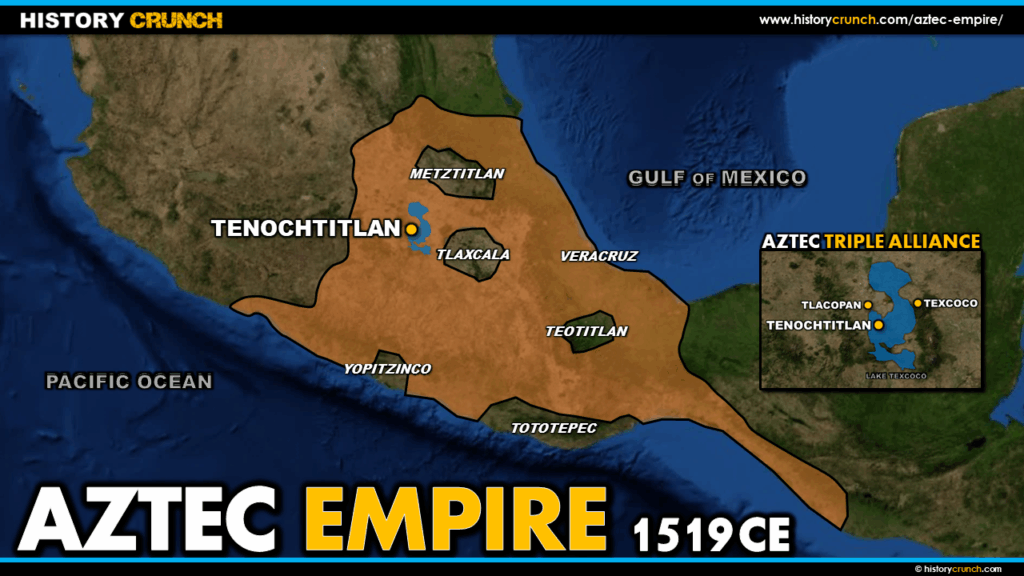
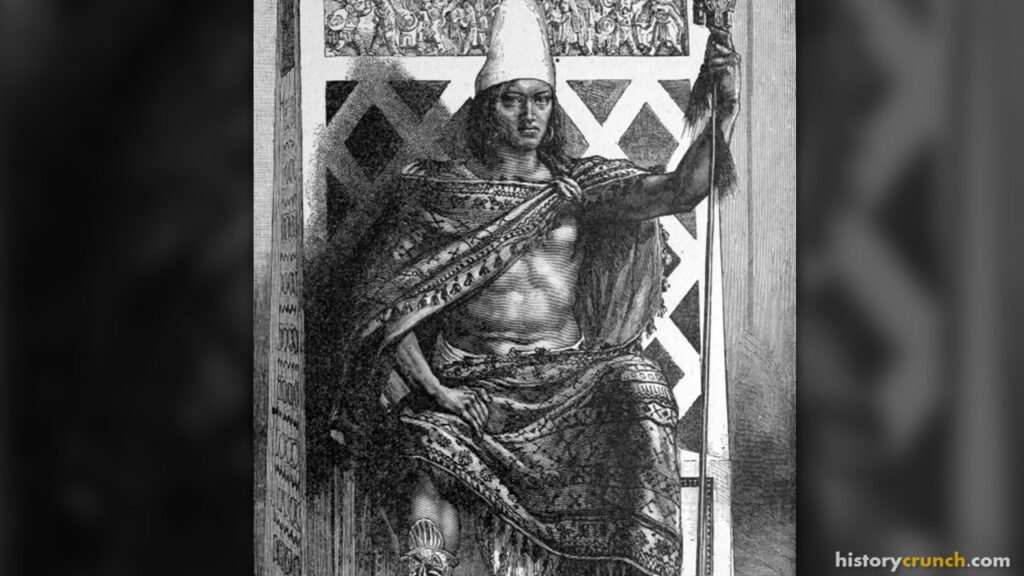
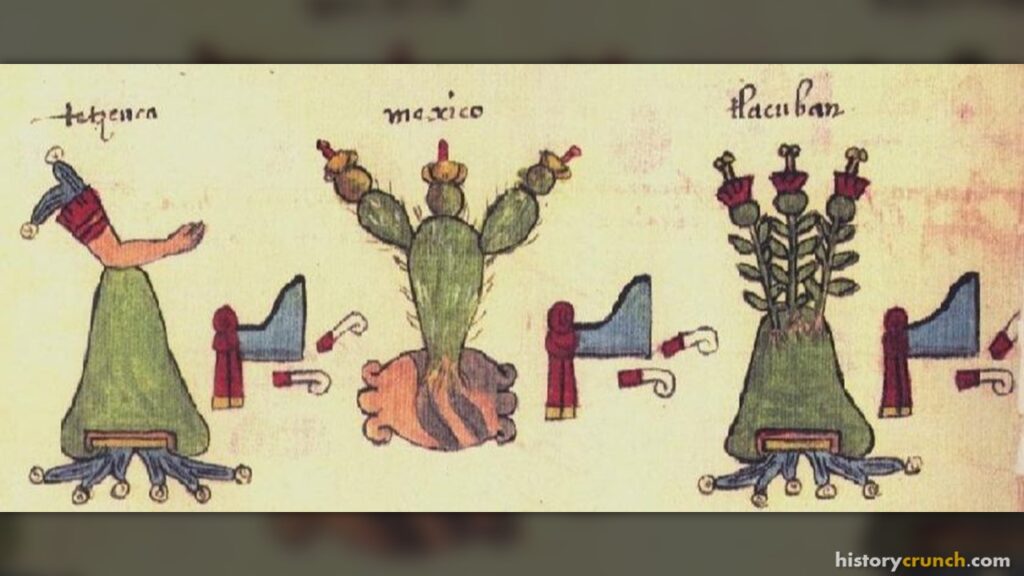
Both the Aztec and Spanish were building their own empires, yet were unknown to each other. As such, many view the conquest as the clash of two societies and ways of life. The Aztec Empire was a powerful collection of city-states in what is today modern-day Mexico. It began as an alliance of three city-states, known as the Aztec Triple Alliance, which included: Tenochtitlan, Texcoco, and Tlacopan. These city-states ruled the area in and around the Mexico Valley from 1428 until they were defeated by the Spanish in 1521 as part of the Spanish conquest. During the period of the Spanish conquest of the Aztec Empire, it was ruled by Moctezuma II.
Moctezuma II became the ninth tlatoani and ruler of Tenochtitlan in 1502. When he came to power he continued the campaigns of conquest and expanded the Aztec Empire even further than it had already in the previous decades. While he oversaw the Aztec conquest of several different Mesoamerican city-states, he still had bitter rivals in the Tlaxcala and Huexotzinco. During this time the Aztec continued to carry out the Flower Wars against these two powerful city-states. As well, he built temples and public buildings in Tenochtitlan and expanded his authority over the people. However, Moctezuma II is most famous for being the Aztec ruler during the Spanish conquests of Mexico. Historians have reported that Moctezuma II was first made aware of the Spanish’s arrival in 1518 when Spanish conquistadorsSpanish soldiers and explorers who traveled to the Americas to conquer lands and peoples for Spain. landed at the edge of Aztec territory along the coast of the Gulf of Mexico. In fact, this was the expedition of Juan de Grijalva who was a Spanish conquistador and one of the first European explorers to arrive in Mexico. Unsure of who these people were or what they wanted, Moctezuma II ordered his people to keep him informed of their movements and actions. In 1519, more Spanish conquistadors arrived, but this time they were led by Hernan Cortés.
In the years before the arrival of the Spanish into the territory of the Aztec Empire, the Spanish had been exploring the waters of the Gulf of Mexico and the Caribbean during the European ‘Age of Exploration’. Spain’s monarchs, Isabella and Ferdinand, were expanding Spain’s influence and prestige by funding expeditions by Spanish explorers. Many of these explorers were driven by a desire to capture as much gold and other precious metals as possible. For example, Spain had already played an important role in the early part of the Age of Exploration with the voyages of Christopher Columbus.
 FactsthatCrunch
Tenochtitlan held the top position in the Triple Alliance as the military and political capital, while Texcoco contributed legal and intellectual leadership. Both city-states governed the Mexico Valley together from 1428 until the Spanish conquest ended the alliance in 1521.
Hernan Cortes and the Conquest of the Aztec Empire
Hernan Cortés was the Spanish conquistador that led the expedition to explore and conquer the Aztec Empire. At the age of 19, he travelled to the Spanish controlled colonies in the Caribbean. More specifically, he arrived at the island of Hispaniola which is the modern-day Dominican Republic and Haiti. After several years in the colonies, Cortés convinced Diego Velasquez, another conquistador and then governor of Cuba, to let him lead an expedition to Mexico. Cortés set sail soon after with approximately 11 ships and just over 500 men.
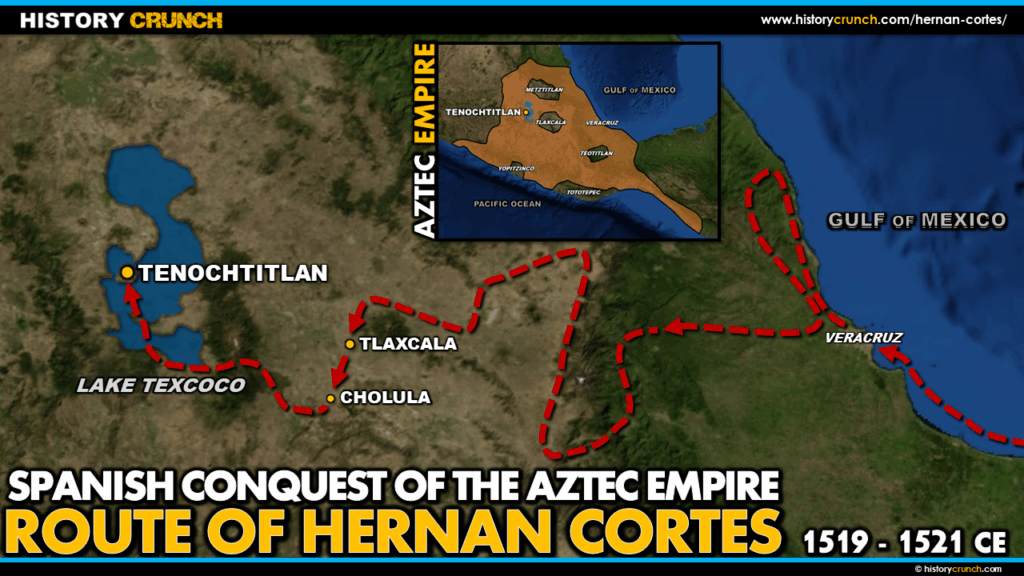
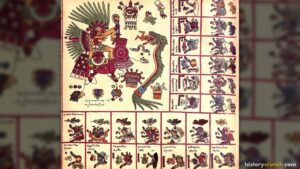
As stated previously, the Spanish returned to Mexico in 1519. Moctezuma II was informed of their arrival, which was in the area of the Yucatan Peninsula, to the east of the main territory of the Aztec Empire. Quickly, Hernan Cortés and his men encountered other Mesoamerican peoples living in the area. For example, they came into contact with the Tlaxcala, which was a powerful city-state to the east of Tenochtitlan. Tlaxcala were traditional enemies of the Aztec as the two had fought each other in different battles including the Flower Wars. As such, the Tlaxcala used the opportunity to their advantage and allied themselves with the Spanish against Tenochtitlan. This is important, because Cortés used the Tlaxcala and other enemies of the Aztec in his later conquest of Tenochtitlan. In response, Moctezuma II had gifts sent to Cortés in an attempt to show his prestige and the power of the Aztec over their rivals. Moctezuma II was also unsure of how to respond to Cortés and the other Spanish conquistadors because their arrival into the Aztec territory coincided with an important Aztec prophecy in relation to the Mesoamerican god Quetzalcoatl. The prophecy spoke of Quetzalcoatl’s arrival at the same time as the Spanish, and Quetzalcoatl was said to have white skin. Unsure of whether or not Cortés was the god, Moctezuma II responded by greeting him with honor and giving him many gifts. However, many historians today believe this prophecy story was written after the conquest, and that Moctezuma II never truly thought Cortés was a god. Giving rich gifts was also the normal way an Aztec ruler showed his power to important visitors.
 FactsthatCrunch
Aztec Omens and the Spanish Conquest of the Aztec Empire
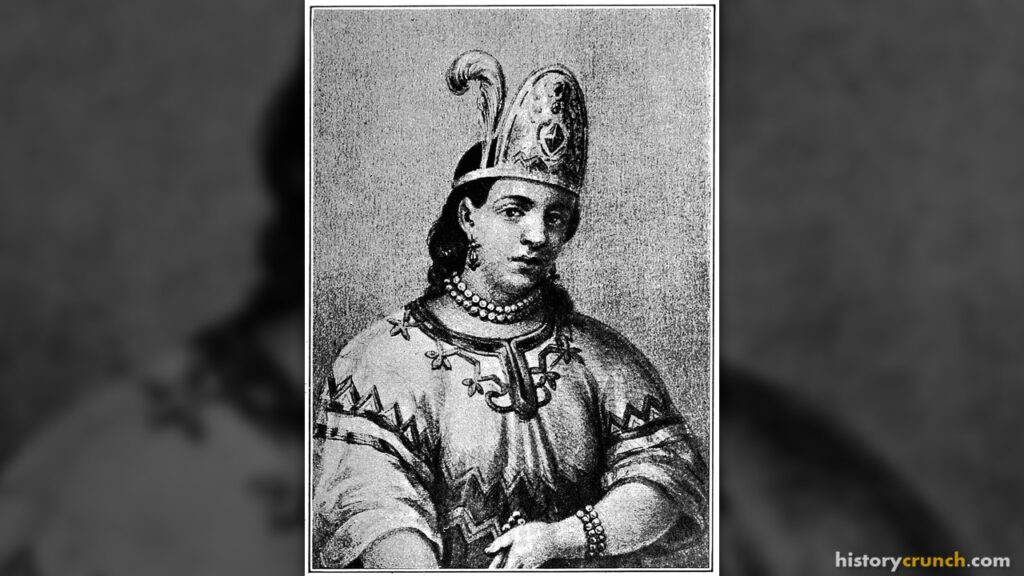
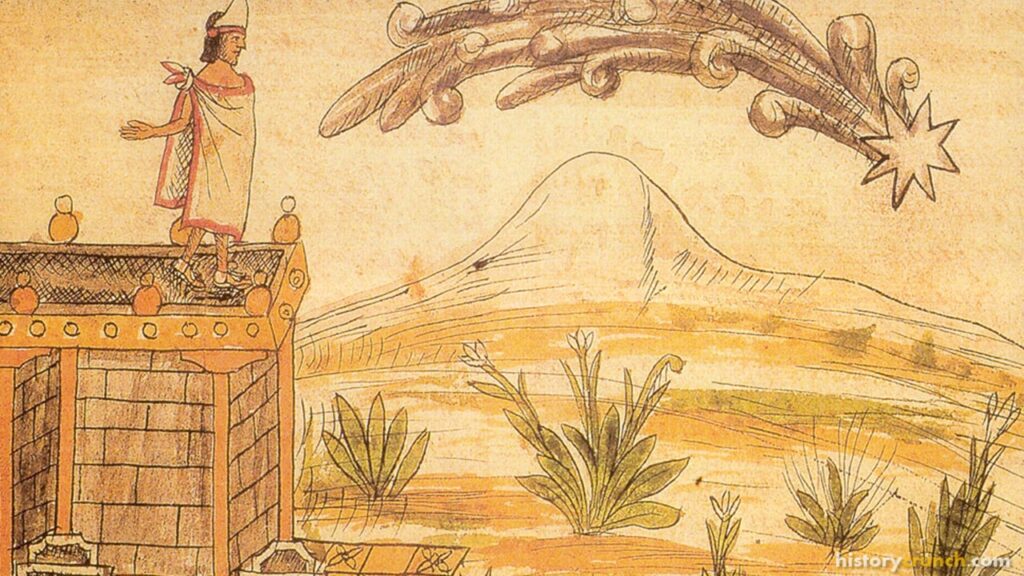
Some historians believe that Moctezuma II was unsure about Cortés due to a series of eight omens that occurred in the years before the arrival of the Spanish. OmensEvents believed to signal or predict important future occurrences. are events which are said to have significance on future events or occurrences. For instance, one of the roles of high priests in the Aztec religion was to interpret significant events to predict their impact on the huey tlatoaniThe title given to a ruler or leader of an Aztec city-state. and the Aztec Empire.
In regards to these omens, Moctezuma II (the huey tlatoani of the Aztec when the Spanish arrived) was visited in 1510 by Nezahualpilli, the tlatoani of the Mesoamerican city-state of Texcoco. Nezahualpilli warned Moctezuma II of the downfall of the Aztec Empire and told Moctezuma II to be on guard for bad omens. As the account goes, there were said to be eight omens in total that foretold the arrival of the Spanish and the collapse of the Aztec Empire.
 FactsthatCrunch
The best-known list of the eight omens comes from the Florentine Codex, which was written down decades after the conquest by the Spanish friar Bernardino de Sahagun and Nahua scholars.
Because the omens were recorded after Tenochtitlan fell, many historians think the stories may have been shaped by people looking back and trying to explain how such a powerful empire could be defeated.
How Did the Aztec Respond to Meeting the Spanish?
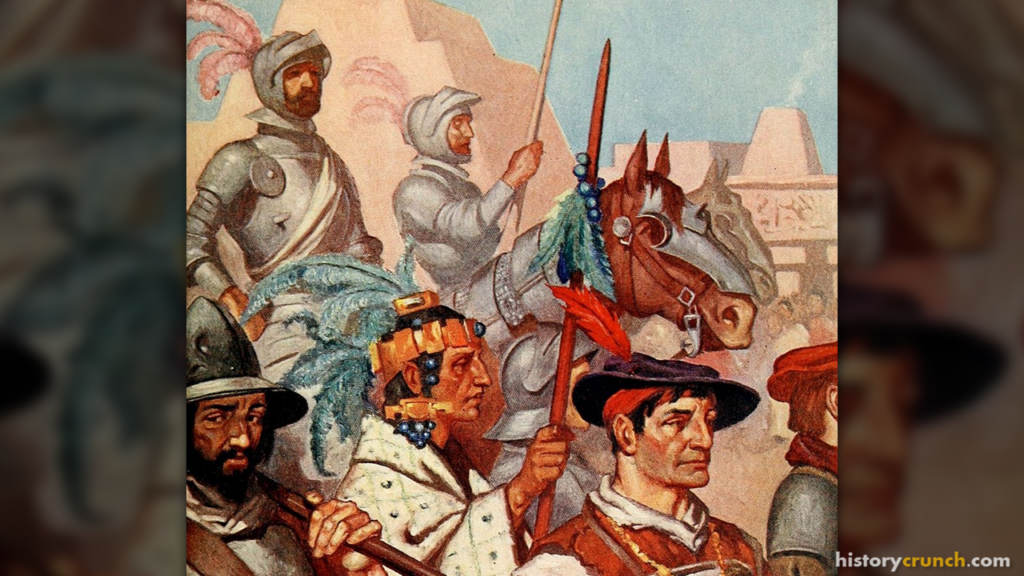
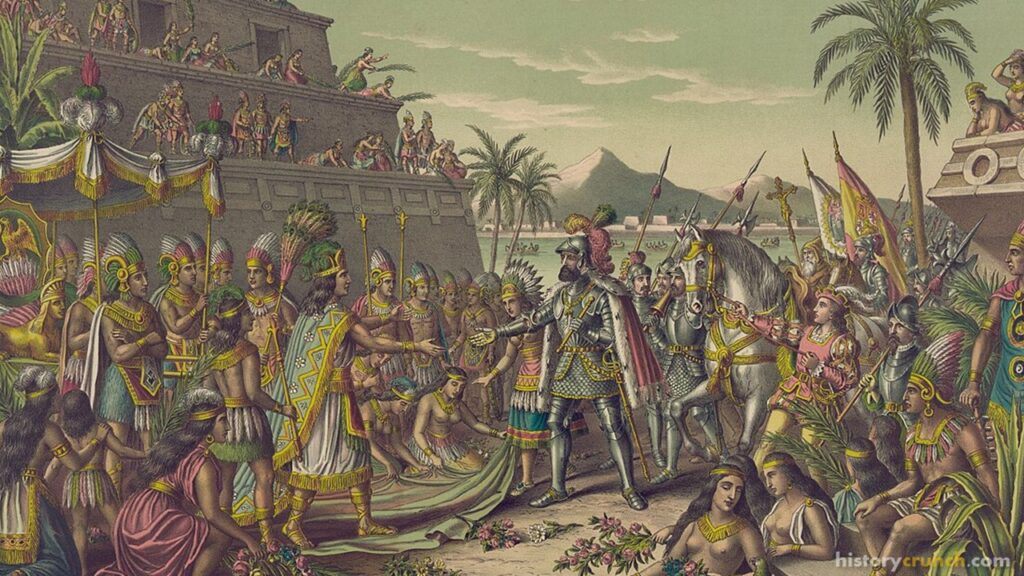
Regardless, the Aztecs were amazed by the Spanish. First, the Aztec had never seen a person with white skin before. Secondly, the armor and weapons that the Spanish used would have been mostly unimaginable to the Aztecs. For example, the Aztec would not have known what firearms were, or understood how they worked. When the Spanish conquistadors first fired their weapons, the blast and smoke shocked and amazed the Aztec people. As well, the metal armor of the Spanish fascinated the Aztec because they did not have any similar form of protection. Third, the Aztec people had never seen a horse before. Horses are not native animals to the Americas, and the Aztec people would not have known what the animal was. The animal itself likely shocked the Aztec people, but the fact that the Spanish Conquistadors rode on them would have astounded them even more. The Aztecs had no similar animals and certainly none that they would ride. These three factors combined, along with others, to show the technological divide that existed between the Spanish and the Aztecs. As such, the Aztec and their leader Moctezuma II were shocked and unprepared for the arrival of the Spanish conquistadors.
 FactsthatCrunch
What did the Aztec encounter for the first time when the Spanish arrived, and how did those unfamiliar things leave them unprepared?
The Arrival of the Spanish in the Aztec Empire
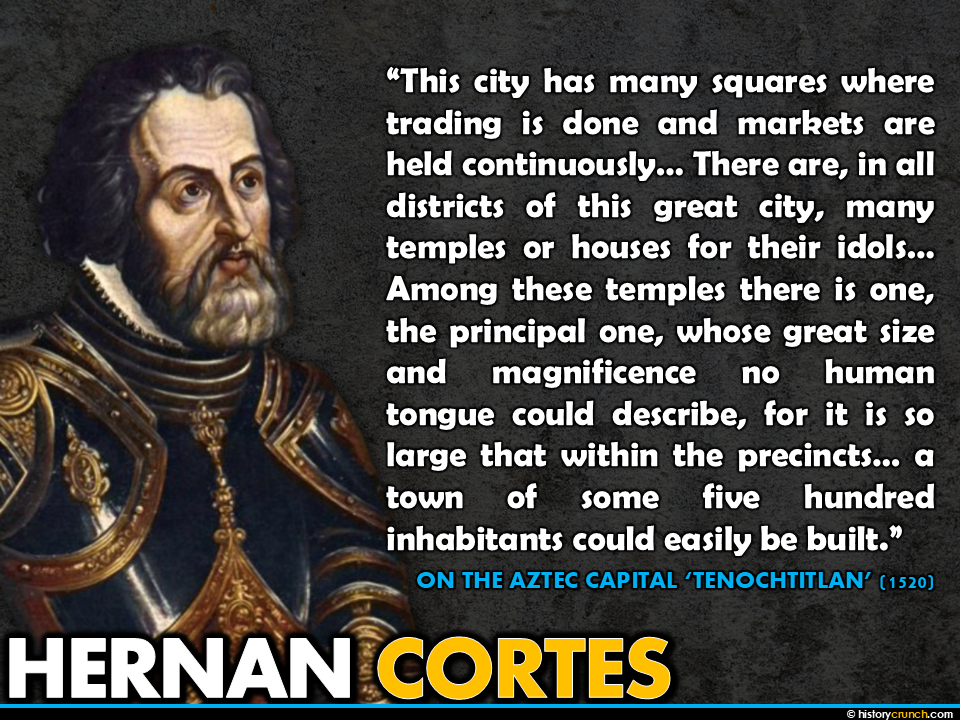
Cortés and the Spanish arrived at the city of Tenochtitlan in November of 1519. While they were accompanied by their new allies, the Tlaxcala, only Cortés and the Spanish were invited into the city. Still believing that Cortés might be Quetzalcoatl, Moctezuma II gave the Spanish many gifts and allowed them to stay as guests in the Aztec capital. During the next week or so the Spanish toured the city and saw the many Aztec temples, markets and palaces. However, soon after, Cortés learned of the death of several of his men from an Aztec attack on the Gulf Coast. The Aztec had attacked one of their rivals, and since the Spanish had allied with many of the Aztecs enemies, they were caught up in the battle. At this point Cortés became fearful that Moctezuma II may order his death and in response he took the Aztec leader captive in the palace that Moctezuma II had prepared for the Spanish in Tenochtitlan. Capturing the leader of an indigenous tribe or group was a very common practice by the Spanish throughout their conquests of the Caribbean and Central America. As such, Cortés was simply following a commonly held practice by the Spanish during the time period. The Spanish remained in Tenochtitlan for the next several months, during which time they controlled the city through Moctezuma II. This is because Moctezuma II continued to rule over the Aztec Empire and city of Tenochtitlan from his imprisonment in the Aztec palace. The Aztec nobility and religious leaders became very angry during this time with the Spanish. They believed that Moctezuma II was weak and had let the Spanish take over the city. For example, during this time, Cortés replaced Aztec religious symbols in the palace with Christian symbols and demanded that the Aztec deliver as much gold as possible.
 FactsthatCrunch
It is November 1519, and you are Hernan Cortes, the Spanish conquistador leading the conquest of the Aztec Empire. You and your men have been welcomed as guests inside Tenochtitlan, the Aztec capital, by the ruler Moctezuma II. Then word reaches you that Aztec warriors on the Gulf Coast have attacked and killed several of your men, and you begin to fear that Moctezuma II may order your death next. You must decide what to do with the most powerful ruler in the region, knowing that a wrong move could end your entire expedition.
Massacre of the Aztec in the Great Temple of Tenochtitlan
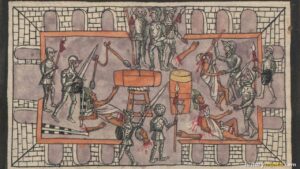
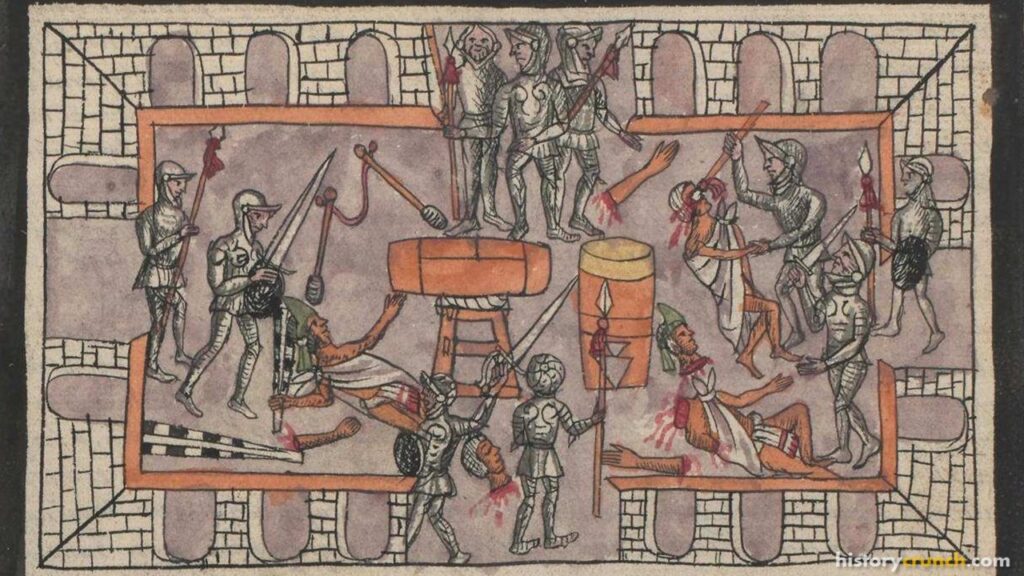
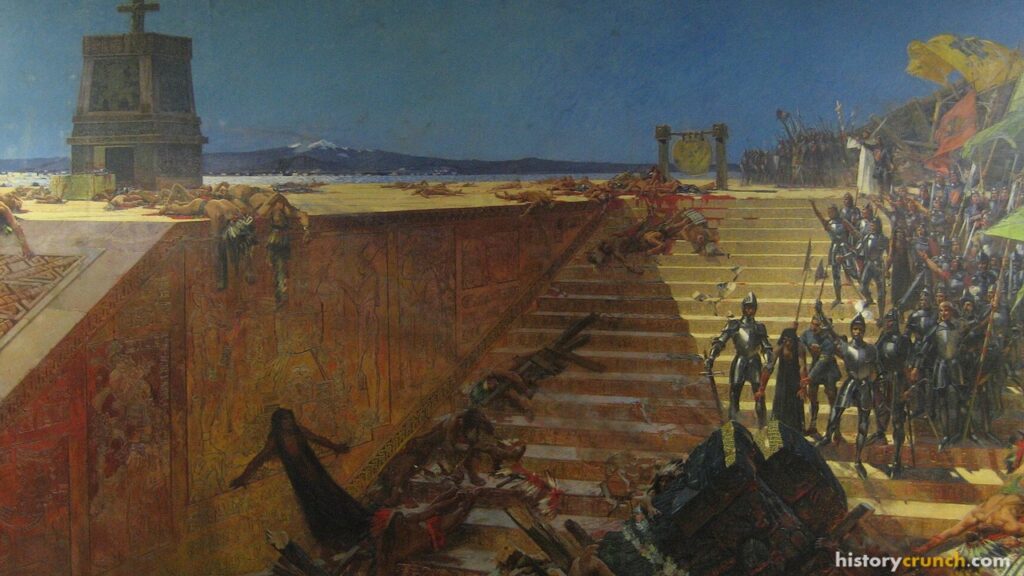
During the months after Moctezuma II was imprisoned in Tenochtitlan, Cortés was forced to leave to handle a different situation. Cortés had been made aware that Diego Velasquez, the Spanish governor of Cuba, had ordered his arrest for disobeying orders in regards to his expedition to Mexico. As such, Cortés left that spring to stop Pánfilo de Narváez and other Spanish men that were sent to arrest him. While he was gone, Pedro de Alvarado was left in charge of the Spanish’s mission in Tenochtitlan. Alvarado was a Spanish conquistador and is famous for participating in expeditions throughout the Caribbean and Central America, including places such as: Cuba, Mexico, Guatemala, Honduras and El Salvador. Several historians have noted the brutality he displayed in these conquests, particularly against the indigenous people of the different regions. Anyways, soon after Cortés left, Moctezuma II requested that his people be allowed to celebrate the festival of Toxcatl. The festival occurred every May and was carried out to honor the Aztec god of Tezcatlipoca. This god was important in Aztec culture and religion and was related to many different concepts, including: the night sky, hurricanes, the earth, obsidian, jaguars, and war. Alvarado agreed, but soon after the Aztec began the celebration he ordered and carried out an attack against the Aztec men, women and children that were participating. This event is referred to as the ‘Massacre of Aztec in the Great Temple of Tenochtitlan’.
Essentially, the Spanish conquistadors attacked the Aztec and killed most of the people, who were unarmed and did not actively fight back. There are differing accounts of why Alvarado carried out the attack, such as: he attacked the Aztec after seeing the gold religious items they brought to the festival or he attacked in an attempt to stop a human sacrifice that was part of the ceremony. Regardless, in both accounts, Alvarado massacred unarmed Aztecs. The massacre led to an increase in hostilities between the Spanish and the Aztec and caused the Spanish to hide in the palace that Moctezuma II provided them with following retaliation by the Aztec warriors. Cortés returned from his victory over Pánfilo de Narváez to find Tenochtitlan in full upheaval and revolt. The Spanish were essentially held captive by the Aztec nobility and warriors in Tenochtitlan following the massacre.
 FactsthatCrunch
Death of Moctezuma II
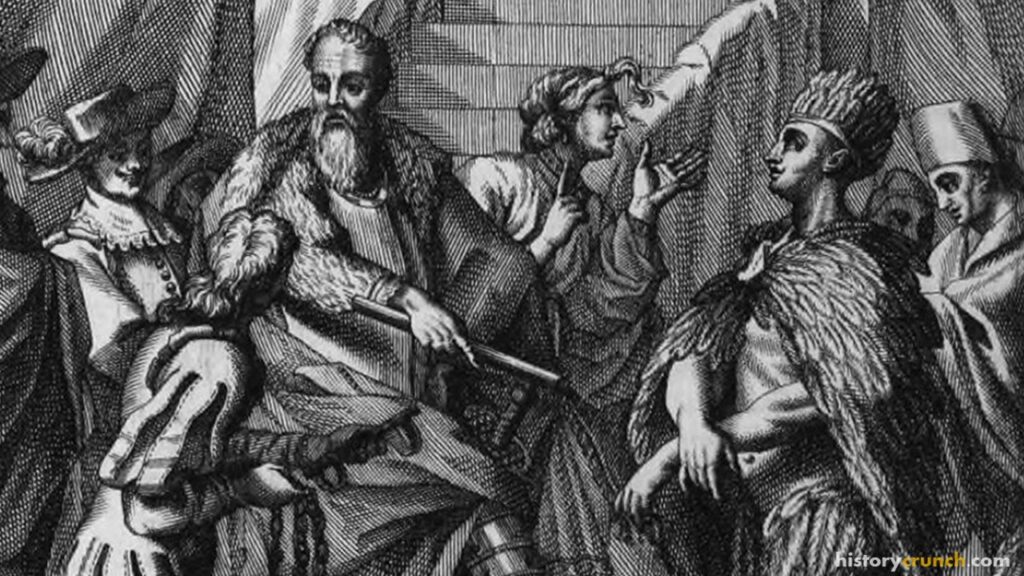
The next major event in the Spanish conquest of the Aztec was the death of Moctezuma II. Sometime during the conflict between the Spanish and the Aztecs, Moctezuma II was killed, however there are different accounts of the event and historians are unsure of the truth. First, Spanish accounts of the death of Moctezuma II argue that he was killed by his own people while trying to get them to retreat from fighting the Spanish. This version is based on the idea that the Aztec people became so disgusted with Moctezuma’s actions and support for the Spanish that they killed him. An account by Cortés suggests that Moctezuma II was stabbed to death by his own people, while another account suggests that he was stoned to death. Supposedly, the Spanish had forced him to speak to his people in an attempt to allow the Spanish to go free. The second version of his death, which comes from Aztec accounts of the event, is that Moctezuma II was killed by the Spanish as they fled the city following the Aztec retaliation for the Spanish massacre of Aztec people in the Great Temple of Tenochtitlan as part of a festival. In this version, Moctezuma’s body was said to have been thrown from the palace as the Spanish fled. The Aztec people cremated his body soon after. Historians are unsure of which version is true based on the truthfulness of the sources of information and the difficulty of assessing an event so far in the past. Regardless, Moctezuma II died during this time and his death was one of several factors that led to the eventual collapse of the Aztec Empire during the Spanish conquest. Cuitláhuac, the younger brother of Moctezuma II, was chosen as the next tlatoani to rule over Tenochtitlan.
 FactsthatCrunch
In his written letters to the Spanish king, Cortes stated that Moctezuma II died after being struck by stones thrown by his own people while speaking to them from a palace balcony in Tenochtitlan. Cortes reported that the Aztec crowd, angry at Moctezuma for cooperating with the Spanish, hurled rocks and other objects at him, and that he died from those wounds. A separate Spanish account suggests he was stabbed to death by his own people. Indigenous accounts gave a completely different version: that the Spanish themselves killed Moctezuma before fleeing the city, and that his body was thrown from the palace as they left. The Aztec people cremated his body soon after.
Noche Triste and the Spanish Conquest of the Aztec Empire
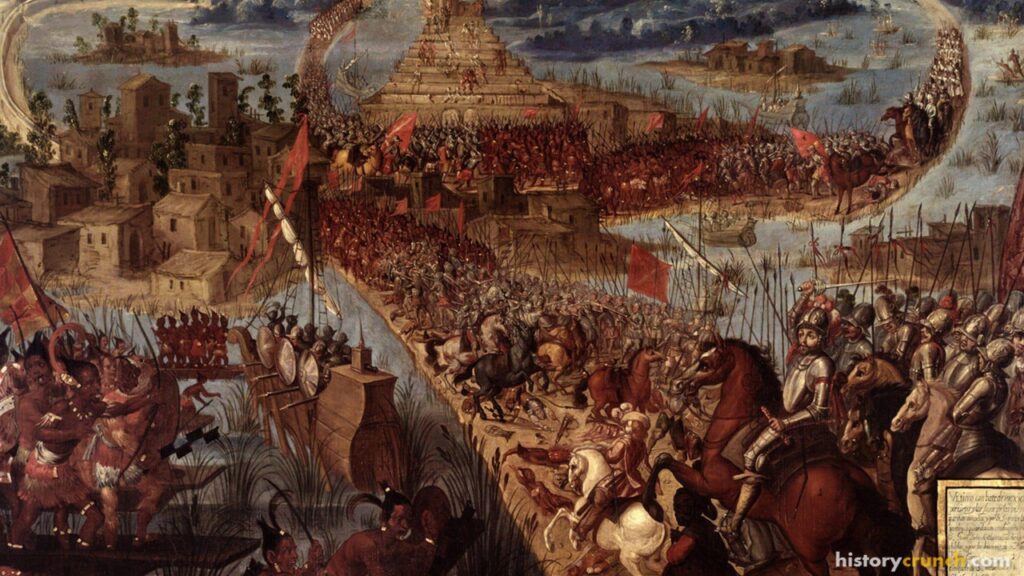
Following the death of Moctezuma II is the event that the Spanish referred to as ‘Noche Triste’. Trapped inside of Tenochtitlan, the Spanish and their Tlaxcala allies devised a plan to escape in the night. The Aztec had destroyed sections of several of the causewaysRaised roads built across water or wetland that connected Tenochtitlan to the surrounding land. that led out of Tenochtitlan, so Cortés ordered his men to construct a sort-of portable bridge that could be used to aid the Spanish in crossing. Next he ordered his men to bring with them as much of the Aztec treasure and gold as possible. On the night of June 30th, 1520, Cortés and his men fled Tenochtitlan under the cover of dark and a storm. They attempted to flee the city by using the causeway to the west of the city, which led to Tlacopan. While trying to setup their portable bridge, they were noticed by the Aztec who notified others. Soon, hundreds of Aztec warriors attacked the Spanish and their Tlaxcala allies on the causeway. Some of those that survived spoke about how hundreds of Aztec canoes appeared alongside the bridge while other Aztec warriors attacked along the causeway. The Spanish and Tlaxcala fought as they struggled across the shallow lake. In fact, many of the Spanish soldiers apparently were so weighed down with Aztec treasure that they died from drowning and the inability to properly fight back. For his part, Cortés was able to flee the lake and made it to the western shore. He waited there as only a few of his fellow conquistadors and Tlaxcala allies made it out alive. Apparently, he is said to have cried realizing that the mission to escape was largely a failure. Historical accounts of the number of dead during Noche Triste differ, but in general the Spanish are said to have lost between 150 and 450 men while the Tlaxcala are estimated to have lost between 2,000 and 4,000. The Spanish referred to the escape and battle as ‘Noche Triste’ or ‘the night of sorrows’ in recognition of the large number of Spanish that died.
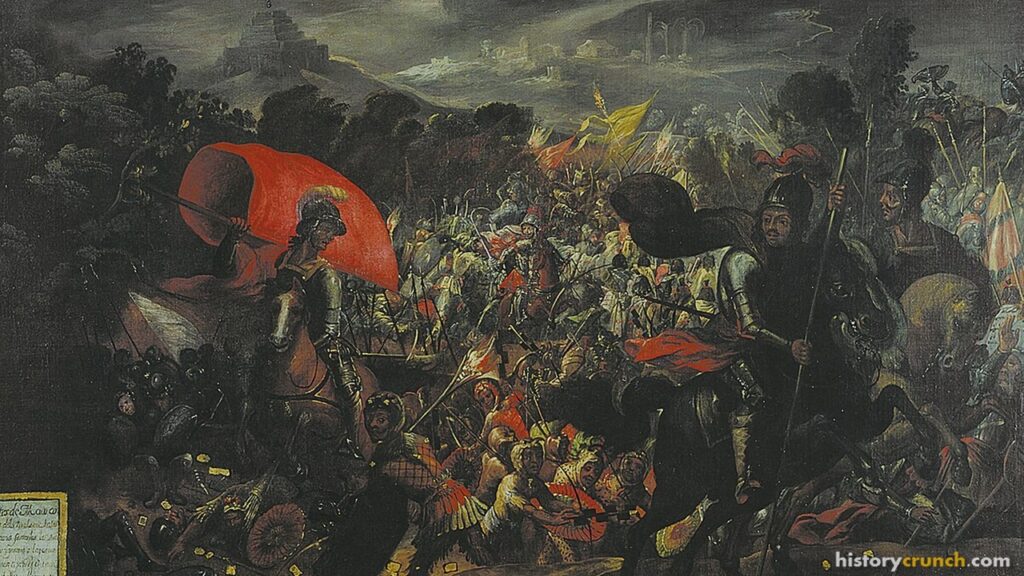
Following the events of Noche Triste, the Spanish fled to Tlaxcala, chased away by Aztec warriors. In Tlaxcala the Spanish recovered from their wounds, including Cortés and Alvarado who were both injured in the escape from Tenochtitlan. This time in Tlaxcala had impacts for both the Spanish and the Aztec, because the Spanish were able to resupply and received new Spanish troops while the Aztec suffered from the consequences of the spread of European diseases.
 FactsthatCrunch
Why did the Spanish call the night of June 30, 1520, La Noche Triste, or 'The Sad Night'?
The Impact of European Diseases on the Aztec
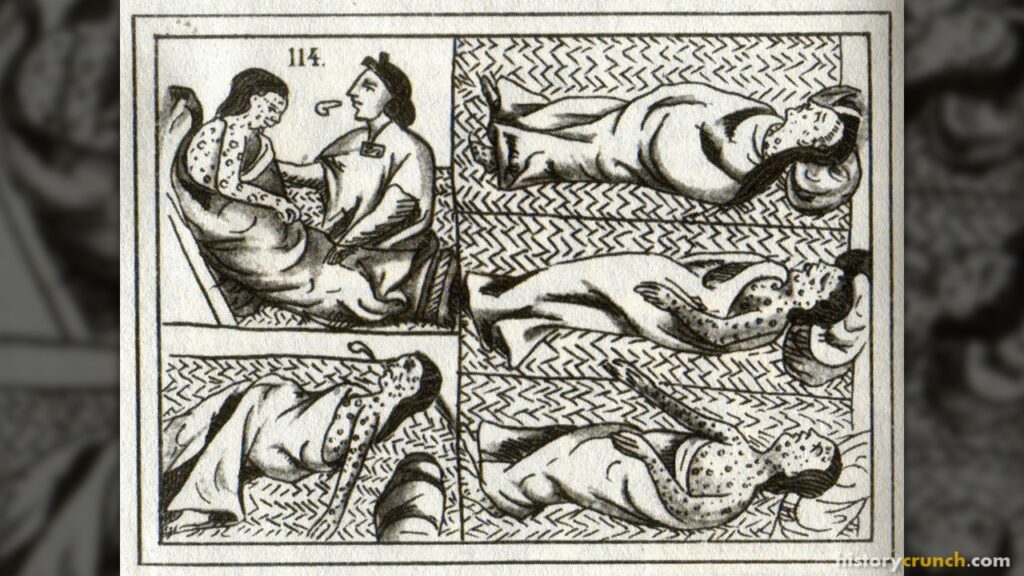
When European explorers arrived in the New World during the Age of Exploration they brought with them many different types of diseases that were not already present in the New World, including: smallpox, influenza, measles, malaria, chicken pox and yellow fever. These diseases were spread as part of the Columbian Exchange and led to the deaths of millions of people. In fact, some historians have suggested that as many as 90% of people in the New World died from the spread of European diseases. Since the indigenous people of the New World had never been exposed to these diseases before, they lacked the immunityThe body’s natural ability to resist or fight off a particular disease. and were susceptible to the deadly effects of the disease. One of the more significant European diseases was smallpox which is said to have had the largest impact on the indigenous people of the New World. For example, the Aztecs in Tenochtitlan supposedly underwent a mass spread of smallpox from September to November of 1520. Historians are unsure of how many of the Aztec people suffered and died from the disease at this time, but their newest tlatoani, Cuitláhuac, died from the disease. This is important because the Aztecs lacked stable leadership during the Spanish conquest of Tenochtitlan, since their leaders (Moctezuma II and Cuitláhuac) died. Regardless, the spread of smallpox throughout Tenochtitlan severely weakened the Aztec people and aided the Spanish in their final battle against the city. A new tlatoani, and the final one to rule over the Aztec Empire, Cuauhtémoc, was chosen in February of 1521.
Final Battle of Tenochtitlan and the Fall of the Aztec Empire
Resupplied and with new Spanish soldiers, Cortés further prepared for his attack against Tenochtitlan. The Spanish and their Tlaxcalan allies left Tlaxcala on December 26th, 1520 and immediately went to work in creating alliances with other powerful city-states in the region of Lake Texcoco against Tenochtitlan. For example, in a short period of time, Cortés was able to get several other Mesoamerican societies on his side, including former members of the Aztec Triple Alliance such as Texcoco. As a result, when Cortés attacked Tenochtitlan in the spring and summer of 1521, they were aided by thousands of Tlaxcala and Texcoco warriors. As well, at the start of the final battle for Tenochtitlan, the Spanish had nearly 1,000 soldiers of their own, over 120 horses, newly constructed ships for use on the lake, and newly arrived firearms and gunpowder.
The Spanish began their attack against Tenochtitlan by destroying the aqueductsStructures built to carry fresh water from one place to another, used here to supply Tenochtitlan. that brought fresh water to the city. As well, Cortés ordered his troops to surround the city and stop it from receiving food supplies. This effectively cut off the city from the surrounding areas and further weakened the already suffering Aztec people who were struggling with the effects of smallpox and unstable leadership. Furthermore, Cortés had his men launch several small ships into Lake Texcoco, which prevented the people of Tenochtitlan from escaping or receiving help. The fighting of the final battle for Tenochtitlan was brutal. The Aztec people in the city, who were starving and suffering from smallpox, were bombarded by Spanish cannons and firearms.
While the Aztec carried out several counterattacks they were mostly ineffective due to the Spanish’s organization, alliances and overwhelming military power. Apparently, Cortés had hoped that the Aztecs would surrender so that he could capture Tenochtitlan intact and present it as a prize to the Spanish monarch Charles V. However, during the battle, the Aztec’s sacrificed many of the Spanish prisoners of war that they had held captive. This angered Cortés and caused him to order the destruction of the city and the Aztec people. Tenochtitlan was finally captured by the Spanish and Tlaxcala on August 13th, 1521. Cuauhtémoc was taken prisoner and the Aztec Empire was no more. The battle had devastated large parts of the city, with huge sections of the temples and buildings destroyed. However, after capturing the city, the Spanish continued its destruction by taking down any religious symbols and temples. As well, they burned large areas of the city to root out the remaining people. With their city destroyed, the Aztec people scattered throughout the Valley of Mexico. Cortés and the Spanish began to build a new city on top of the ruins of Tenochtitlan, which eventually became Mexico City. In the decades and centuries that followed the Spanish continued their campaigns of conquest in central America against indigenous peoples. For example, Francisco Pizarro’s conquest of the Inca in Peru was based partially on Cortés’ conquest of the Aztec in Mexico.
 FactsthatCrunch
Why did Tenochtitlan fall to the Spanish in 1521: was it just military force, or were there deeper causes beneath the surface?
Explore Aztec Empire · 1325 – 1521 CE
Keep exploring Aztec Empire with these History Crunch resources.
Key Vocabulary
Conquistadors
Tlatoani
Flower Wars
Omens
Causeways
Immunity
Aqueducts
Frequently Asked Questions
Who led the Spanish conquest of the Aztec Empire?
Hernan Cortés led the Spanish expedition that conquered the Aztec Empire. He first sailed to the Caribbean at age 19 and later convinced the governor of Cuba to let him lead a mission to Mexico. Cortés set out with about 11 ships and just over 500 men in 1519.
When did the Aztec Empire fall to the Spanish?
The Aztec capital of Tenochtitlan fell to the Spanish on August 13th, 1521. The final battle lasted through the spring and summer of that year. Cuauhtémoc, the last Aztec ruler, was taken prisoner, and the empire came to an end.
How did the Spanish defeat the much larger Aztec Empire?
The Spanish won through a mix of native allies, better weapons, and disease. City-states like the Tlaxcala and Texcoco joined Cortés because they were old enemies of the Aztec. Guns, steel armor, and horses gave the Spanish an edge, while smallpox killed huge numbers of Aztec people.
What was Noche Triste?
Noche Triste, or “the night of sorrows,” was the Spanish escape from Tenochtitlan on the night of June 30th, 1520. Aztec warriors attacked them on a causeway as they tried to flee with stolen treasure. The Spanish lost between 150 and 450 men, and their Tlaxcala allies lost thousands more.
How did European diseases affect the Aztec?
Smallpox swept through Tenochtitlan from September to November of 1520 and killed vast numbers of people. The Aztec had never faced the disease, so they had no built-up immunity against it. Their ruler Cuitláhuac died of smallpox, which left the empire without steady leadership during the war.
Why did Moctezuma II welcome the Spanish at first?
Moctezuma II greeted Cortés with gifts, which was the normal way an Aztec ruler showed his power to important visitors. Later accounts claimed he thought Cortés might be the god Quetzalcoatl and that eight omens had warned him of danger. Many historians today believe these stories were written after the conquest.
Cite This Article
To cite this article as a source, use one of the formats below.
MLA: Beck, Elias. “Spanish Conquest of the Aztec Empire: A Detailed Summary.” HistoryCrunch, 26 October 2026, https://historycrunch.com/spanish-conquest-of-the-aztec-empire/.
APA: Beck, E. (2026). Spanish Conquest of the Aztec Empire: A Detailed Summary. HistoryCrunch. https://historycrunch.com/spanish-conquest-of-the-aztec-empire/
Chicago: Beck, Elias. “Spanish Conquest of the Aztec Empire: A Detailed Summary.” HistoryCrunch. October 26, 2026. https://historycrunch.com/spanish-conquest-of-the-aztec-empire/
Sources
- Richard Townsend, The Aztecs.
- Matthew Restall, When Montezuma Met Cortés / Seven Myths of the Spanish Conquest.
- Michael E. Smith, The Aztecs.