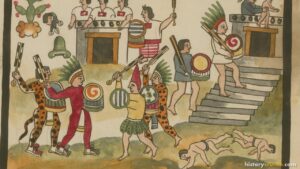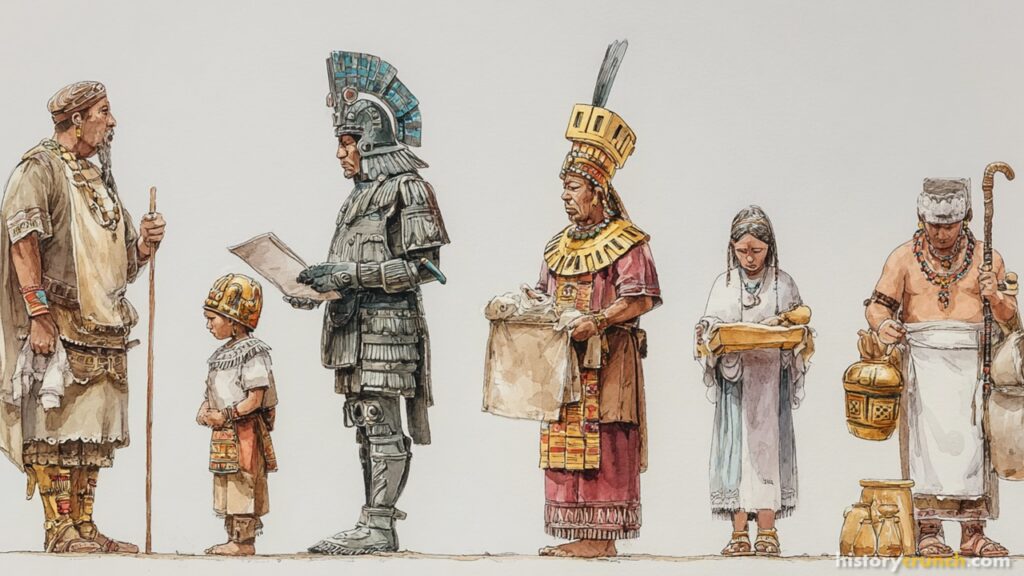
Aztec society was centered on a highly structured hierarchy that was led by the huey tlatoani (emperor). Next, was the pipiltinThe noble upper class who held the highest positions in government, religion, and the military. (nobles), including priests, warriors, and government officials. Meanwhile, the macehualtinThe commoner middle class, the largest group in Aztec society, working as farmers, traders, and artisans. (commoners) worked as farmers, artisans, and merchants. At the bottom were the tlacotinThe lowest social class in Aztec society, made up of slaves who worked on the lands of wealthy nobles or merchants. (slaves). The system of Aztec society had a profound impact on the daily lives of the Aztec people. Read more about each of the Aztec social classes below.
Who Were the Aztec?
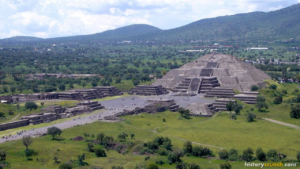
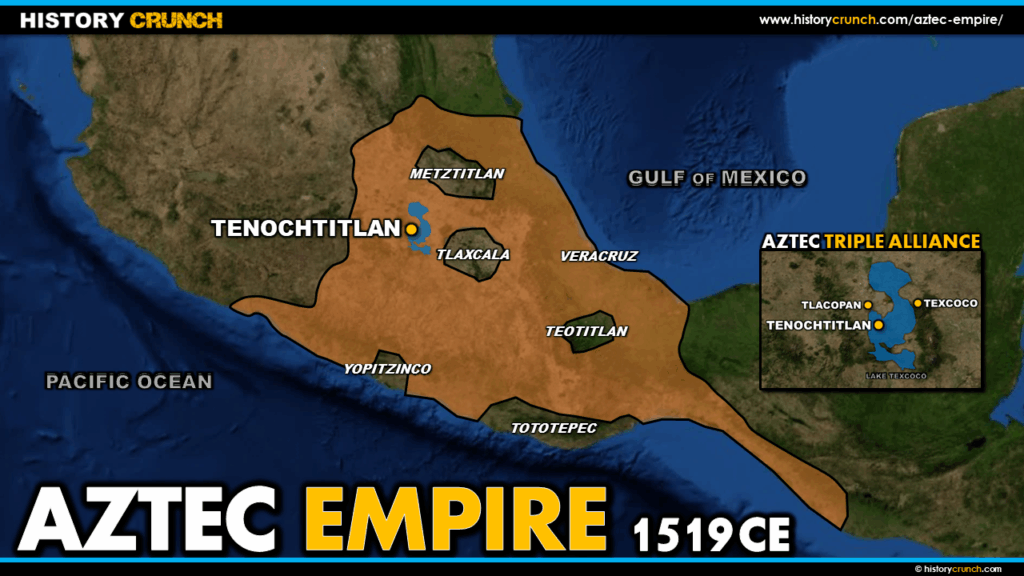
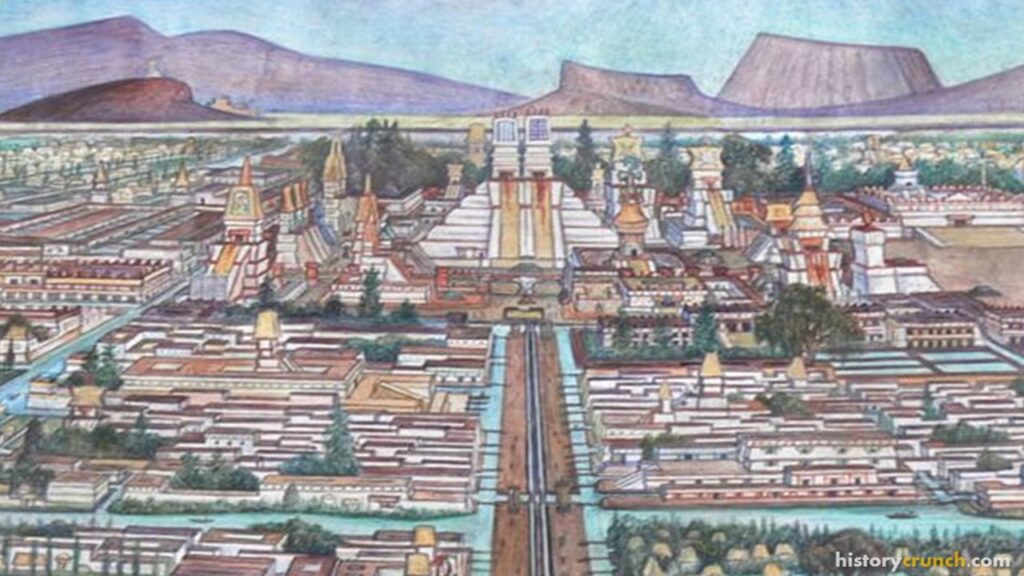
The Aztec Empire was a civilization in central Mexico that thrived in the time before the arrival of European explorers during the Age of Exploration. Throughout its history as a civilization the Aztec Empire expanded across much of central Mexico and other surrounding areas, to become the most dominant and powerful people in the region. Tenochtitlan, the main Aztec city (or altepetl), was the center of this vast empire. Aztec society was made up of several different classes of people, usually divided as an upper class, middle class and lower class.
 FactsthatCrunch
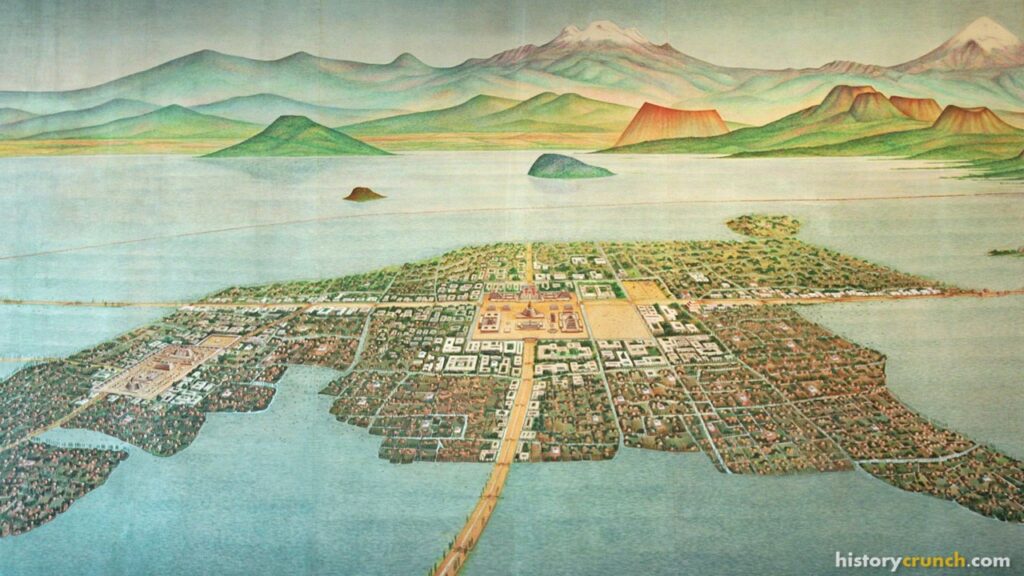 Aztec Dominance in Central Mexico
Pipiltin (Upper Class)
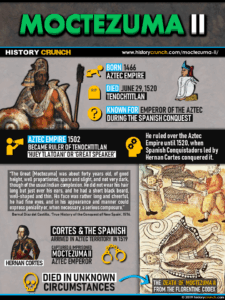
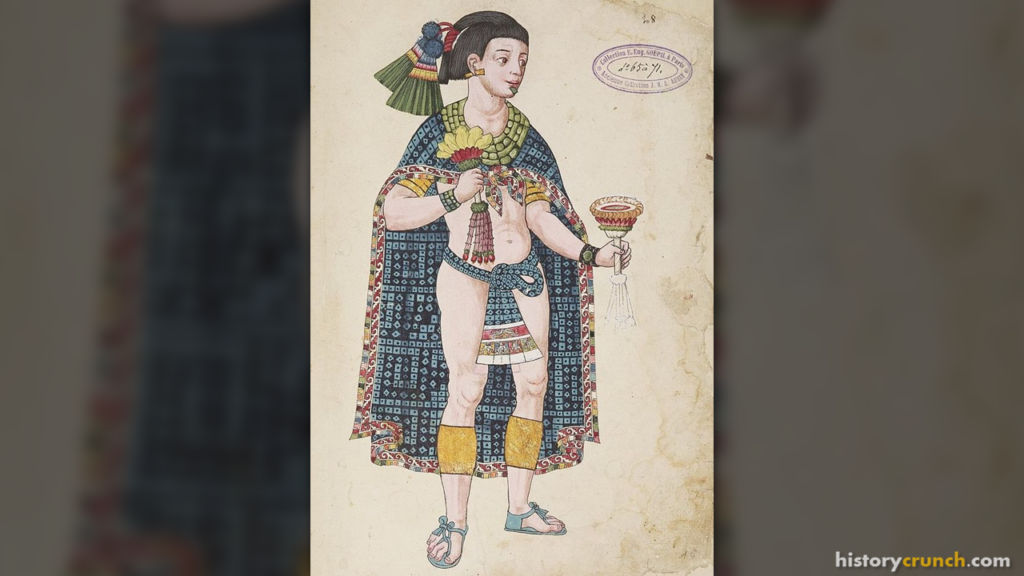
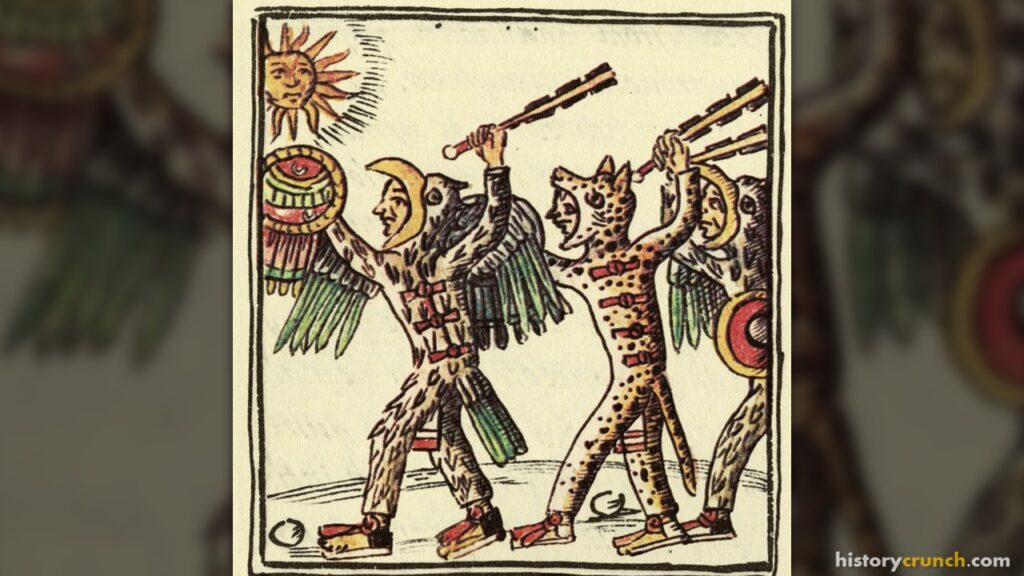
The upper class were referred to as pipiltin. These people were the nobility and controlled the highest positions in Aztec society. For example, they worked in the Aztec government, were high priests in the Aztec religion, and held the highest ranks in the Aztec military. As such, the pipiltin were the ruling class. For instance, the Aztec emperor, referred to as huey tlatoaniThe supreme ruler of the Aztec Empire, whose title means ‘Great Speaker’ in the Aztec language. (Great Speaker), came from the pipiltin. The huey tlatoani played an important role in Aztec history and the expansion of the Aztec Empire. They primarily ruled over the Aztec Empire as a whole. For instance, the huey tlatoani oversaw the tribute system present in the Aztec Empire, the military and any wars that were carried out, and the expansion of the empire to new regions. Since the huey tlatoani was concerned with the affairs of the overall empire, the cihuacoatl (which was second in command) in Tenochtitlan carried out the administration of the city itself. The cihuacoatl also came from the pipiltin. Pipiltin children received the best education available in Aztec society, in order to prepare them for life in these ruling positions. For instance, pipiltin boys between the ages of ten and twenty were required to attend schools called Calmecac. The Calmecac schools prepared the noble boys to be leaders in the military, religion and government. For example, the highest warrior societies in the Aztec military (Eagle warriors and Jaguar warriors) were primarily made up of pipiltin. Due to their position in society, the pipiltin owned and controlled more land than the other classes, had larger more luxurious homes and could afford more elaborate art and clothing.
 FactsthatCrunch
The Aztec emperor, the huey tlatoani, ruled the whole empire, while a second noble called the cihuacoatl ran the city of Tenochtitlan itself.
Both came from the pipiltin, the noble class. Nobles held the top jobs in government, the priesthood, and the army, owned more land, and filled the elite Eagle and Jaguar warrior societies.
Macehualtin (Middle Class)
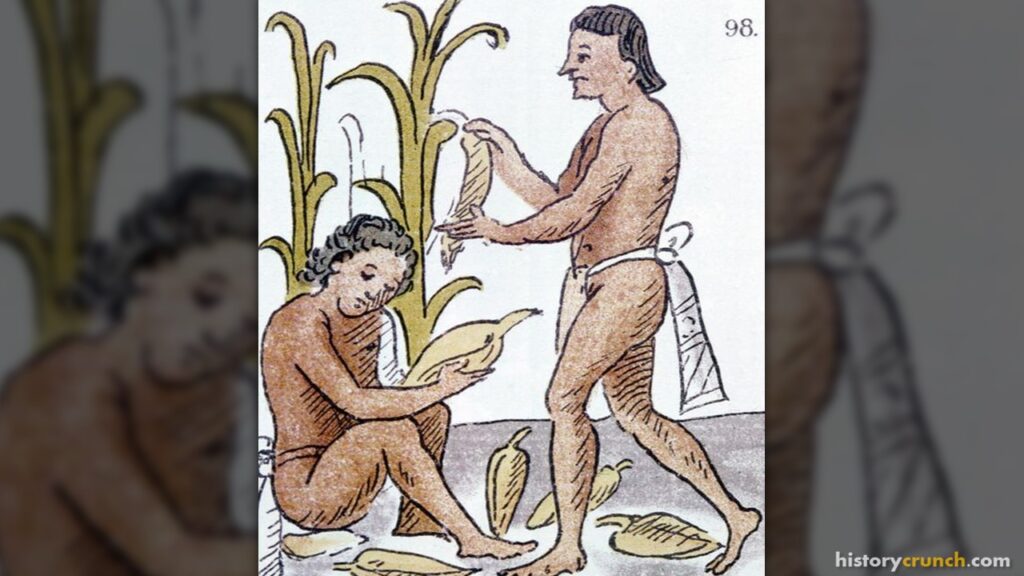
The middle class in Aztec society were referred to as macehualtin and they made up the largest group of people in Aztec society. These people were considered to be among the commoner class and generally were made up of rural farmers. As such, macehualtin were organized in the calpulliA group organization, similar to a family unit, that coordinated land use and assigned farming tasks to commoners. system. The concept of the calpulli can best be related to a family, since they were groups of people who were responsible for the day-to-day living of the group. The calpulli coordinated the use of land and designated different people to different farming tasks. On the plots of land provided by the calpulli, the macehualtin would grow crops common in central Mexico, such as: maize (corn), beans and squash. Due to the island location of Tenochtitlan, Aztec farming was based primarily on agriculture in the form of chinampasMounds of dirt and debris built up in shallow swampy lake areas to create farmable land, also called ‘floating gardens.’. Also referred to as ‘floating gardens’ chinampas were mounds of dirt and other debris built up in the shallow, swampy areas of Lake Texcoco which surrounded Tenochtitlan. When combined with other forms of farming such as traditional farms and terraced hill sides, the agriculture of Aztec Empire grew dramatically and became a central component of the Aztec economy.
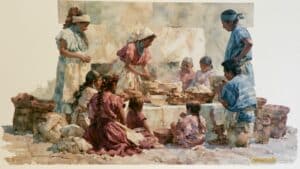
Beyond working as farmers, some macehualtin were known to work as traders and artisans. For instance, another key feature of the Aztec economy was the development of large markets for the different goods from across the Aztec Empire. These markets supplied the citizens with different foods, luxury items and crafts. The markets sold all sorts of things, but it greatly benefitted both merchants (traders) and artists and craftspeople. For example, it allowed the artists and craftspeople a venue to sell their finely crafted goods. As well, the traders helped distribute goods across the Aztec Empire and ultimately central Mexico. For instance, all goods were transported throughout the empire by human beings. The class of people who carried out this long distance trade in the Aztec Empire were referred to as ‘pochtecaThe specialized class of long-distance traders who transported goods by foot throughout the Aztec Empire.’. The artists and craftspeople were referred to as ‘toltecah’ after the Toltec civilization from which the Aztec believed they had derived. In fact, the Aztec revered the craftsmanship of the earlier Toltec people, and used their name to refer to skilled artists and craftspeople.
Also, since the Aztec Empire was militaristic in nature the Aztec warriors were also an important aspect of Aztec society. As such, the macehualtin were expected to participate in the Aztec military and train to be warriors from a young age. For example, macehualtin boys received an education that ultimately prepared them for battle and service in the Aztec military. For instance, boys between the ages of ten and twenty were required to attend school. Boys of the lower classes attended schools called Telpochcalli. The Telpochcalli schools focused on preparing the boys for warfare and teaching the boys how to use different weapons. Finally, when the boys were approximately twenty years old they joined the military ranks and became an Aztec warrior. Due to the macehualtin’s role as traders, merchants, artisans and warriors, some macehualtin were supposedly able to move up on the social status in Aztec society and become similar to the pipiltin. For instance, macehualtin warriors who showed skill and bravery on the battlefield were able to join some of the higher warrior societies such as Eagle warriors and Jaguar warriors which were traditionally made up of pipiltin people. As well, some macehualtin became very wealthy from their roles as traders and merchants and were able to equal the wealth and prestige of the pipiltin. Therefore, some historians have suggested that social mobility was possible for some macehualtin.
 FactsthatCrunch
What jobs did the macehualtin hold in the Aztec Empire?
Mayeques
Below the macehualtin in Aztec society were the mayeques. They were similar to macehualtin in that they often performed work on farms, but the mayeques were generally responsible for much more laborious work. For instance, they were often tasked with the hard labor on farms, building and maintaining the temples, and the houses of the nobles. Often the mayeques were required to work for the local nobles. As such, the mayeques did not own the land upon which they worked and were instead forced to pay heavy taxes to the pipiltin for the right to farm the land. This caused a heavy burden on the mayeques.
 FactsthatCrunch
Mayeques farmed land owned by pipiltin nobles and were required to pay heavy taxes for the right to farm that land, creating a direct economic bond between the laborers and the noble class above them.
Unlike macehualtin commoners, mayeques did not own the land they worked, so every harvest tied them financially to the pipiltin nobles whose estates they maintained.
Tlacotin (Slaves)
The lowest social class in Aztec society were the tlacotin. These people were the slaves that worked throughout the Aztec Empire. For the Aztecs, slavery was not something that you could be born into. Rather, people became slaves of their own choosing, as a punishment for a crime, or because they were taken captive. Someone might choose to enter slavery as a means of paying off a financial debt. While some slaves might be sacrificed in a religious ceremony, most were simply workers on the lands of wealthy nobles or merchants. In fact, the owners were expected to treat the slaves well, including feeding and housing them. In return, slaves were expected to follow rules of conduct and obey all reasonable commands from their owners. Slaves who did not follow the rules, or who tried to escape were punished by being forced to wear a wooden collar. The collar had a long wooden staff attached to it that made it difficult for the slave to flee.
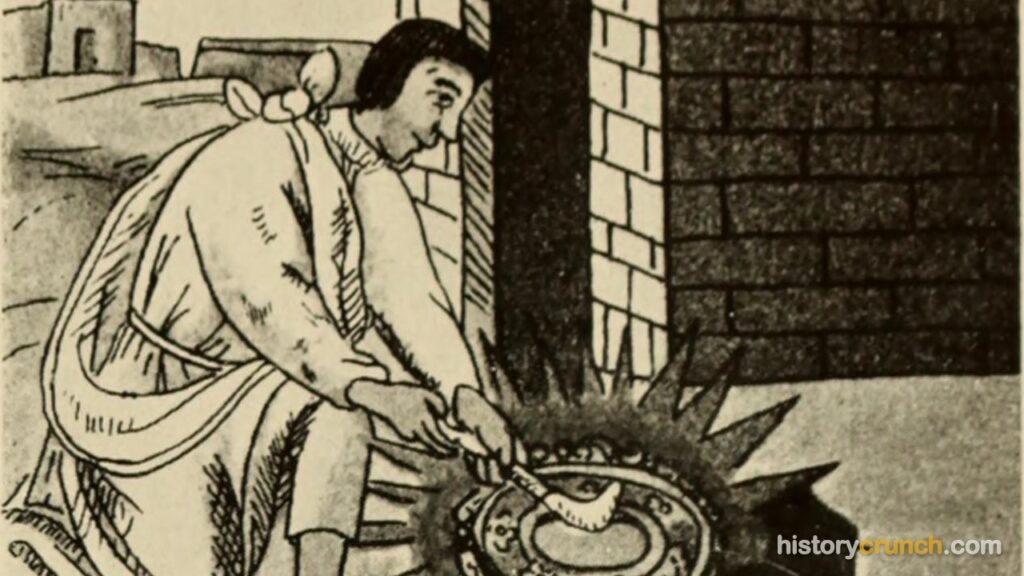
Priests
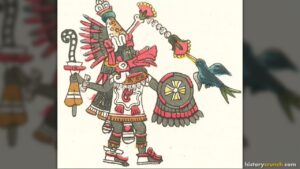
Priests played an important role in Aztec society. In Nahuatl, the language of the Aztecs, the word for priest was ‘tlamacazqui’ which translates to ‘giver of things’. The concept of ‘god’ in Aztec society is referred to as ‘teotl’. The Aztecs, like other Mesoamerican societies, had a wide pantheon of gods. As such they were a polytheisticWorshipping many gods, each representing different important parts of the world. society, which means they had many gods and each god represented different important parts of the world for Aztec people. One of the main roles of the Aztec priest was to carry out ceremonies and festivals in honor of these gods. They would see that all aspects of a ceremony were carried out according to tradition. This was especially true in regards to the practice of human sacrifice, as the priests played a central role in making offerings to the gods. As well, the priests were expected to read and consider different omens and offer advice on their meaning. An omen was a sign which the Aztec believed offered a supernatural prediction of the future or other events.
 FactsthatCrunch
The Aztec word for a priest, tlamacazqui, meant 'giver of things,' because priests made offerings to the gods for the whole community.
Priests made sure every ceremony and festival followed tradition. They also studied omens, signs the Aztec believed predicted the future, and advised leaders on what those signs meant.
Explore Aztec Empire · 1325 – 1521 CE
Keep exploring Aztec Empire with these History Crunch resources.
Key Vocabulary
Huey tlatoani
Pipiltin
Macehualtin
Calpulli
Chinampas
Pochteca
Tlacotin
Polytheistic
Frequently Asked Questions
What were the main social classes in Aztec society?
Aztec society had three broad levels, an upper, middle, and lower class. The pipiltin were the nobles at the top, while the macehualtin commoners made up the middle. Below them were the mayeques, who did heavy labor, and the tlacotin, who were slaves. The huey tlatoani, or emperor, ruled over the whole system.
Who were the pipiltin in the Aztec Empire?
The pipiltin were the noble upper class who held the highest positions in Aztec society. They worked in government, served as high priests, and held top ranks in the military. The emperor and his second in command both came from this class. They also owned the most land and lived in large, luxurious homes.
Could Aztec commoners move up in social class?
Some historians believe social mobility was possible for certain macehualtin commoners. A warrior who showed great skill and bravery could join elite groups like the Eagle or Jaguar warriors. Some traders and merchants also grew wealthy enough to match the prestige of the nobles. These paths were rare but open to a few.
How did a person become a slave in Aztec society?
Aztec slavery was never passed down by birth, so no one was born a slave. People became slaves by choice, as punishment for a crime, or by being captured. Someone might enter slavery to pay off a debt they owed. Owners were expected to feed, house, and treat their slaves fairly.
What was the difference between Calmecac and Telpochcalli schools?
The two schools trained boys from different classes for different futures. Calmecac schools taught noble pipiltin boys to become leaders in government, religion, and the military. Telpochcalli schools taught commoner boys to fight and use weapons. Boys between ages ten and twenty were required to attend one of these schools.
What role did priests play in Aztec society?
Priests led the ceremonies and festivals that honored the many Aztec gods. The Aztecs were polytheistic, meaning they worshipped a large group of gods. Priests made sure each ritual followed tradition, including the practice of human sacrifice. They also read omens and gave advice about what those signs might mean.
Cite This Article
To cite this article as a source, use one of the formats below.
MLA: Beck, Elias. “Aztec Society (Social Classes): A Detailed Summary.” HistoryCrunch, 25 October 2026, https://historycrunch.com/aztec-society-social-classes/.
APA: Beck, E. (2026). Aztec Society (Social Classes): A Detailed Summary. HistoryCrunch. https://historycrunch.com/aztec-society-social-classes/
Chicago: Beck, Elias. “Aztec Society (Social Classes): A Detailed Summary.” HistoryCrunch. October 25, 2026. https://historycrunch.com/aztec-society-social-classes/
Sources
- Richard Townsend, The Aztecs.
- Matthew Restall, When Montezuma Met Cortés / Seven Myths of the Spanish Conquest.
- Fordham Internet History Sourcebooks