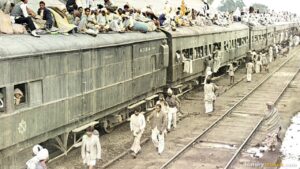
The Amritsar Massacre of 1919 is one of the most important events in the history of British Imperialism in India and the wider Indian Independence Movement. It took place on April 13th, 1919, in the city of Amritsar, in the Punjab region of India, when British soldiers opened fire on a large crowd of unarmed Indians who had gathered in a walled public garden called the Jallianwala Bagh. Hundreds of people were killed and many more were wounded. The massacre shocked people across India and around the world, and it caused many Indians to lose faith in British rule.
The Amritsar Massacre is sometimes called the Jallianwala Bagh Massacre, after the garden where it happened. It marked a turning point in the relationship between the Indian people and their British rulers. In the years that followed, the memory of the killings helped fuel a growing movement that would eventually lead to Indian independence in 1947.
What Was the British Raj?
To understand the Amritsar Massacre, it helps to first understand the British Raj. The term ‘British Raj’ refers to the time period when Britain ruled over India as a colony of the British Empire. In fact, the word ‘raj’ translates to ‘rule’ in the languages of northern India. This period is generally considered to have lasted from 1858 until 1947.
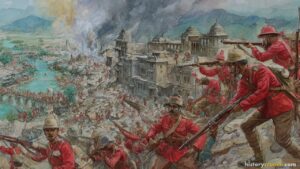
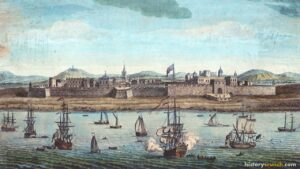
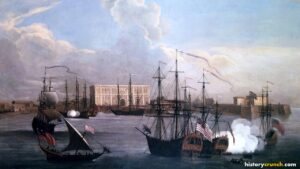
The British Raj began after the Sepoy Rebellion of 1857 and 1858, which was an uprising of Indian soldiers and citizens against the British East India Company. Before that time, the British East India Company, a powerful trading organization, had gradually expanded its control over the Indian subcontinent since the 1600s. When the rebellion ended, the British government took over direct control of India and ruled it as a colony. At its height, the British Raj controlled almost all of modern-day India, Pakistan, and Bangladesh.
India was so valuable to Britain that it was often called the “Jewel in the Crown.” However, British rule also caused great hardship for many Indians, and over time it gave rise to a powerful independence movement. This movement, known as the Indian Independence Movement, is considered by historians to have lasted about 90 years, from 1857 until 1947. The Amritsar Massacre happened in the middle of this long struggle.
What Caused the Amritsar Massacre?
The Amritsar Massacre did not happen suddenly. Instead, it grew out of years of rising anger against British rule. During World War I, more than a million Indians served in the British military, and tens of thousands died fighting for the British Empire. Many Indians hoped that this loyalty would be rewarded with more freedom and self-government once the war ended in 1918.
Instead of granting more freedom, the British government passed a harsh new law in early 1919 called the Rowlatt Act. This law gave British authorities in India the power to arrest and imprison people suspected of anti-government activity without a trial. It also allowed them to hold suspects for up to two years and to restrict the freedom of the press. Because it took away basic legal rights, many Indians viewed the Rowlatt Act as a betrayal, and it became widely known as the “Black Act.”
In response, the Indian leader Mahatma Gandhi called for peaceful protests across the country, including a nationwide hartal, which was a form of protest in which shops and businesses shut down for the day. Tensions rose quickly in the Punjab region. On April 9th, 1919, the British arrested two popular local leaders in Amritsar, Dr. Saifuddin Kitchlew and Dr. Satyapal. Their arrest sparked angry protests, and in the days that followed some of these demonstrations turned violent, with several Europeans killed and buildings attacked.
To restore order, the British placed Amritsar under military control and gave command of the city to a British officer named Brigadier General Reginald Dyer. Dyer quickly banned all public meetings and gatherings, announcing that they would be broken up by force if necessary. This ban set the stage for the tragedy that followed.
What Happened at the Jallianwala Bagh?
On April 13th, 1919, thousands of people gathered at the Jallianwala Bagh, a walled public garden in Amritsar. April 13th was the day of Baisakhi, an important springtime festival, and many in the crowd were local families and pilgrims who had come to celebrate and to visit the nearby Golden Temple, the holiest site of the Sikh religion. Others had gathered to peacefully protest the arrest of their leaders and the Rowlatt Act. Importantly, many people in the crowd did not even know about Dyer’s recent ban on public meetings.
The Jallianwala Bagh was a dangerous place for such a large crowd. It was surrounded by high walls and buildings, and it had only a few narrow exits. In the late afternoon, General Dyer arrived at the garden with about 50 armed soldiers. Without giving the crowd any warning to leave, he blocked the main entrance and ordered his troops to open fire on the unarmed people trapped inside.
The soldiers kept firing for around ten minutes, aiming into the thickest parts of the crowd and toward the exits where people tried to escape. Because the walls surrounded the garden, there was almost nowhere for people to run. Some were trampled in the panic, and others jumped into a well inside the garden in a desperate attempt to escape the bullets. The soldiers only stopped firing when they had nearly run out of ammunition.
The exact number of people killed is still debated. British officials later reported that at least 379 people died and more than 1,200 were wounded. Indian sources, however, counted far higher numbers, with some estimates placing the dead at close to 1,000. Either way, the massacre was one of the deadliest single acts of violence in the entire history of British rule in India.
What Happened After the Massacre?
News of the massacre spread slowly at first, because the British had placed the Punjab under strict military control and censored the press. In the weeks that followed, British authorities in the region carried out further harsh and humiliating punishments against Indians, which only deepened the anger. Once the full story became known, outrage swept across India and reached far beyond its borders.
In 1919, the British government set up an official investigation known as the Hunter Commission to look into the events at Amritsar. During the inquiry, General Dyer defended his actions and showed little regret. He even admitted that he would have used machine guns mounted on armored cars if he had been able to bring them into the narrow garden. His testimony shocked many who read it.
The Hunter Commission criticized Dyer, and he was removed from his military command. However, reaction in Britain was deeply divided. Some people condemned him as a butcher, while others praised him as a hero who had prevented a larger rebellion. In India, this mixed reaction made many Indians realize that they could not expect fair treatment under British rule.
Significance of Amritsar Massacre of 1919
The Amritsar Massacre is considered one of the most important turning points in the history of British Imperialism in India. Before 1919, many Indian leaders, including members of the Indian National Congress, had hoped to gain greater rights and representation while remaining part of the British Empire. After the massacre, more and more Indians became convinced that nothing less than full independence would be acceptable.
The massacre had a powerful effect on Mahatma Gandhi. During World War I, Gandhi had supported the British in the hope of winning more self-rule for India. After the killings at Amritsar, he lost faith in British justice and became a firm supporter of complete independence. In the years that followed, Gandhi launched large campaigns of nonviolent civil disobedience against British rule, and he became the leading figure of the Indian Independence Movement.
The event also caused respected Indians to publicly break with the British. For instance, the famous writer Rabindranath Tagore gave up the knighthood he had received from Britain as a protest against the massacre. Overall, the Amritsar Massacre helped unite Indians against colonial rule and gave the independence movement powerful new energy. For that reason, many historians describe it as the beginning of the end of British rule in India, which finally came to a close in 1947.
Frequently Asked Questions
When and where did the Amritsar Massacre happen?
The Amritsar Massacre happened on April 13th, 1919, in the city of Amritsar in the Punjab region of India. More specifically, it took place at the Jallianwala Bagh, a walled public garden located near the Golden Temple, which is the holiest site in the Sikh religion. Amritsar was an important religious and trading city, which is one reason so many people were present that day.
Who was General Dyer?
General Dyer was the British army officer who ordered the shooting at the Jallianwala Bagh. His full name was Reginald Dyer, and he had been given military command of Amritsar to restore order after protests turned violent. Because of his role in the massacre, he later became known by the nickname the “Butcher of Amritsar,” and he was eventually removed from his command.
Why were people gathered at the Jallianwala Bagh?
People were gathered at the Jallianwala Bagh for a mix of reasons. Many had come to celebrate Baisakhi, a springtime festival, and to visit the nearby Golden Temple. Others were there to peacefully protest the Rowlatt Act and the arrest of two popular local leaders. A large number of people in the crowd did not even know that public gatherings had been banned.
How many people died in the Amritsar Massacre?
The exact number of deaths is still uncertain, but the official British count listed at least 379 people killed and more than 1,200 wounded. Indian sources believed the true numbers were much higher, with some estimates reaching close to 1,000 dead. The high walls and few narrow exits of the garden made it very hard for people to escape the gunfire.
Why is the Amritsar Massacre important today?
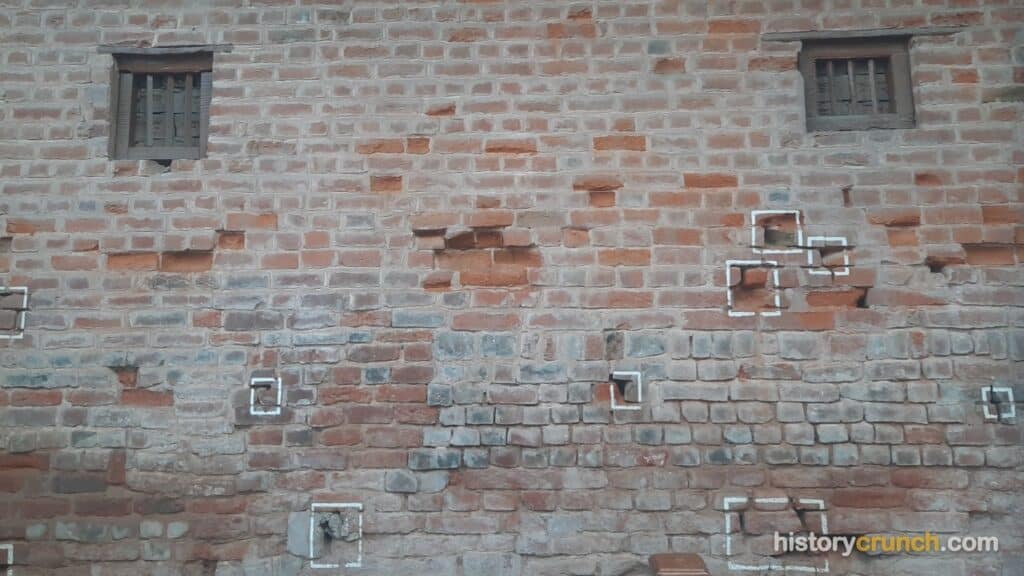
The Amritsar Massacre is remembered today as a symbol of the injustice of colonial rule and a key moment in India’s fight for freedom. A memorial now stands at the Jallianwala Bagh, and visitors can still see bullet marks left in the walls from that day. The event is often taught as an example of how British rule lost the trust of the Indian people and helped inspire the movement for independence.
Cite This Article
To cite this article as a source, use one of the formats below.
MLA: Millar, B. “Amritsar Massacre of 1919: A Detailed Summary.” HistoryCrunch, 14 August 2026, https://historycrunch.com/amritsar-massacre-of-1919/.
APA: Millar, B. (2026). Amritsar Massacre of 1919: A Detailed Summary. HistoryCrunch. https://historycrunch.com/amritsar-massacre-of-1919/
Chicago: Millar, B. “Amritsar Massacre of 1919: A Detailed Summary.” HistoryCrunch. August 14, 2026. https://historycrunch.com/amritsar-massacre-of-1919/
Sources
- J.M. Roberts & Odd Arne Westad, The Penguin History of the World.
- Jerry Bentley & Herbert Ziegler, Traditions & Encounters: A Global Perspective on the Past.