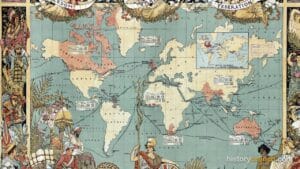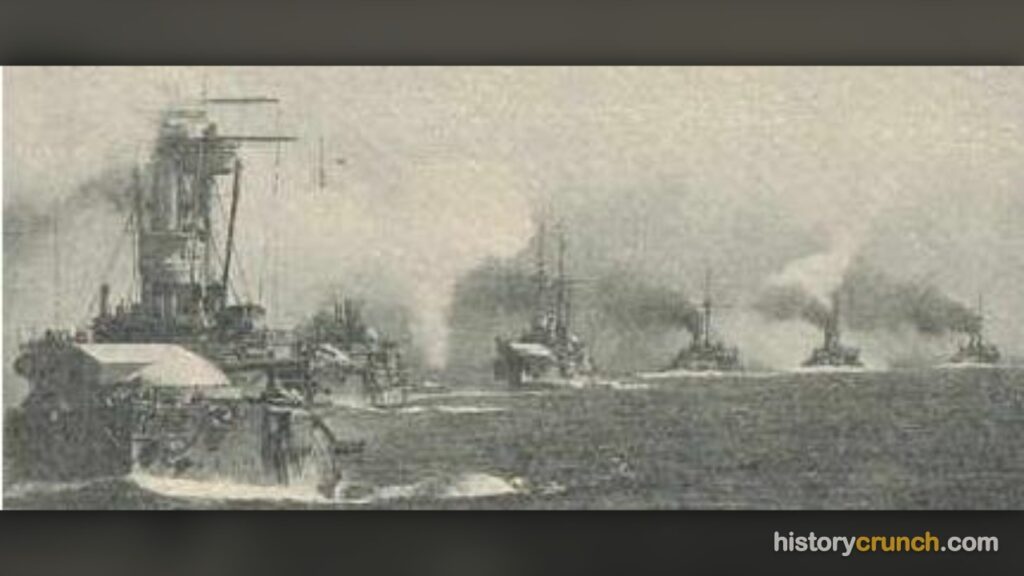
Germany was one of the most important powers of the Age of Imperialism, and its rapid rise as a colonial empire helped shape the tensions that eventually led to World War I. Although Germany entered the race for overseas colonies later than rival nations such as Britain and France, it quickly claimed large territories in Africa and the Pacific and became a central player in the competition between European powers. Germany’s actions during this period, especially the hosting of the Berlin Conference of 1884, played a major role in the division of the African continent.
ImperialismA system where one nation extends power over other territories through colonization, military force, or economic domination. is a system in which one nation extends its power and control over other territories and peoples, usually through colonization, military force, or economic domination. During the Age of Imperialism, powerful nations established colonies far from their own borders in order to gain resources, wealth, and prestige. For Germany, imperialism meant building an overseas empire that stretched from Africa to the Pacific Ocean, even though Germany itself had only become a unified country a few years earlier.
 FactsthatCrunch
Many students believe the treaties Germany signed with African rulers during the Scramble for Africa were genuine agreements in which both sides understood and accepted the same terms.
In practice, tribal chiefs often signed treaties without understanding what they were agreeing to, and German officials used this confusion to claim vast territories. The German presence in a newly claimed area was frequently nothing more than a national flag raised over a remote village. The agreements served German colonial interests, not those of the African communities whose land and authority were transferred away.
What Was the Age of Imperialism?
The Age of Imperialism was a period of intense colonial expansion by European powers that took place primarily from the 1870s through the early 20th century. During this era, European nations competed to establish formal political control over territories in Africa, Asia, and the Pacific, and they were driven by economic interests, nationalist rivalry, and a belief in racial and cultural superiority. Major powers such as Britain, France, Germany, Belgium, and Italy carved up entire continents during these decades.
In fact, historians usually point to five main causes or motives of the Age of Imperialism. These were economic gain, colonization, religion, ethnocentrismThe belief that one’s own culture or race is superior to others., and prestige. More specifically, European nations wanted new sources of raw materials and new markets for their factory-made goods, places to resettle growing populations, and opportunities to spread Christianity and their own culture.
The most dramatic expression of the Age of Imperialism was the Scramble for Africa. This is the term that historians use to refer to the expansion of European empires into Africa during the Age of Imperialism, and it is referred to as a “scramble” due to the way in which the European nations raced to capture territory to expand their empires from approximately 1870 until the outbreak of World War I in 1914. Germany became one of the key competitors in this race for African territory.
How Did a Unified Germany Enter the Age of Imperialism?
Germany’s role in the Age of Imperialism cannot be understood without first understanding German unification. Before 1871, Germany did not exist as a single country, and instead the region was made up of dozens of separate kingdoms, duchies, and smaller states that shared a common language and cultural heritage but were each governed independently. These German-speaking states were not yet joined together as one nation.
The process of German unificationThe process of joining many separate states into one single nation. was driven by the rise of nationalism in the 19th century and was ultimately achieved by the Prussian statesman Otto von Bismarck through a combination of skilled diplomacy and three decisive wars. Prussia was the largest and most powerful of the German states outside of Austria, and it had a highly efficient military, a strong economy, and an effective government, which made it the natural candidate to lead the unification of Germany.
In 1862, King Wilhelm I of Prussia appointed Otto von Bismarck as Minister-President of Prussia, and Bismarck believed that German unification could only be achieved through what he called “blood and iron,” meaning through military force rather than through political negotiation alone. On January 18th, 1871, the German Empire was officially proclaimed, bringing the long period of German fragmentation to an end. As a result, Germany entered the Age of Imperialism as a brand new and rapidly growing power.
Because Germany unified so late, it entered the race for colonies after other nations had already claimed much of the world. As stated above, this meant that Germany had to compete aggressively to catch up with rivals such as Britain and France. This late start would shape both Germany’s colonial ambitions and the tensions it created with other powers.
FactsthatCrunch
Why Did Germany Host the Berlin Conference of 1884?
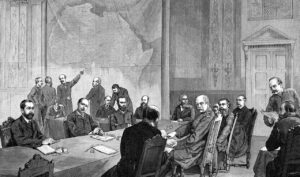
One of Germany’s most important contributions to the Age of Imperialism was the Berlin Conference of 1884. The conference was called by German Chancellor Otto von Bismarck and lasted from November 15th, 1884, until February 26th, 1885, at a time when Germany was emerging as a colonial power in Africa, which caused tensions with the other major powers such as Britain, France, and Belgium.
Bismarck called for the Berlin Conference as a means of reducing tensions between the European powers and determining how to divide the African continent between each other. More specifically, the Berlin Conference was made up of 14 nations in total, including Austria-Hungary, Belgium, Britain, Denmark, France, Germany, Italy, the Netherlands, the Ottoman Empire, Portugal, Russia, Spain, Sweden, and the United States.
The goal of the Berlin Conference was to create a set of boundary lines and defined territory for the nations involved, and what resulted was a mix of approximately 50 African states with irregular borders, since African societies were not consulted in this process and it sometimes forced African groups together that had a history of conflict. Historians now point out that the conference itself mostly set rules for claiming land, and that most of these borders were drawn in later treaties between the European powers. In reality, the decisions made in Berlin were meant to serve European interests rather than African ones. The conference showed how central Germany had become to the politics of imperialism, even though it had only recently entered the competition.
FactsthatCrunchThe Berlin Conference of 1884 created a set of rules for dividing Africa, but historians debate whether the exclusion of African societies amounted to a deliberate erasure of African political authority or simply a reflection of European ignorance about the continent's existing societies.
Which Colonies Did Germany Claim During the Age of Imperialism?
Germany claimed several large colonies in Africa during the Age of Imperialism, most of them beginning in 1884. These included German Southwest Africa, which today is the nation of Namibia, and German East Africa, which today includes Tanzania, Rwanda, and Burundi. Germany also claimed the colonies of Togoland and Cameroon, known in German as Kamerun, in West Africa.
These colonies were often acquired through treaties signed with local African rulers, many of whom did not fully understand what they were agreeing to. In reality, treaties were signed by tribal chiefs entirely ignorant of what they were signing, and the German presence was often nothing more than the national flag flying over a remote village. German traders, explorers, and missionaries all played a part in extending these claims into the interior.
German colonial rule was frequently harsh and violent. German authorities brutally suppressedCrushed or put down by force, usually referring to a rebellion or uprising. native Nama and Herero uprisings in Southwest Africa, and the first Nama uprising of 1893 to 1894 was followed by the Herero Wars beginning in 1904. The German response to these uprisings was extremely brutal and is remembered as one of the darkest chapters of the colonial period. Historians now call the killing of tens of thousands of Herero and Nama people between 1904 and 1908 a genocide, and in 2021 the German government formally recognized it as one. In addition to its African colonies, Germany also claimed territories in the Pacific Ocean and a small concessionA small piece of territory granted to a foreign power, giving it special rights there. in China, extending its empire far across the globe.
FactsthatCrunchHow Did German Imperialism Contribute to World War I?
The rivalries created during the Age of Imperialism were closely tied to the outbreak of World War I, and Germany was at the center of many of these tensions. The European nations had experienced a period of prolonged rivalry stretching back to the Age of Exploration, and by the time of the Age of Imperialism these nations were still politically and economically competitive with each other as they each raced to capture as much territory as they could.
This sense of rivalry was so intense that it eventually led to the outbreak of World War I in 1914. Germany’s rapid rise and its determination to expand its empire alarmed older powers such as Britain and France. For instance, competition over territory in Africa produced dangerous crises, such as the First and Second Moroccan Crises, that pushed the European nations closer to war.
When World War I finally broke out, Germany’s colonies quickly became targets. French and British troops occupied German Togoland within the first weeks of the fighting and Cameroon by 1916, and South Africa took over German South West Africa. After Germany’s defeat, it lost all of its overseas colonies, which were handed over to the victorious powers to administer. As such, the German colonial empire that had grown so quickly during the Age of Imperialism came to an end after only a few decades.
FactsthatCrunchGermany challenged French control over Morocco in 1905 and again in 1911, triggering two international crises that forced European powers to choose sides.
Morocco was nominally independent but was a target of French imperial expansion. Germany used the Moroccan Crises not mainly to gain Moroccan territory but to test and break apart the alliance between France and Britain. The strategy failed and left Germany more isolated, while the rival alliance blocs grew stronger.
Significance of Germany in the Age of Imperialism
Germany’s role in the Age of Imperialism was significant because it showed how a newly unified nation could rise to become a major world power in a very short time. Although Germany entered the colonial race late, it quickly claimed vast territories and became a central force in the competition between European empires. This rapid rise disrupted the balance of power in Europe and increased tensions among the great powers.
The Berlin Conference of 1884, hosted by German Chancellor Otto von Bismarck, was one of the most important events of the entire Age of Imperialism. It set the rules that guided the division of Africa and helped shape borders that still affect the continent today. In this way, Germany played a leading role in one of the most consequential land grabs in history, even though many of its own colonies were relatively small.
Finally, German imperialism is significant because of its connection to World War I and its lasting effects on the peoples it colonized. The rivalries created during the scramble for empire helped push Europe toward war, and German colonial rule left behind painful legacies in Africa. Overall, the story of Germany in the Age of Imperialism helps explain how the competition for empire reshaped both Europe and the wider world.
FactsthatCrunch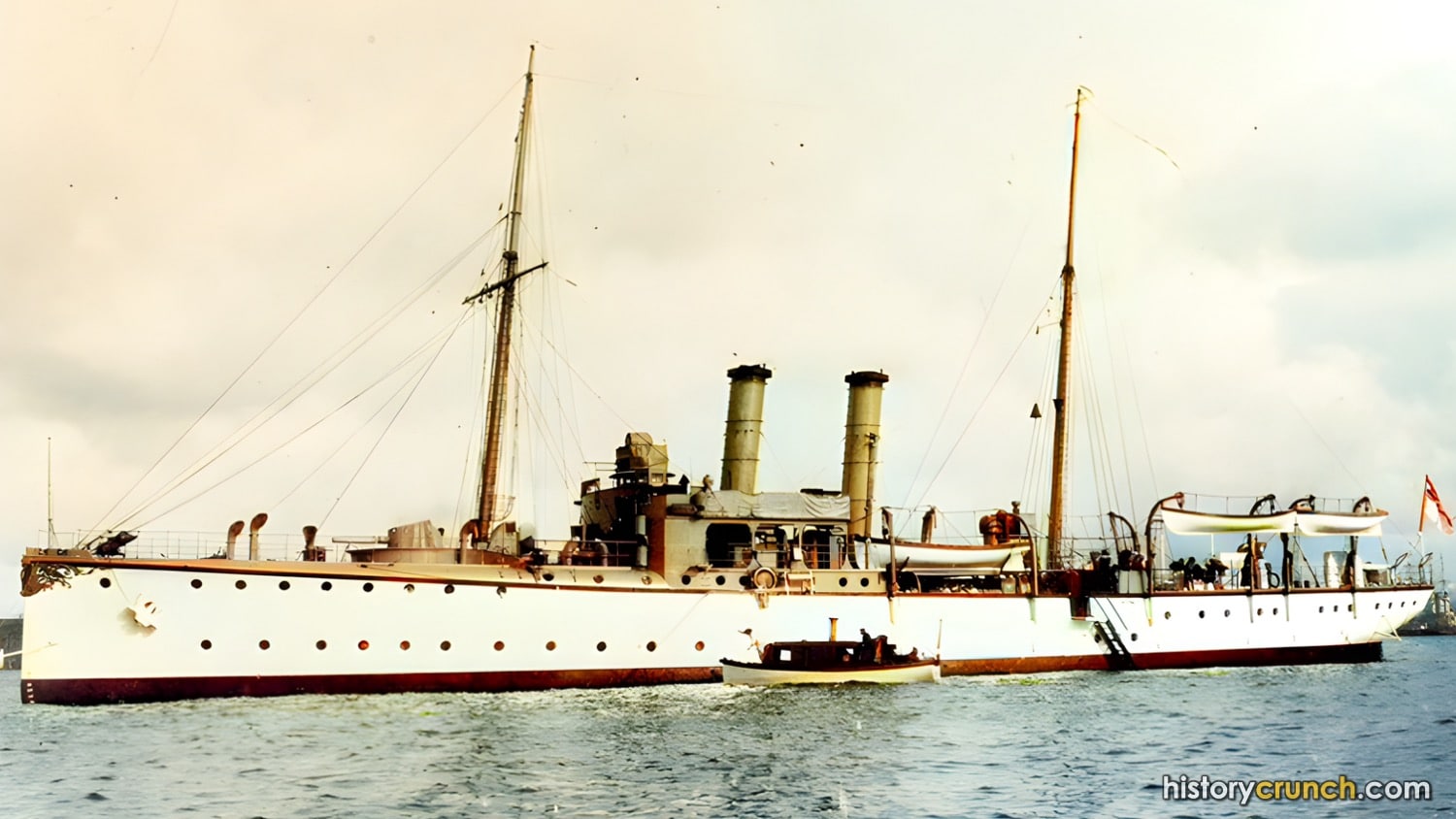 Black & whiteColor
Key Vocabulary
Imperialism
Unification
Scramble for Africa
Ethnocentrism
Concession
Suppressed
Frequently Asked Questions
When did Germany become a colonial power?
Germany became a colonial power mainly in 1884, when it began claiming territories in Africa. This was only about 13 years after Germany itself became a unified country in 1871. Because of this, Germany is often described as a latecomer to the race for overseas colonies compared with Britain and France.
Why did Germany join the Age of Imperialism late?
Germany joined the Age of Imperialism late because it did not exist as a single unified nation until 1871. Before that year, the region was divided into dozens of separate German-speaking states. By the time Germany unified under Otto von Bismarck, other European powers had already claimed much of the world, which forced Germany to compete aggressively for the territory that remained.
What countries were once German colonies?
Several present-day African countries were once German colonies, including Namibia, Tanzania, Cameroon, Togo, and parts of Rwanda and Burundi. Germany also controlled islands in the Pacific Ocean and a small area in China. Nearly all of these territories were lost after Germany’s defeat in World War I.
What was the role of Otto von Bismarck in German imperialism?
Otto von Bismarck was the chancellor who led Germany during the early years of its colonial expansion and who organized the Berlin Conference of 1884. Interestingly, Bismarck was not personally enthusiastic about colonies at first, but he supported expansion in response to public and political pressure. His leadership placed Germany at the center of European imperial politics.
How did German imperialism affect Africa?
German imperialism had harsh and long-lasting effects on the peoples of Africa, including violent suppression of uprisings and the forced drawing of new borders. German colonial forces responded brutally to resistance, especially in Southwest Africa. Many of the artificial boundaries created during this period continue to shape African nations today.
Cite This Article
To cite this article as a source, use one of the formats below.
MLA: Millar, B. “Germany in the Age of Imperialism: A Detailed Summary.” HistoryCrunch, 12 August 2026, https://historycrunch.com/germany-in-the-age-of-imperialism/.
APA: Millar, B. (2026). Germany in the Age of Imperialism: A Detailed Summary. HistoryCrunch. https://historycrunch.com/germany-in-the-age-of-imperialism/
Chicago: Millar, B. “Germany in the Age of Imperialism: A Detailed Summary.” HistoryCrunch. August 12, 2026. https://historycrunch.com/germany-in-the-age-of-imperialism/
Sources
- Eric Hobsbawm, The Age of Empire 1875-1914.
- Daniel R. Headrick, The Tools of Empire.
- State Department — Office of the Historian
- Fordham Modern History Sourcebook