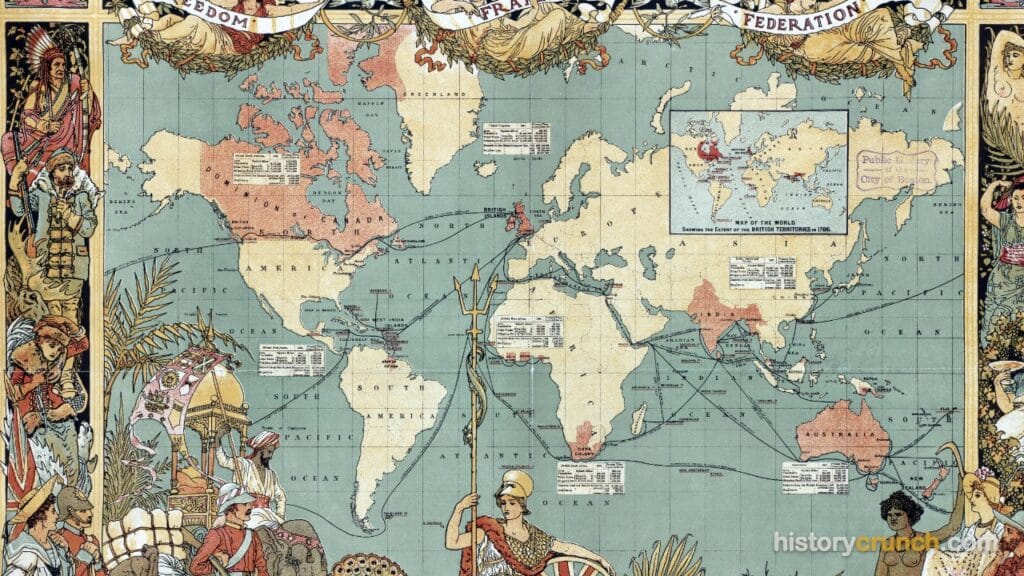
Britain played one of the most significant roles during the Age of Imperialism, and its empire came to shape the modern world in lasting ways. Throughout the 18th and 19th centuries, Britain expanded its power across the globe until the British Empire became the largest empire in world history. The Age of Imperialism was a period of intense colonial expansion by the major European powers, and Britain stood at the center of it, gaining control over vast territories in Asia, Africa, and beyond.
Imperialism is a term that describes when one country extends its political, economic, or cultural authority over another country or region. This process can involve direct invasion and political control, or it can involve gaining authority over another country’s economy through trade and finance. In fact, imperialism has been practiced by many nations throughout history, but it is most often associated with the European powers, the United States, and a few Asian countries during the 1800s and early 1900s.
What Was the Age of Imperialism?
The Age of Imperialism is generally considered to have taken place from approximately the middle of the 18th century until the outbreak of World War I in 1914, although some extend it further into the 20th century. During this era, the major European powers dramatically expanded their empires and came to control large portions of the world. More specifically, these nations conquered and exerted their control over vast regions of Africa and Asia.
Britain was the most dominant of these nations. At the height of the British Empire, it controlled roughly one quarter of the entire land surface of the earth, which made it the largest empire in history. France was second in terms of the size of its empire, while Germany, Belgium, Italy, Portugal, and Spain all played significant roles as well. The United States, Russia, and Japan also carried out imperial campaigns during this period, though their focus was on different regions of the world.
The overall era was driven by several main causes. As stated above, the first and most important cause was economic, and it was closely tied to the Industrial Revolution. Other causes included the desire to resettle growing populations, the spread of religion, ethnocentrism, and national prestige. Together these forces pushed the powerful nations of the time to spread their influence to the far reaches of the planet.
Why Did Britain Build Such a Large Empire?
Britain’s rise as the leading imperial power was closely connected to the Industrial Revolution. In fact, Britain was the first country to industrialize, and this gave it a major advantage over other nations. The Industrial Revolution transformed British society from one based on agriculture into one based on factory production, and it created an enormous demand for raw materials.
More specifically, British factories needed large amounts of raw materials such as cotton, rubber, gold, diamonds, and other resources to keep production going. British leaders looked to Africa, Asia, and other regions of the world as sources for these materials. At the same time, these same regions offered new markets where British manufactured goods could be sold at a profit.
Britain also possessed a powerful navy and a strong merchant fleet, which allowed it to protect its trade routes and project power across long distances. This naval strength meant that British ships could reach nearly every corner of the globe. As a result, Britain gained influence in many different regions, including India, South Africa, Egypt, Australia, Canada, and more.
How Did Britain Rule India?
India was the most important part of the British Empire, and Britain’s rule there was one of the most significant examples of colonial control during the Age of Imperialism. Britain’s involvement in India began through the British East India Company, a powerful trading organization that gradually expanded its political and military control over the Indian subcontinent from the 1600s onward. For instance, the British East India Company took control of the former Mughal province of Bengal-Bihar in 1793 as the older Mughal Empire weakened.
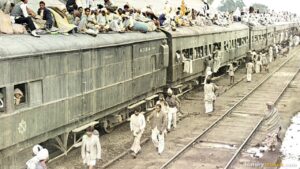
The British government did not take direct control of India until 1858. This change followed the Sepoy Rebellion, which was an uprising of Indian soldiers and citizens against the British East India Company. After the rebellion, the company was dissolved and the British government took over administrative power, ruling India as a colony of the British Empire. This period of direct rule became known as the British Raj, and the word raj translates to “rule” in the languages of northern India.
The British Raj lasted from 1858 until Indian independence in 1947. At its height, it controlled almost all of modern-day India, Pakistan, and Bangladesh. India was so valuable to Britain from an economic standpoint that it was often referred to as the “Jewel in the Crown.” As a result, the British benefited greatly from both the raw materials of India and the ability to sell British goods to the large Indian population.
What Was British Imperialism in China?
Britain also played a leading role in the imperialism that affected China during the 19th century. In this case, Britain was driven by the desire to trade with Chinese merchants, but it faced a major problem. Chinese consumers wanted little from Britain, while British consumers wanted large amounts of Chinese tea, silk, and other goods, which created a trade imbalance that favored China.
To solve this problem, British traders began selling opium to China. Opium is a highly addictive drug made from the poppy plant, which the British grew in India. As the drug spread through Chinese society, it caused widespread addiction and serious social and economic harm. When the Chinese government tried to stop the trade, tensions with Britain increased.
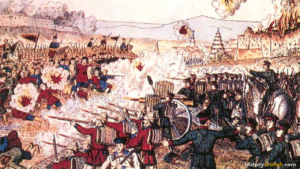
These tensions led Britain to wage the two Opium Wars against China. The first Opium War was fought from 1839 until 1842, and the second Opium War took place from 1856 until 1860. Britain won both conflicts, and as a result it gained the island of Hong Kong along with expanded trading rights in Chinese ports. In this way, Britain used its superior military power to force China to open itself to foreign trade.
What Impact Did British Imperialism Have?
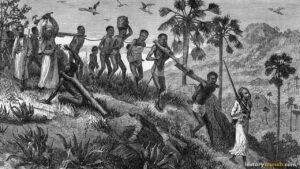
British imperialism had a profound and lasting impact on the many regions that came under British control, and these effects were both positive and negative. On the negative side, British rule often devastated the lives of indigenous peoples. For instance, the wars and conflicts that came with imperialism overwhelmed local populations who could not match the superior military power of the British.
British rule also reshaped the economies of colonies to serve the needs of Britain rather than the needs of local people. In India, for example, traditional industries suffered as the colony became a source of raw materials and a market for British manufactured goods. In China, the opium trade brought addiction and social breakdown to millions of people.
At the same time, British rule introduced new technologies and systems to some regions. For instance, the British built railroads, roads, ports, and telegraph lines, and they spread the English language and British legal and political systems. Some have argued that these developments brought benefits, though they were built mainly to strengthen British control rather than to help the people who lived there.
How Did the British Empire Decline?
British imperial rule gave rise to powerful independence movements in many of its colonies. In India, this movement grew especially strong in the early 20th century and was led by figures such as Mahatma Gandhi. Gandhi used nonviolent methods to challenge British rule, including his famous Salt March in March of 1930 and his call for Indians to produce their own goods.
These independence movements gained strength after the enormous costs of two world wars weakened Britain’s ability to hold its empire together. In 1947, India finally gained its independence, and with that event British imperial rule in India came to an end. Over the following decades, many other British colonies gained their independence as well, which brought the era of the British Empire to a close.
Significance of Britain in the Age of Imperialism
Britain’s role in the Age of Imperialism was one of the most important developments in world history, and its effects continue to shape the modern world. As the largest empire ever created, the British Empire spread the English language, British institutions, and British influence across many continents. For instance, countries such as India, South Africa, Australia, and Canada were all deeply affected by their time under British rule.
British imperialism also reshaped global trade, connected distant regions through commerce, and moved people and goods across the world on a massive scale. In reality, the borders of many modern nations were drawn during the era of British control, and these borders still exist today. The struggles for independence that grew in response to British rule also inspired similar movements in other parts of the world.
As a result, understanding Britain in the Age of Imperialism helps explain both the achievements and the injustices of the imperial era. The story of the British Empire includes technological progress and global connection, but it also includes conquest, exploitation, and lasting harm to many peoples. For this reason, the era remains one of the most studied and debated periods in modern history.
Frequently Asked Questions
When was the Age of Imperialism?
The Age of Imperialism took place from about the middle of the 18th century until the outbreak of World War I in 1914, though some extend it further into the 20th century. During these years, Britain and the other major powers expanded their empires faster than at any earlier point in history. The period is sometimes divided into an older phase of colonial trade and a later phase of intense competition in the late 1800s.
How big was the British Empire at its height?
At its height, the British Empire controlled roughly one quarter of the earth’s land surface, making it the largest empire in world history. It stretched across every inhabited continent, from Canada in North America to Australia in the Pacific. This is why people once claimed that the sun never set on the British Empire, since it was always daytime somewhere within its territory.
Why was India called the Jewel in the Crown?
India was called the “Jewel in the Crown” because it was Britain’s most valuable colony from an economic standpoint. India supplied Britain with raw materials such as cotton, tea, and spices, and it provided an enormous market of people to whom British goods could be sold. Its wealth and importance made it central to the strength of the entire British Empire.
What were the Opium Wars?
The Opium Wars were two conflicts that Britain fought against China in the middle of the 19th century over trade and the opium trade. The first war lasted from 1839 until 1842, and the second from 1856 until 1860, and Britain won both. As a result, Britain gained Hong Kong and forced China to open more of its ports to foreign trade.
When did the British Empire end?
The British Empire declined mainly in the 20th century, with India gaining independence in 1947 as a major turning point. The heavy costs of the two world wars weakened Britain and made it harder to hold onto distant colonies. Over the following decades, most remaining British colonies gained their independence, bringing the age of the empire to a close.
Cite This Article
To cite this article as a source, use one of the formats below.
MLA: Millar, B. “Britain in the Age of Imperialism: A Detailed Summary.” HistoryCrunch, 12 August 2026, https://historycrunch.com/britain-in-the-age-of-imperialism/.
APA: Millar, B. (2026). Britain in the Age of Imperialism: A Detailed Summary. HistoryCrunch. https://historycrunch.com/britain-in-the-age-of-imperialism/
Chicago: Millar, B. “Britain in the Age of Imperialism: A Detailed Summary.” HistoryCrunch. August 12, 2026. https://historycrunch.com/britain-in-the-age-of-imperialism/
Sources
- State Department — Office of the Historian
- John Darwin, After Tamerlane / Unfinished Empire.
- Eric Hobsbawm, The Age of Empire 1875-1914.