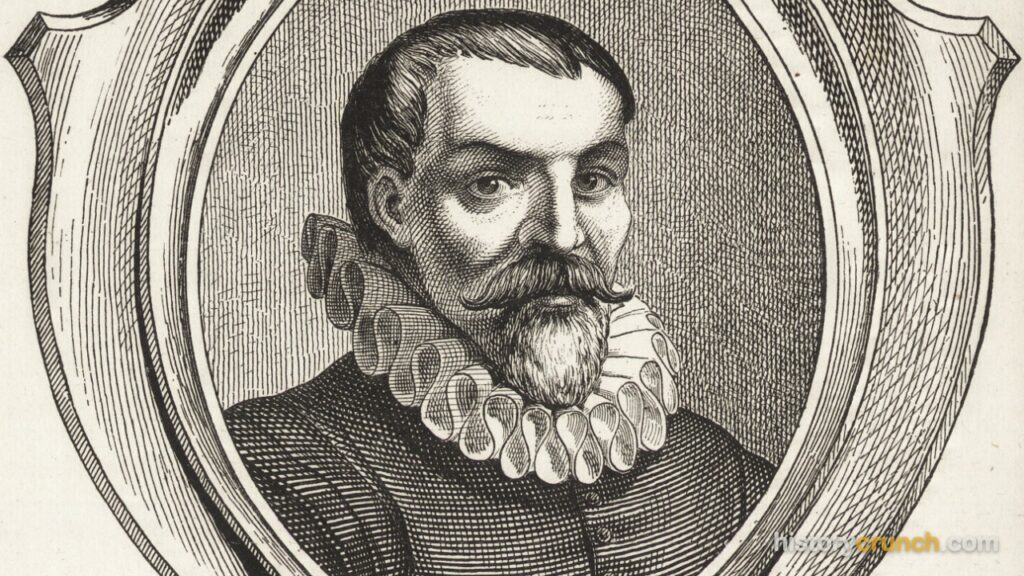
Willem Barentsz stands as one of the most important figures in the history of Arctic exploration. A Dutch navigator and mapmaker, he led three daring voyages into the frozen waters north of Europe in search of the Northeast Passage, a hoped-for sea route that would carry Dutch ships over the top of Russia and Siberia to the riches of China and Asia. During the Age of Exploration, European nations competed fiercely to open new trade routes, and Barentsz became the Netherlands’ most famous Arctic pioneer. Although he never found the passage he sought, his careful charts, his discovery of new lands, and the astonishing survival of his crew during a brutal Arctic winter made him a legend across northern Europe.
The Northeast Passage was the name given to a possible sea route that ran east from northern Europe, along the Arctic coast of Russia and Siberia, and finally down to the Pacific Ocean and Asia. If such a route could be found, it would allow Dutch and other European traders to reach China without sailing the long and dangerous journey around Africa, which was then controlled by Portugal. The search for this passage drew explorers into some of the coldest and most dangerous waters on Earth.
Early Life and Background
Willem Barentsz was born around 1550 in a village on the island of Terschelling, which lies off the northern coast of the region that is today the Netherlands. At the time of his birth, this area was part of the group of lands known as the Seventeen Provinces. Very little is known about his childhood, but growing up on an island surrounded by the sea likely shaped his early interest in ships and navigation.
The name “Barentsz” was not a family surname in the modern sense. Instead, it was a patronymic, which is a name taken from a person’s father. “Barentsz” was short for “Barentszoon,” meaning “son of Barent.” As a young man, Barentsz trained as a navigator and cartographer, which is a person who makes maps and charts. His early mapmaking work took him south, and he helped produce a detailed chart of the Mediterranean Sea. These skills would later make him one of the most valuable seamen in the Dutch Republic.
Rise to Prominence
In the late 1500s, merchants in the Dutch Republic were eager to break into the profitable trade with Asia. The route around the southern tip of Africa was dominated by Portugal, so Dutch traders looked instead for a northern shortcut. In fact, both the Dutch and the English believed that a Northeast Passage might exist along the top of Russia and Siberia, offering a faster and safer path to China and the Indies.
Barentsz became closely connected with this effort through his work as a skilled navigator and mapmaker. His reputation for careful charting made him a natural choice to lead expeditions into unknown Arctic waters. More specifically, Amsterdam merchants and Dutch leaders came to trust him as the man most capable of guiding ships through the ice and fog of the far north. This trust placed him at the center of one of the great goals of Dutch exploration.
Major Voyages and Achievements
Barentsz made three major voyages into the Arctic between 1594 and 1597, all in search of the Northeast Passage. His first expedition set out in 1594, when he sailed from the Netherlands with a small fleet toward the islands of Novaya Zemlya, a long chain of land off the northern coast of Russia. He reached the west coast of Novaya Zemlya and followed it northward until walls of ice forced him to turn back near the island’s northern tip. Even though he did not find the passage, the voyage was considered a success because of the new coastline he charted.
The results of the first voyage created great excitement back home. Prince Maurice of Orange was filled with high hopes after hearing of the earlier voyage, and named Barentsz chief pilot of a new expedition of six ships loaded with trade goods that the Dutch hoped to sell in China. This second voyage set out in 1595 and sailed toward the waters between the Siberian coast and Vaygach Island. However, this time the ice proved even worse, and the fleet was again turned back before reaching open water beyond the Arctic. The disappointment of the second voyage cooled the enthusiasm of many merchants.
The third voyage, which began in 1596, became the most famous of all. This time the expedition took a more northerly route across the open sea. In June of that year, Barentsz and his crew discovered and named two new lands. One month into the voyage, they came upon the islands of Spitsbergen, now part of Svalbard, and Bear Island. These discoveries were important, because they added entirely new territory to European maps of the Arctic.
After these discoveries, the expedition pushed on toward Novaya Zemlya once more. The crew rounded the island’s northern edge, but the ice soon became impassable, and Barentsz gave orders to turn back. Before they could escape, though, their ship became trapped in the ice off the northeastern coast of the island. With winter closing in and no way to sail free, the men faced a terrifying choice: stay aboard the icebound ship or make a shelter on land.
Wintering on Novaya Zemlya
Facing the long Arctic night, the crew went ashore and built a shelter out of driftwood and timber taken from their own ship. They called this shelter Het Behouden Huys, meaning “The Saved House.” In doing so, they became the first Europeans known to survive a winter so far north in the Arctic, a feat that had never before been attempted.
Conditions inside and outside the house were brutal. It grew so cold that the men slept with warmed cannonballs tucked under their bedding, and they cut up merchant goods to make extra clothing and blankets. Although they were forced to ration their bread and beer, they managed to hunt Arctic foxes and even a few polar bears for food. Despite these efforts, the men slowly weakened. Even so, they still fell prey to the cold, to hunger, and to scurvy, a deadly disease caused by a lack of fresh food.
One member of the crew, an officer named Gerrit de Veer, kept a diary of the ordeal that later made the story famous. In 1597, he became the first person to observe and record the strange optical event now called the Novaya Zemlya effect, in which the sun appeared to rise weeks earlier than it should have. His writings gave Europeans a rare and detailed picture of survival at the very edge of the known world.
Later Life and Death
When summer arrived in June of 1597 and the ice still refused to release the ship, the survivors realized they could not wait any longer. Nearly a year after first making camp, the ragged and starving men set out in two small open boats, hoping to reach the Kola Peninsula on the Russian mainland. The journey across the freezing sea was desperate and dangerous.
Barentsz did not survive the trip. He died from his illnesses on June 20th, 1597, only about a week after leaving Novaya Zemlya, and he has no known grave. Some accounts suggest he was buried on the northern island of Novaya Zemlya, while others believe he was buried at sea. Remarkably, part of his crew lived on. In the end, 12 of the original 17 men survived and were eventually rescued by a Dutch merchant ship. The survivors carried home the story of their leader and their incredible winter in the ice.
Significance of Willem Barentsz
Although Willem Barentsz never found the Northeast Passage, his voyages had a lasting impact on the history of exploration. Because of his extensive travels, his accurate charting, and the valuable weather data he collected, he is regarded as one of the most important early Arctic explorers. His maps of the northern coasts gave later sailors better knowledge of ice patterns and coastlines, which helped guide future expeditions into the region.
His discoveries also reshaped how Europeans understood the far north. The discoveries of Barentsz and his crew captured the public imagination back in the Netherlands and across northern Europe, helping to spark a new wave of Arctic exploration. His mapping of Spitsbergen, later part of Svalbard, opened lands that would soon become important for whaling and fishing.
Perhaps his greatest legacy is the survival story itself. The unplanned overwintering on Novaya Zemlya has long been held up as one of the finest tales of human endurance. To honor his achievements, the Barents Sea, along with many other places, was named after him. In this way, Willem Barentsz is still remembered today, more than four centuries after his death, as a symbol of both the ambition and the danger of Arctic exploration.
Frequently Asked Questions
Who Was Willem Barentsz?
Willem Barentsz was a Dutch navigator and mapmaker who lived from about 1550 to 1597 and led three voyages in search of the Northeast Passage to Asia. He was born on the island of Terschelling in what is now the Netherlands. He is remembered as one of the earliest and most skilled explorers of the Arctic.
What Was Willem Barentsz Trying to Find?
Barentsz was trying to find the Northeast Passage, a sea route over the top of Russia and Siberia that would connect Europe to China and Asia. Dutch merchants hoped this route would let them avoid the long journey around Africa, which was controlled by Portugal. A shorter northern route would have made trade faster and much more profitable.
How Did Willem Barentsz Die?
Barentsz died on June 20th, 1597, from illness and exhaustion while traveling in a small open boat after his crew abandoned their icebound ship. He passed away only about a week after leaving Novaya Zemlya, where he and his men had spent a terrible winter. His exact burial place is unknown, and some believe he was buried at sea.
What Did Willem Barentsz Discover?
Barentsz is best known for discovering the islands of Spitsbergen, now part of Svalbard, and Bear Island during his third voyage in 1596. He also charted large stretches of the coast of Novaya Zemlya. His careful maps and records greatly improved European knowledge of Arctic geography.
Why Is the Barents Sea Named After Him?
The Barents Sea, a part of the Arctic Ocean north of Norway and Russia, was named after Willem Barentsz to honor his pioneering voyages in the region. Naming seas and places after explorers was a common way to remember their achievements. The name has helped keep his memory alive for more than 400 years.
Cite This Article
To cite this article as a source, use one of the formats below.
MLA: Millar, B. “Willem Barentsz: A Detailed Biography.” HistoryCrunch, 2 August 2026, https://historycrunch.com/willem-barentsz/.
APA: Millar, B. (2026). Willem Barentsz: A Detailed Biography. HistoryCrunch. https://historycrunch.com/willem-barentsz/
Chicago: Millar, B. “Willem Barentsz: A Detailed Biography.” HistoryCrunch. August 2, 2026. https://historycrunch.com/willem-barentsz/
Sources
- J.M. Roberts & Odd Arne Westad, The Penguin History of the World.
- Jerry Bentley & Herbert Ziegler, Traditions & Encounters: A Global Perspective on the Past.