American Civil War

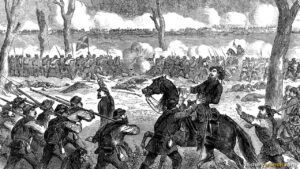
Battle of the Wilderness

Battle of the Wilderness: A Detailed Summary

The Battle of the Wilderness was the first major engagement of General Ulysses S. Grant’s Overland Campaign, fought from May 5th to 7th, 1864, in a dense forested region of northern Virginia. The battle ended without a decisive result for either side, but its true significance lay in Grant’s refusal to retreat afterward, instead continuing his advance south toward Richmond and fundamentally changing the nature of the war in Virginia. This article details the history and significance of the Battle of the Wilderness.
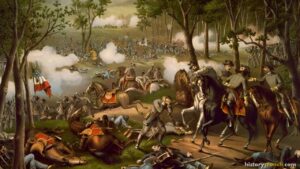
Battle of Chancellorsville

Battle of Chancellorsville: A Detailed Summary

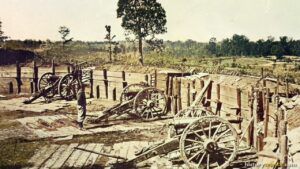
The Battle of Chancellorsville was one of the most remarkable Confederate victories of the American Civil War, fought from April 30th to May 6th, 1863, near Chancellorsville, Virginia. Widely regarded as General Robert E. Lee’s greatest military achievement, the battle saw his army defeat a Union force more than twice its size, though the victory was overshadowed by the mortal wounding of Confederate General Stonewall Jackson. This article details the history and significance of the Battle of Chancellorsville.

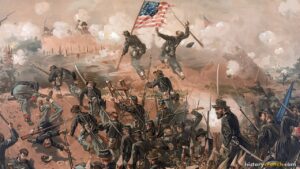
Battle of Atlanta

Battle of Atlanta: A Detailed Summary

The Battle of Atlanta was an important battle of the American Civil War that took place on July 22nd, 1864, just southeast of Atlanta, Georgia. It was part of the broader Atlanta Campaign in which General William Sherman worked to capture the city of Atlanta and destroy the Confederate army defending it. The battle ended in a Union victory and was a major step toward the fall of Atlanta on September 2nd, 1864. This article details the history and significance of the Battle of Atlanta.

Battle of Cold Harbor

Battle of Cold Harbor: A Detailed Summary

The Battle of Cold Harbor was an important battle of the American Civil War and one of the most costly defeats for the Union army in the entire conflict. Fought from May 31st to June 12th, 1864, near Mechanicsville, Virginia, the battle saw Union forces suffer approximately 7,000 casualties in less than an hour during a frontal assault on June 3rd and is considered the last major victory for Confederate General Robert E. Lee. This article details the history and significance of the Battle of Cold Harbor.

Union in the Civil War

Union in the Civil War: A Detailed Summary

The Union in the Civil War was the name given to the Northern states that fought to preserve the United States during the American Civil War from 1861 to 1865. This article details the history and significance of the Union in the Civil War.

Joseph Hooker

Joseph Hooker: A Detailed Biography

Joseph Hooker was a Union general during the American Civil War, best known for commanding the Army of the Potomac and suffering a surprising defeat at the Battle of Chancellorsville in 1863. This article details the life and significance of Joseph Hooker.

Battle of Chickamauga

Battle of Chickamauga: A Detailed Summary

The Battle of Chickamauga was the largest Confederate victory in the Western Theater of the American Civil War, fought on September 19th and 20th, 1863, near Chickamauga Creek in northwestern Georgia. With approximately 34,000 total casualties, it was the second deadliest battle of the Civil War after Gettysburg, and saw Confederate forces drive the Union Army of the Cumberland back to Chattanooga, Tennessee. This article details the history and significance of the Battle of Chickamauga.

Siege of Vicksburg

Siege of Vicksburg: A Detailed Summary

The Siege of Vicksburg was one of the most important Union victories of the American Civil War, lasting 47 days from May 18th to July 4th, 1863. The Confederate surrender gave the Union control of the entire Mississippi River and effectively split the Confederacy in two, dealing a blow to the Southern war effort from which it never fully recovered. This article details the history and significance of the Siege of Vicksburg.